Following TI Deal, Weebit Nano Forecasts Sharp Revenue Growth in 2026
1 February, 2026
First-ever revenue guidance: at least A$10 million in 2026, more than double 2025 levels. The backdrop includes the licensing deal with TI, accelerating commercial discussions, and the establishment of a U.S. subsidiary
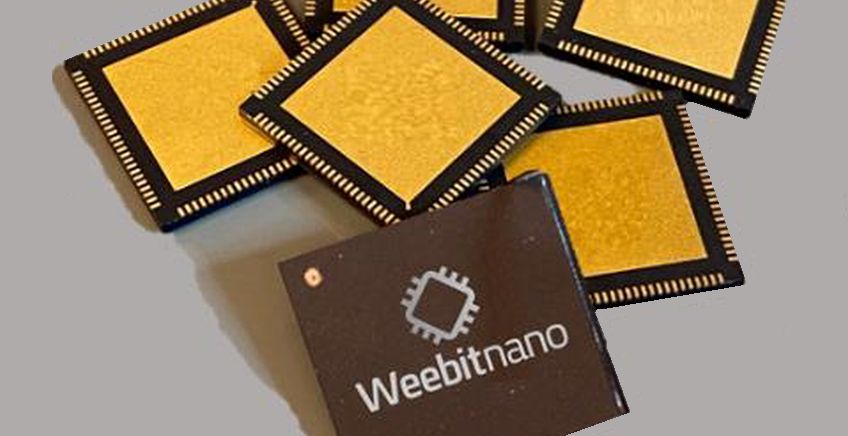
Weebit Nano has published annual revenue guidance for the first time since becoming a public company, projecting revenues of at least A$10 million (approximately US$6.5 million) in 2026—more than double its A$4.4 million revenue in 2025. The forecast was released as part of the company’s quarterly report published over the weekend and marks a significant inflection point: a shift from a company primarily reporting technological milestones and licensing agreements to one seeking to anchor expectations around measurable revenue growth.
Weebit Nano’s shares, traded on the Australian Securities Exchange (ASX), have risen 140% over the past 12 months, giving the company a market capitalization of A$1.12 billion.
The main driver behind the forecast is the largest commercial agreement in the company’s history: the licensing of Weebit’s ReRAM technology to Texas Instruments, one of the world’s leading semiconductor manufacturers. The agreement includes IP licensing, technology transfer, and the design and qualification of Weebit’s ReRAM in TI’s advanced manufacturing nodes for embedded processing chips.
Weebit Nano CEO Coby Hanoch said the agreement represents a major milestone in the company’s commercialization path, stating: “Our agreement with TI marks a major milestone in our commercialisation trajectory, reflecting the quality of our Non-Volatile Memory (NVM) technology, evolving industry perceptions, and Weebit’s growing reputation as the leading independent provider of ReRAM.”
Hanoch added that TI’s adoption is already having a broader market impact: “TI’s adoption of our ReRAM is already accelerating our commercial discussions with multiple foundries, Integrated Device Manufacturers (IDMs) and product companies, and momentum is continuing to build.”
He noted that while a third target fab agreement originally planned for 2025 has slipped into 2026, negotiations with multiple parties are advancing and the company remains committed to closing additional deals during the year.
Alongside the commercial momentum, Weebit announced the establishment of a wholly owned U.S. subsidiary, aimed at supporting expanding engagement with customers in North America. The company says the move reflects growing commercial activity in the region and the need to support sales and business development efforts more closely. In practical terms, beyond the branding and signaling effect of the TI deal, Weebit is adjusting its organizational structure to deepen its footprint in the U.S. market, where many of its most relevant semiconductor customers are based.
Gideon Intrater to Lead AI Efforts
Beyond the headline commercial news, the quarterly report highlights technological progress designed to support the next phase: moving from demonstrations and agreements to product integration and manufacturing. During the quarter, Weebit completed technology qualification of its ReRAM at South Korean foundry DB HiTek, based on industry-standard JEDEC requirements for non-volatile memory. The process involved demanding tests, including high-temperature operation, program/erase endurance, and long-term data retention across multiple silicon wafer lots. The company says it is now working with DB HiTek to prepare for high-volume manufacturing readiness.
Another key technical update relates to demonstration chips manufactured at onsemi. Weebit reports that functional testing confirmed the chips are “performing as expected,” including full programming and readout of ReRAM arrays using smart algorithms and error-correcting code (ECC). The chips are now undergoing further qualification, expected to be completed later this year. The 65nm BCD Treo platform used for manufacturing is aimed primarily at automotive, industrial, and data-center applications that require reliable operation in harsh, high-temperature environments.
On the product commercialization front—working with “product customers” that integrate ReRAM directly into finished chips—Weebit says several products are already in design using its technology, and that it expects to complete the first product customer tape-out in 2026. During the quarter, the company also signed an agreement with a new U.S.-based product customer, reflecting what it describes as a broader industry shift in which ReRAM is increasingly viewed as the successor to embedded flash in next-generation applications.
In this context, Weebit cites a forecast by market research firm Yole Group, which predicts that ReRAM will grow 45-fold over the next six years and account for more than half of the US$3.26 billion embedded emerging NVM market by 2030. For Weebit, the data serves not just as market background, but as a way to frame the TI deal and its progress with DB HiTek and onsemi as part of a broader adoption wave.
Further signaling an expanded strategic focus, Weebit announced the appointment of Gideon Intrater as VP Systems and AI. The company notes that Intrater brings around 40 years of experience in the semiconductor industry, including senior roles at IP companies and leadership positions at Adesto and MIPS, as well as involvement in industry standards through JEDEC. Weebit says it plans to formalize an AI offering built around the advantages of ReRAM for edge AI applications, with an initial solution expected later this year.
Posted in: News
Posted in tags: TI , Weebit Nano