Tan Reverses Course; Slams Intel’s Former Management
26 July, 2025
Halts German and Polish fab projects, brings engineers back to the office, and sets a new AI software strategy. "Policies in Recent years were unwise. I'm fixing mistakes"

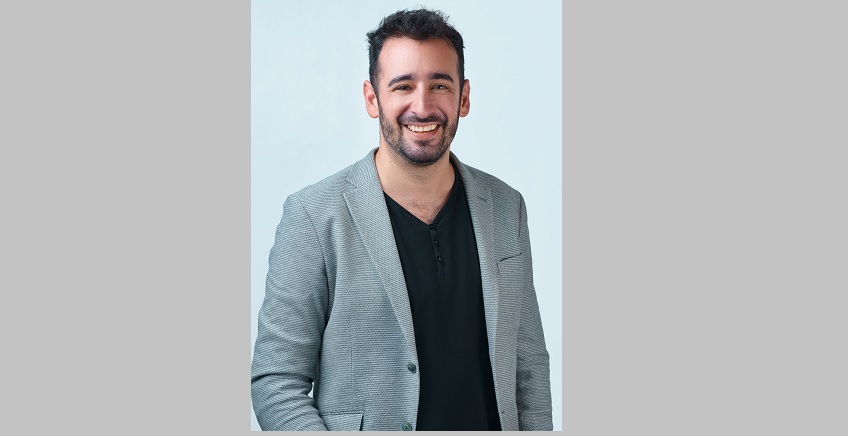
Photo above: Lip-Bu Tan. Leading Intel’s broad restructuring plan
Intel CEO Lip-Bu Tan presented his new vision and roadmap for the company Thursday, marking a dramatic departure from the direction taken by Intel in recent years. Tan is spearheading a sweeping operational and cultural restructuring, which includes massive layoffs, the cancellation of mega-projects in Europe, and a sharp cut in development budgets.
Initial reports of Tan’s cost-cutting strategy emerged when he took the reins in April 2025, but with the release of Intel’s Q2 report this week, the scale became clear: the company officially confirmed the largest layoff in its history, which will reduce Intel’s workforce by approximately 15%.
The restructuring plan includes cutting around 24,000 jobs. By year-end, Intel will employ about 75,000 people. The initiative aims to slash operating expenses to $17 billion in 2025 and $16 billion in 2026. Layoffs are already underway, with reports surfacing in recent weeks of business unit closures and staff exits. In Q2 2025, Intel posted $12.9 billion in revenue and a staggering GAAP net loss of $2.9 billion. The company also issued a disappointing Q3 forecast: revenue of $12.6–13.6 billion with zero adjusted earnings per share.
18A Failed, Servers Were Complex and Pricy
In the earnings call with investors and analysts, Tan delivered scathing criticism of the company’s previous management. “We have a lot to fix to move this company forward,” he said, referring to the failed 18A process node, once considered Intel’s flagship engineering initiative. “We’ve learned a lot from the mistake we made with 18A. We’re applying those lessons now to 14A,” he added. Tan emphasized that 14A investments would only proceed if there’s tangible demand: “I will invest only when I’m convinced the returns are there.”
He was equally blunt about the company’s server processor strategy, which focused on multi-core, multi-threaded chips with dozens of cores and hundreds of threads—regardless of actual market demand. “That approach led to overly complex and expensive CPUs whose performance didn’t justify the cost,” he said. “We are now shifting to a leaner, more focused product line that addresses real customer needs. I will not greenlight chips just because we can build them—only if the market justifies it. I’m fixing the mistakes made in recent years.”
CEO Will Personally Approve All Major Silicon Designs
Tan said Intel still maintains a strong position in the traditional server market. “We’re seeing healthy demand, but we need to improve performance-per-watt for our hyperscale server CPUs,” he explained. “I’ve already taken steps to undo mistakes in multi-threading architecture and am now in the process of bringing in new leadership for our Data Center Group. Expect announcements in the coming months.”
He added: “My directive for future silicon designs is clear: products must feature clean, simple architectures and better cost structures. From now on, every major CPU design will require my personal review and approval before tape-out. This will enhance execution speed, sharpen our focus, and reduce development costs.”
A Software-First Shift in AI Strategy
One of Tan’s most significant announcements was a major strategic shift in Intel’s approach to software, particularly in artificial intelligence. “In the past, we approached AI with a narrow focus on silicon and training—without building an integrated hardware-software stack,” he said. “Our AI strategy must now center on the x86 CPU architecture and Xe GPU architecture, but we must rise to a higher level of abstraction—offering full-stack solutions that include both hardware and software. This is an area where Intel was weak or entirely absent. Under my leadership, that will change.”
“To be the preferred computing platform, we need to deeply understand the most important computing trends and respond with an integrated approach—developing both software and silicon. In the coming months, we’ll provide more details on our efforts to build unified AI capabilities across hardware and software. It will take time, but it’s essential if Intel is to remain relevant in the next computing wave.”
“An Engineering Vision With No Commercial Spine”
At the core of Tan’s critique was the previous CEO’s manufacturing strategy, which centered on building massive fabs for the Foundry Services division in Ohio, Germany, Poland, and Costa Rica—before securing sufficient customers. “We need to build manufacturing capacity wisely and cautiously, aligned with customer demand and business needs,” Tan said. “The investment in recent years far exceeded actual demand and was done in an unwise and excessive manner. Our manufacturing footprint became too dispersed. Going forward, we will grow capacity only when we have volume commitments and will allocate resources gradually based on milestones.”
Tan reiterated this principle throughout the call: “I don’t believe in the ‘if we build it, they will come’ mindset. Under my leadership, we will build what customers need, when they need it—and we will earn back their trust. That applies both to Foundry projects and to future process nodes. We cannot afford an engineering vision with no commercial backbone.”
Mega Projects Canceled, Engineers Back to Office
Tan’s words have already translated into concrete actions. Intel has canceled the planned €10 billion fab in Germany and the assembly plant in Poland. The Costa Rica site will focus only on R&D, with assembly operations shifting to lower-cost countries like Vietnam and Malaysia. Intel will significantly cut its capital expenditures and slow geographic expansion.
“Our operational metrics already reflect the impact of the changes we’ve started implementing,” Tan said. Going forward, Intel will concentrate resources on just three areas: Foundry-as-a-Service, AI chips, and enhancing existing products. Management layers will be reduced by 50%, and engineers will be required to work on-site at least four days a week. “We need to become a fast, precise, and lean company—like our competitors in Asia,” he said. “This is a strategic shift. We’re not measuring ourselves by near-term earnings, but by our ability to stay relevant over the next two years. The transition to AI and foundry services isn’t a luxury—it’s a necessity.”
Posted in: News , Semiconductors