
Is SolarEdge Headed for Another Inventory Crisis?
6 August, 2026
SolarEdge posted its strongest results in nearly three years, yet its stock plunged 30%. Is another inventory crisis looming, or is this just a temporary slowdown?
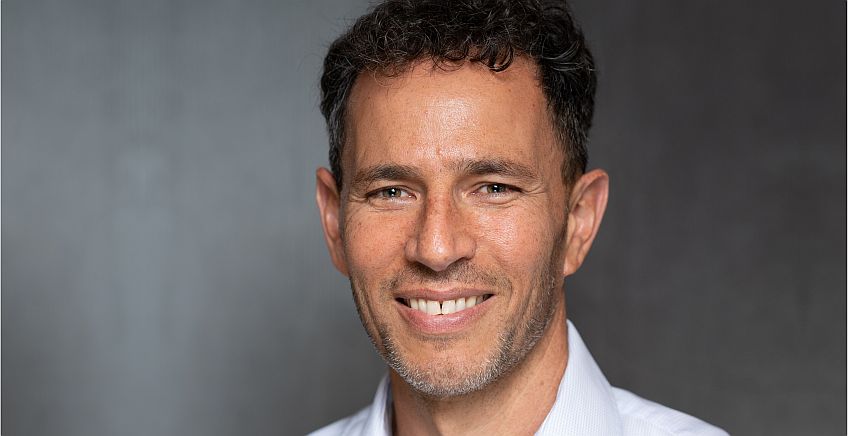
photo above: SolarEdge CEO, Shuki Nir
SolarEdge delivered one of its strongest quarterly performances in years in the second quarter of 2026. Revenue rose 19.6% year over year to $346.2 million, non-GAAP gross margin improved to 28.6%, the company reported its first non-GAAP operating profit since 2023, continued to reduce operating expenses, and generated both positive non-GAAP net income and positive free cash flow.
Investors, however, focused on the outlook rather than the quarter itself. SolarEdge guided for third-quarter revenue of $310-$340 million, along with a lower gross margin. The stock responded by falling more than 20%. The central question hanging over the earnings call was whether the company is entering the early stages of another inventory correction—the same process that triggered its dramatic downturn nearly three years ago.
The concern is not without basis. Several familiar warning signs have reappeared: the U.S. residential solar market remains weak, distributors are purchasing less equipment, installers are struggling to secure financing for new projects, and regulatory uncertainty is making the entire value chain more cautious. It is a combination that inevitably recalls the inventory crisis of 2023.
Not Excess Inventory, but Cautious Ordering
One of the main themes of the Q&A session was whether distributors are once again carrying excessive inventory and whether another wave of destocking is underway. New CFO Maoz Sigron addressed the issue directly: “Our channel inventory, to the best of our knowledge, is normalized.”
He added that inventory continues to move between distributors and product families, but the company does not currently see abnormal inventory accumulation. At the same time, he acknowledged that distributors have become significantly more cautious.
CEO Shuki Nir explained that the U.S. residential market continues to face a slower tax equity funding environment and ongoing uncertainty surrounding FEOC regulations. As a result, installers are finding it harder to launch new projects, their cash flows are under pressure, and distributors have “reduced the amount of inventory they carry.”
This may have been the most important takeaway from the call. In 2023, the problem was warehouses that were too full. Today, the concern is almost the opposite: distributors are reluctant to rebuild inventory. The key question is whether this caution will eventually turn into another prolonged order slowdown—or whether it simply reflects a temporary wait for greater regulatory clarity.
Europe Is Carrying the Business
The geographic breakdown highlights how much SolarEdge has changed since the previous downturn. Revenue from the United States totaled $154.9 million, down 2% sequentially and representing 44.7% of total revenue. Europe, meanwhile, grew 36% quarter over quarter to $154.4 million—almost matching the U.S. business.
According to Nir, European demand is benefiting from rising electricity prices and the gradual phase-out of net metering programs across several countries, both of which are accelerating demand for battery storage systems. Still, management is cautious about Europe. The company expects approximately $15 million of sequential revenue decline in Europe during the third quarter, primarily due to seasonality.
The picture in the United States is almost the reverse. Residential demand remains weak, but the commercial and industrial (C&I) business continues to gain momentum. SolarEdge said it now holds more than 50% of the U.S. commercial rooftop inverter market and that its systems are installed on the rooftops of more than 60% of Fortune 100 companies.
Nexis and Storage Are Reshaping the Business
Alongside its operational turnaround, SolarEdge continues to position the Nexis platform as the next growth engine for its core business. Nir said that shipments of the three-phase Nexis platform in Europe exceeded $60 million during the quarter, while the U.S. rollout is now beginning. At the same time, the company is seeing steady growth in battery storage demand. “We are expecting storage to become a bigger piece of our business.”
The same trends driving European solar adoption are also making battery retrofits increasingly attractive. SolarEdge disclosed that its retrofit business generated more than $20 million in revenue during the second quarter.
The Next Growth Bet Lies in AI Data Centers
Beyond solar, SolarEdge is attempting to establish an entirely new business in power infrastructure for AI data centers. The company is developing a Solid-State Transformer (SST) designed to convert medium-voltage AC directly into 800V DC power for AI servers.
As Nir explained: “Efficiency directly translates into greater compute capacity within a fixed power envelope… this additional compute leads to higher revenue, lower cost per token, and improved return on investment for the data center.”
The company has already demonstrated a working prototype to prospective customers, but management acknowledges that this is a long-term opportunity. Pilot deployments are planned for 2027, while meaningful revenue is not expected before 2028.
Posted in: News
Posted in tags: SolarEdge