Tectonic shift: Samsung may pass Intel in Q2-2017

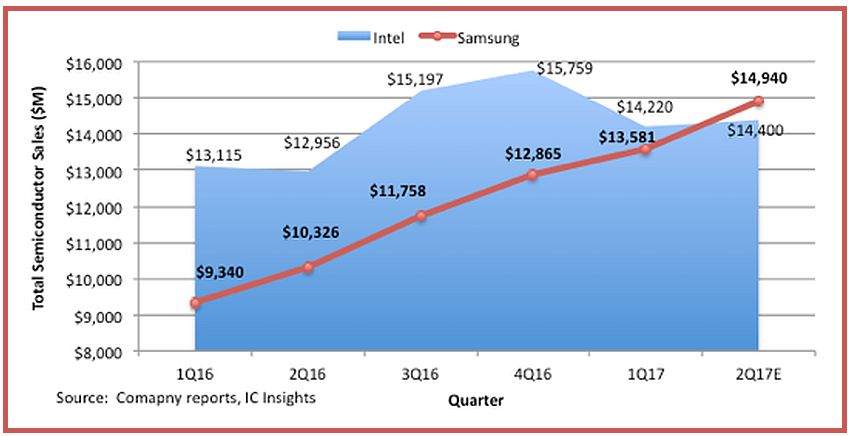
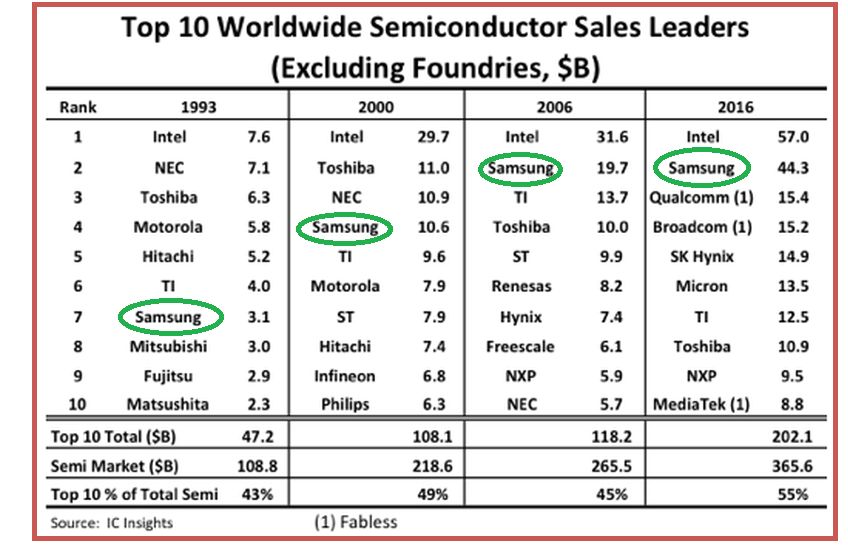
After nearly a quarter of a century, the semiconductor industry could see a new Number One supplier in the second quarter of 2017. IC Insights estimates that if memory market prices continue to hold or increase through Q2 2017, Samsung could charge into the top spot and displace Intel, which has held the title Number One for 25 years in a row.

Using the mid range sales guidance set by Intel for 2Q17, and a modest (yet typical) 2Q sales increase of 7.5% for Samsung, the research company believes that he South Korean supplier would unseat Intel as the world’s leading semiconductor supplier in 2Q17.

If so, this would mark a milestone achievement not only for Samsung, but for all other competing semiconductor producers who have tried for years to supplant Intel as the world’s largest supplier.  IC Insights: “In 1Q2016, Intel’s sales were 40% greater than Samsung’s, but in just over a year’s time, that lead may be erased and Intel may find itself trailing in quarterly sales.”

Samsung’s big increase in sales has been driven by a sharp rise in DRAM and NAND flash average selling prices. IC Insights expects that the tremendous gains in DRAM and NAND flash pricing experienced through 2016 and into the first quarter of 2017 will begin to cool in the second half of the year, but there remains solid upside potential of 39% growth for the 2017 DRAM market and 25% growth in the NAND flash market.

Intel has been locked in as the world’s top semiconductor manufacturer since 1993 when it introduced its x486 processor and soon thereafter, its revolutionary Pentium processor, which sent sales of personal computers soaring to new heights. Over the past 24 years, some companies have narrowed the sales gap between themselves and Intel, but could never surpass the MPU giant.  If memory prices don’t tank in the second half of this year, it’s quite possible that Samsung could displace Intel in full-year semiconductor sales results as well.  Presently, both companies are headed for about $60.0 billion in 2017 semiconductor sales.

The First-Ever Dual Robotic Surgery

The world’s first-of-its-kind dual robotic surgery was performed on April 23 at Hadassah Hospital Ein Kerem in Jerusalem, announced  National President Ellen Hershkin of Hadassah. The revolutionary dual robotic surgery assisted in the repair of a severe spinal fracture suffered by Aharon Schwartz, 42, a factory worker in Jerusalem who was injured when a steel object pinned him to the ground, fracturing his leg in two places and breaking six of his spinal vertebrae.

Renaissance Guidance System

During the 3-hour surgery, the medical team employed two different robotic systems: The Mazor Robotics Renaissance Guidance System to transforms spine surgery from freehand procedures to highly-accurate computer controlled procedures for the treatment of complex spinal deformity cases, and the Siemens Artis Zeego Robotic Technology enables smoother, swifter and trouble-free patient positioning and execution procedures.

Robotic accuracy with 3D Imaging

Dr. Meir Liebergall, Chairman of the Hadassah Medical Orthopedic Department and head of the Musculo-Skeletal Medicine Division, explained the pioneering surgery, said that Artis Zeego provided real-time 3-dimensional imaging during the surgical procedure (which eliminated the need for pre-surgery CT scans and post-surgery X-rays), while the Renaissance Guidance System was responsible for the a screw placement system which allows spinal implant placement with maximum safety and accuracy.

“Renaissance communicated with Artis Zeego during the minimally-invasive surgery while the Hadassah orthopedic team inserted eleven pedicle screws into the patient’s spine with clinical exactitude.” He predicted that patient Schwartz will completely recover from the surgery and will be walking again very shortly.

Over 50,000 implants

The Renaissance Guidance System of Mazor (from Caesarea, Israel) increases both accuracy and clinical outcomes. It was clinically validated in both routine and complex cases in thousands of spinal procedures worldwide – including over 50,000 implants. Using this system, the medical team create a pre-operative blueprint of the ideal surgery for each patient in a virtual 3D environment.

Then they install a rigid attachment to the patient to assures maximum surgical accuracy throughout the procedure. During the procedure two fluoroscopic images are taken and matched to their corresponding location on the pre-operative CT, while the tools and implants are guided to the planned location with 1.5 mm accuracy.

Silicom’s revenues soared 19%. Stock up 13%

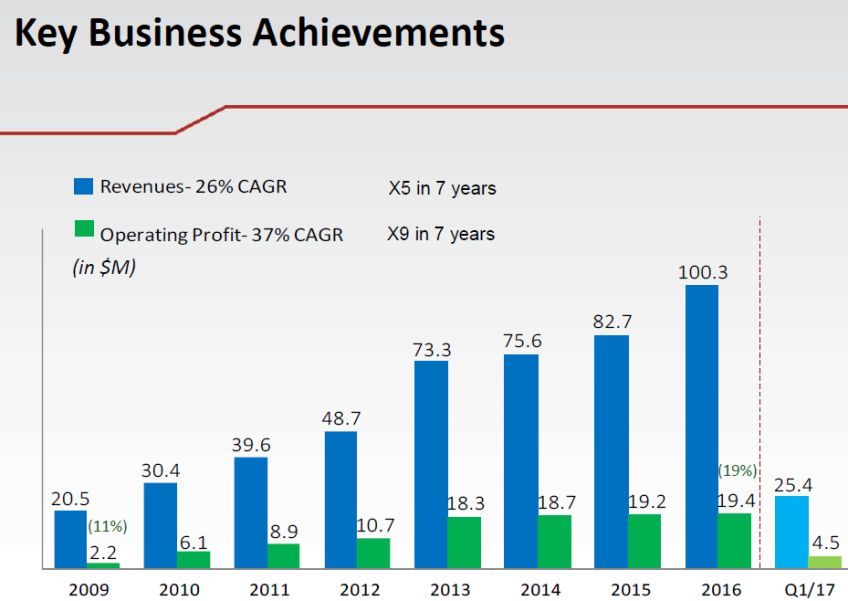
Silicom Ltd. stock in NASDAQ (SILC) rose 13% during last Thursday following the positive results of its financial report. Revenues for the first quarter of 2017 totalled $25.3 million, up 19% compared with $21.4 million in the first quarter of 2016. This was the Company’s best-ever revenues for a first quarter, and brought Silicom’s trade value in the stock market to $400 million.

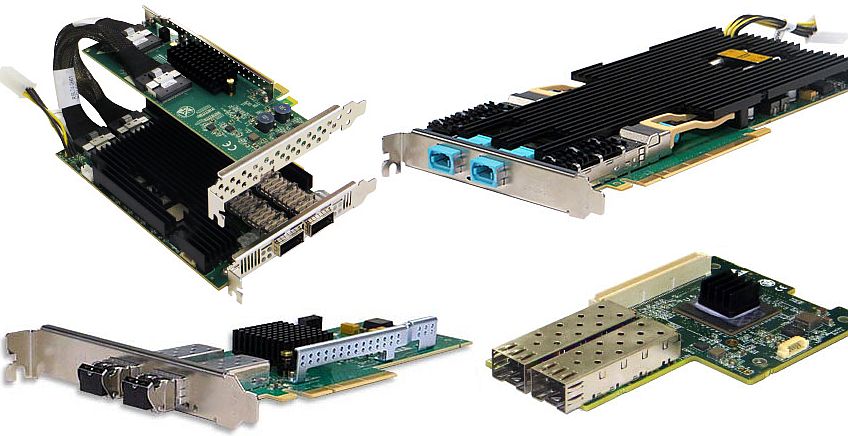
Silicom from Kfar-saba, Israel, provides for OEM customers high-performance networking and data infrastructure solutions to increase data center efficiency. Its product portfolio includes multi-port 1/10/25/40/100 Gigabit Ethernet server adapters, Intelligent Bypass solutions, Encryption accelerators, Ultra Low Latency solutions, Time Stamping and other Smart adapters.

Growth in Cyber Cloud

Silicom’s President and CEO, Shaike Orbach, said that the strong first quarter results demonstrate the growing momentum of the company’s business. “We benefit from the long-term relationships with our ‘traditional’ OEM customers, while beginning to enjoy the fruits of the significant investment we have made over the past several years in Cloud connectivity product lines. In fact, the lines between our ‘traditional’ and new Cloud businesses are blurring, as many of our long-time clients initiate new Cloud product lines and turn naturally to Silicom for the required connectivity components.”

Lately Silicom had a mile stone contract: “In March, we announced the largest Design Win in our history, reflecting our selection by one of the Cloud industry’s major players to deliver a critical connectivity component for its Cloud offerings. Based on the customer’s guidance, once we move past final scale-up challenges, we expect this Win to build to over $30 million per year. We also believe it will pave the way to additional large opportunities.”

He meant cyber: Earlier this month Silicom announced that it has secured an important first Design Win for several versions of its Bypass cards from a well-established Cyber Security customer which has now standardized on Silicom as its networking add-on solution provider. Shipments against this Design Win are expected to ramp up to approximately $1 million per year. In parallel, the customer is considering the potential use of Silicom’s vCPE appliances as part of its Cloud offering.

Mellanox shares price hit by disappointing Q1 results

Tough Choices: Eyal Waldman, President and CEO of Mellanox Technologies

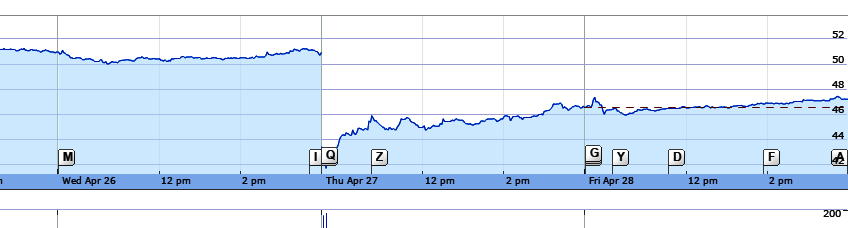
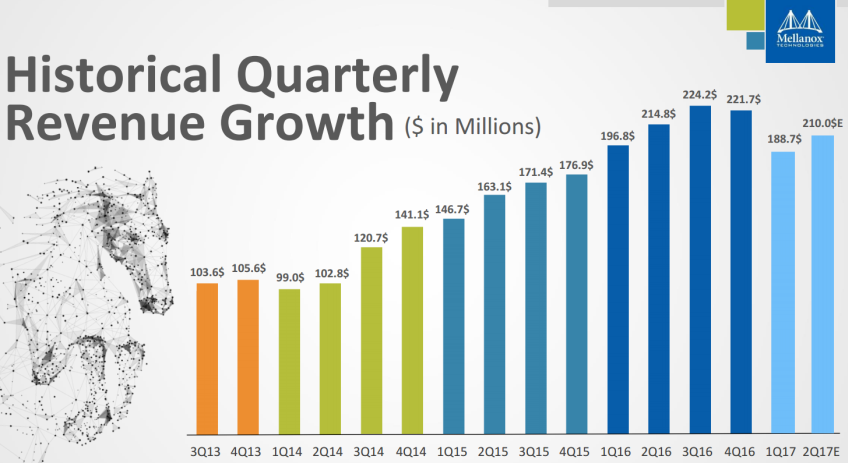
Mellanox Technologies lost approximately 8.5% of its market value last week. The company published a disappointing report for the first quarter 2017, that sent its share price in NASDAQ down from $51 US to about $47 US during the weekend. Today the company total worth is $2.38 billion. Total revenues for Q1 2017 were $188.7 million – a decreased of 4.1% compared to $196.8 million in the first quarter of 2016.

Non-GAAP operating income was $15.7 million, or 8.3 percent of revenue, compared to $41.3 million, or 21.0 percent of revenue in the first quarter of 2016. GAAP net loss was $12.2 million, compared to $7.2 million in the first quarter of 2016. Even the forecast for the second quarter disappointed the investors: Mellanoxs expects quarterly revenues of $205-$215 million, compared to $196.8 million in Q2 2016.

Mellanox Technologies dramatic week in NASDAQ

“We expect sequential growth in the coming quarters”

One explanation for those results is surprising:  “Our InfiniBand revenues were impacted by delays in the general availability of next generation x86 CPUs,” said  Eyal Waldman, president and CEO of Mellanox Technologies. He also mentioned “seasonal trends in high-performance computing, and technology transitions” in several end users and OEM customers. “We believe InfiniBand has maintained share in HPC, and expect revenues will see sequential growth in the coming quarters driven by current backlog and additional pipeline opportunities.

During the Conference Call held on April 26, (Transcript brought by Seeking Alpha) Waldman said the problem was with a delay of the x86 new processors introduction, and not the competition with Intel’s InfiniBand products. “We’re seeing people on the hold part and waiting for the new process to be in the market to deploy HPC clusters and computers.” Regarding the competition he believes Mellanox is superior over Intel.

Competition with Intel’s Omni-Path interconnect

Waldman: “We don’t think we’re losing market share to Intel with Omni-Path. We’re actually seeing more people being disappointed with Omni-Path interconnect, and some are actually reconsidering their decisions. Intel is continuing to be aggressive in terms of pushing Omni-Path into the market with their pricing strategy and convincing customers to join Omni-Path, but we don’t think they’re successful in turning or taking more market share from us.

Our recent competitive analysis conducted by a leading global OEM comparing Mellanox’s InfiniBand to Intel’s Omni-Path demonstrated customers can achieve 30% to 250% higher application performance using Mellanox’s InfiniBand versus Omni-Path. The performance analysis was conducted at an end-user site across multiple applications covering several key commercial industries.

The analysis also highlighted the benefit customers achieved from the scalability and off-load capabilities offered with InfiniBand, a key differentiator versus Omni-Path, allowing for 50% lower total cost of ownership on multiple applications. We believe the competitive advantages of InfiniBand over Omni-Path will further widen with the introduction of our 200-gigabit HDR solutions in 2017.”

Israeli high-tech raising down 8% in Q1 2017

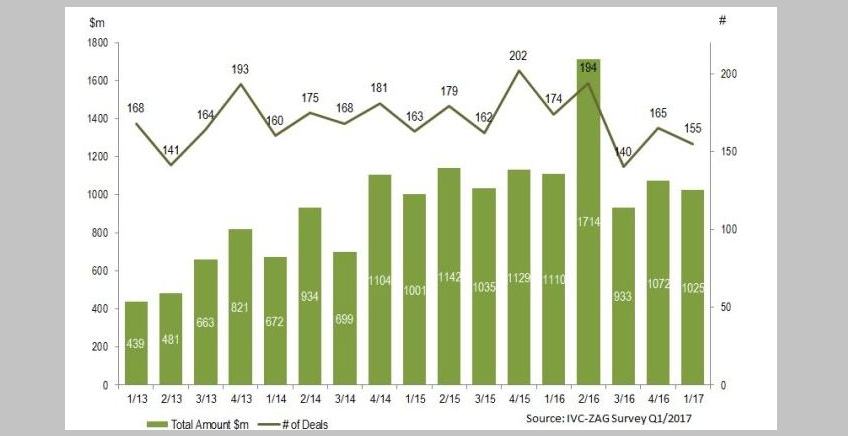
In the first quarter of 2017, Israeli high-tech companies raised a total of $1.03 billion in 155 transactions, a 4% decrease from the $1.07 billion raised in 165 deals in the previous quarter and 8% lower than the $1.11 billion raised in Q1/2016.

The number of transactions was down 10% in Q1 compared to the quarterly average of 172 deals in the previous three years. The average financing round rose to $6.6 million, compared to $6.4 million in Q1/2016. According to the research made by IVC Research Center and the law firm ZAG-S&W, there is a sharp drop in early stages investments.

It’s better to be bigger

Early rounds raising dropped 16% and seed raising dropped staggering 31%, with only 37 seed rounds and 40 A rounds closing in Q1, at a total of $247 million. The first quarter of 2017 was the weakest for early stage rounds in three years, with 41 companies raising only $199 million, or 19 percent of total capital. Capital raised by stage Mid-stage companies continued to lead quarterly capital raising in Q1/2017, with $478 million

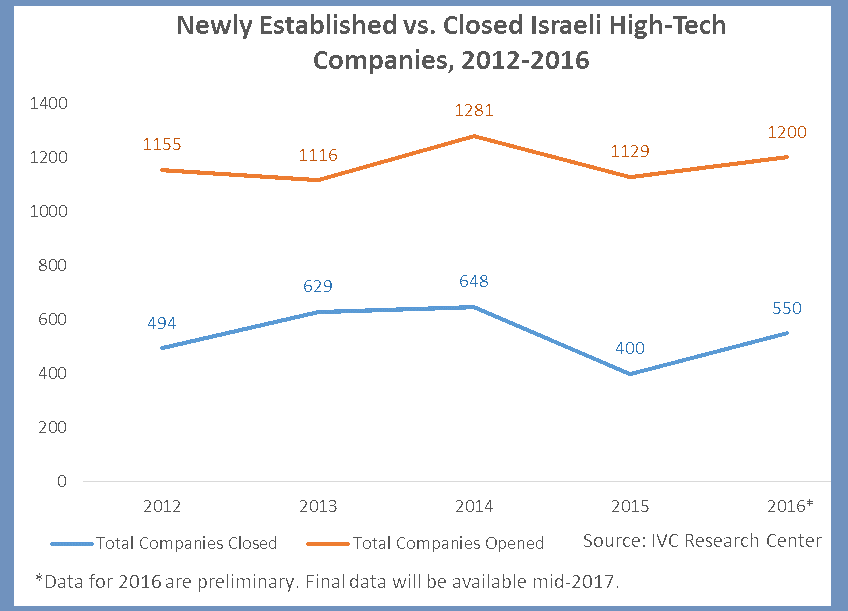
In terms of capital raising, only C rounds managed to top their previous record, with $285 million raised in 17 deals, compared to $234 million in Q1/2016. Shmulik Zysman, founding partner of ZAG-S&W (Zysman, Aharoni, Gayer & Co.), said that the number of financing rounds in the first quarter was the lowest since 2012, while the number of new startups continued to grow.

“We expect the Mobileye deal – which shifted paradigms regarding valuations of Israeli companies – to have future impact on the industry in terms of growth in capital raising volumes. The fact that most of the capital goes into mature companies reflects the maturity of companies today, but also the low appetite of investors for young companies. If it continues, this trend is liable to harm young companies’ ability to realize their potential.”

“Void in the early stages”

Koby Simana, CEO of IVC Research Center, noticed: “Our analysis shows that venture capital funds, both Israeli and foreign, are shifting their activity focus to investments in later stages – in terms of companies’ product development stage, financing stage or capital raising round. This change creates a void in the early stages that is not fully met by other investors, such as accelerators or private investors.

“But on the one hand, this move creates an opportunity for new investors willing to focus on young startups and early stage companies without much competition. If VC funds pass up the opportunity to join at early stages and hold the majority of shares in a company, they will have less control over their deal-flows. If there are no investments in early stages and early rounds now, two years down the line there could be a shortage of promising late stage companies.”

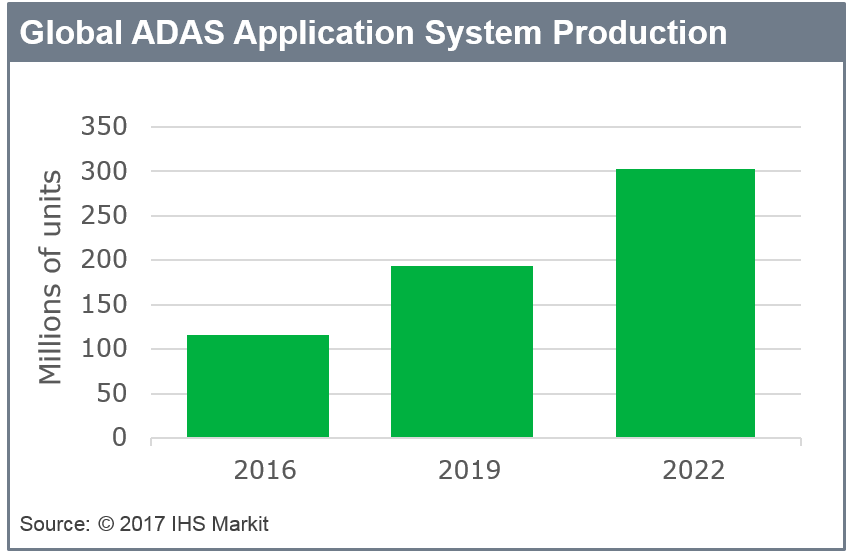
Global ADAS Market to reach 302 Million Units in 2022

Photo above: Mobileye ADAS demonstration

Global automotive applications of Advanced Driver Assist systems (ADAS) will surpass 302 million units annually in 2022, according to new analysis from business information provider IHS Markit (Nasdaq: INFO). In ADAS Applications and Sensors Report, IHS Markit forecasts that global ADAS growth will be led in part by new introductions of automated autopilot, driver monitoring systems and side and rear mirror cameras.

The growth will be driven by advances in sensor technologies including radar, camera and laser sensors (LiDAR) that will number more than 232 million units annually in 2022, the report says. These technologies will also enable higher levels of automated driving.

“Many OEMs have started offering partially automated systems that execute accelerating, braking and steering together,” said Aaron Dale, senior automotive analyst at IHS Markit and the report’s author. “These systems combine multiple sensors and multiple single-function ADAS features to allow the vehicle to drive, albeit under driver supervision. Combining these functions and sensors requires high level of integration and computing power.”

Complete 360-degree awareness

Current systems manage the driving task at low speeds as well as high and can complete lane changes with driver input. Future systems may use artificial intelligence to navigate more complex driving environments on their own. This functionality extends the integration of forward-sensing systems such as adaptive cruise control (ACC), lane keeping assist (LKA) and traffic sign recognition (TSR) by integrating blind spot information (BSI) and rear-sensing to provide complete 360-degree awareness.

Automated driving systems today have guided the industry into level 2 of the Society of Automotive Engineers definitions where constant driver supervision is required. The first level 3 capable systems are just around the corner, which will remove the need for constant driver supervision in certain circumstances, such as in traffic jams or on well-maintained stretches of highway. Europe and North America will see the first deployments of L3 technology, but consumer acceptance remains a key question on the path to widespread adoption.

Looking for the blind spots

Side and rear mirror cameras offer another opportunity for growth, IHS Markit says. While the technology for such systems readily exists and automakers have an appetite to deploy such systems, regulation has hindered widespread adoption. Japan was first to revise regulations in 2016 citing advances in camera quality, and other markets are expected to follow in the years to come in order to improve blind spot visibility, vehicle aerodynamics and provide additional driver support through the use of machine vision. As cameras add to the complexity and cost of vehicles, uptake is expected to be limited to well-equipped flagship models over the short term, with wider deployment in smaller cars likely in Japan especially.

Driver monitoring systems are intended to address driver distraction, fatigue and cognitive load that may negatively affect driver awareness or ability to react in a timely manner. Most systems today reference a multitude of sensors and measurements throughout the vehicle to infer driver fatigue or distraction, but the arrival of more advanced L3 driving systems has highlighted the need to understand the driver’s state more directly. This method of direct driver observation, using an interior camera sensor to observe eye movement and gaze direction, will allow the vehicle to effectively manage and ensure a safe transition between self-driving and driver-controlled operation.

New generation of LiDAR sensors

Sensors continue to be the primary enabler of these new safety and convenience features, and radar and camera maintain a strong position in the market throughout the forecast as capable incumbent sensing technologies. Advances in machine vision and machine learning give camera sensors unique utility, while new applications for 77 GHz radar are providing automakers with higher resolution awareness in the short to mid-range distances around the vehicle. A new generation of LiDAR sensors will offer useful complementary and redundant coverage as more highly automated driving systems come to market.

Siemens builds Train parts with Stratasys 3D Printer

Additive manufacturing gains hold in heavy industries and may change the concept of how to manufacture various industrial parts. The recent example came from Siemens, the German Industrial giant. According to Stratasys from Rehovot (Israel) and Minneapolis (USA), the Mobility Division of Siemens, utilized its Fortus 900mc 3D Printer to produce customized final parts for German transport services provider, Stadtwerke Ulm/Neu Ulm Verkehr.

Low volume – but cost effective

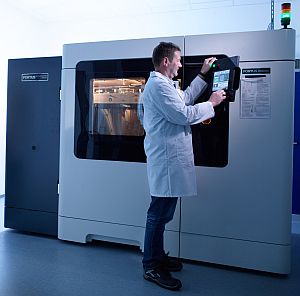
Fortus 900mc Production 3D Printer

In this way Siemens Mobility was able to overcome the barriers of traditional low-volume production and printed final tram parts in a matter of days compared to weeks with traditional methods, while diminishing the need for costly tooling. Siemens Mobility develops technology for vehicles and infrastructure for transport machines. But for the rail industry, if a replacement part is not in stock, Siemens would need to purchase the machinery or tools to manufacture it. From a cost-perspective, Siemens was limited to only taking orders above 10 parts, since lower volumes can’t justify the production cost.

Production down from weeks to days

“Our production services become much more flexible and tailored to our customers’ needs since we introduced the Stratasys 3D Printer into our manufacturing process,” said Tina Eufinger from Siemens Mobility Division. “Before 3D printing, we were forced to produce high quantities of parts in order to make the project cost-effective. For small volume part demands from customers, we would store excess parts until they were needed. Now create a design that is 100% customized to the specific requirements. This took our production time down from weeks to days.”

“Availability as the most important asset”

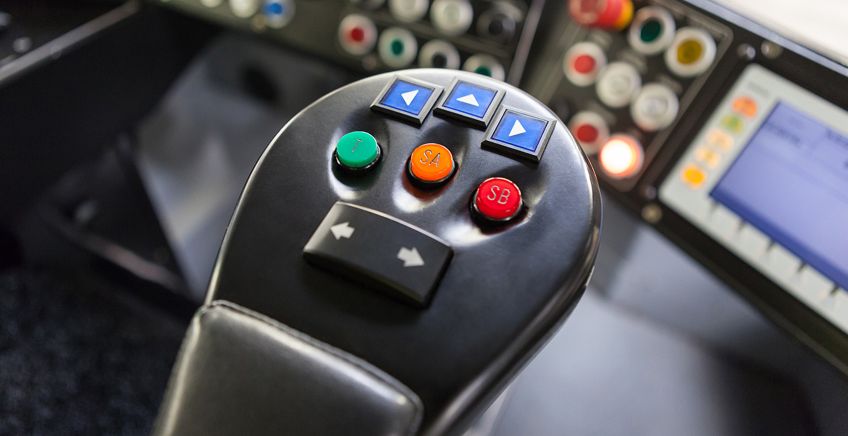
Driver seat armrest printed for the SWU Verkehr tram

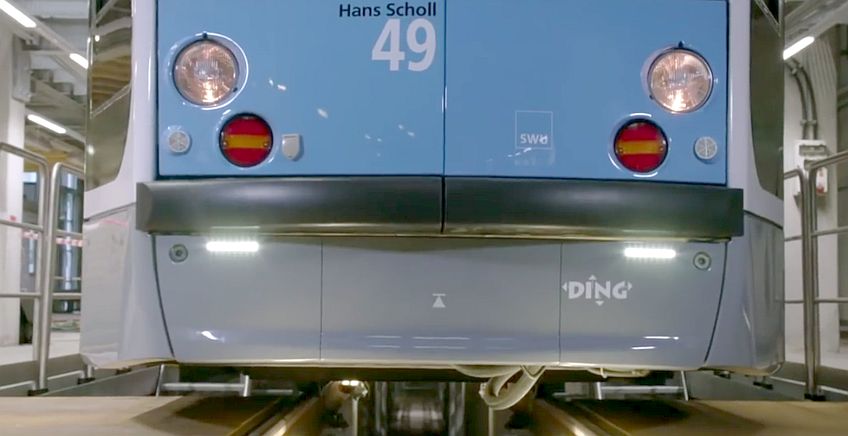
This was demonstrated in a production project for SWU Verkehr, which offers transport services across 10 rail networks in thecity of Ulm. SWU recieved 3D printed parts include customized armrests for the driver seat and housing covers for the ‘coupler’ (the cover of the link between two tram carriages).

Andreas Düvel, Siemens Mobility Sales Representative said that customers such as SWU Verkehr see availability as the most important asset to their business. “Trams need to be available and run constantly throughout the day. Through customized additive manufacturing we are achieving maximum customer satisfaction, as the client is actively participating in the creation and optimization of its parts. This would simply not be possible with mass production.”

3D printing Goes online

Beyond offering 3D printed production parts for customers in the transport industry, Siemens Mobility division has expanded its business branch online, with customers able to order customized 3D printed parts. Customers who require replacement parts or who need to make changes to existing ones can go online and request the desired part, which is subsequently 3D printed and delivered to them. This has given birth to an on-demand production business model, whereby customers can have part requirements met how and when they need them.