
Innoviz Unveils InnovizThree, Expanding Its Vision Beyond Autonomous Vehicles

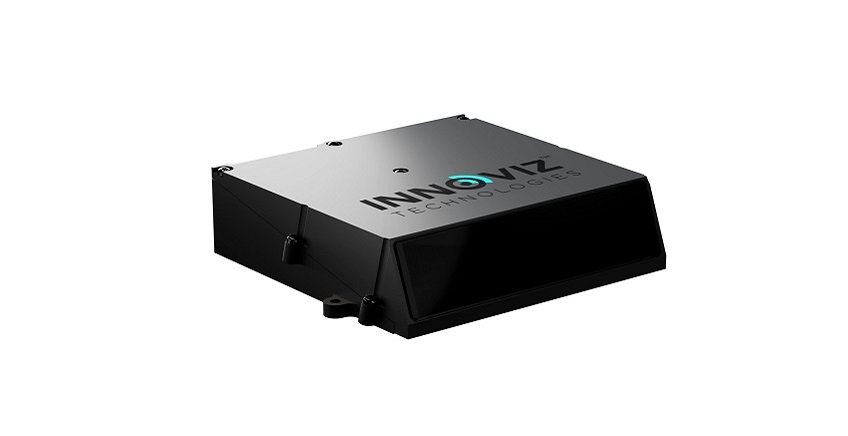
Innoviz has officially unveiled InnovizThree, the next generation in its LiDAR sensor portfolio, marking a significant step forward both technologically and strategically. The new sensor, which will be demonstrated publicly for the first time at the upcoming CES exhibition, was designed from the ground up to be integrated inside the vehicle cabin, behind the windshield—a location long considered particularly challenging for LiDAR systems but increasingly favored by automakers.

InnovizThree is based on 905-nanometer Time of Flight technology and delivers a roughly 60% reduction in volume compared with its predecessor, alongside improved performance and lower power consumption. The sensor comes in an exceptionally compact form factor, measuring about 34 millimeters in height and weighing roughly 600 grams, enabling seamless behind-the-windshield integration. According to the company, it offers a detection range of up to 300 meters, high angular resolution of around 0.05 degrees, a wide horizontal field of view of up to 120 degrees, and a scanning rate of up to 10.6 million points per second. It supports operating modes of 10 or 20 frames per second and enables configurable regions of interest, allowing higher point density and resolution to be concentrated in critical areas of the field of view. The system is also designed to deliver a continuous point cloud without gaps within these regions and to detect multiple returns from a single laser pulse, improving performance in rain, fog, glass interference, and complex lighting conditions.

The emphasis on behind-the-windshield installation goes beyond aesthetics. In addition to improving vehicle design, internal placement protects the sensor from physical damage, dirt, and harsh weather, enables the use of existing heating and cleaning systems, and simplifies installation and maintenance. At the same time, it presents a significant optical challenge due to glass distortion and signal attenuation—challenges Innoviz says it has addressed through a combination of optical design, algorithms, and thermal management.

Alongside its core focus on autonomous driving, Innoviz is clearly signaling an expansion into new markets. InnovizThree is positioned as a general-purpose, high-precision 3D sensing platform suitable not only for vehicles but also for humanoid robots, drones, and physical AI systems—domains that demand compact, lightweight, low-power sensors with industrial-grade reliability.

Although this marks the product’s official launch, Innoviz CEO Omer Keilaf revealed InnovizThree several weeks ago during the company’s latest earnings call, as previously reported by TechTime. At the time, Keilaf emphasized that the product was born directly out of discussions with automakers, noting that placing LiDAR behind the windshield requires a smaller, more efficient sensor with sufficient performance headroom to compensate for optical signal degradation.

During the call, Keilaf also addressed competing sensing technologies such as FMCW and OPA, arguing that they are not yet mature enough for mass production. According to him, Innoviz’s choice of 905-nanometer Time of Flight enables the use of proven, widely available components, making the technology suitable for large-scale manufacturing and compliance with automotive standards.

The launch comes amid strong business momentum. Innoviz reported a 238% year-over-year increase in quarterly revenue to $15.3 million, a sharp rise in unit shipments, and continued progress in pilot programs and validation processes with major automakers for Level 3 and Level 4 systems, ahead of a planned start of serial production in 2027.

Innoviz Unveils InnovizThree LiDAR, Engineered for Behind-the-Windshield Automotive Integration

[In the image above: the InnovizThree sensor (right) compared with the previous-generation InnovizTwo]

By Yohai Schwiger

Innoviz Technologies used its Q3 2025 earnings call on Wednesday to unveil the next generation in its LiDAR family, the InnovizThree sensor. CEO Omer Keilaf said the new model was engineered specifically to meet emerging requirements from the automotive industry. Based on 905nm Time-of-Flight, the device delivers improved performance, lower power consumption, and — most critically — a 60% reduction in volume, enabling installation in what he described as “the holy grail” location for automakers: behind the vehicle’s windshield, inside the cabin.

The sensor moves inside the vehicle

“This device was born out of conversations we’ve had with automakers,” Keilaf said on the call. “To place LiDAR behind the windshield you need a smaller, more power-efficient product with enough performance margin to absorb the optical loss going through the glass. InnovizThree was built exactly for this purpose, and can support urban Level 3 autonomy as well as seamless integration into the vehicle without roof- or grille-mounted protrusions.”

Automakers want LiDAR behind the windshield because it dramatically improves vehicle styling, protects the sensor from impacts, dirt and weather, leverages existing heating and cleaning systems, and simplifies installation and maintenance. Today, most LiDAR units in commercial and Level 3 vehicles sit on the front grille or fascia, while Level 4 autonomous vehicles typically mount LiDARs externally — on the roof or at the corners.

A technology ready for mass production

Integrating LiDAR behind the windshield is an engineering challenge due to optical distortion, thermal constraints and glass-induced signal attenuation. That requires smaller, more efficient and more robust sensors. InnovizThree builds on the architecture of the InnovizTwo — the platform that also underpins Innoviz Smart and the company’s short- and mid-range variants. The new model will debut publicly at CES 2026, and will serve as a central platform for derivative products for both automotive and industrial markets.

During the call, Keilaf addressed competing LiDAR approaches such as FMCW and OPA, arguing they are still far from production maturity. As he put it: “After many years of testing and experimenting, including OPA 1550 and FMCW LiDARs, it’s clear to us that 905 Time of Flight is the customer’s preferred solution. This industry can only scale on the solid ground of a proven mature technology.”

He emphasized that FMCW and OPA rely on materials and components that are not yet viable for automotive-scale production, whereas 905nm Time-of-Flight uses established, cost-effective, automotive-grade supply chains suitable for high-volume manufacturing.

Business momentum accelerates

Innoviz posted another record quarter: Q3 revenue jumped 238% year-over-year to $15.3 million. For the first nine months of 2025, revenue reached $42.4 million, up 2.3× from the same period in 2024. Gross margin was 15% for the quarter (26% year-to-date), while operating expenses fell 30% to $18.1 million, partly due to operational realignment and cost allocations associated with NRE payments. The company ended the quarter with $74.4 million in cash, no long-term debt, and reiterated that its ~$14M quarterly cash burn will continue to decline.

Innoviz reported a 10× increase in LiDAR shipments this quarter, supported by ramping production at Fabrinet. The company is progressing with Level 3 and Level 4 validation programs with top automakers, including another round of winter testing in northern Europe ahead of an expected 2027 SOP.

Level 4 autonomous trucks

A major development highlighted on the call was Innoviz’s progress with a global commercial truck manufacturer that selected the company as its LiDAR supplier for Level 4 Class 8 trucks, using multiple InnovizTwo units. Innoviz is already shipping sensors to the OEM’s data-collection fleet and is implementing software modifications.

“This is a significant milestone for us,” Keilaf said. “It demonstrates that our platform meets the stringent requirements of the heavy-duty trucking industry and positions us at the forefront of autonomous trucking.” The company expects to reveal the OEM’s identity in the coming weeks.

Volkswagen’s feedback

Keilaf also played excerpts from a conversation with Christian Senger, CEO of Volkswagen’s Autonomous Driving, Mobility & Transport Group (ADMT), responsible for the autonomous ID.Buzz program with MOIA and Mobileye.

Senger said: “Fully autonomous mobility becomes now really real… Our ID.Buzz has 27 sensors and nine LiDARs from Innoviz — three long-range and six short-range. The combination of all sensors and a strong compute platform gives the performance to understand the world.”

On LiDAR performance he added: “Our operational LiDAR with more than 350 meters of range gives us the distance we need for highway speed. There’s almost no difference between day and night. We have great results in rain and even foggy conditions. It helps the cameras understand the environment better.”

Senger praised the partnership: “We are creating together subsystems which have not been there ever… It is not only high-end performance, it is also industrial scale and fully automotive grade. I really love the openness and fast reaction from the Innoviz team.”

A market converging around Time of Flight

Keilaf noted that the automotive LiDAR market is consolidating rapidly. “The number of relevant automotive LiDAR players is declining… Some who had publicly committed to using FMCW are now expressing interest in transitioning to Time of Flight.”

After years of experimenting internally with both FMCW and OPA, Innoviz concluded that 905nm ToF is the only technology ready to scale in automotive volumes over the next several years.

Security applications: Innoviz Smart vs. cameras and radar

Beyond automotive, Innoviz reported growing traction in perimeter-security applications. The company completed its first installation of an Innoviz Smart–based fence-protection system and anticipates deploying dozens more by year’s end.

Keilaf described a comparative audit performed by a professional penetration-testing team: “Four out of ten times, the team avoided detection with the existing camera- and radar-based solution… Under the same conditions, they were not able to evade the Innoviz Smart solution at all.”

He added that the security sector remains “underserved,” both in sensing technology and in integration with VMS and command-and-control systems. Innoviz plans to offer software, analytics and 24/7 support alongside sensors — creating recurring-revenue opportunities.