
By Yohai Schweiger
Chip giant NVIDIA announced this week a strategic $4 billion investment in two U.S.-based photonics companies — Coherent Corp. and Lumentum Holdings — in a move designed to support the accelerated expansion of its connectivity division and ensure the availability of critical components for next-generation AI switches and advanced optical interconnect solutions.
NVIDIA will invest $2 billion in each company through direct equity stakes, alongside multi-year supply agreements that include significant purchasing commitments and preferential access to future manufacturing capacity. The structure combines capital investment with long-term supply chain guarantees, deepening collaboration on next-generation optical connectivity components. Beyond the capital infusion, the partnerships are designed to secure steady access to critical optical and laser components for AI data centers, while expanding advanced manufacturing capabilities in the United States and increasing domestic industrial output.
Critical Links in the Optical Value Chain
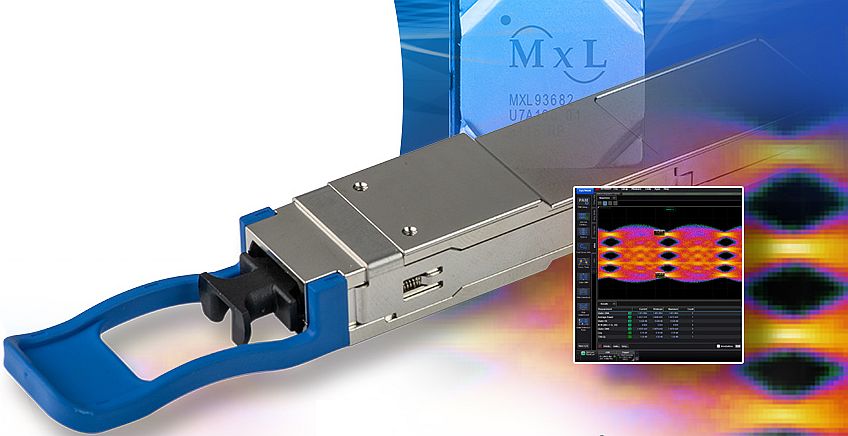
Coherent, headquartered in Pennsylvania, is one of the long-standing players in the global laser and photonic materials industry. The company develops and manufactures III-V laser sources, silicon photonics components, advanced optical engines and high-precision chip packaging technologies. In data centers, lasers are far from a peripheral component — they are the heart of the optical system. Integrated into optical transceiver modules installed in network interface cards and InfiniBand and Ethernet switches, they generate the light that enables high-speed data transmission between servers, racks and large-scale GPU clusters at speeds reaching 800 gigabits per second today and advancing toward 1.6 and 3.2 terabits.
Coherent operates advanced manufacturing facilities in the U.S., and their expansion under the agreement aligns with broader American efforts to strengthen domestic production of critical infrastructure technologies. The company supplies laser and optical components to networking equipment manufacturers, semiconductor firms, hyperscale cloud providers, and to industrial, defense and aerospace customers.
Lumentum, which became an independent company in 2015 following its spin-off from JDSU — once one of the world’s largest optical communications component suppliers in the 1990s and 2000s — focuses on optical communication modules and laser components for data centers and high-speed networks. It develops high-speed transceivers, VCSEL lasers and modulation components integrated into network cards and data center switches, enabling optical connectivity between servers, racks and entire computing clusters.
If Coherent provides the light source and foundational photonic layer, Lumentum delivers the modules that transform that light into a functioning data network. As AI infrastructure scales and bottlenecks shift from compute to bandwidth, the optical layer becomes just as critical as the GPU itself.
The Fastest-Growing Division
In recent years, NVIDIA has introduced silicon photonics solutions in its InfiniBand and Ethernet switches and has been advancing co-packaged optics technologies. Yet even when optical integration occurs inside the switch, laser sources, raw materials and large-scale manufacturing of optical components are handled by specialized suppliers. The new investments secure preferred capacity access, influence over the technology roadmap and deeper control of the supply chain — a critical advantage as AI data centers expand at exponential scale.
The strategic context of the move lies in NVIDIA’s connectivity division, built on the 2019 acquisition of Mellanox and headquartered in Israel. This division now oversees InfiniBand, Spectrum Ethernet, BlueField DPUs and advanced fabric systems that connect tens of thousands of GPUs into a single computing cluster. In its latest fiscal 2026 results, the networking segment reached approximately $31 billion in annual revenue — a dramatic expansion that has turned it into one of NVIDIA’s primary growth engines and roughly a tenfold increase in scale since the Mellanox acquisition.
As data centers grow from 10,000 GPUs to 100,000 and beyond, demand for bandwidth, low latency and energy efficiency surges. Copper links are no longer sufficient, and the transition to advanced optics becomes unavoidable. The investments in Coherent and Lumentum allow NVIDIA to avoid manufacturing bottlenecks as AI infrastructure demand accelerates, while enabling faster transitions to next-generation optical connectivity. At the same time, deeper control over the optical layer strengthens NVIDIA’s competitive differentiation in networking and supports high margins in full-stack AI systems.
From an Israeli perspective, the move further reinforces NVIDIA’s connectivity arm. Future generations of InfiniBand and Ethernet switches developed in Israel are expected to rely increasingly on integrated photonics solutions. Expanded optical manufacturing capacity and closer collaboration with laser and module suppliers directly support the division’s ability to sustain its growth trajectory, meet rising demand and deliver increasingly advanced products.
Whoever controls the GPU, the memory, the switch — and the optical layer connecting them — effectively controls the architecture of next-generation data centers. NVIDIA’s investment in photonics is another step in that direction, reinforcing a growth wave that is also being driven from Israel.