SolarEdge and Infineon to Develop Ultra-Efficient Electronic Transformer for Data Centers

SolarEdge Technologies and semiconductor giant Infineon Technologies have announced a collaboration to develop a solid-state transformer (SST) rated at 2–5 megawatts, designed to power high-consumption data centers — particularly those supporting AI compute workloads. The joint solution aims to dramatically improve power-conversion efficiency by enabling a direct link between the grid’s medium-voltage AC supply and a data center’s internal DC network. For SolarEdge, this represents its first significant move into the data-center infrastructure space.

At the technological level, the joint project fundamentally redefines how modern data centers are powered. Today, electricity typically enters at medium voltage (13–35 kV AC) and passes through a long chain of conversions: first to 400 V AC, then to 230 V AC, and finally to 12–5 V DC for the servers. Each step causes 5–10% energy loss. The new solid-state transformer shortens that chain by converting directly from medium-voltage AC to high-voltage DC (800–1500 V) with efficiency exceeding 99%, allowing data-center DC systems to be powered directly — with fewer conversions, less heat, and smaller equipment.

The SST’s uniqueness lies in the fact that it is “solid-state” — with no moving or magnetic components. Instead of traditional copper windings and iron cores, it relies on high-speed electronic switching built on Infineon’s silicon-carbide (SiC) power semiconductors, combined with SolarEdge’s digital power-control architecture. This enables very high switching frequencies, precise real-time control, and compact, lightweight packaging. The architecture also allows seamless integration of multiple power sources — grid, battery storage, or solar — managed intelligently according to load.

For data-center operators, this represents a major step toward a DC microgrid model, where energy distribution is managed dynamically, much like computing resources. In such an architecture, power management becomes part of the IT layer itself: algorithms regulate current flow, balance loads in real time, and enhance the facility’s overall energy and operational efficiency.

For SolarEdge, entry into the data-center segment presents both vast opportunity and a significant test. In recent years the company has repeatedly sought to diversify beyond its solar-inverter core — into lithium-ion storage systems, EV chargers, and UPS solutions — but most of those ventures ended in disappointment. Products struggled to reach profitability, adoption was slower than expected, and some projects were eventually written off or shuttered.

Against that backdrop, the partnership with Infineon is both a strategic opportunity and a maturity test: can SolarEdge leverage its deep expertise in power electronics to establish a foothold in a new, high-growth market — or will another attempt to move beyond the sun end in another burn?

SolarEdge Shifts Core Manufacturing to the U.S.

Photo: SolarEdge’s manufacturing facility in Tampa, Florida. Source: SolarEdge

The Israeli-founded solar technology company is executing its strategy to relocate the bulk of its manufacturing to the U.S., with the first shipments of residential solar systems leaving its American plants for Australia. Broader global deliveries are scheduled to begin next quarter, including commercial and industrial products. Production is currently spread across facilities in Utah, Texas, and Florida.

Following the announcement, SolarEdge’s market value climbed to approximately $2.22 billion. The move was outlined just last month, when CEO Shuky Nir told investors that SolarEdge would anchor its long-term production in the U.S.—not only for the domestic market but for global customers as well. “We intend to manufacture in the U.S. and ship American-made products both locally and worldwide for many years to come,” Nir said.

A Strategic Pivot Away from Israel?

The strategy leverages SolarEdge’s three U.S. plants: the Texas facility producing inverters for the residential market, the Florida facility building inverters and power optimizers for commercial installations, and the Utah site manufacturing residential solar storage batteries.

Producing in the U.S. serves several purposes. It reduces reliance on the “Made in Israel” label, which has faced growing marketing challenges; it aligns with the Trump administration’s push to bring high-tech manufacturing to American soil; and it enables customers to benefit from the revamped American Energy Tax Credit, which grants transferable tax credits—effectively cashable—for U.S.-made renewable energy systems.

The incentive has also helped SolarEdge secure tens of millions of dollars in local financing to expand its American plants. The company currently reports a global headcount of about 3,400, though it has not disclosed the breakdown between Israel and the U.S. In June 2025, it confirmed that its three American factories employed around 2,000 workers—signaling a clear shift of operational gravity away from Israel.

In Q2 2025, SolarEdge posted revenues of $289 million, compared with $265 million in the same period last year. Net loss stood at $125 million, slightly improved from a $131 million loss a year earlier. For Q3, the company forecasts sales of $315–355 million.

SolarEdge Embraces Trump’s “America First” Policy

SolarEdge has strategically aligned itself with the new reality shaped by President Donald Trump’s “America First” agenda. Speaking on Thursday’s earnings call, following the release of its quarterly results, Company’s CEO Shuki Nir stressed that SolarEdge intends to anchor most of its production in the U.S., positioning the country as its primary manufacturing hub.

Nir pointed to the recently enacted federal tax law, known as the Big Beautiful Bill, as a key factor in the decision. The legislation grants a dedicated tax benefit for advanced manufacturing, locked in for the next seven years. “The law validates our multiyear strategy of bringing manufacturing to U.S. soil by preserving the tax benefit for the next seven years,” Nir said. “We intend to produce in the U.S. and distribute U.S.-made products both domestically and globally for many years to come.”

SolarEdge already operates manufacturing sites across several states: residential inverters in Texas, commercial inverters and power optimizers in Florida, and battery production in Utah. “We plan to ramp up production toward the end of the year to support exports,” Nir noted, without addressing whether the company will scale back output in Europe, Asia, or Israel.

While expanding its U.S. footprint, the company is also seeing signs of recovery in Europe. “Our pricing and promotional campaigns have shown early signs of success,” said Nir. “Most of our partners reached normal inventory levels toward the end of the second quarter, and we saw initial profits in Europe.” Still, he acknowledged that the company’s market share on the continent remains below historical levels, leaving room for growth.

On tariffs, SolarEdge expects the impact on profitability in the second half of the year to be milder than initially forecast—around 2%, compared to an earlier estimate of 4% to 6%. “We believe we can fully offset this impact in 2026, after pricing adjustments,” Nir said.

Strong Second Quarter Performance

SolarEdge reported a particularly strong second quarter for 2025, with broad improvement across nearly all operational and financial metrics. Revenue reached $289.4 million, up 32% from the previous quarter—marking the second consecutive period of both sequential and year-over-year growth, a sign of stabilization after a prolonged downturn.

Margins also improved. GAAP gross margin rose to 11.1% from 8% in Q1, while non-GAAP gross margin climbed to 13.1% from 7.8%. The company attributed the gains to higher sales volumes and operational efficiencies, though new U.S. tariffs still trimmed about one percentage point from profitability. Cash flow strengthened as well: net cash, after debt, stood at roughly $132 million—an increase of $19 million from year-end 2024—driven by prudent management, reduced inventory levels, and stronger operating cash flow.

For the third quarter, SolarEdge projects revenue between $315 million and $355 million. Non-GAAP gross margin is expected to reach 15% to 19%, including an estimated two-percentage-point drag from tariffs.

Nir expressed confidence in the company’s trajectory. “This was our second consecutive quarter of year-over-year and sequential revenue growth, along with margin expansion,” he said. “We are staying laser-focused on elevating our execution and advancing our strategic priorities, positioning SolarEdge for the opportunities we see ahead.”

With rising revenue, improving margins, stronger cash reserves, and a positive outlook for the next quarter, the company is signaling a return to growth momentum.

SolarEdge Continues Its Upward Momentum

SolarEdge is reporting a particularly strong second quarter for 2025, showing significant recovery across nearly all operational and financial indicators. Revenue reached $289.4 million, a sharp 32% increase compared to the previous quarter. This marks the second consecutive quarter of both quarterly and year-over-year growth, signaling a clear trend of stabilization following a prolonged downturn. The company’s stock responded positively, posting modest gains in pre-market Nasdaq trading.

Profit margins are also showing signs of recovery. GAAP gross margin reached 11.1%, up from 8% last quarter. On a Non-GAAP basis, margins rose to 13.1% from 7.8%. The improvement is attributed to higher sales volume and operational efficiency measures, although new U.S. tariffs continue to weigh slightly on profitability, reducing margins by approximately one percentage point.

The company also reported a notable improvement in its cash position. Net cash, after subtracting debt, stood at approximately $132 million—an increase of $19 million from the end of 2024. This growth reflects prudent financial management, reduced inventory levels, and improved cash flow from operating activities.

Looking ahead, SolarEdge expects the positive trend to continue. The third-quarter revenue forecast stands between $315 million and $355 million. Non-GAAP gross margins are expected to expand further, reaching 15%–19%, even after accounting for a roughly two-percentage-point hit from tariffs.

CEO Shuki Nir expressed confidence in the company’s progress, stating:
“This is the second consecutive quarter in which we’ve demonstrated revenue growth—both sequentially and year-over-year—alongside improving profit margins. We are working diligently to bring SolarEdge back on track, and the numbers clearly show that our efforts are paying off.”

This latest report marks a new phase in SolarEdge’s recovery. With rising revenue, improved profitability, stronger cash flow, and an optimistic outlook for the next quarter, the company signals a return to growth momentum.

Major Rooftop Solar Deal for SolarEdge in the U.S. Commercial Market

Israeli solar technology company SolarEdge announced a strategic collaboration with U.S.-based Solar Landscape to deploy solar energy systems on hundreds of commercial and industrial rooftops throughout the United States. Under the agreement, SolarEdge will supply inverters and power optimizers—manufactured at its U.S. facility—for more than 500 projects scheduled for construction across several states during 2025–2026. The announcement sent the company’s stock higher. Since the beginning of the year, SolarEdge shares listed on Nasdaq have gained more than 85%.

According to a report by The Wall Street Journal, the planned installation capacity of the collaboration is approximately 630 megawatts, potentially making it one of the largest commercial rooftop solar initiatives in the country. The report also noted that currently, only around 5% of U.S. commercial rooftops are utilized for solar energy production, although full utilization could theoretically provide up to 16% of the nation’s residential electricity demand.

The project’s aggressive timeline appears directly tied to recent changes in the U.S. incentive landscape. A new tax law, recently passed under the leadership of Donald Trump, reduces the scope of federal incentives for renewable energy projects and tightens deadlines for claiming solar tax credits. According to the updated guidelines, projects must commence construction by July 2026 in order to qualify for the 30% tax credit. In this context, the SolarEdge–Solar Landscape partnership—planning hundreds of rooftop solar installations during 2025–2026—is well-timed to help both companies maximize financial benefits before the new restrictions take effect.

The U.S. commercial rooftop solar market has seen strong growth in recent years but still falls short of its full potential. Vast rooftop spaces on warehouses and industrial buildings remain underutilized, largely due to building owners’ concerns over structural impacts, high installation costs, and regulatory hurdles. Nevertheless, major corporations are leading a shift, with hundreds of megawatts already installed and ambitious goals for further expansion.

Solar Landscape, a leading player in the U.S. community solar sector, specializes in installing photovoltaic systems on commercial and industrial rooftops to supply electricity to local communities. The company currently operates projects across roughly 3.7 million square meters of leased or owned rooftops and partners with major real estate firms to generate renewable energy. To date, it has built hundreds of solar systems, with a goal to power tens of thousands of homes—while focusing on including underserved communities in its distribution and benefits model.

SolarEdge Closes the Energy Storage Division

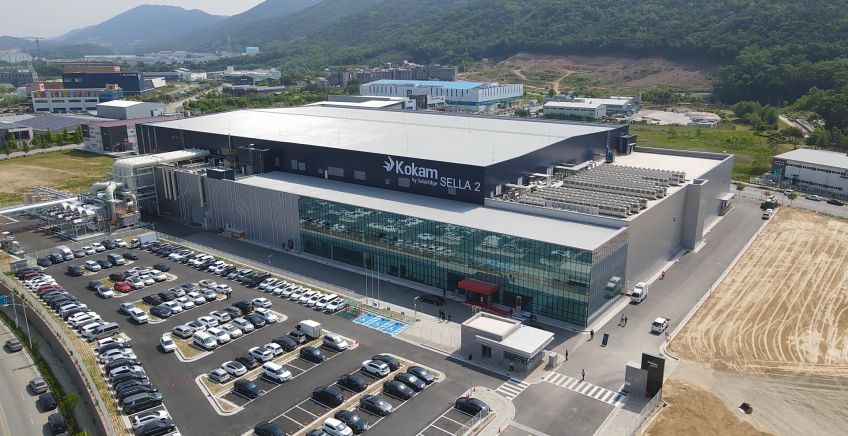
Photo above: SolarEdge’s “Sella 2” plant, a two gigawatt-hour (2GWh) battery cell manufacturing facility in Korea

SolarEdge Technologies announced today that as part of its focus on its core solar activities, it will cease all activities of its Energy Storage division. This decision will result in a workforce reduction of approximately 500 employees, most of whom are in South Korea. The expected quarterly operating expenses savings due to the closure are approximately $7.5 million with the full run rate expected to be achieved by the second half of 2025.

The Company intends to sell the assets related to the storage division activities including its manufacturing facilities for battery cells and packs. This does not impact the solar business sale of batteries for residential and C&I markets. Ronen Faier, Interim Chief Executive Officer of SolarEdge, said: “The decision to close our Energy Storage division represent continued execution of two of our main priorities: financial stability  and profitability; and focus on our core business lines of solar, PV-attached storage and energy management capabilities.”

The activity in Korea is based on Kokam, a local producer of Lithium-ion battery cells, batteries and energy storage solutions, which was acquired by SolarEdge  in 2018 for approximately $105 millions. Following the acquisition, SolarEdge opened in May 2022 Kokam’s second plant, “Sella 2”, a two gigawatt-hour (2GWh) battery cell manufacturing facility. The manufactured battery cells for SolarEdge’s residential solar-attached batteries as well as battery cells for a variety of industries, including mobile, energy stationary storage solutions and UPS.

Ending all Non-solar activities

During 2023 , SolarEdge continued to ramp up the manufacturing capabilities in Sella 2, and planned to gradually increase its manufacturing capabilities during 2024. The current descision marks an historic moment for the company: the completion of the exit from all the non-solar activities, such as UPS, e-Mobility and battery cell productions. The non-solar activity never took off and had remained bewlow 10% of total revenues.

At its peak, in 2023, it had reached $200 million sales, when total sales surepassed $3 billions. During the first nine months of 2023, Kokam’s sales totaled $51.9 million, out of  SolarEdge’s $730.7 millions sales. The market reacted to the news by sending SolarEdge stock price on NASDAQ 8.5% up, giving the company a market cap of approximately $861 millions.

Caught in a Perfect Storm

SolarEdge Technologies announced last week its intention to raise approximately $300 million by issuing convertible bonds to be offered to institutional investors. The bonds (not yet priced) are due in five years, on July 1, 2029. Underwriters will be given an option to purchase additional bonds worth $45 million. The current move stems from the company’s cash flow difficulties, which turned negative due to the downturn in the solar market. In fact, the current debt issuance is a kind of “debt refinancing” intended to increase its “cash cushion” ahead of the expected repayment of the company’s bonds worth $550 million. SolarEdge issued these in September 2020 and must repay them in September 2025.

In response to the announcement published after the NASDAQ close, SolarEdge’s stock is plummeting by more than 17% in pre-market trading, after losing about 86.5% of its value in the last 12 months. Another worrying sign of the negative business environment was received last weel, when the company reported to the SEC that one of its customers, PM&M Electric from Arizona, which provides solar panel installation services, has declared bankruptcy. The company owes SolarEdge $11.4 million.

Losing Money on Every Sale

SolarEdge’s Q1 2024 report, published a few weeks ago, illustrates its business and cash flow challenges. Along with a 79% decrease in revenue, the company recorded a GAAP net loss of $157.2 million. Its cash reserves shrank from $634.7 million at the end of Q4 2023 to just $316.3 million at the end of Q1. It also reported that its gross margin on sales in the solar market is negative: minus 3.5%, compared to a positive margin of 35% last year. This figure means that SolarEdge incurs a loss on every product it sells.

In a conversation with Techtime, Sergey Vastchenok, a senior analyst at Oppenheimer Israel, explained that the debt issuance announcement reflects a pessimistic forecast from the company, at least in the near term. “Due to its heavy expense structure, SolarEdge is burning a lot of cash, almost a billion dollars in the last year. The fundraising indicates that the company is not optimistic about a recovery later this year, and therefore it is raising capital to have a ‘cash cushion’ for repayment of previous bonds.”

Collapse of the Concept

Regarding the factors that brought it to this situation, Vastchenok says: “Many tend to attribute this to high interest rates, but in my opinion, this is a secondary factor. In the U.S. market, there is disappointment with Biden’s incentive program for renewable energy, which has only partially materialized, and in certain states, they have begun to impose restrictions on the amount of electricity that can be sold from solar panels. In Europe, the company’s main target market, electricity prices that were remarkably high at the beginning of the war in Ukraine and drove solar demand, have returned to normal levels. Also, in the European Parliament elections, the Green parties lost significant power. There is also increasing competition from Chinese players entering the market. This is truly a ‘perfect storm’ for SolarEdge.”

In his view, management led a flawed concept that collapsed in the past year. “SolarEdge grew too fast, and they did not properly assess potential risks. Throughout the solar market value chain, there was a phenomenon of inventory build-up that got out of control. The company built itself for sales of $5 billion, which was reflected in establishing factories, global expansion, commitments to subcontractors, and a too wide range of products. The faster you grow, the less efficient you are. When the market suddenly crashed, the company found itself with an unsuitable operational structure, which will take time to fix. SolarEdge is the last link in the food chain of the solar market – and it failed to anticipate the market downturn.”

Despite the plunge in the company’s value, Vastchenok does not believe that there will be a factor that will take advantage of the situation to promote a takeover of the company. “There is no incentive for such a move. Such takeovers occur in companies with lots of cash, good business conditions, and room for efficiency. This is not the case with SolarEdge. The recovery and efficiency process will take a long time and will be challenging.”

The background

The background to what is happening in the market is the sales crisis: SolarEdge closed the first half of 2023 with record revenues of $1.93 billion – and then the picture turned completely up side down: in Q3 the company reported a 27% decrease in revenues, and in Q4 it reported a 65% decrease in sales compared to Q4 2022, to about $316 million. The decline continued: in Q1 2024, sales totaled about $204 million – a 78% decrease compared to Q1 2023. Solaredge attributed the declines to inventory accumulation among its customers in Europe (responsible for more than half of revenues), and a general decline in the solar market.

Investors’ reaction to the stock exchange was extreme and persistent: at the beginning of 2023, the company’s stock was trading on NASDAQ at about $300. In March 2023, the collapse began, bringing the stock within about three months to a price of $70. Since then, the decline has continued at a more moderate but steady pace, and today it is trading at about $34 – almost a tenth of its price in February 2023.

Short-selling Attack

A Techtime enquiry revealed that the significant declines in SolarEdge’s stock are likely also related to a short-selling attack that the company is dealing with, which is being carried out with almost unprecedented intensity and volume in the technology industry. In these transactions, investors bet that the stock price will fall: they borrow a stock at a certain price, and upon closing the transaction, they return a stock to the lender – meaning they buy it at its market price. If the stock price falls, they profit; if it rises, they lose.

According to data from Benzinga, which centralizes information on short-selling transactions, about 23.4% of transactions in SolarEdge stock are short-selling transactions. This is a considerable percentage: the short-selling rate at SolarEdge’s main competitor, Enphase, which deals with the same market phenomena, is only about 13.3%, and even this is an exceptionally substantial percentage.

When comparing it to technology companies in other markets, the problem becomes apparent in its full extent: Intel’s short-selling rate is 2.19%, Nvidia’s is 0.12%, and Tesla’s is 3.65%. Even a company like Innoviz, another Israeli company that suffered a painful stock blow due to a misvaluation (during a capital raise), has a short-selling rate of only 8.07%. Moreover, at SolarEdge, this rate is on the rise: about a year and a half ago, it was only about 4.5%. Since then, it has been steadily and consistently rising, meaning there are buyers for the short-sold stocks returning to owners – and therefore the market is forcefully pushed to the bottom.