Meta Purchased Stratasys 3D Printers for Robotics and XR

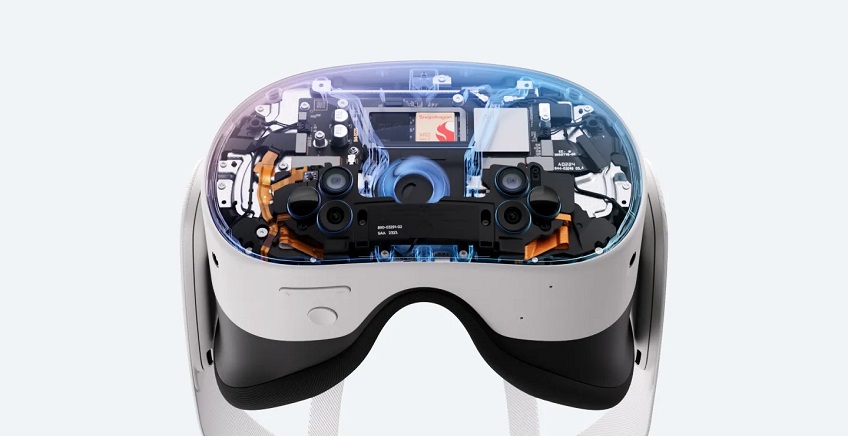
Image above: Meta’s Quest headset. Source: Meta

By Yohai Schwiger

During Stratasys’ third-quarter earnings call, CEO Dr. Yoav Zeif revealed that “one of the largest American technology companies — a global leader in social networks, artificial intelligence, and virtual and augmented reality hardware” — purchased four of the company’s new F3300 3D printers. While he did not name the customer, the clues unmistakably point to Meta, the parent company of Facebook, Instagram, WhatsApp, and the Quest headset line.

According to Zeif, the systems will initially support large-scale prototyping for the customer’s “automation platforms” and for developing “its next robot.” Over time, the same printers are expected to transition into production of end-use parts for the company’s XR devices. Zeif stressed that the customer ran a lengthy evaluation against competing solutions and ultimately chose Stratasys because of its ability to move from design to production on the same machine — a capability he described as critical for fast-cycle, globally competitive tech giants.

Meta’s Humanoid Project

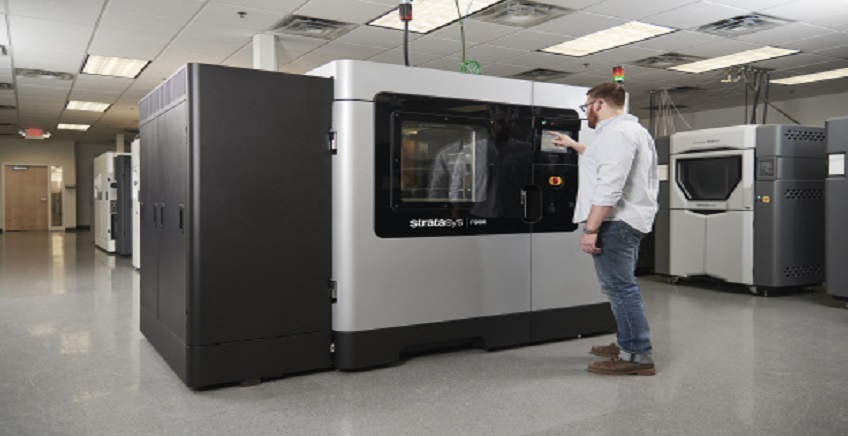
The F3300 units purchased are industrial-grade FDM systems with large build volumes, engineering-grade materials, and high long-term geometric precision. Practically, that means they can produce not only early-stage prototypes but also final, production-quality components for robotics platforms, camera housings, sensor mounts, and complex XR mechanisms. Choosing such machines suggests a need for equipment capable of producing thousands of identical parts at industrial standards, supporting internal automation pipelines that change frequently.

Over the past year, reports have indicated that Meta is developing an advanced humanoid prototype featuring tactile sensing, haptics, and AI-driven control systems. Research published by the company has shown a robotic hand capable of evaluating texture, friction, and stiffness, and Meta has been investing heavily in robotics for locomotion, manipulation, and complex task execution in dynamic environments.

Zeif’s reference to “automation platforms” likely points to Meta’s internal manufacturing and testing infrastructure — a sprawling ecosystem of robotics, sensors, and automated rigs used for module assembly, quality assurance, and rapid prototyping. This world of jigs, fixtures, manufacturing tools, and test stations increasingly relies on high-throughput 3D printing, enabling Meta to iterate mechanical elements at high frequency.

“We see enormous potential here,” Zeif told analysts. “The customer selected us after a lengthy evaluation. These printers passed the highest-level certifications and tests. They’re starting with prototyping, but moving quickly into production on the same machine — and that gives them a major speed-to-market advantage.”

Stratasys Printers in the U.S. Navy’s Trident Warrior Exercise

Stratasys posted a challenging yet steady quarter. Revenue came in at $137 million, down about 2% year-on-year amid ongoing caution in capital-equipment spending. Gross margin declined due to higher U.S. tariffs and a shift in product mix, but operating expenses fell meaningfully, resulting in $1.5 million in adjusted net profit. The company maintained positive cash flow, ended the quarter with roughly $255 million in cash and no debt, and reaffirmed its full-year revenue guidance of $550–560 million with modest Non-GAAP profitability.

Defense was a standout. Stratasys reported strong activity with Boeing, Embraer, Honeywell, TE Connectivity, and L3Harris. The company also participated in the U.S. Navy’s Trident Warrior 25 exercise, which tested distributed manufacturing and advanced maintenance capabilities across thousands of kilometers. Stratasys printers were deployed at seven global sites — both as forward positions producing critical components at the edge and as part of reach-back operations, where Stratasys Direct facilities supplied complex parts. All printed components met full military specifications, demonstrating how a hybrid production network can shorten supply timelines, reduce logistical dependence, and improve operational continuity for deployed units.

Stratasys also highlighted significant progress in the dental market, which it views as a major growth engine. The company appointed Chris Cabot, formerly of Affordable Care, to lead global dental operations. It launched new post-processing solutions that reduce manual labor and minimize reliance on harmful chemicals, and it removed TPO from its dental resins to streamline safety and future regulatory approvals.

Despite macroeconomic headwinds, Stratasys is positioning itself not just as a prototyping provider but as a partner in advanced manufacturing. The Meta-scale customer win, deepening defense-sector traction, expansion in dental, and a strong balance sheet all reinforce management’s optimism as distributed production, automation, and rapid development cycles increasingly become the industry standard.
Stratasys Rejected Nano Dimension’s Acquisition Proposal

Stratasys Board of Directors has unanimously rejected the unsolicited proposal it received from Nano Dimension to acquire Stratasys for $1.1 billion in cash ($18.00 per share). Stratasys announced last week that “Following a careful review, the Board concluded that Nano’s proposal substantially undervalues the Company in light of its standalone prospects and is not in the best interests of Stratasys and its shareholders.”

Stratasys is an additive manufacturing solutions provider with innovative 3D printing solutions for industries such as aerospace, automotive, consumer products, healthcare, fashion and education. Its 2022 annual sales totaled $651.5 million. Israel based Nano Dimension is a group of companies focused on rapid prototyping, high-mix-low-volume production solutions for the mechanical and electronics industries. Its 2022 annual sales totaled $31.5 million.

Yoav Stern, Chairman and Chief Executive Officer of Nano Dimension, said he is surprised by Stratasys’ response: “While we remain open to discussions, we are disciplined with regards to our growth strategy and will consider our options, relative to both Stratasys and alternative strategic acquisition targets currently under review.” During the recent weeks, Nano Dimension bought shares of Stratasys in the open market, until it had reached 14.5% ownership stake.

Aware to this quite move, Stratasys adopted in July 2022 a “poison pill” policy, under the name “Shareholder Rights Plan”. It was designed to reduce the likelihood that any entity, person or group would gain control of Stratasys through the open-market accumulation of the Company’s shares. It is yet unclear whether Nano Dimension will make another move to reach Stratasys. Nano Dimension itself is involved now in a bitter control struggle with some of its investors, led by the investments firm Murchinson, who seek to overthrow the CEO and take over the Board of Directors of  Nano Dimension.

Stratasys to print 500 parts for a renewed Lotus 62-2 racecar

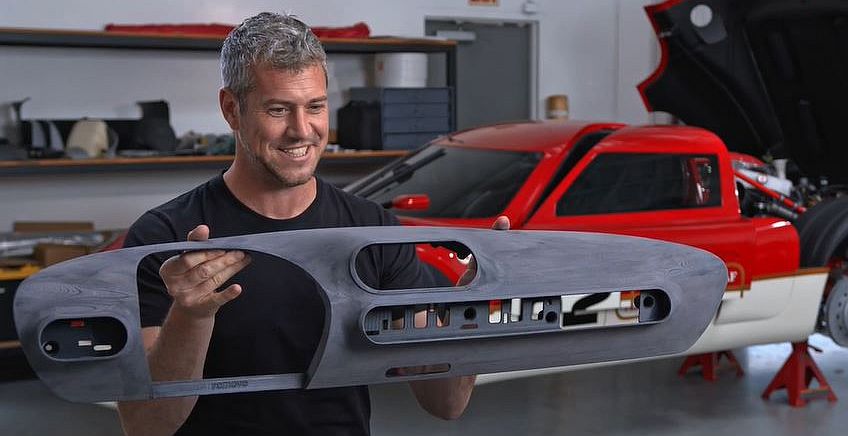
Stratasys Company manufactures over 500 3D-printed parts for the launch of the renewed Lotus Type 62-2, the legendary racecar. The car is being build by Radford, a global luxury automotive brand and is documented for the Discovery+ show that tells the story of the revival of the art of coachbuilding using technology for the 21st century. The project is led by the car builder and host Ant Anstead and former Formula One champion racecar driver Jenson Button, current owner of Radford Company.

Lotus Cars was a British automotive company that won the Formula One World Championship seven times, and is currently owned by Chinese multinational Geely. In the renewed version, only 62 units were created. The company turned to Stratasys to assist in building the cars for two major reasons: Create a car of less than 1,000Kg and provide the option of producing personalized parts for each client. Ansted: “Stratasys’ 3D printing technology gave us the design freedom and ability to easily create customized, one-off pieces and parts for these two prototype vehicles”.

Within current project, Radford utilizes Stratasys FDM®, PolyJet™, and stereolithography 3D printing technologies. The parts are designed using Stratasys’ GrabCAD Shop™ workflow software. As of today, two cars were built with over 500 3D-parts, using a fleet of up to 20 different Stratasys 3D printers at one time in five different global sites. For Stratasys – it was a genuine demonstration of distributed manufacturing. Among the printed parts were complex mounting features for interior speakers, a fuel filler mount and for the luggage compartment, side mirror housings, radiator ducts, body vents and more.

In the project, several industrial printers were used – F900®, F770™, Fortus 450mc™, F370® and J55™ 3D printers, each used to achieve different desired outcomes for each part. Among other, they were used to create large solid composite firewall sandwich core inside the car which provides passenger protection in case of fire. The automotive industry is a focal target market of Stratasys, and several customers demonstrated already how 3d printers are incorporated in this industry. For example, the Malaysian Solidify Company manufactures silicon rubber moldings that are used for a European automotive client whose car had gone out of production, but still required spare part supplies.

The Italian Skorpion Engineering Company is famous as a pioneer in advanced automotive prototypes and subsystems for luxury brands. Today, the company depends on its arsenal of Stratasys PolyJet and FDM 3D printers.

Canadian Solaxis Company uses Stratasys’ technology to print handles and other accessories that are used to compose car doors in mass production lines. The Spanish-Italian automotive design studio Italdesign purchased the Stratasys J750 printer, through which it manufactures the complete interior parts of the DaVinci concept car that was built to celebrate the 500th anniversary of Leonardo DaVinci.  Continental Company, a leading provider of car components, integrated the Stratasys Fortus 450mc printer in its production line, in order to mass-produce replacement production tools and parts. 

The technologies behind the operation to separate conjoined twins

About a month ago, a unique surgery to separate head-conjoined twins was performed at the Soroka-University Medical Center in Beer-Sheva, Israel. The twins that were born at Soroka in August 2020, jointed at the occipital part of their heads. This condition cause them to be almost handicapped, preventing them from freely move their body, crawl and normally developed.

An operation aimed to separate head-conjoined twins (medically called Craniopagus Twins) is considered highly rare and complex, and as of today – only 20 operations of this kind has been carried out. In this specific case, additional level of complexity was added, as some of the blood vessels at their cerebral cortex were coiled in each other, and some were even been used by both twins. In order to overcome this challenge, the medical team had to perform a detailed, precise mapping of the interfacing points between the babies.

CAD files of the brain

Mickey Gideon: “This case is about twins, conjoined not only with their head, but also with the Craniospinal compartment, the meninges and brain blood vessels. The main challenge was to understand which blood vessels are important to which twin – and to preserve them”. The learning and mapping processes were based on two types of three dimensional models: a physical one, printed with a 3D printer, and a virtual model – created by virtual reality (VR) technology. Both models were based on images from MRI, CT and angiography scans that simulated the complexity of the connection of the blood vessels, meninges, skull bones and skin of the twins. “Technology had central role in this operation. It provided us with the ability to merge the data and build 3D models which, in turn, enabled us to see the interface between the twins”.

The physical 3D model was built using 3D4OP technology and a 3D-Printer manufactured by Stratasys. 3D4OP was established and managed by Limor Haviv. This company developed technology to support the process of operation planning, using CT and MRI imaging to build a detailed CAD model of the target area, to include exporting CAD files in order to later print the models from polymer. This technology also supports the planning and printing of orthopedic transplants and even designated facilities tailor-made for a single patient. Those virtual models were transferred to medical printer developed by Stratasys, using polymer materials mimic the physical characteristics of tissues such as skin, bones, muscles, blood vessels etc.

The doctors used the physical models to plan the process of the surgery, and furthermore: they used it to practice their actions such as drilling and cutting. In parallel, the doctors were assisted in the virtual model created by Surgical Theater’s technology. This technology utilizes VR algorithms to construct a virtual model of the area based on CT and MRI imaging. This model provides the capability of better planning the procedure in a VR environment, where the users can enlarge specific areas, change watching angles and achieve clear insights regarding critical aspects such as optimal position and order of activities.  

Watch: The virtual model created by Surgical Theator:


Technology and medicine should cooperate

The model created by Surgical Theater’s technology made it possible for the surgeons to exactly map the routes of the coiled blood vessels in the interface area between the twins, something that otherwise was impossible to be achieved using standard imaging technologies. This virtual model was even in use during the operation itself, assisting them to navigate precisely within the joint area.

Gideon: “Using the virtual model we were able to observe the blood vessels from various angles, plan the procedure ahead and train ourselves in a VR environment. For instance – by using this VR technology we came to the decision that the procedure should begin when the twins are lying on their back”.

“The Israeli technology companies are groundbreakers, and the cooperation between them and the doctors should be tightened. Currently, we experience some break between these worlds. It is important for the companies to consult the doctors early in the requirement characterization, development and proof of concept phases. As the final users – joining the doctors with the processes will assist in deploying these technologies in the operating rooms.

U.S. Navy to deploy 25 of Stratasys 3D printers

The U.S. Navy has issued Stratasys a $20 million contract to purchase up to 25 Stratasys F900 3D printers over the next five years, with delivery of the first eight expected before the end of 2021. In addition to the printers, the contract includes initial support and sustainment, materials, and development of initial training for the supplied systems.

The printers will be located on bases in the United States and Japan with the potential to be used to produce end-use parts, tooling and training aids, as well as to assist the Navy in achieving its goal of using distributed additive manufacturing practices to maintain its fleet of aircraft across bases worldwide.

The U.S. Department of Defense (DoD) issued a report in January 2021 outlining its additive manufacturing strategy. The report explained how manufacturing is undergoing a digital revolution, and the important role additive manufacturing can play in a shift to a digital manufacturing ecosystem.

In particular, additive manufacturing can help modernize the national defense systems, increase materiel readiness, and enhance warfighting innovation and capability. Among other objectives, the DoD set a goal of integrating additive manufacturing into both the department and the broader defense industrial base, while advancing and promoting the agile use of 3D printing.

“The benefits of additive manufacturing for military organizations like the U.S. Navy include cost-effectively extending the life of strategic and tactical assets like aircraft while ensuring sustainment activities can happen quickly and from virtually anywhere,” said Mark Menninger, director of U.S. Government Business Segment for Stratasys. “This contract, the largest government project for Stratasys to-date, continues to expand the presence of industrial 3D printing from Stratasys across the U.S. government.”

Stratasys eyes the new market of “Additive Manufacturing 2.0”

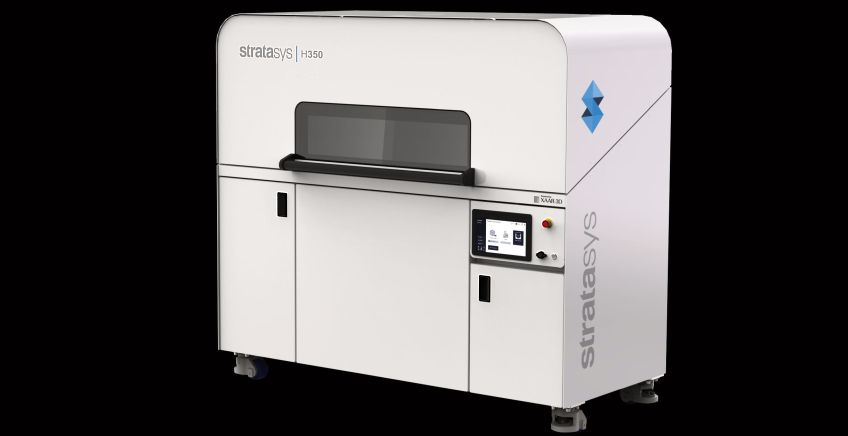
Above: Stratasys H350 3D printer is designed for the production of thousands of parts

Stratasys introduced three new 3D printers for additive manufacturing of end-use parts in low-to-mid-volume production applications underserved by traditional mass-production methods. “We are accelerating into the Additive Manufacturing 2.0 era,” said Stratasys CEO Dr. Yoav Zeif. “The disruptions we are seeing today on both the supply and demand side of global supply chains are a clear sign that the status quo isn’t working.

“Additive manufacturing gives companies the total flexibility to decide when, where, and how to produce parts.” Last year, Stratasys accrued more than 25% of its revenue from manufacturing-related applications. Stratasys estimates that its manufacturing revenue growth will outpace other segments, growing at an annual rate of over 20% starting in 2022.

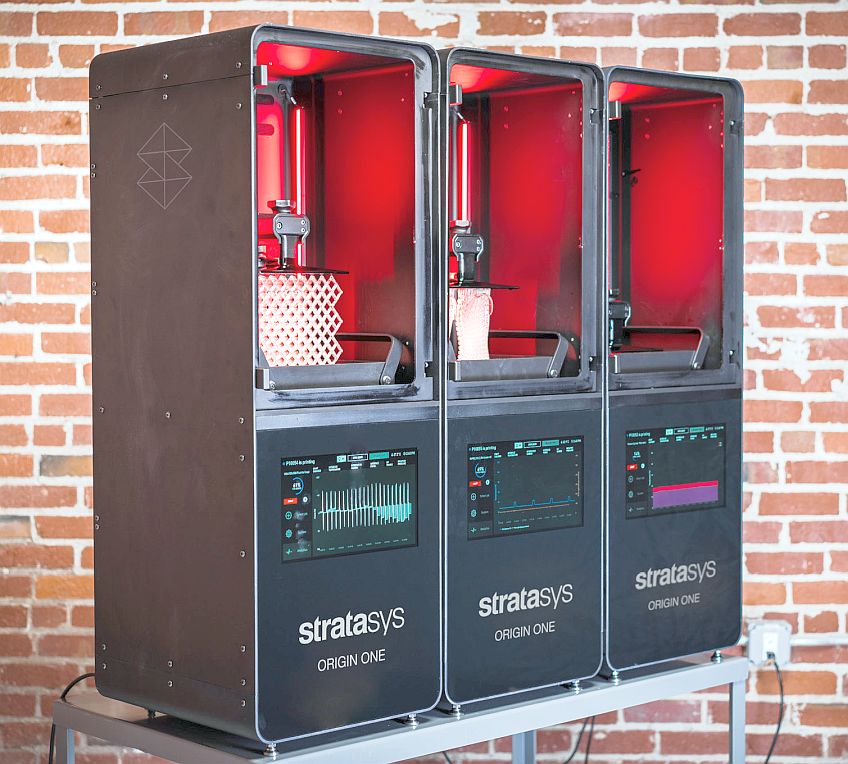
Stratasys Origin One 3D printer uses proprietary P3 technology. It cures liquid photopolymer resin with light and capable of printing thousands of parts reaching details less than 50 microns in size with high-accuracy materials. TE Connectivity is using this printer. Internal Stratasys estimates suggest a $3.7 billion market opportunity by 2025 for the production-oriented segments suited to the Origin One, including automotive, consumer goods, medical, dental, and tooling applications. Stratasys plans to begin taking orders for the printer beginning in May 2021.

Stratasys also introduced the H350 3D printer, the first 3D printer in Stratasys’ new H Series Production Platform that delivers production-level throughput for end-use parts. The H350 printer has been in beta testing since early 2021 with service bureaus and contract manufacturers in Europe, Israel, and the United States, including Stratasys Direct Manufacturing, which is now selling parts on demand using the system. Applications include end-use parts such as connectors, cable holders and electronics housings.

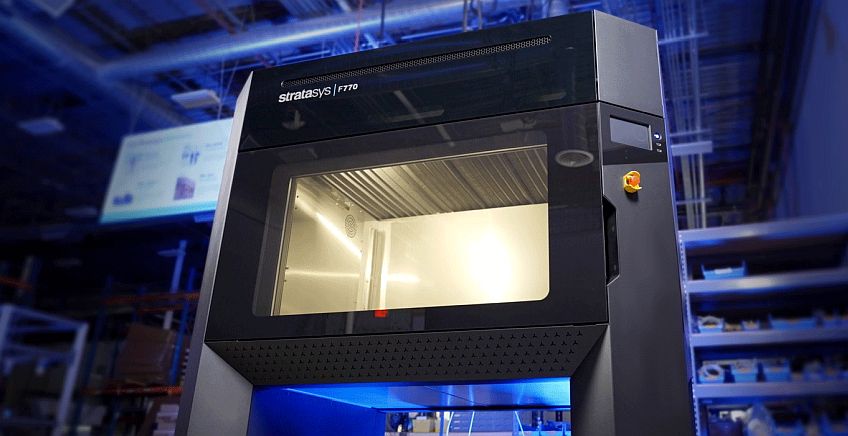
The third new system, the F770 3D printer, builds on Stratasys’ FDM technology. Aimed for big industrial-grade parts, this newest printer features the longest fully heated build chamber on the market and a generous build volume of over 13 cubic feet (372 liters). The new system, priced under $100,000, is designed for prototyping, jigs and fixtures, and tooling applications requiring standard thermoplastics.

Stratasys is looking for Production Technologies

Stratasys plans to make a strategic move and shift its focus from prototyping-oriented technologies into full scale production. “Stratasys today leads the industry with the largest share in material extrusion and material jetting through our FDM and PolyJet technologies,” said the CEO Yoav Zeif (pictured above), during a conference call after the company had reported disappointing Q2 2020 results.

“However, these two technologies currently address only about one-third of the total additive manufacturing hardware opportunity. Further, their growth rates have slowed in comparison to the growth rates of other technologies that suit the needs of faster growing applications, especially in production.” Stratasys ended the quarter with a net loss of $28 million, joining a loss of $21.7 million in the first quarter – a total of $50 million in H1 2020.

COVID-19 hit the entire 3D Printing Market

This weakness characterizes the entire 3D printing market: Stratasys’s main competitor, 3D Systems, also reported a double-digit decline in revenue and losses in the last two quarters. Among other things, this is the result of COVID-19 crisis that led to a downsizing of many equipment purchasing plans in key industries around the world.

“We have already started the journey into true manufacturing,” added Zeif. “There are over 100,000 Polymer parts flying today that have been printed on Stratasys systems. Therefore, to help us win in these faster growing areas, we will invest organically and inorganically in new Polymer technologies such as PBM, VAT Photopolymerization and others.”

In PBM – Powder Bed Fusion technology –  a powdered polymer is solidified using a heat source such as a laser or a thermal print head. In VAT Photo Polymer technology, a solution of a light-sensitive polymeric substance is solidified by exposing it to ultraviolet radiation. Zeif revealed that in order to implement this strategy, the company is considering to acquire companies that specialize in these technologies.