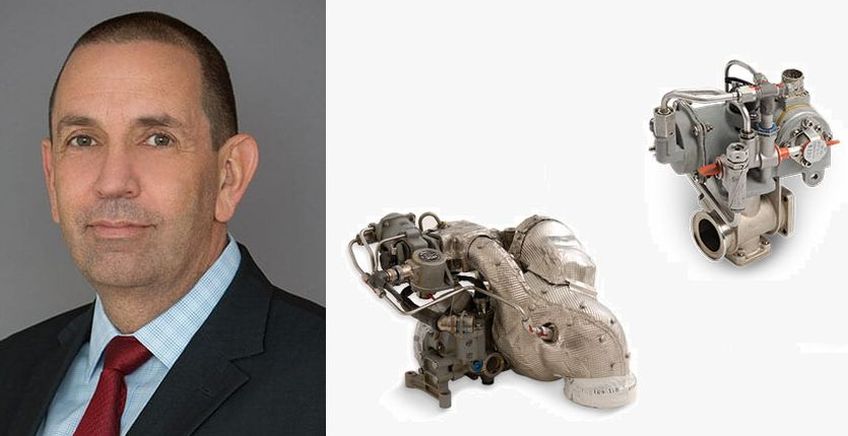
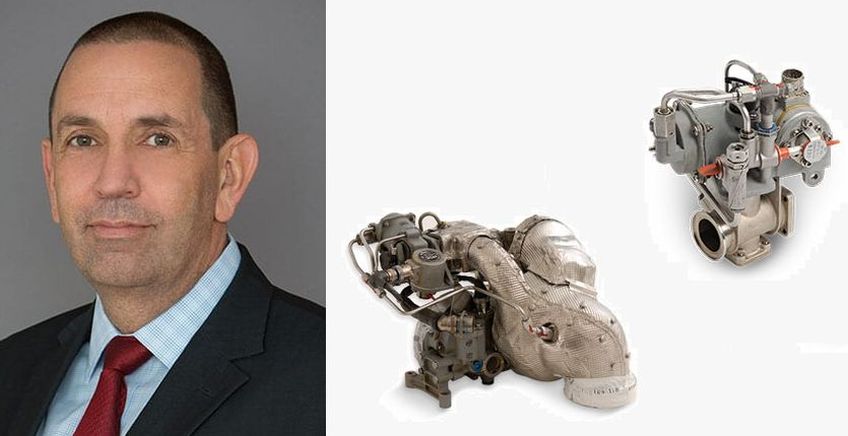
[Image: TAT CEO Igal Zamir alongside power modules supplied by the company for F-16 aircraft]
TAT Technologies reported record results for 2025, continuing its growth trajectory in revenue, profitability, and backlog — but also warned that ongoing and worsening supply chain disruptions could weigh on near-term performance.
According to the company’s annual report released last week, fourth-quarter revenue reached $46.5 million, up 13% year-over-year. For the full year, revenue grew 17% to $178 million, alongside a sharp improvement in profitability: net income rose by about 50% to $16.8 million, while adjusted EBITDA reached $25.5 million, representing 14.3% of revenue.
Demand trends remained strong. The company’s backlog and long-term agreements increased to approximately $550 million, up from $429 million at the end of 2024. Management noted that the growth in backlog was driven בעיקר by new contracts and long-term agreements, rather than deferred work.
At the same time, TAT continues to shift toward maintenance, repair, and overhaul (MRO) services, which now account for more than 71% of revenue. This reflects broader industry dynamics, including extended aircraft lifecycles and delays in new aircraft deliveries, which are driving sustained demand for maintenance services.
The Bottleneck: Supply Chain Constraints
Beneath the strong financial performance, however, lies a significant operational challenge. During the earnings call, management emphasized that supply chain disruptions — which had shown signs of improvement earlier in 2025 — worsened again in the fourth quarter and continue into 2026.
According to CEO Igal Zamir, the impact is most pronounced in two key areas: auxiliary power units (APUs) and landing gear — both complex systems that depend on the availability of numerous components and sub-parts.
“In the last quarter, it completely reversed,” Zamir said. “All of a sudden, we are facing challenges again, especially in APUs and landing gear, with dramatically extended lead times and no advance warning.”
He added that the issue is not necessarily a broad shortage, but rather the unavailability of specific parts — which can delay entire systems:
“When it comes to an engine, there are hundreds of different parts that we need… all it takes is one bolt or one seal or one screw that we need to replace, and we cannot send the engine.”
The implications are both operational and financial. In some cases, the company is forced to procure parts on the open market at higher prices than under contractual terms, putting pressure on margins. Longer turnaround times can also delay revenue recognition.
In addition, management pointed to another structural constraint: a shortage of teardown aircraft, which typically supply used serviceable material (USM). These refurbished components are a key element in the economics of APU maintenance. As airlines continue to keep older aircraft in service, the supply of such parts remains limited.
Looking Ahead: Strong Demand, Supply-Dependent Execution
Despite these challenges, TAT remains optimistic about 2026. The company reported strong intake levels at the start of the year, with demand for MRO services continuing to grow.
The outlook is supported by several factors: a record backlog, newly signed long-term agreements, and a global aviation market that continues to expand while relying more heavily on existing fleets. In addition, TAT’s financial position — including over $50 million in cash and low debt — provides flexibility to invest in growth and pursue acquisitions.
However, management made clear that while demand is not a constraint, execution remains closely tied to supply chain conditions.
“We do not yet see a broad recovery in overall supply chain performance,” Zamir said, adding that the company nonetheless enters 2026 “from a position of strength.”