Nano Dimension to open new Ink production facility

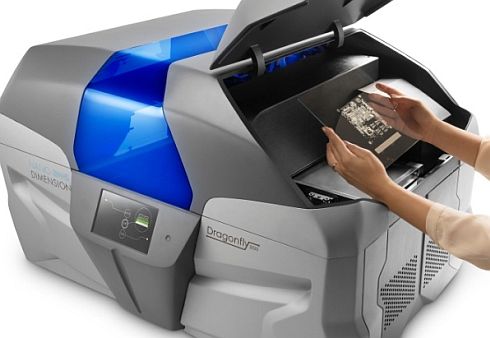
The new facility will built by the company’s subsidiary Nano Dimension Technologies Ltd will produce the company’s “nano-ink”. The construction of the plants marks another stepping stone towards commercial distribution

the DragonFly2020
the DragonFly2020

Nes Ziona, Israel based Nano Dimension announced today, that its subsidiary Nano Dimension Technologies Ltd will open a production facility for the company’s unique nano-ink products. The facility is located in Ness Ziona, in the same building as the company’s headquarters. The facility will feature advanced technological solutions in the chemistry and production fields, will meet high quality control standards and will cover an area of approximately 8600 square feet and will be able to support hundreds of printers.

Today’s announcement is another stepping stone towards the commercial distribution of Nano Dimension’s PCB 3D printer. Recently, Techtime reported that the company’s PCB printer, the DragonFly2020 has been supplied to a major, unnamed Israeli defense company for beta use. A successful pilot in the demanding defense market could open the gate to more customers. The opening of an ink facility which can support hundreds of printers shows that Nano dimension is confident in the success of its product.

Nano-ink – the fuel for a revolution in PCB production?

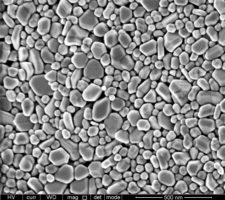
Silver nano-particles

Nano Dimensions developed the Dragonfly, a 3D printer enabling the use of advanced nanoparticle conductive and dielectric inks for rapid prototyping of complex multilayer printed circuit boards (PCBs). The process is based on the use of polymeric materials to create insulating layers, and conductive silver ink for the electrical conductors.

The sintering of material is usually done using laser rays, while curing is done by heating. These two processes are carried out separately, in number of different mechanical and complex systems. Obviously, this separation slows down production. The maintenance of several complex systems increase production costs.

Nano Dimension’s new technology combines the two processes thus reducing the number if critical systems in a printer and thus allows for a significant reduction in production costs of the printer, increased printer speed, system miniaturization and increased system reliability.

The combination of the two processes is possible due to the unique chemical structure of the inks, both of which are developed and manufactured in the company’s in-house laboratory. Nanoparticles in the ink absorb radiant energy, causing a plasmonic effect on the surface of the nanoparticle. The plasmonic waves are immediately converted into heat, which causes the fusion of silver nanoparticles due to the high surface energies at the nanoscale. This sintering process results in a final uniform metallic trace.

A new Israeli player in the autonomous car arena: Foresight

The system developed by Foresight has a stereoscopic 3D mapping capabilities. The company has recently concluded a testing phase, proving the system’s feasibility1

Herzliya, Israel based Foresight, a developer if ADAS systems, announced it has completed an advanced testing phase of its prototype. The system, which has undergone various tests during the last few months is based on video processing and 3D technology.

Foresight says “it has crossed a crucial threshold in the development of the system”, and that the chances for completion of the development phase and of future commercial distribution have increased considerably. The company intends to continue the work on its prototype, showcasing it to potential customers.

Foresight’s system is, uniquely, comprised of two video cameras mounted on the vehicles front, supplying stereoscopic vision capabilities – not unlike human vision – of the road and the surroundings. A specialized software installed in the car, processes the collected data using the company’s algorithms, supplying the driver with real time alerts. The company’s technology can map objects as small as 50cm.

Foresight's technology is based on defense technology
Foresight’s technology is based on defense technology

The origins of foresight’s technology lie not in the automotive industry, but in Israel’s thriving defense industry. The company was founded last year, and is a subsidiary of Magna BSP, an Israeli defense technology company. Magna has developed an Electro-Optic radar system for perimeter security of borders and sensitive installations and infrastructure.  Foresight’s ADAS system is based on the same unique technology used in Magna’s novel radar system – stereoscopy. Both perimeter security radar and ADAS system function similarly – two cameras cover the same field, thus supplying outstanding panoramic 3D imagery.

Similarly to Mobileye, Foresight intends to “make it” in the autonomous car arena, which is based on artificial sensing technologies. In a presentation for investor released by the company today, the company repeatedly noted that it aims to develop technologies which could be used in autonomous driving as the field is moving to higher degrees of autonomy.

Is foresight’s System better than Mobileye’s?

Foresight’s system has undergone a long series of tests in the last few months. These were intended to test the systems capabilities. The tests were held in southern Israel, and included many possible scenarios including glare – a phenomena known to reduce the capabilities of current ADAS systems. The company reported that all the system’s modules were working at the same time, and that the system supplied visual and vocal alerts early enough to enable the human driver to react and avoid the dangers. The current test were conducted in daytime, and Foresight is now moving on to test the system at nighttime and difficult light conditions.

Part of the testing was a comparison between Foresight’s system and another, undisclosed system (Mobileye’s ADAS?), and according to the company, its system scored better results.

Israeli AI analyst developer Revuze raises $4 million

The company applying artificial intelligence in the field of brand and product management raised $4 million. The company opens offices in San Francisco and New York Cityrevuze2

Revuze, an Israeli startup applying Artificial Intelligence technology in brand and product management has raised $4 million in a seed round, led by investors Nielsen, the NPD Group and TIC Group. Revuze announced it is entering into business development partnerships to introduce its AI-led technology to its investors’ customers. On the back of this investment, the company is expanding its U.S. operations by opening offices in San Francisco and New York City.

Revuze uses AI, powered by neural networks and machine learning, to empower the brand and product management industries that previously have relied on manually intensive solutions, such as text analytics, social listening and monitoring. These current solutions, requiring months to execute, demand teams of product experts, data scientists and analysts to construct and maintain rules, dictionaries and taxonomies before interpreting the findings. This process is slow, expensive, inefficient and easily skewed by misunderstanding or misinterpretation. Revuze removes these limitations, directly addressing the biases and other shortcomings of those managing such extreme volumes of data.

Revuze aims to provide customers with a simple solution based on contextual understanding and intelligence, Sentiment Analysis and machine learning. These are implemented in order to provide customers comprehensible, single screen data about customers and trends. “Revuze is transforming the way that companies track their corporate and product brands through the introduction of AI,” saidJohn Burbank, President, Strategic Initiatives, at Nielsen. “Now, they can easily gain detailed market and consumer intelligence, which enables them to be far more responsive to consumer perception and feedback.”

Revuze was founded by Ido Ramati, Eyal Strasburg and Yair Almog The company “graduated” from the Nielsen early-stage technological incubator, focusing on  market research, consumer behavior, data analytics, marketing and advertising solutions, campaign effectiveness measurement, big data, social, mobile and new media.

Startasys demonstrates new robotic printer for aerospace and automotive manufacturing

The new printer, designed to print large scale components for aerospace and automotive manufacturing, was developed in cooperation with industry giants Ford and Boeing. The new technology could accelerate the spread of new production technologies

Stratasys Infinite Build 3D Demonstrato

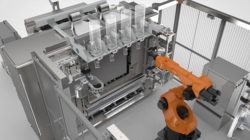
The company unveiled an industrial solution which is focused on two of the world’s most demanding industries: the automotive and aerospace industries. The system was developed in cooperation with automotive manufacturer Ford and Aerospace Boeing. The new systems edge leis in its ability to print components in any size, from a wide range of materials. Startasys’s new printer is so flexibale in the issue of size due to a technological breakthrough – vertical printing.

8 dimensional manufacturing

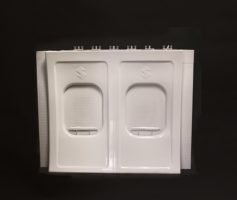
an aircraft panel printed using Infinite Build technologyStratasys dubbed its new technology Infinite Build. The technology quite literally turns current printing methods “on the side” – the ability to print vertically virtually lifts any limitations on the scale of objects printed by the novel 3D printer. “Additive manufacturing represents a great opportunity for Boeing and our customers, so we made a strategic decision more than a decade ago to work closely with Stratasys on this technology. We are always looking for ways to reduce the cost and weight of aircraft structures, or reduce the time it takes to prototype and test new tools and products so we can provide them to customers in a more affordable and rapid manner. The Stratasys Infinite-Build 3D Demonstrator enables products to be made at a much larger and potentially unlimited length, offering us a breakthrough tool to add to our robust additive manufacturing processes,” said Darryl Davis, President, Boeing Phantom Works.
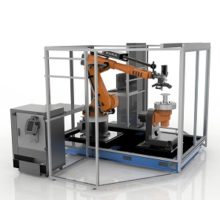
Stratasys Robotic-Composite 3D Demonstrator

Together with the novel Infinite Build printer, Stratasys demonstrated a robotic printer developed in cooperation with Siemens. The Robotic Composite 3D Demonstrator delivers true 3D printing by using an 8-axis motion system that enables precise, directional material placement for strength while also reducing the need for speed-hindering support strategies. The unveiling of two industrial manufacturing technologies developed in cooperation with industrial giants is a further push by Stratasys to make additive manufacturing a common technology in large scale industrial production.

The Infinite Build printer is currently in development – a prototype will be demonstrated at the international manufacturing fair 2016IMTS in September. Stratasys has not yet published a road map or a timetable for commercial distribution. Nevertheless, the breaking of the “size barrier” is undoubtedly of great importance, and could prove to be a major stepping stone in what many perceive as a virtual industrial revolution.

IC Insights: “Tower-Jazz’s Sales forecast to surge in 2016”

Israeli Tower-Jazz will become the world’s 5th largest pure-play chip foundry thanks to a yearly 35% compound annual growth since 2013. In 2016, the company will is forecasted to display the highest growth rate amongst chip producers

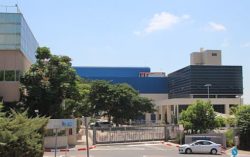
Tower-Jazz's Migdal Haemek plant
Tower-Jazz’s Migdal Haemek plant

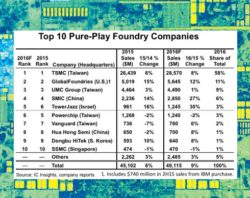
The pure-play foundries market is growing at a faster pace than the global semiconductor market as a whole. This is one of the insights from IC Insight’s report ranking the 10 leading foundries. The pure-play market has grown by 17% sin 2014’ compared to a 9% of the global semiconductor market.  In 2015 the numbers were less impressive, but still – the pure-play foundry market showed a 6% increase, about one-third the rate of growth in the previous year, but seven points higher than the total IC market growth rate of -1%.

The Data collected in 2-16 shows that the foundries market is much more centralized than the already centralized semiconductor market. The ten leading pure-play foundries hold 95% of the market, while the first four players – SMIC, TSMC, GlobalFoundries and UMC control a staggering 84% of the pure-play market. But even these figure are not telling the whole picture – TSMC, the world leading pure-play foundry controls 58% of the global market, thanks to an impressive leap from $1.5 billion revenues in 2015 to $2.1 in 2016.

The three remaining giants are expected to hold their power – 25% of global market. In this state of affairs, what chances does an Israeli producer have? According to IC Insights, the chances are great. “The two top-10 pure-play foundry companies that are forecast to display the highest growth rates this year are Israel-based TowerJazz, which is expected to edge-out Powerchip for the 5th spot in the pure-play foundry ranking in 2016, and China-based SMIC, with 30% and 27% sales increases, respectively. “TOWERJAZZ-2

The research company expects TowerJazz to grow from $505 million in sales in 2013 to $1,245 million in 2016, a compound growth rate of 35%, while SMIC is forecast to more than double its revenue from 2011 ($1,220 million) to 2016 ($2,850 million) and register a 19% CAGR over this five-year time period. Tower-Jazz is exceptional in another aspect – together with American GlobalFoundries, the company is one of two non-Asian companies in the prestigious list.

Sleeping dragons

For the time being, the Chinese dragon has not overtaken the field of pure-play foundries, Chinese foundries are forecasted to control a mere 8.2% of global markets, a 5.1% decrease compared to 2007, when companies from the People’s Republic held 13.3% of the market. According to IC Insights, this is only a temporary absence. The research institute believes that the total Chinese company share of the pure-play foundry market will increase through 2020, as the China-based foundries take advantage of the huge amount of government and private investment that will be flowing into the Chinese semiconductor market infrastructure over the next five years.

Rafael takes part in Lithuania’s military buildup

In the largest deal in Lithuanian military history, the Baltic State’s armed forces acquire 88 armed vehicles from a German-Israeli-Dutch consortium, for more than Euro 385 million

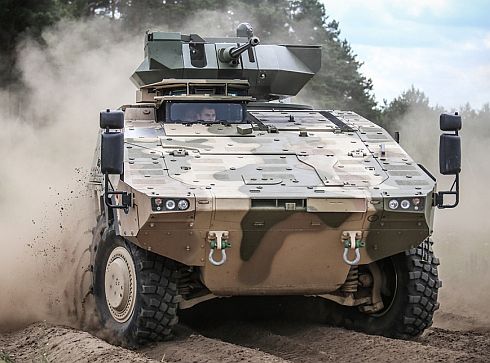
The Boxer APC is equipped with Rafael's turret
The Boxer APC is equipped with Rafael’s turret

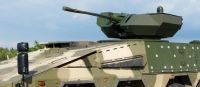
The rising tensions on Russian borders are of great concern for its small Baltic neighbors, fearing a fate similar to that of the Ukraine. On the backdrop of the growing rift between Russia and the west, Lithuania is completing its biggest ever arms deal, intended to build up its military power. The Euro 385.6 million order signed in Aug 23 contracted the Rheinmetall-Krauss-Maffei Wegmann joint venture ARTEC to supply 88 armed vehicles, equipped with Israeli defense system developer Rafael’s Samson MK II turrets.

The Vehicles ordered by the Lithuanian armed forces will have Rafael Samson MK II remote weapon stations armed with 30mm automatic cannon and Spike LR anti-Tank missiles. Rafel’s turrets have a very low silhouette and a unique under-armor reloading system increasing crew survivability.

A Dutch-German APC

The Lithuanian armed forces chose Rheinmetall-Krauss-Maffei Wegmann joint ventur’s Boxer wheeled armored infantry fighting vehicle, produced by Munich based ARTEC GmbH, a subsidiary of the joint venture.

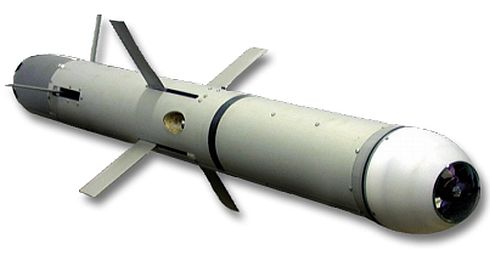
Rfael's Spike missile
Rfael’s Spike missile

For this project, a German-Israeli-Dutch consortium was established, which priced each vehicle at the cost of $4.38. The APC’s will supplied bin 2017-2021.

Rafael’s Spike-LR missile is defined as a multi-purpose fire and forget guided missile. It is used by infantry and light combat vehicles such as the Boxer. The missile adds fiber-optic communication to and from the launching soldier during flight and has a reported armor penetration capability is more than 700 mm (28 in) of Rolled homogeneous armor (RHA).

The Russian Bear lurks behind the border

The APC’s specifications were developed in cooperation with the OCCAR – Organization for Joint Armament Cooperation – a European intergovernmental organization which facilitates and manages collaborative armament programs through their lifecycle between the nations of Europe.

In its official statement, the Lithuanian Ministry of defense noted the unusual speed in which the contract was prepared “The contract and the Lithuanian entry into the BOXER Program were prepared by Lithuania, Germany, the Netherlands, OCCAR and ARTEC in less than eight months between January and August 2016”, an unusual phenomena in the European autocratic landscape.

The military cooperation with other European nations stands in the core of Lithuania’s defense doctrine. The rising tensions with Russia have led to the deployment of European and NATO forces in the Baltic state. These take part in the active defense of its borders against Russian airspace infringement.


The lightning does strike twice: DSPG found its way again into a Samsung Flagship Device

A year after DSPG’s HDClear chip was integrated into Samsung’s Galaxy S7, the company’s voice enhancement processor entered Galaxy Note 7

Smasung's Note 7
Smasung’s Note 7

By Orna Gadel, Techtime

Israeli DSPG managed to make its DBMDB4 voice enhancement processor part of Samsung’s new flagship smartphone – the Galaxy Note 7. This is the second time that DBMDB4 finds its way into a Samsung flagship smartphone, and the third time Samsung chose it for its high-end device.

It seems that bit by bit, the Israeli based company is enlarges its footprint in the mobile market, while the Samsung connection is beginning to look and feel like a long term partnership.

This is a relatively new alliance: In November 2015, it was revealed by Techtime that Samsung included DSPG’s voice processor in its Gear S2 smartwatch . About six months ago, it came out that the company’s new generation of HDClear processor, dubbed DBMD4, was integrated into Samsung Galaxy S6 released in the beginning of 2016. The S7 was one of Smasung’s highest rated devices.

For DSPG, this is an amazing feat. The device is not only a flagship device of one of the world’s most important producers, but (as Techtime has learned), it was integrated into the main version of the smartphone. Samsung has decided to make two versions: one is based on Qualcomm Snapdragon processor to be distributed in the US, China and Japan, and a second version is based Samsung’s own processor to be distributed in the rest of the world. DSPG’s processor was chosen for the more important Qualcomm’s version.

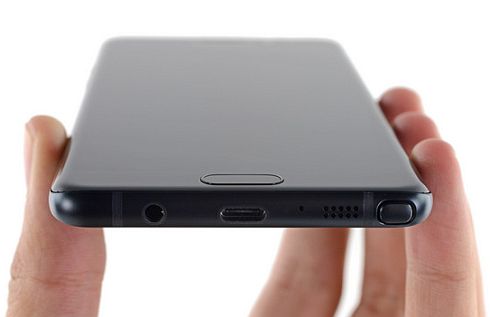
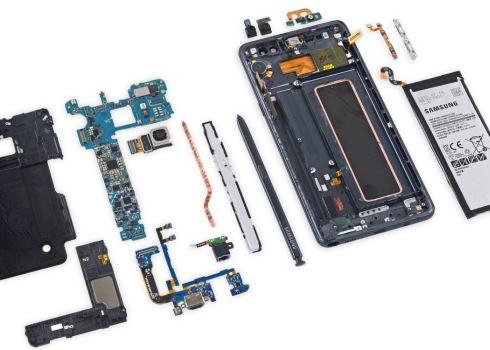
The Note 7's after being dismantled by iFixit
The Note 7’s after being dismantled by iFixit

Note 7 under the hood

This month, without any warning, press release or celebrations, DSPG processor has found its way into yet another of Samsung flagship devices: the Note 7. This advanced smartphone features a 5.7 AMOLED screen and HDR video support. It is based on Qualcomm Snapdragon 820 processor, the Adreno 530 GPU graphic processor, 4GB RAM and 64GB of storage. The Note 7 also features high security applications such as identification based retina scan and IP68 waterproof standard.

Even the Stylus pen is waterproof: if the need arises, one can write underwater notes. A few days ago, the engineering website iFixit undertook the delicate operation of dismantling Note 7 to reveal its secrets. After a careful work, the team exposed its main PCB double sided motherboard.

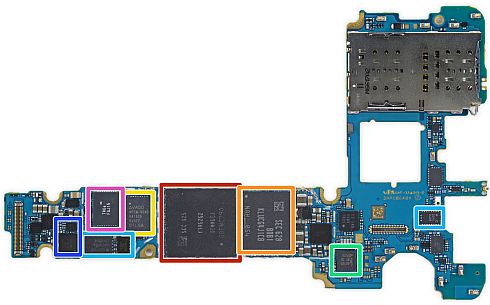
The motherboard
The motherboard

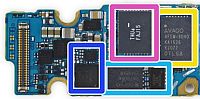
The major elements are mounted in its upper side, alongside Snapdragon 820 processor. The processor is hidden beneath a Smasung 4GB memory chip (red square in the picture above). It also includes a 64GB Samsung Flash memory (orange), Avago wireless module (yellow), NXP NFC controller (green), two Qorvo RF modules (light blue). A Murata wireless module (purple) and the Audio corner (blue). The “audio corner” which contains two chips: WCD9335 Qualcomm decoder, and DSPG DBMD4 voice processor.

DBMD4 supports analog and digital microphones, and has a full development suite for android based devices. The processor is based on TrulyHandsfree, Sensory and Google Hotword operating platforms. Most important: it releases the main Application Processor from the need to perform audio and voice tasks.

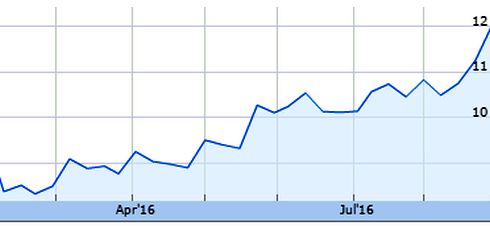
DSPG-STOCK
DSPG Stock in NASDAQ

The investors comes back

The evolving relationship with Samsung does DSPG good. Analysts and traders see the integration of DSPG’s components in three Samsung high-end devices as a vote of confidence and a sign of things to come. This positive sentiments may very well be the force behind the improving DSPG stocks in NASDAQ.

In February, DSPG’s stock was traded for $8.1. Early in March came the Samsung S7 news, and the company’s stock began to rise and this week it reached $12, giving the company a market value of approximately $267 million. If the stock performance is the result of Samsung-DSPG cooperation, than it is a clear sign that the investors no longer measure DSPG according to its traditional and declining market – the DECT wireless phone market.