
Cognex to Acquire RealSense for $500 Million
22 September, 2026
The machine-vision company is acquiring the Intel spinout to expand into robotics and Physical AI, with up to $106.5 million earmarked for employee retention and equity awards
By Yohai Schwiger
U.S.-based Cognex has announced the acquisition of Israeli company RealSense, an Intel spinout specializing in depth cameras and computer vision for robotics, for approximately $500 million in cash. In addition to the purchase price, Cognex plans to allocate retention packages and equity awards to RealSense employees worth up to $106.5 million. The transaction is expected to close in the fourth quarter of 2026.
RealSense is expected to generate $80-90 million in revenue this year, representing growth of more than 50% compared with 2025. The purchase price therefore implies a revenue multiple of approximately 5.6-6.25, or roughly 6 times revenue based on the midpoint of the forecast. Cognex said the acquisition is intended to expand its business beyond traditional industrial machine vision into robotic perception, particularly for autonomous mobile robots, quadrupeds and humanoid robots.
More Than $100 Million to Keep Employees on Board
One relatively unusual aspect of the transaction is the scale of the incentives being offered to RealSense employees. Cognex plans to establish a three-year cash retention program with a target value of $56.5 million, which will also be subject to performance metrics. In addition, it plans to grant employees approximately $50 million in Cognex restricted stock units (RSUs). The company has not disclosed the vesting period for the RSUs.
Combined, the employee packages could reach approximately $106.5 million, equivalent to about 21% of the acquisition price. This is a high proportion compared with typical M&A transactions. According to an M&A study by consulting firm WTW, nearly 70% of companies that establish a predefined employee retention pool allocate less than 2% of the purchase price to it, while only a minority allocate more than 5%.
The study also found that the median retention period has shortened to 13-18 months, compared with three years for the cash component of the RealSense program. However, retention packages tend to be larger in transactions where acquiring critical human capital is a central objective, particularly when AI and other specialized technology talent is involved.
The size of the package highlights the importance Cognex places on retaining the RealSense team. Much of the company’s expertise resides with engineers who have spent years specializing in areas such as depth vision, optics, image-processing chips, calibration and 3D perception algorithms. Retention programs are designed to give employees a financial incentive to remain with the company following an acquisition, a period when technology companies can be particularly vulnerable to the departure of key personnel.
From Intel to Physical AI
RealSense originated as an Intel business, with the brand officially launched in 2014. In July 2025, the business completed its spinout from Intel and became an independent company. At the same time, it raised $50 million in a Series A round backed by Intel Capital and the MediaTek Innovation Fund. The sale to Cognex therefore comes little more than a year after RealSense became independent.
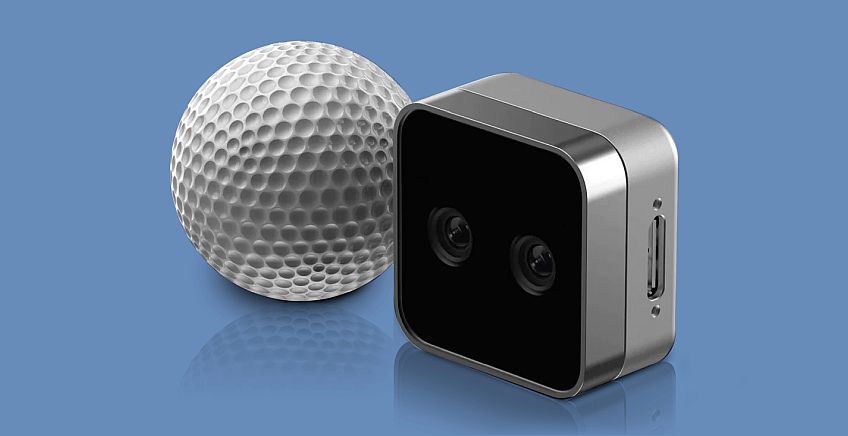
The company develops depth cameras and related technologies that enable machines to build a three-dimensional representation of their surroundings. Its products are used in robotic arms, autonomous mobile robots (AMRs), quadrupeds and humanoid robots. Over the past year, RealSense has also expanded its focus beyond depth cameras toward perception platforms that combine sensing, processing and edge AI.
For Cognex, the acquisition represents an expansion of its core business. The U.S. company has operated in the machine-vision market for more than four decades and serves over 30,000 customers, primarily in factories, warehouses and production lines. Its systems enable machines to identify products, read barcodes, measure components and detect defects.
Over the past year, Cognex has deepened the integration of AI across its portfolio, launching systems such as the In-Sight 3900 and In-Sight 6900, as well as OneVision, a platform for managing and deploying vision AI models.
RealSense extends these capabilities from machines observing objects within controlled industrial environments to machines that move through the physical world and need to understand their surroundings in real time. Cognex estimates that the robotic perception market in which RealSense operates is currently worth approximately $600 million and will grow at an annual rate of more than 25% to reach $1.6 billion by 2030.
In this sense, Cognex is paying a relatively high multiple not only for an existing business that is growing rapidly, but also for a foothold in the emerging Physical AI market. If the shift from robots operating in predefined environments toward autonomous machines and humanoids accelerates in the coming years, the 3D perception layer in which RealSense specializes could become an increasingly important component of industrial automation systems.
Posted in: Business , ElectroOptics , News