
Mobileye Plans Orlando Robotaxi Fleet for 2027, Eyes LiDAR-Free Future
2 November, 2026
Mobileye reported $492 million in quarterly revenue and raised its annual guidance, while outlining robotaxi expansion plans, its Tesla strategy, and humanoid robotics ambitions
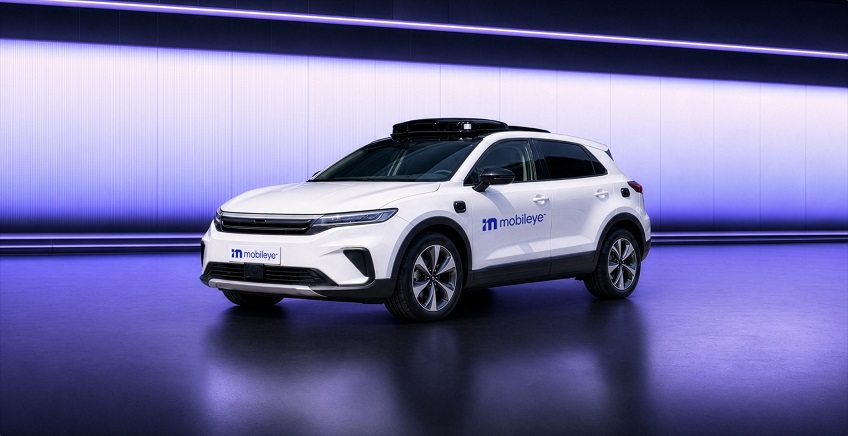
Photo: Rendering of Mobileye’s autonomous taxi. Credit: Mobileye.
Mobileye ended the third quarter of 2026 with revenue of $492 million, down 2% year over year, but slightly raised its full-year revenue guidance. During the company’s earnings call, CEO Prof. Amnon Shashua outlined plans to expand its robotaxi operations, including the deployment of a fleet of approximately 100 fully autonomous vehicles in the Orlando area during 2027.
Despite the revenue decline, shipments of Mobileye’s EyeQ systems increased by 11% during the first nine months of the year, even as global vehicle production fell by approximately 1%. However, average revenue per system declined by 5% in the quarter, primarily due to increased sales to Chinese automakers, which purchase systems with a lower software content.
Mobileye reported an operating loss of $82 million, compared with $109 million a year earlier. Adjusted operating profit rose 20% to $89 million, although $51 million of that amount came from benefits under Israel’s new R&D incentive legislation.
The company raised the lower end of its full-year revenue guidance from $1.97 billion to $1.995 billion, while maintaining the upper end at $2.02 billion.
From Selling Driving Systems to Operating Robotaxi Services
One of Mobileye’s most significant strategic shifts is its move toward directly operating autonomous transportation services, alongside its established business of supplying driving systems to automakers and third-party fleet operators.
During the earnings call, Shashua outlined a target of deploying approximately 100 driverless vehicles in the Orlando area in 2027, operating without safety drivers. He also mentioned plans for operations in Miami.
Mobileye is already testing the integration of its Moovit platform in Tel Aviv for fleet management, ride booking, and passenger services. In parallel, the company is evaluating suppliers for the vehicles themselves, installation of the autonomous driving systems, and day-to-day fleet operations.
Mobileye also reported progress across several partner projects. In Hamburg, public rides have begun with safety drivers on board. In the Orlando area, testing is underway with closed groups of users. Meanwhile, Germany’s Deutsche Bahn has selected the HOLON Urban autonomous vehicle, powered by Mobileye Drive, for public transportation services.
The new business model is intended to generate recurring revenue from the rides themselves, rather than relying solely on sales of autonomous driving systems.
Shashua: Eventually, We Won’t Need LiDAR
During the earnings call, Shashua also discussed the potential to significantly reduce the cost of autonomous driving systems by eliminating expensive LiDAR sensors.
According to Shashua, Mobileye has spent seven years developing imaging radar technology that could eventually replace LiDAR.
“Our bet is on cameras and imaging radar. We believe that, in the long run, LiDAR will not be necessary,” Shashua said, while emphasizing that the company has not yet established a timeline for achieving that goal.
Shashua also addressed competition with Tesla, noting that the company has begun emphasizing the use of data collected from large vehicle fleets to build road intelligence, an approach similar to Mobileye’s Road Experience Management (REM) technology.
“You cannot replicate these road intelligence databases without enormous scale,” he said.
According to Shashua, Mobileye’s REM system currently draws on data from approximately eight million vehicles.
Volkswagen: Programs on Track, but Competition Continues
Responding to an analyst’s question about the future of Mobileye’s partnership with Volkswagen Group, Shashua said the companies’ joint production programs remain on schedule.
The SuperVision system is expected to enter Porsche vehicles in 2027, while Chauffeur, which enables Level 3 automated driving, is scheduled to launch in Audi vehicles in 2028.
However, Shashua acknowledged that Volkswagen’s software subsidiary, CARIAD, continues to develop an alternative to Mobileye’s technology.
“Mobileye cannot be that partner, because CARIAD’s entire purpose is to serve as Volkswagen’s second source for autonomous driving technology,” he explained.
Meanwhile, Mobileye announced two new program wins with major Asian automakers for its Cloud-Enhanced ADAS systems, which combine camera-based sensing with road intelligence data.
A similar program with Stellantis, scheduled to launch in the United States in 2027, has also been expanded to Europe.
Nevertheless, Mobileye expects a meaningful improvement in average revenue per system primarily from 2028 onward, when additional programs enter mass production.
Mentee Robotics Targets Production in 2028
Shashua also provided an update on Mentee Robotics, the humanoid robotics company acquired by Mobileye earlier this year.
According to Shashua, version 3.2 of the company’s humanoid robot is already operational, while development of the fourth-generation model, designed with manufacturing in mind, is nearing completion.
The goal is to begin limited production during 2028.
Mobileye also noted that Mentee uses Nvidia’s Isaac platforms for robot training and simulation.
For now, the robotics business remains largely in the development stage, with no significant commercial revenue reported.
Posted in: News