2D Materials-Based FETs for High Performance Logic

Imec Semiconductors Technology

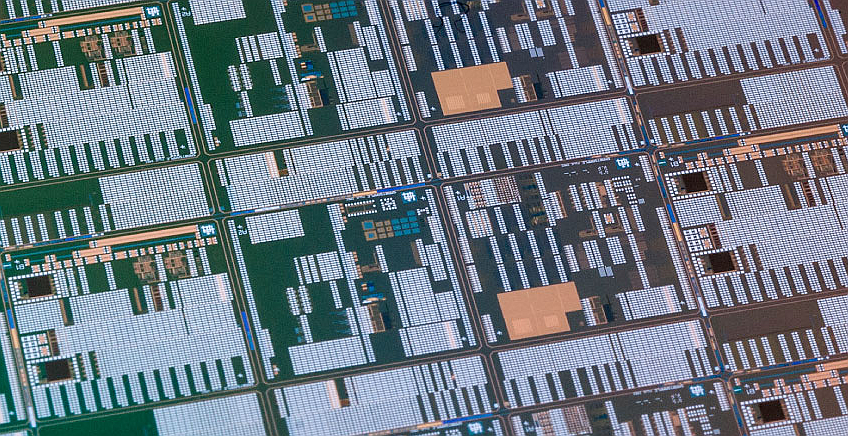
imec, the semiconductor’s research hub, announced in At its annual Imec Technology Forum USA in San Francisco, that its researchers, in collaboration with scientists from KU Leuven in Belgium and Pisa University, Italy, have performed the first material-device-circuit level co-optimization of field-effect transistors (FETs) based on 2D materials for high-performance logic applications. Imec also presented novel designs that would allow using mono-layer 2D materials to enable Moore’s law even below 5nm gate length.

2D materials is a family of materials that form two-dimensional crystals, that may be used to create the new kinds of transistor with a channel thickness down to the level of single atoms and gate length of few nanometers. To counter the resulting negative short-channel effects, chip manufacturers have already moved from planar transistors to vertical FinFETs. They are now introducing other transistor architectures such as nanowire FETs. The work reported by imec looks even further, and is replacing the transistor channel material, with 2D materials as some of the prime candidates.

In order to fit FETs based on 2D materials into the scaling roadmap, it is essential to understand how their characteristics relate to their behavior in digital circuits. In the paper published in Scientific Reports paper, the imec scientists and their colleagues presented guidelines on how to choose materials, design the devices and optimize performance to get the circuits that meet the requirements for sub-10nm high-performance logic chips.

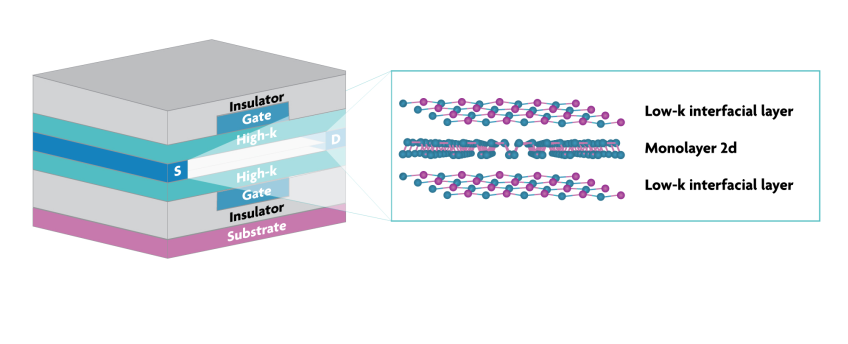
imec demonstration of 2D Materials-Based Field-Effect Transistor

Using the material monolayer black-phosphorus, the researchers presented novel device designs that pave the way into sub-5nm gate length. These designs reveal that for sub-5nm gate lengths, 2D electrostatics arising from gate stack design become more of a challenge than direct source-to-drain tunneling.  These results are very encouraging, because in the case of 3D semiconductors, such as Si, scaling gate length so aggressively is practically impossible.

“2D materials, with the atomically-precise dimension control they enable, promise to become key materials for future innovations,” said Iuliana Radu, distinguished member of technical staff at imec. “Our latest results presented in Scientific Reports, show how 2D materials could be used to scale FETs for very advanced technology nodes.”

These results were published in Scientific Reports: T. Agarwal, G. Fiori, B. Soree, I. Radu, P. Raghavan, G. Iannaccone, W. Dehaene, M. Heyns – Material-Device-Circuit Co-optimization of 2D Material based FETs for Ultra-Scaled Technology Nodes (SREP-16-50433) www.nature.com/articles/s41598-017-04055-3

This work was supported by imec’s industrial affiliation programs on core CMOS including key partners GlobalFoundries, Huawei, Intel, Micron, Qualcomm, Samsung, SK Hynix, Sony Semiconductor Solutions and TSMC, and by the European GRAPHENE FLAGSHIP core 1.

Vayyar Brings its 3D Sensor to the Automotive Market

Vayyar Imaging

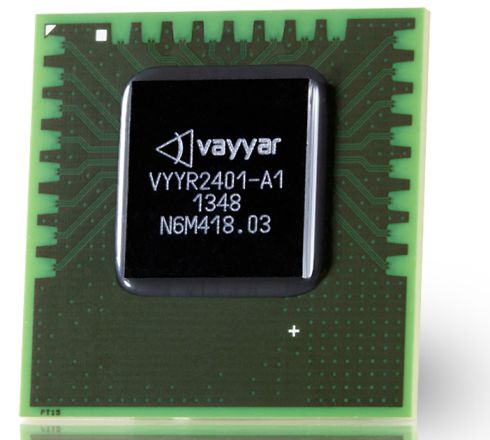
Vayyar Imaging from Yehud, Israel, announced the launch of its sensor technology within the automotive and autonomous driving markets. Vayyar has developed 3D sensing technology base on RF principles. Its semiconductor chip can manage miniature Radar running through multiple small antennas (MIMO) that transmit and receive weak electromagnetic signals in 3.5GHz-10GHz frequencies. The information extracted from those signals can help to detect breast or other cancer masses, look through walls to detect structural foundations, and can track a person’s location and vital signs as they move through a Smart Home, and so on.

Vayyar Imaging was established in December 2011 by the chairman and CEO Raviv Melamed with VP Research and Development Miri Ratner and CTO,Naftali Chayat. Melamed previously held the role of VP and GM of the Mobile Wireless Group at Intel. Ratner and Chayat previously served in senior management positions at BreezeCOM and Alvarion.
The company began developing its 3D imaging sensor technology as a way to aid in breast cancer detection, but expanded its capabilities for new markets. On December 2015 Vayyar completed a $22 million raising led by Walden Riverwood. “3D imaging sensor technology is the future, and Vayyar is leading the way with its revolutionary technology,” said Lip-Bu Tan, Founder, and Chairman, Walden. The total capital raised by the company is $34M million.

“The automotive market has always been at the forefront of technical evolution, and as we move toward autonomous navigation, our vehicles need constant, accurate and new types of information,” said Raviv Melamed, CEO and co-founder of Vayyar Imaging.  “We believe this next step will provide safety from obstacles outside the car, as well as monitor the health and safety of people within the car.”

One Sensor for All Needs

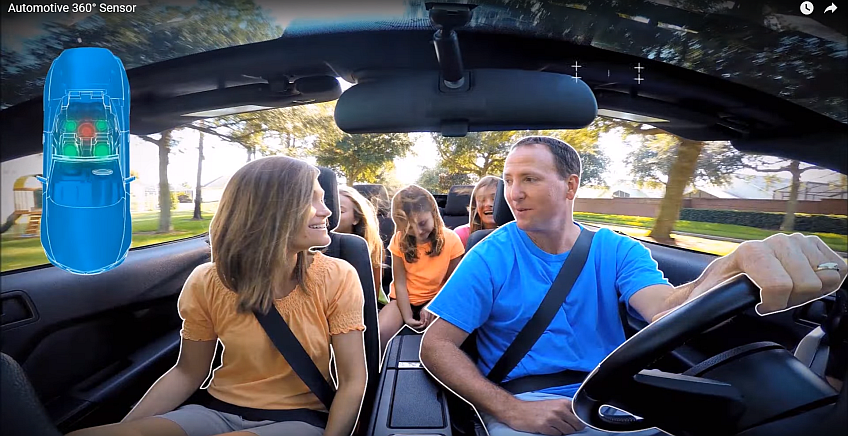
Vayyar had already demonstrated automotive related capabilities: Its embedded 3D sensors scan the interior of a car and give a real-time picture of everything happening within the vehicle. By monitoring vital signs, the sensors can alert a driver who is dozing off or send an alert to a parent if an infant or pet has been left in the car.  Post-accident, 3D sensors can identify the state of survivors inside the vehicle and relay information to emergency responders.

In the autonomous driving sector, Vayyar’s sensors create a 3D image that enables autonomous cars to identify the number of people inside the car and in case of an accident, optimize airbags to deploy and inflate based on the seating location and size of the vehicle’s passengers. The company says its sensors can be used to identify nearby obstacles, cyclists, vehicles that are too close and self-parking, providing perimeter information both vertically and horizontally or large or small vehicles.

Vayyar’s sensors are agnostic to environmental factors such as darkness, excessive light, heat or fog, allowing them to provide an increased level of safety. The sensors also enable volumetric sensing for in cargo management. When placed inside transport vehicles, the 3D sensors can map available space, the distribution of objects within the container, and also provide cargo integrity while in transit by detecting movements of the cargo in real-time.

According to a recent report by Research and Markets, the global 3D sensor market is poised to grow at a CAGR of around 17.4 percent over the next decade, reaching approximately $12 billion by 2025.

Intel Received Israel Tax Ruling for Mobileye Deal

Intel-Autonomous-Driving-Cars

Intel Corporation announced that the Israel Tax Authority has issued “an acceptable tax ruling” with respect to the all cash tender offer to purchase all of the outstanding ordinary shares of Mobileye by Intel. The tender offer is being made Cyclops Holdings, a wholly owned subsidiary of Intel that was later converted to Cyclops Holdings. When the deal is completed, Intel is expected to pay approximately $15.3 billion for Mobileye.

BMW, Intel and Mobileye Autonomous Driving Car

Following the receipt of the tax ruling and the latest resolutions at the general meeting of Mobileye shareholders in June, the minimum number of Mobileye shares that must be validly tendered has been lowered from 95% to 67% of Mobileye shares. Intel also announced that Intel and Mobileye have agreed that Cyclops will extend the offering period of the tender offer, from the original date of July 20, to July 28, 2017. The transaction is currently expected to close during the third quarter of 2017.

Mobileye shareholders who have already tendered and not withdrawn their ordinary shares of Mobileye do not have to re-tender their shares or take any other action as a result of the extension of the expiration date of the tender offer. Now Intel and Mobileye are waiting for a regulatory approval from the Korean Fair Trade Authority. Earlier this month the deal received the approvals of the German Federal Cartel Office and the Austrian Federal Competition Authority. Intel plans convert Mobileye from a public company to a private company, and to delist its shares from the NYSE.

Mobileye from Jerusalem, Israel, is one of the leaders in the development of computer vision and machine learning solutions for Advanced Driver Assistance Systems and Autonomous Driving. Its proprietary software algorithms and EyeQ chips perform detailed interpretations of the visual field in order to anticipate possible collisions with other vehicles, pedestrians, cyclists, animals, debris and other obstacles. Mobileye’s products are or will be integrated into car models from more than 25 global automakers.

On May 2017, BMW Group, Intel, Mobileye and Delphi announced a cooperation project to jointly deploy solutions to the broader OEM automotive industry and potentially other industries. Delphi has already provided a prototype compute platform to the BMW Group and is working together with Intel and Mobileye in the areas of perception, sensor fusion, and high performance automated driving computing. Delphi’s role will be the integration of the solution delivered by BMW Group, Intel and Mobileye into OEM vehicle architectures. Delphi may also provide the hardware components such as sensors and applications for differentiation.

Symantec to Acquire Fireglass for $250 Million

fireglass_screen

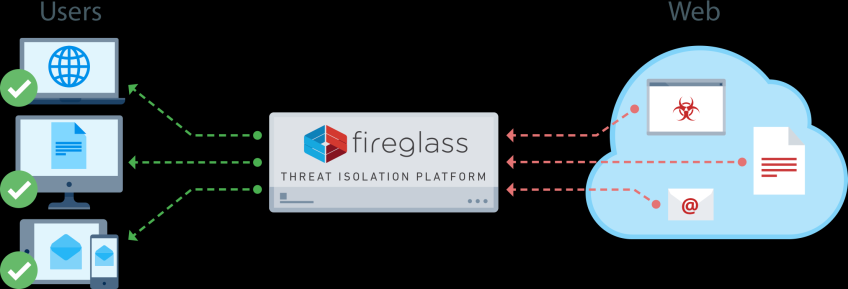
Symantec, one of the the world’s leaders in cyber security, announced an agreement to acquire Israel-based Fireglass, the developer of an agent-less isolation solution that eliminates ransomware, malware and phishing threats in real-time. According to the Israeli newspaper TheMarker, Symantec will pay approximately $250 million for Fireglass. The acquisition strengthens Symantec’s Integrated Cyber Defense Platform, especially in Secure Web Gateway and Email protection delivered both on premises and in the cloud.

Fireglass was founded in 2014 by the CEO Guy Guzner the CTO Dan Amiga. Guy has over 15 years of experience in network security products. In his last role he was head of security products at Check Point software responsible for a product portfolio with $1 billion in revenue. Dan has 13 years of experience innovating software in mission critical applications. Having worked at the Israeli military intelligence and Microsoft, his last role was Chief Architect, Technology & Innovation at Schneider-Electric. The company is backed by Lightspeed Venture Partners and Norwest Venture Partners.

Isolation Without Installation

Its Threat Isolation Platform eliminates malware and phishing by isolating critical attack vectors including web pages, emails and documents. Fireglass patented Transparent Clientless Rendering (TCR) technology transforms all web content into a safe visual stream and prevents threats from ever reaching devices.

Fireglass  creates a virtual web browsers on a dedicated platform that is designed from the grounds up for security and scale. Each browsing session is executed in a secure disposable container which confines any malicious activity. Therefore, Fireglass does not require endpoint installation and provides seamless user experience and supports all browsers, devices and OSs.

Greg Clark, Symantec CEO said that integrating Fireglass’ isolation technology with Symantec’s existing endpoint, email and secure web gateway solutions, “could reduce security events by as much as 70 percent, while virtually eliminating advanced threats spread by web browsing or email content. Isolation will become a core component in the design of cyber defense architectures for the cloud generation who face the reality of an encrypted Internet and the crisis inherent in email and web-delivered attacks.

How does the Magic Works? See Demo below:

“The ability for the security team to take an aggressive stance on unknown websites and questionable attachments without causing chaos for a company’s users and IT help desk is now a reality. Isolation is a key element of securing the cloud generation and is even a productivity gain for both the end user and security operations center.”

The transaction is subject to customary closing conditions, and is expected to close in the third calendar quarter of 2017. Symantec expects Fireglass’ technology to be available to its customers and partners soon after the transaction closes. Financial terms of the transaction were not disclosed.


Dune Medical Raised $12.3 Million for RF spectroscopy

Dune Medical MarginProbe RF Spectroscopy

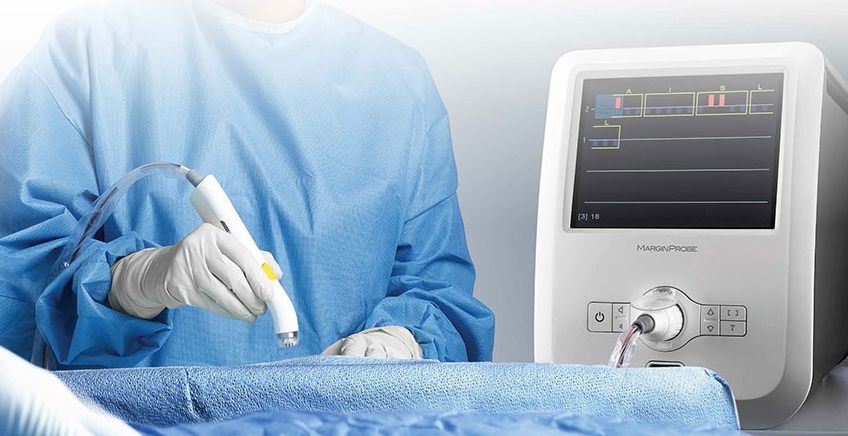
Dune Medical Devices from Caesarea, Israel, has developed  an innovative RF Spectroscopy technology to differentiate cancerous from healthy tissue based on electromagnetic properties. Its MarginProbe System is mostly used during breast cancer surgery, but is being explored for other applications and disease sites.

In August 2016, Dune celebrated receipt of three million euros awarded by a prestigious EU Horizon 2020 grant to support the continued development of its RF spectroscopy based biopsy system. Las week Dune Medical announced the closing of a $12.3 million dollar financing round  led by Canepa Healthcare, ATON Partners, and the Kraft Group.

“This financing round is a testament to the success of the revolutionary radiofrequency (RF) spectroscopy technology that created our first product, the MarginProbe,  said Dune Medical CEO Lori Chmura. “It is the basis for our surgical oncology platform which is quickly becoming the standard of care in cancer treatment.”

2,500 Positive Results

Since receiving FDA approval, the MarginProbe System has successfully demonstrated a consistent and significant reduction in re-excisions when women undergo breast conserving surgery after a diagnosis of early-stage breast cancer. To date, three large randomized controlled trials over 2,500 women who have undergone lumpectomy with MarginProbe shows a reduction in re-excision rates up to 79%. The impact of this reduction is very significant: Data indicates that without effective margin assessment 20-30% of women who undergo lumpectomy for breast cancer will undergo an additional surgical procedure to ensure negative margins.

Dune Medical’s technology is utilizing RF electrical fields, similar to the frequency range of FM radio, to identify microscopic residual cancerous lesions at the area of tissue being examined. The technology is based on two main principles: Reflection of electromagnetic fields depends on the underlying electrical properties of the tissue they interact with, and that the electrical properties of cancerous tissue are different from those of normal tissue

Tissue is a complex organ, with various components of the tissue contributing to its electrical properties. Any change in a cell’s physiological state will be reflected in its electrical response. Dune’s technology can capture these changes and provide immediate feedback to physicians, who need to decide if tissue is malignant or benign.

Israel Intelligence Service Established a Technology Fund

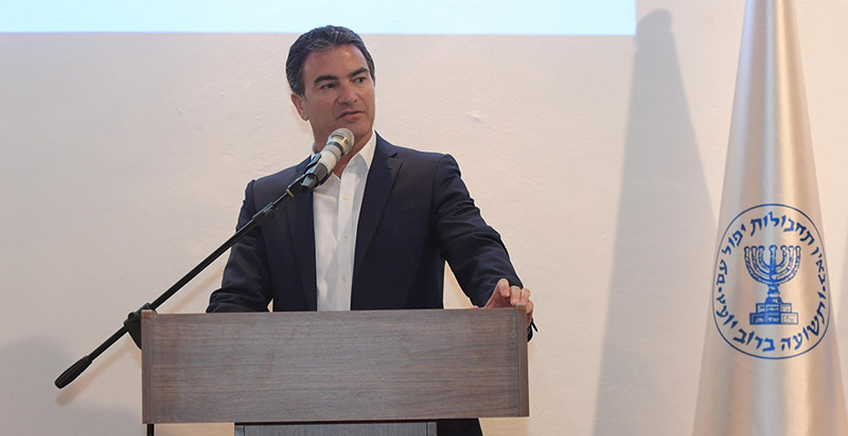
Mossad Director Yossi Cohen at the launching of the Libertad fund

[Photo above: Mossad Director Yossi Cohen at the launching of the Libertad fund]

The Israel Security and Intelligence Service (Mossad) announced last week the the establishing of a new technological innovation fund called Libertad (“freedom” in Latin). The Technological Innovation Fund of the Israel Security and Intelligence Service, was established to maintain the Mossad’s technological superiority by connecting to civilian cutting-edge technological startup companies.

According to the Israeli Foreugn Ministry, Libertad fund is an additional arm of the Mossad’s technological force, and will enable rapid research and development for the Mossad’s various goals. “For this purpose, Libertad will invest in R&D programs of cutting-edge technology startup companies.”

The Mossad’s investment method is unique: Libertad fund offers up to NIS 2 million in equity-free capital for R&D of relevant, viable and groundbreaking projects. In return for financing R&D programs, the Mossad will receive a license to use the technology developed, without imposing any restrictions on the IP developed, and without paying royalties.

From Robotics to Encryption Technologies

The Mossad also made a call to submit proposals for R&D projects in the following areas of interest:  Robotics technologies in the fields of flexible robotics, biomimetics, miniaturized systems, all-terrain capabilities and silencing solutions, for land, sea, and air. Energy harvesting and self-powered systems providing solutions for increased performance and/or miniaturization.

Technologies for encrypting information at high speed (100 Gbps or higher), Automatic Identification of personality characteristics (Personality Profiling) based on online behavior and activity, and various automatic methods for summarizing documents, cataloging, extracting entities and semantic connections, using machine learning and other areas, in Hebrew and other languages.

For more information: Libertad Technological Innovation Fund

FTC Approved Broadcom’s $5.9 Billion Acquisition of Brocade Communications

Brocade Fibre Channel

Semiconductor manufacturer Broadcom Limited has agreed to establish a firewall to remedy the FTC’s concerns that its proposed $5.9 billion acquisition of Brocade Communications Systems is anti-competitive. These concerns arise because of Broadcom’s current access to the confidential business information of Brocade’s major competitor, Cisco Systems, in the worldwide market for fibre channel switches.

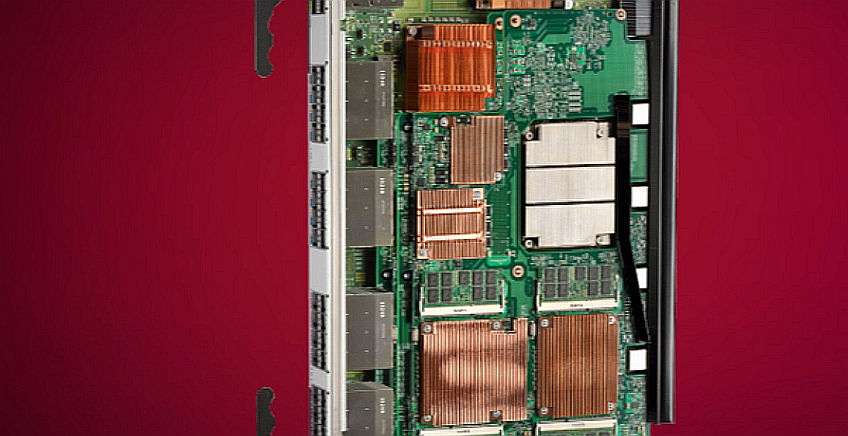
Fibre channel switches are part of storage area networks that transfer data between servers and storage arrays in data centers. Because fibre channel switches can quickly and securely transfer large amounts of data, they are often used for mission-critical applications. According to the complaint, San Jose, California-based Broadcom makes the fibre channel application specific integrated circuits, or ASICs, that are custom-tailored to carry out the functions of each switch.

Brocade and Cisco are the only two competitors in the worldwide market for fibre channel switches, and Broadcom supplies both companies with ASICs to make fibre channel switches. The complaint alleges that Broadcom’s acquisition of Brocade could harm worldwide competition in the fibre channel switch market because as Cisco’s supplier, Broadcom has extensive access to Cisco’s competitively sensitive confidential information.

As the new owner of Brocade, Broadcom could use that information to unilaterally exercise market power or to coordinate action among Brocade and Cisco, increasing the likelihood that customers would pay higher prices for fibre channel switches, or that innovation would be lessened, according to the complaint.

The proposed consent order, prevents Broadcom from using Cisco’s competitively sensitive confidential information for any purpose other than the design, manufacturing and sale of fibre channel ASICs for Cisco. It requires Broadcom’s business group responsible for developing, producing, selling and marketing fibre channel ASICs for Cisco to have separate facilities and a separate information technology system with security protocols that allow access only to authorized individuals, and provides for other information firewall protections. To assure compliance, the Commission will appoint a monitor for five years, and the Commission may extend the appointment for up to an additional five years.

For further details about the consent agreement, click analysis to aid public comment.