Powermat sees opportunity in Apple’s Wireless Charging move

Very quietly, and away from the eyes of the industry, Apple has joind the Wireless Power Consortium and became a member in the Industry’s most influential body who promote the wireless charging in mobile devices. For the Israeli Powermat, who pioneered this technology, it was a refreshing sign for the future of  Wireless Charging market. It reacted quickly, and announced that the company would be ready to support iPhones with whatever  wireless charging protocol Apple employs.

Elad Dubzinski, Powermat CEO

“Regardless of which standard Apple will ultimately adopt or whether they’ll develop their own proprietary technology, we believe the category is big enough for everyone to play,” said Elad Dubzinski, Powermat CEO.  “Powermat was the first wireless charging company to develop the technology and envision a world where wireless power is ubiquitous. That was the brainchild of Ran Poliakine, our founder and the first Powermat CEO. We are delighted that Apple will help bring that vision to fruition.”

Poliakine told Techtime that Apple’s decision is critical because Apple is known for its ability to direct market trends. “For many years it was a premature market, but now we begin to see big players entering the emerging market of wireless charging for smartphone, wearable devices and medical solutions. Recognizing Apple’s ability to bring wireless charging into the mainstream by the sheer volume of iPhones in the market, we are getting close to fulfill our vision from a decade ago.”

The market gains momentum

The Wireless Power Consortium is a group of leading manufacturers in a wide range of industries that understand the untapped potential of wireless charging. WPC members include leading makers of mobile phones, consumer electronics, batteries, semiconductors, components, wireless power technology and infrastructure such as wireless operators, furniture and automotive parts.

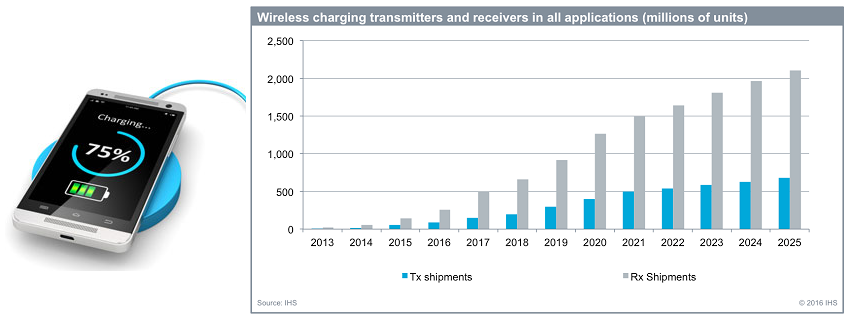
The market research firm IHS expect the Wireless Charging market to reach 2 billion units by 2025. According to a report published earlier this year by TechNavio, the global wireless chargers market to grow at a CAGR of 26.13% during the period 2017-2021. The study also identified Powermat Technologies, Energizer Holdings, Evatran, Qualcomm, and WiTricity as the leading players in this market.

“With the increased use of smartphones, a number of people face the problem of charging their smartphones and devices. Around 80% of consumers show need to have wireless charging in public places. Hence, many global food chains such as Starbucks and McDonald’s are partnering with vendors of wireless chargers to offer customers convenience with Aircharge and Powermat wireless charging hotspots.”

Powermat seems to leads the category in real estate with wireless charging capability being installed in Starbucks stores across the US and abroad.  There are currently 12,000 Powermat charging spots used regularly by consumers in public venues, and it is also installed in approximately 1 million GM vehicles and 250 million mobile devices in the market, including the the Samsung’s Galaxy Note 7, Galaxy S6 and Galaxy Note 5.

And the winner is… Micron Technology

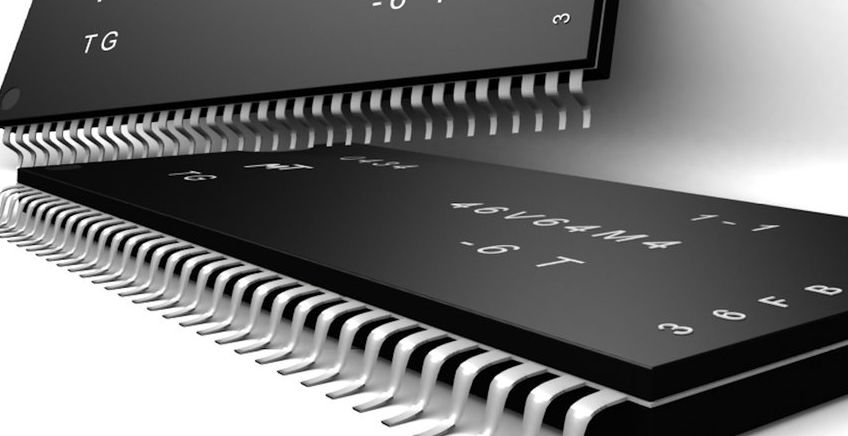
IC Insights has raised its worldwide IC market growth forecast for 2017 to 11%—more than twice its original 5% outlook. The reason for this revision is very interesting: The market research company expects DRAM sales to grow 39% and NAND flash sales to increase 25% this year. “DRAM market growth is expected to be driven almost entirely by a huge 37% increase in the DRAM average selling price (ASP), as compared to 2016, when the DRAM ASP dropped by 12%. Moreover, NAND flash ASPs are forecast to rebound and jump 22% this year after falling by 1% last year.”

The DRAM market started 2017 with strong gains in price: In April 2016, the DRAM ASP was $2.41, and rapidly increased to $3.60 in January 2017. This is a 49% jump. IC Insights beleives it is result of growing demand fpr DRAM memory devices by PC suppliers and by mobile devices producers.

With total DRAM bit volume demand expected to increase by 30% this year and DRAM bit volume production capacity forecast to increase by 20%, IC Insights believes that quarterly DRAM PRICES in 2017 could still surprise on the upside. Furthermore, “DRAM output is also being slowed, at least temporarily, by the ongoing transition of DRAM production to ≤20nm feature sizes by the major DRAM producers this year.”

At $57.3 billion, the DRAM market is forecast to be by far the largest IC product category in 2017, exceeding the expected MPU market for standard PCs and servers ($47.1 billion) by $10.2 billion this year. Last year, the DRAM market slumped 8%  after a 12% decline in the DRAM ASP. Now, the DRAM segment is forecast to have a positive impact on total IC market growth this year.  “It is interesting to note that the total IC market growth rate forecast for 2017, when excluding the DRAM and NAND flash markets, would be only 4%, about one-third of the current worldwide IC market growth rate forecast including these memory devices.”

Micron seized the opportunity

A dramatic demonstration of the effects of the DRAM soaring prices were given earkier this month, when Micron Technology reported its results for the second quarter of fiscal 2017, which ended March 2, 2017. Revenues for the quarter were $4.65 billion – 17% higher compared to the first quarter of fiscal 2017 and 58% higher compared to the second quarter of fiscal 2016. Micron explained that the increase in the company’s revenues was due primarily to a 21% increase in DRAM average selling prices and 18% increase in trade NAND sales volumes.

Samsung NeuroLogica and MedyMatch in Strategic Alliance

MedyMatch Technology from Tel-aviv Israel, and Samsung NeuroLogica Corporation, the Danvers, Massachussetts healthcare subsidiary of Samsung Electronics, announced a collaboration to integrate artificial intelligence (AI) clinical decision support applications with Samsung NeuroLogica’s medical imaging hardware. This collaboration will create support tools which will help caregivers to quickly and accurately assess patients in prehospital environments.

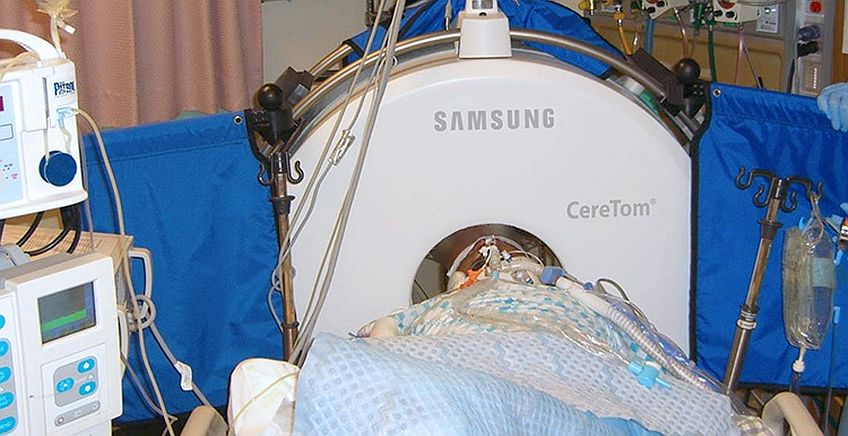
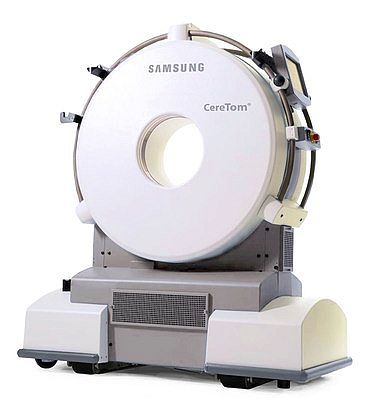
Samsung NeuroLogica’s CereTom CT

The first step will be to integrate of MedyMatch’s AI technologies into the mobile stroke unit (MSU) – ambulance or other emergency vehicle – that is equipped with a Samsung NeuroLogica CereTom CT (computed tomography) scanner. This will allow the team onboard to quickly assess whether a patient is having a stroke caused by a blood clot or hemorrhage.  The very first step in the assessment is to rule out brain bleed, and this is where MedyMatch’s technology will be utilized. Since “Time Lost is Brain Lost,” rapid patient assessment is essential in choosing the most appropriate treatment, even while in transit to the hospital.

Smart Imaging is smarter

“We are on the threshold of the next evolutionary step in Imaging”, said Gene Saragnese, Chairman & CEO of MedyMatch, “Imaging technological development has been historically focused on providing clinicians the best possible image. MedyMatch artificial intelligence applications will leap this paradigm forward, enabling Imagers such as CT to provide clinical answers and not just images.”

A stroke occurs when blood flow to the brain is interrupted by a blockage or a rupture in an artery, depriving brain tissue of oxygen. Stroke is the fourth leading cause of death in the United States and a leading cause of disability. Close to 800,000 Americans suffer a stroke each year. Most suffer ischemic stroke, which occurs when blood flow to the brain is obstructed by a clot in a blood vessel. Fortunately, ischemic stroke can be treated effectively with a tissue plasminogen activator (tPA), a drug that if administered within three hours of the first signs of stroke dissolves a clot to improve blood flow back to the affected part of the brain.

Smarter is faster

Unfortunately, it can take an hour after a stroke patient arrives in the emergency department to receive treatment because of the time needed to determine which kind of stroke the patient is having. “Technology that can assist the physicians in recognizing brain bleeds more quickly, will lead to faster decision making for the patient and better outcomes,” said Dr. Peter Rasmussen, Medical Director of Cleveland Clinic’s Distance Health Program.  “Emergency treatment is needed to recognize and treat brain bleeds as quickly as possible.”

“This is just one example of how Intelligent imaging can have a positive impact,” said Robert Mehler, COO of MedyMatch. “We envision that medical imaging devices will be A.I. enabled with decision support to assist the physician in patient care and optimize the clinical workflow.”

Phillip Sullivan, President and CEO of Samsung NeuroLogica: “We are seeing worldwide demand and implementation of our Mobile Stroke Units, with new installations in New York, Trenton, Chicago, Bangkok, Alberta, India and Germany. Our collaboration with MedyMatch brings advanced technology to support better treatment of stroke.”

The portable X-ray and CT scan device market growth is expected to grow approximately 7.6% CAGR to 2020, reaching $8.41B, and MedyMatch is at the forefront of enabling this industry growth.

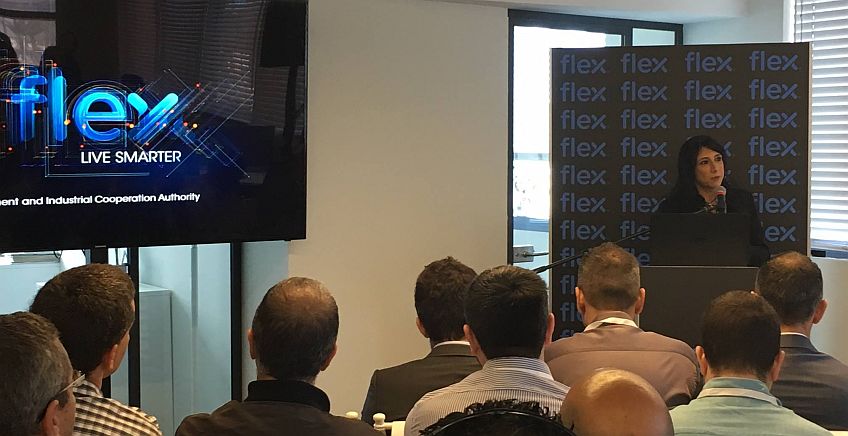
Flex opened new Design Center in Haifa

Flex opened this week its new design center in Haifa, offering local and international customers an ISO certified environment to explore and collaborate on new product design. With over 40 design engineers on site, prototypes can be developed, tested and designed for scale production. The center is being managed by Boaz Kalisch. Techtime has learned that flex plans to expand it to about 70 people.

The new design center in Haifa gives Flex Israel the ability to manage the entire lifecycle of a product – from the first sketch, through complete manufacturing and shipping. The design center works closely with Flex’s current manufacturing facilities in Migdal Ha’emek, Ofakim and Yavneh as well as handles design work for customers from around the world.

“Flex is one of the key partners for the State of Israel in helping to build the Israeli economy and we will help in any phase in the process,” said Ziva Enger, Director of Foreign Investments and Industrial Cooperation in the Ministry of Economy and Industry. “The Government of Israel sees many multinationals and we are open for business and working every day to bring more and more companies like flex to Israel and we are planning to bring up to 20 fatcories to Israel by 2020 that combine R&D and production in Israel – just like flex does. We want to see more companies like Flex in Israel.”

Flex Design Center Haifa

The new design center in Haifa serves costumers in the Medical, Industrial and Consumer products. Its Services included: Design & Engineering, New product development, Electronics design, Mechanical engineering, Optical design, Firmware/embedded development and Industrial design. It gained Experience in Medical devices: Laparoscopic tools, optical systems/endoscopy, laser based surgical, ultrasound ablation, cardiac care, wearable, electro mechanical systems, respiratory & anesthesia. The center also involved in Automation assemblies, plastic design and shells, agriculture monitoring tools, optical sensors.

Flex is the biggest Electronic Manufacturing Services provider (EMS) in Israel. Today it employs approximately 4,000 local employees in the main manufacturing center in Migdal Ha’aemek and in two additional manufacturing plants in Ofakim and Yavneh.

Flex production facility in Migdal Ha’emek

With approximately 200,000 professionals across 30 countries, Flex provides design, engineering, manufacturing, supply chain insight and logistics services to companies of all sizes in various industries and end-markets. Global sales FY15 totaled approximately $26 billion. Flex gives services to a wide range Industries: automotive, medical, telecom, IoT, industrial, home appliances, smartphones, energy, wearables, connected living, server/storage and datacom

Rada put its faith in Military Tactical Radars

At first glance, RADA Electronic Industries concluded a tough year: Revenues in 2016 totaled $12.8 million compared with revenues of $14.0 million in 2015.  Gross profit totaled $1.4 million compared with gross profit of $2.4 million in 2015, and the company’s Operating loss reached $3.4 million in 2016, compared with operating loss of $2.7 million in 2015.

But all this did not prevent Rada to provide a very positive outlook for 2017: Two weeks ago it announced that “given its current backlog of orders in hand, for tactical radars and avionics, it expects significant revenue growth in 2017.” In numbers: RADA expects its full year 2017 revenues to grow to over $18 million from approximately $13 million in 2016. This is no less than 40% year over year growth.

Growth engine of 2017

RADA Electronic Industries Ltd. is an Israel-based defense electronics contractor. The Company started as an avionic expert, but recently it gains respect for its highly sophisticated Tactical Land Radar for force and border protection. “We plan to invest further in our growth engine, our software-defined tactical radars, where we currently see significant opportunities globally,” said Dov Sella, RADA’s Chief Executive Officer. This was backed by a prospectus to sell up to 4,351,568 ordinary shares of Rada, for aggregating amount of approximately $5.3 million, published yesterday.

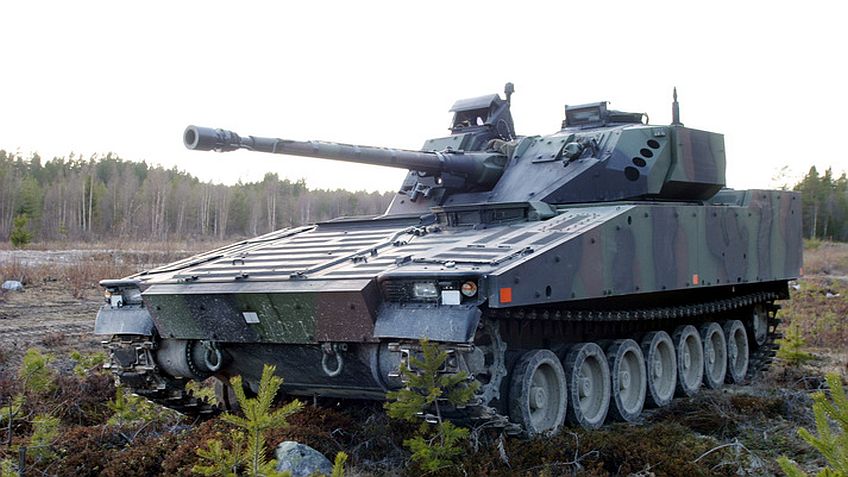
Rada believes that after a long time (the company was established 30 years ago), it has the right product for the right market in the right time: A Compact Hemispheric Radar (CHR), perfectly adapted to the growing market of Active Protection Systems (APS) on armored vehicles. The APS provides armored vehicles the needed protection against rocket-propelled grenades (RPG), anti-tank guided missiles (ATGM) and tank shells.

Dutch CV90. The first NATO combat vehicle to receive active protection. Will use a Radar system from Rada


The heart of the APS system is a search and track radar, with the ability to detect threats and enable interception before a threat strikes the vehicle. The addressable APS market in the Western World is estimated at the tens of thousands of vehicles. According to Rada, it means multi-billion dollar market potential for tactical radars capable to perform such functions.

Field tested systems

Rada’s CHR platform was developed to address exactly those the needs. This is an S-band, software-defined, pulse-Doppler, active electronically scanned array radar. The radar system introduces sophisticated beam forming capabilities and advanced signal processing, which can provide various missions on each radar platform. The CHR is incorporated into IMI Systems’ Iron Fist family of APS, and has undergone hundreds of live fire tests. Recently RADA delivered CHRs to Artis, to be integrated and tested with its Iron Curtain close-in APS.

This may prove to be a good assumption: In December 2016, BAE Systems, announced it has received a contract from the Netherlands for supplying its CV90 combat vehicles with active protection systems. BAE will install the Iron Fist of IMI, a field proven system – already integrated into many of the IDFs “Namer” APCs, based on the renowned Israeli “Merkava” tank.

DARPA is planning to reinvent the Transistor

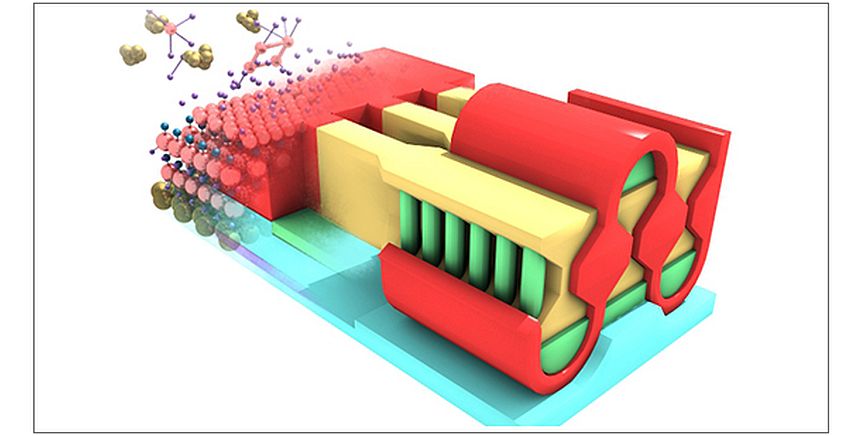
The Defense Advanced Research Projects Agency (DARPA) in the US  begins a new program called DREaM, in order to re-design the traditional transistor and define a new building block for future military electronic systems. Since the advent of microelectronics in the mid-20th century, the basic concepts an materials in transistors virtually have not changed. DARPA’s new Dynamic Range-enhanced Electronics and Materials (DREaM) program is designed to provide new transistors for radiofrequency (RF) and millimeter-wave signals (mmW), which are central in defense-relevant domains such as communications, signals intelligence, and electronic warfare.

“The same basic transistor types have been dominant since their invention and we have been engineering the heck out of them for 50 years,” said Dan Green, a program manager in DARPA’s Microsystems Technology Office (MTO) and the overseer of the DREaM program. “The use of so just a few semiconductor materials has fundamentally limited us in the RF world. With DREaM, we want to rethink all of that and imagine new possibilities.”

The electromagnetic spectrum is overloaded

DARPA says there is a real need: “Enormous and exponentially growing cacophony of RF and millimeter-wave signals (shorter-wavelength and higher-frequency signals than those in the RF range) from civilian and military gadgetry, including everyday smartphones, long-range radars, and frequency-hopping RF jammers, is threatening to overcrowd the electromagnetic (EM) environment. As the Internet of Things and its billions of wirelessly communicating devices (UAVs, home appliances, and military and household sensors, for example) emerge, the RF and millimeter-wave environment will become even more complex, noisy, and challenging to use.”

The program seek to push for new transistors with unprecedented performance, especially in frequencies important for wireless communication, could become important parts of the solution to these challenges. DARPA had already put a stamp on transistors: Agency programs have laid down foundations for transistor technology based on the semiconductor materials gallium arsenide (GaAs) and gallium nitride (GaN), for example. Compared to silicon-based technology, the backbone substance of the microelectronics revolution, GaAs circuitry operates at the higher frequencies and signal amplification powers that have made practical a world connected by palm-sized cell phones. GaN circuitry can operate at yet higher powers and frequencies and have given the U.S. military an edge in electronic warfare by enabling its radars and jammers to work at greater distances than its adversaries.

New characteristics of RF transistors

The strategic challenge for researchers in DREaM, will be to revolutionize the trade offs between four key characteristics of RF transistors: 1) signal power, which determines an RF system’s range of operation, 2) power efficiency, which determines the size and weight of the power system required to run them, 3) the range of frequencies (bandwidth) in which the transistors work, 4) and the system’s so-called linearity, a measure of the fidelity at which a receiver can amplify signals, including weak ones that otherwise would get lost in the cocktail party of signals.

“Our goal is that DREaM transistors will transmit and receive the large and complex RF signals of the future and they will do so in smaller packages while consuming minimal power,” said  Green. To achieve these goals DARPA hopes to push transistor technology on new materials that can accommodate more electrical charge and voltage without degrading. Advances on the materials front could open the way to the higher-power and more capable transistors. Ultrawide bandgap materials (UWB) such as complex oxides, which include gadolinium titanate and strontium titanate, and even particular crystal variants of GaN, are among the many possible candidates for research in this area.

Researchers engaging in the second technical area, which focuses on the linearity of transistor behavior over wide ranges of signal frequencies, will investigate unconventional transistor structures, among them nonplanar and filamentous ones, such as ones based on carbon nanotubes, as well as still-to-be-imagined geometries and layouts that are not constrained by the row-and-column transistor formats of today’s integrated circuits.

DARPA will host a Proposers Day in support of the DREaM program on March 29, 2017 at the Hilton in Arlington, VA.

CEVA may pose a challenge to Intel-Mobileye

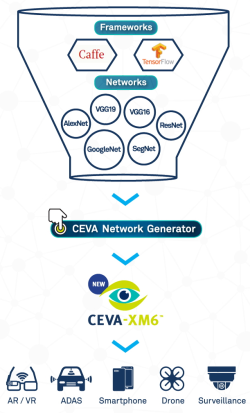
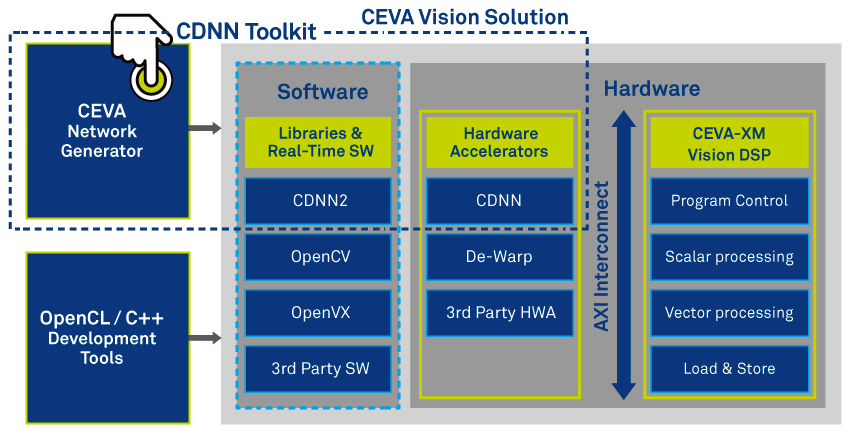
CEVA’s Neural Networks framework

The Intel-Mobileye $15 billion deal that gives Intel a premium position in the future Automomous Vehicles, sent investors to look for interesting opprtunities in this emerging market.  A new report by Wunderlich Securities pointing CEVA from Herzlya, Israel, as a growing competitor in this vsegment.

CEVA is a leading licensor of digital signal processor (DSP) technology. The Wunderlich analyst,  Matthew Robison, gave CEVA a price target of  $40 for CEVA’s shares, now traded in NASDAQ for $34.30.

Robison explained that in uniquely offering a licensable vision processor along with a neural network framework for artificial intelligence applications, “CEVA is providing for those wishing to develop their own capabilities to augment or compete with Mobileye. Meanwhile, CEVA is adding licensees for driver assistance and imaging functions.”

Investments in imaging and ADAS

He mentioned that the company has made heavy investments in imaging, machine vision and Advanced Driver Assistance Systems (ADAS). “The company’s latest vision digital signal processor, the XM6, which was announced in September, is to be licensing in 1Q17. In the near and medium-term we expect royalties from machine vision imaging applications to come from more sophisticated smart phone cameras, followed by surveillance applications and ADAS, including 360-degree object detection.

“With Intel purchasing Mobileye, arguably the purest publicly traded asset in ADAS and autonomous vehicle technology is spoken for. Of the 20 CEVA licensees for imaging and vision, Altek, Novatek, On Semiconductor and Rockchip exemplify licensees targeting automotive/ADAS, as well as at least one undisclosed tier-1 subsystem supplier. Expect several of these to become part of 2017 royalties.”

CEVA does not provide full ADAS application software solutions for forward collision or lane departure warning. These capabilities are offered by Mobileye (MBLE-NR), tier-1 subsystem roviders, like AutoLiv (ALV-NR), Bosch (500530-BOM-NR), Continental (CON-ETR-NR) and Denso (6902-TKS-NR), as well as by Tesla (TSLA-NR). CEVA uniquely provides licensable vision processors cores with complete tools to implement algorithms, utilize industry frameworks and use of artificial intelligence (AI) for fully autonomous vehicle operation.

“We expect CEVA to be part of the competitive environment for Intel/Mobileye in autonomous vehicles over the long term.”