Intel to Acquire MobilEye for $15.3 Billion

*[Photograph above: Prof. Amnon Shashua of Mobileye]

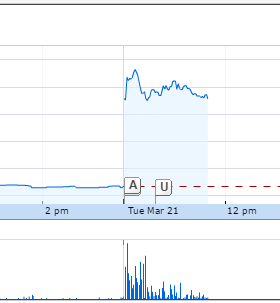
Intel Corporation an Mobileye N.V. (NYSE: MBLY) today announced a definitive agreement under which Intel would acquire Mobileye. Pursuant to the agreement, a subsidiary of Intel will commence a tender offer to acquire all of the issued and outstanding ordinary shares of Mobileye for $63.54 per share in cash, representing an equity value of approximately $15.3 billion and an enterprise value of $14.7 billion.

The combination is expected to position Intel as a leading technology provider in the fast-growing market for autonomous vehicles. Intel estimates the vehicle systems, data and services market opportunity to be up to $70 billion by 2030.

Intel’s Automated Driving Group will be based in Jeruzalem

Together with partners and customers, Intel and Mobileye expect to deliver driving solutions that will transform the automotive industry. The combined global autonomous driving organization, which will consist of Mobileye and Intel’s Automated Driving Group, will be headquartered in Israel and led by Prof. Amnon Shashua, Mobileye’s CoFounder, Chairman and CTO.

The organization will support both companies’ existing production programs and build upon relationships with automotive OEMs, Tier-1 suppliers and semiconductor partners to develop advanced driving assist, highly autonomous and fully autonomous driving programs.

4,000GB per Car per Day

“This acquisition is a great step forward,” said Brian Krzanich, Intel CEO. “Intel provides critical foundational technologies for autonomous driving. Mobileye brings the industry’s best automotive-grade computer vision and strong momentum with automakers and suppliers. Together, we can accelerate the future of autonomous driving with improved performance at a lower cost.”

As cars progress from assisted driving to fully autonomous, they are increasingly becoming data centers on wheels. Intel expects that by 2020, autonomous vehicles will generate 4,000GB of data per day, which plays to Intel’s strengths in high-performance computing and network connectivity. The complexity and computing power of highly and fully autonomous cars creates large-scale opportunities for high-end Intel Xeon processors and high-performance EyeQ4 and EyeQ5 SoCs, high-performance FPGAs, memory, high-bandwidth connectivity, and computer vision technology.

The transaction is expected to close within the next nine months. It has been approved by the Intel and Mobileye Boards of Directors and is subject to the receipt of certain regulatory approvals and other closing conditions.

In a mail to the employees, Intel CEO Brian Krzanich explained the motivations behind the deal: “Many of you have asked why we think autonomous cars and vehicles are so important to Intel’s future. The answer is DATA. Our strategy is to make Intel the driving force of the data revolution across every technology and every industry. We are a DATA company. The businesses we focus on, and deliver solutions to, create, use and analyze massive amounts of data.”

“I recently had a chance to speak at the LA Auto show and the title of my presentation was “Data is the New Oil.” My message was simple: automobiles and the automotive industry are increasingly driven by data and computing. The saying “What’s under the hood” will increasingly refer to computing, not horsepower. At four terabytes of data per day, the average autonomous car will put out the data equivalent of approximately 3,000 people.

“Put just one million autonomous vehicles on the road and you have the data equivalent of half the world’s population. This massive amount of data requires all of Intel’s assets to provide the cost-effective highperformance solutions our customers need.”

Digi-Key Plans a 1 Million Square Foot Warehouse

Digi-Key Electronics, the Thief River Falls, Minn-headquartered global distributor of electronic components, announced that it is reviewing several potential options for a one million square foot, value-added manufacturing and warehouse center. The company plans to invest between $200-$300 million. While multiple options are under review, Thief River Falls would be its preferred location, contingent on both local approvals and legislative changes required.

According to Dave Doherty, Digi-Key’s President and Chief Operating Officer, “Digi-Key’s ongoing growth in both domestic and international sales is driving the need for increased capacity.”  Digi-Key’s potential expansion would add 1,000+ new jobs over the next ten years to its existing base of 3,200 employees in Minnesota.

Over 1.3 million products in stock

“Given our large size, every major expansion becomes more complex and requires that we review a variety of possibilities,” said Rick Trontvet, Digi-Key’s Vice President of Administration and Human Resources.  “This review process involves a lot of fact finding, including due diligence with local and state officials to help us make these decisions.”  Digi-Key’s current operations generate approximately $1.5 billion in economic output and add over $940 million to the state’s gross state product. This new expansion would contribute an additional $500 million in state economic output.

Digi-Key Electronics, based in Thief River Falls, Minn., is a global, full-service distributor of both prototype/design and production quantities of electronic components. It offers more than five million products from over 650 quality name-brand manufacturers. With over 1.3 million products in stock and an impressive selection of online resources.

Analog Devices Completed the Acquisition of Linear Technology

Analog Devices announced today  the completion of its acquisition of Linear Technology Corporation. Linear Technology’s shares of common stock have been delisted from the NASDAQ Global Select Market effective as of the close of trading today. The merger creates a giant analog technology company with a comprehensive suite of high-performance analog offerings, manufacturing, sales and support operations.

In July 2016, Analog Devices and Linear Technology Corporation have entered into a definitive agreement under which Analog Devices will acquire Linear Technology in a cash and stock transaction. The transaction valued Linear Technology at approximately $14.8 billion, and the combined enterprise at approximately $30 billion. Upon completion of the acquisition, Analog Devices will be a premier global analog technology company, with approximately $5 billion annual revenues.

Swanson to join ADI Board

“The combination of Analog Devices and Linear Technology creates an analog industry powerhouse,” said Vincent Roche, ADI President and Chief Executive Officer. ADI also announced that Robert H. Swanson, former Executive Chairman of Linear Technology, has been elected to the ADI Board of Directors, effective immediately after the closing of the acquisition. Swanson, a founder of Linear Technology, has served as Executive Chairman of Linear Technology since January 2005. Prior to that, he served as Chairman and Chief Executive Officer of Linear Technology since its incorporation in 1981. ADI expects Linear Technology to contribute between $160 million to $170 million in revenue to ADI’s second fiscal quarter of 2017.

Analog Devices and Linear Technology merger at glance


Imec Presented a New Digital Receiver for Bluetooth 5

The ongoing evolution towards an intuitive IoT has created unprecedented opportunities in various application domains. However, the deployment of massive numbers of interconnected sensors requires ultra-low power solutions enabling multi-year battery life. To increase the autonomy of sensors, imec develops ultra-low power wireless technology for IoT applications, such as next-generation Bluetooth Low Energy and IEEE 802.15.4.

Imec’s novel receiver concept features sub-1nJ/bit energy efficiency and low supply voltage operation at 0.85V while maintaining similar RX sensitivity as best-in-class products. The receiver employs digital phase-tracking to directly translate the RF input to demodulated digital data. A digitally-controlled oscillator (DCO) is used instead of a power hungry phase locked loop (PLL). The receiver, implemented in 40nm CMOS, is only 0.3mm2, which is at least 3x smaller compared to the state-of-the-art. Due to this small size it can be manufactured at strongly reduced cost.

New generations of Bluetooth and 802.15.4 radios

Especially in wearable or implantable devices, the antenna impedance can dynamically change due to variations in a device’s position or surroundings. This can deteriorate the radio’s performance and degrade battery lifetime. Imec demonstrated a fully integrated, sub-mW impedance detection technique for ultra-low power radios, enabling tunable matching between the antenna and the radio front-end. This technique can be implemented in an adaptive radio front-end to further improve receiver sensitivity and transmitter efficiency in the presence of antenna impedance variations.

“This innovative receiver concept will not only serve the new Bluetooth 5 devices, but provides our industrial partners a long term competitive advantage for multiple new generations of Bluetooth and 802.15.4 radios, still to come.”, says Kathleen Philips, Program Director Perceptive Systems at imec/Holst Centre. “This great achievement is a confirmation of our continuous efforts to push the technology limits toward ever higher performance, lower power consumption and smaller form factor, which are essential features for internet-of-things radio solutions.”

ON Semiconductor Acquires Israeli Radar Technology for Automotive Sensing

ON Semiconductor Corporation (Nasdaq: ON) today announced that it is acquiring and licensing mmWave technology for automotive radar applications developed by IBM’s Haifa, Israel research team. The acquisition expands ON Semiconductor offer to automotive sensing market and ads radar sensors in addition to its image sensors line. Radar is highly complementary to sensing cameras as it excels at measuring distance and object velocity even in poor visibility. The company said that the combination of these technologies “enables ON Semiconductor to address the growing trend of sensor fusion where multiple sensing technologies are used to improve accuracy and automotive safety.”

Next-generation ADAS and Autonomous Sriving Solutions

Techtime has learned from sources close to the deal. that the IBM team of 15 mmWave experts, will join ON Semi to form its new development center in Haifa. It will be the first research activity of ON Semi in Israel. “The team and its technologies accelerates ON Semiconductor’s strategy to grow our automotive sensing business even faster than the robust growth from increasing camera attach rates,” said Taner Ozcelik, senior vice president and general manager Image Sensor Group. “We look forward to delivering a wider range of sensing products for next-generation ADAS and fully autonomous driving solutions.”

The acquisition creates a new Israel design center for ON Semiconductor that reports directly into the automotive solutions division within the Image Sensor Group. The new design center is located in Haifa, Israel. It includes staff, equipment, research facilities and intellectual property. The team’s Eband designs meet the stringent European ETSI standard and include high output power for a Fixed Beam Silicon based chipset.

A Single Chip Solution

During its operation in IBM, the team has developed a low-cost, high-throughput wireless transceiver. The focus is on a single chip solution with a high level of integration (RF-to-baseband including ADC on a single chip) for a short range (less than one meter) wireless transceiver in the unlicensed 60GHz ISM Band. Based on IBM’s CMOS technology and know-how, an efficient integrated receiver is being developed with an emphasis on ultra-low power (less than 150 mW) and low-cost RF and baseband components.

In the long term, it is envisioned that this product will migrate to high-end mobile phone devices and health care applications such as portable MRI, CT-SCAN, and digital imaging enabled tablets, which will expand the market tremendously. The technical challenge for this 60GHz radio is to be capable of transfer rates up to 1.5 Gbps over a range of 1 meter while limiting the power consumption to less than 150 mW.

SatixFy Announced the first Beam Hopping Emulator

SatixFy from Rehovot, Israel, announced an Emulator for Beam Hopping systems. The emulator supports customers with research, development and testing of various aspects of the beam hopping architecture and is based on SatixFy’s existing silicon ASIC chip: SX-3000. It is a fully compliant DVB-S2X/RCS2 System on Chip based on Software Defined Radio (SDR) technology, and supports Receive channels of up to 500 MHz, multiple receivers and a transmit channel with 500 MHz DVB S2X transmission, or 20 MHz DVB RCS2 return link.

Yoel Gat, CEO of SatixFy, said, “There’s no question whether beam hopping will happen — the question is only when. In five to six years, many communication satellites launched will use beam hopping techniques. Beam hopping is the next evolution of HTS and UHTS. It’s going to increase overall satellite capacity, reduce unmet capacity demand and reduce satellite payload power consumption by up to a factor of 2. It also provides wide system flexibility such as on-the-fly dynamic capacity allocation. SatixFy is proud to be first in the market with terminals that support beam hopping. We make Beam Hopping happen.”

Jumping to Beam Hopping

“With DVB-S2X, satellite operators are designing next-generation architectures with features like beam hopping that enable satellites to adjust their payloads based on real-time demand on the ground,” said Wayne Haubner, Senior Vice President, Engineering & Emerging Technologies, iDirect. “Our newly introduced iQ Series remote is built on the SatixFy ASIC chipset to provide our customers with investment protection as these new features come online.”

Beam Hopping technique resemble cellular cells distribution concept. The satellite spot beams are formed by higher gain antennas with smaller beam widths than continental wide beam transponders. Since there are temporal variations in the capacity demands of each beam area, the satellite can give full spectrum and data link speed to the most needed area in a given time.

According to the European Space Agency, “Compared to uniform power and bandwidth assignment per user beam, the beam hopping provides 50% reduction of DC power consumption. Using the beam hopping, one power amplifier can serve up to 8 beams providing significant saving in required mass particularly for multi-beam systems with user link in Ka band with a large number of beams.”

New Satellite Terminal

This month SatixFy will demonstrate the firs system based on its ASIC chip: A COTM terminal developed together with GetSat. In testing, the GetSat terminal successfully operated at -9dB VLSNR on multiple platforms. This is the first product in the market based on DVB-S2X VLSNR mode, demonstrating operation at these SNR levels, which opens up a variety of new applications using compact terminals for government, military and commercial needs.

“SatixFy is the first company to provide a fully integrated chip that supports the complete DVB-S2X standard, including both mandatory and all optional features,” said Yoel Gat, CEO of SatixFy. “Our partnership with GetSat leverages a capability of the DVB-S2X standard that enables applications over compact terminals that have been very hard to support by satellite technology – from ultra-small man packs to new UAV solutions to the expansion of machine-to-machine communication over satellite. We are ensuring our customers can meet current and future opportunities to gain a sustainable advantage in their markets.”

About SatixFy

SatixFy is a leading provider of baseband modem and antenna chips, products and solutions that deliver highest performance with radically reduced cost, size, weight and power. SatixFy also delivers advanced Terminals, Payloads and Gateway equipment. SatixFy is at the forefront of designing the most advanced satellite payloads with on-board-processing, multi-beams and beam hopping as well as indoor/outdoor VSATs systems.

STMicroelectronics and DSP brings intelligence to MEMS Microphones

STMicroelectronics, DSP Group Inc. and Sensory Inc. have revealed details for a highly power-efficient, voice-detecting and -processing microphone that delivers keyword-recognition capabilities in a compact package. The small System-in-Package (SiP) device integrates a low-power ST MEMS microphone enabled by DSP Group’s ultra-low power voice-processing chip and Sensory’s voice-recognition firmware.

Although typical wake-on-sound microphones eliminate the need for users to touch the device to wake it from sleep mode, they have a very  limited processing power and not capable to bring full recognition of the received instruction. Using the HDClear ultra-low power audio processing chip from DSP Group, ST’s microphone detects and recognizes instructions without waking the main system, enabling energy-efficient, intuitive and seamless interactions for users speaking to voice-operated appliances like smart speakers, TV remotes, and smart home systems.

Understanding without Listening

“Unlike previous existing solutions, this microphone doesn’t just listen to voices – it immediately understands the commands, too, without using the power and computation resources of the main processor,” said Andrea Onetti, MEMS and Sensors Division General Manager, STMicroelectronics.

“As voice becomes the default user interface, more and more innovative products embrace smart voice-processing technology,” said Ofer Elyakim, CEO of DSP Group. “This collaboration brings to market a powerful yet energy-efficient solution with best-in-class performance – a perfect match for any smart system that needs high-quality voice capabilities.” First prototypes of ST’s new command-recognition microphone will be available by the end of Q1 2017 with volume production in early 2018.

MEMS Microphones: Smaller and Better

MEMS (Micro-Electrical-Mechanical Systems) microphone sensor is basically a variable capacitor that responds to incoming wave of the sound. It is produced in a silicon fab and consists of two silicon plates/surfaces. One plate is fixed while the other one is movable. The fixed surface is covered by an electrode to make it conductive and is full of acoustic holes which allow sound to pass through. The movable plate is able to move since it is bonded at only one side of its structure. Beside low cost, very small form factor and excellent Signal to Noise Ratio, in comes with an integrated circuit inside the package, to converts the change of the polarized MEMS capacitance into a digital (PDM modulated) or analog output according to the microphone type. This is the place where ST, DSP and Sensory added intelligence into the device.

STMicroelectronics is a global semiconductor leader. In 2016, the Company’s net revenues were $6.97 billion. DSP Group from Herzliya, Israel, provides wireless chipsets integrating DECT/CAT-iq, ULE, Wi-Fi, PSTN, HDClear, video and VoIP technologies. Sensory from the UK provides voice control firmware for mobile phones, automotive, wearables, toys, IoT and various home electronics.