Mellanox Ships More Than 200,000 Optical Transceiver Modules

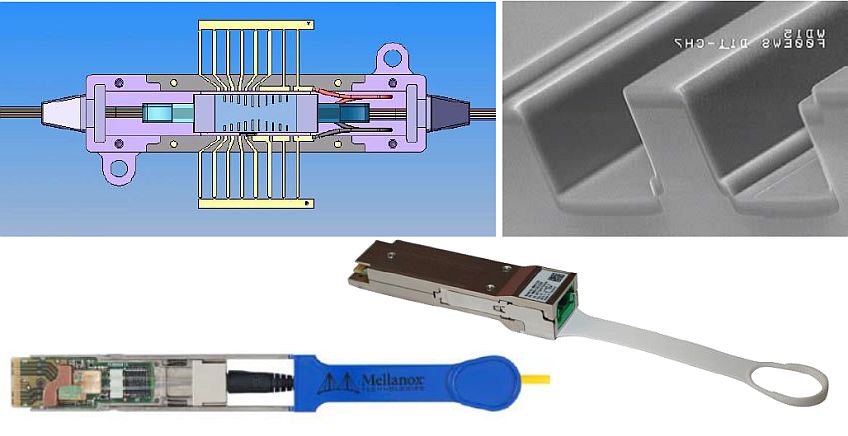
Mellanox Technologies, Ltd. from YOKNEAM, Israel, announced that it has shipped more than 200,000 VCSEL and silicon photonics transceiver modules for hyperscale Web 2.0, cloud, and enterprise 100Gb/s networks. The modules are delivered in the QSFP28 form factor as Active Optical Cables (AOCs) or as standalone pluggable transceivers.

“The 100Gb/s optical transceivers market has ramped very quickly,” said Amir Prescher, general manager of the interconnect business at Mellanox. “Multi-mode optics are the most cost effective solution on the market today to connect 25G and 100G Ethernet servers and switches over shorter data center reaches. For longer reaches, customers selected our silicon photonics-based PSM4 transceivers as the most cost effective, highest configurable, single-mode transceiver available.”

“100G quickly surpassing 40G”

Dale Murray, Principal Analyst at Lightcounting Market Research, said that tThe 100Gb/s transceiver and AOC market grew dramatically in 2016 to about $1.15 billion with demand exceeding supply. “The early adopter hyperscale and HPC spaces lead consumption. Going forward, we see 100G quickly surpassing the very popular 40G and going on to have a very long life cycle.”

Recently, Mellanox announced that is has shipped over 100,000 Direct Attach Copper (DAC) cables for 100Gb/s networks. DAC are used to link servers and storage to Top-of-Rack switches; typically less than 3 meters in length. Transceivers and AOCs offer lengths up to 2km. This announcement of optical transceivers confirms the broader market expansion of 100Gb/s networks.

Key application segments driving demand are the next-generation 100Gb/s networks in hyperscale, Web 2.0, enterprise, and storage as well as High Performance Computers. System builders are more broadly upgrading from 10G and 40Gb/s to 25, 50 and 100Gb/s networks. To meet the demand and the cost targets of end customers, Mellanox designs its own ICs, uses automated manufacturing and parallel system testing.

IBM Watson Health to Integrate MedyMatch’s AI Deep Vision

MedyMatch Technology revealed a collaboration with IBM Watson Health, to bring MedyMatch’s AI-based clinical decision support application to imaging experts working in hospitals to help identifying intracranial bleeding, as a result of head trauma and stroke. IBM Watson Health’s Imaging group will distribute the MedyMatch brain bleed detection application globally through its vendor neutral sales channels. To do so, IBM Watson Health and MedyMatch will also develop interoperability between MedyMatch’s application and IBM Watson Health Imaging’s offerings.

MedyMatch utilizes advanced cognitive analytics and artificial intelligence to deliver real-time decision support tools to improve clinical outcomes in acute medical scenarios. It created a new category of AI-driven diagnostic tools based on 3D imaging, the breadth of patient-specific data, and other relevant data,concurrently.  MedyMatch  has developed imaging artificial intelligence engine leverages deep vision and cognitive analytics to compare billions of data points to immediately identify the most rare, long-tail anomalies invisible to the human eye.

Meeting place of Deep Learning and Big Data

The MedyMatch algorithm uses sophisticated deep learning, machine vision, patient data, and clinical insights to automatically highlight for a physician regions of interest that could indicate the potential presence of cerebral bleeds –and does so without interrupting how a physician works.

“The opportunity to license our deep vision application to IBM Watson Health creates a unique value proposition in healthcare,” said Gene Saragnese, chairman & chief executive officer of MedyMatch. “Engaging closely with IBM allows for a near-zero footprint implementation at a customer location delivering ‘A.I. to the bedside’ where I believe the future of healthcare lies.  At MedyMatch, we believe improvements in the interpretation of data will lead to better decisions, better decisions will lead to better outcomes for patients and lower cost for healthcare.  This is what drives us forward every day.“

“Eight of the top 10 software companies are our customers”

“Eight of the top 10 software companies in the world are now Synopsys customers,” said Dr. Aart de Geus, founder, co-CEO and chairman of Synopsys, during his visit to Israel last week. Dr. de Geus visited Israel to mark the 20th anniversary of Synopsys’ branch in Israel. The visit included meetings with key Israeli customers, dinner event with senior decision makers in the Israeli tech sector and an anniversary celebration event at the offices of Synopsys in Hertzliya.

de Geus: “also seven of the top 10 automotive OEMs are Synopsys’ customers and so are 16 of the top 20 commercial banks in the world.” de Geus made general remarks on Synopsys’ current business status, and stressed: “We’re seeing very good momentum with our EDA platforms, continued strength in our IP portfolio and good growth in Software Integrity as we continue to invest and broaden our Total Available Market in this very promising emerging market.”

Relating to Synopsys’ Software Integrity Group he said: “Our strategy is to, first, broaden and deploy our software sign-off platform; second, accelerate our penetration of key verticals in both the embedded and enterprise spaces; and third, drive demand creation, with services, ecosystem partners and certification projects. While it’s early, we’re making great progress.”

Referring to challenges in the Internet of Things, de Geus observed that integrating security and privacy measures throughout the development process of IoT solutions can prevent most of the security vulnerabilities in this space. Dr. de Geus cited the statement of the industry organization Online Trust Alliance that a 100% of recently reported IoT vulnerabilities could have been easily avoided if manufacturers and developers took security and privacy measures into account throughout the development process.

Verification becomes harder

With the rise of “Smart Everything” system and end-products comes the demand for devices that are smaller, faster, consume less power, and are equipped with increasing amounts of software content. As a result, SoC designs have grown tremendously in complexity. Advanced verification teams are now faced with the challenge of not only reducing functional bugs, but also accelerating both software bring-up and time to market. The process of finding and fixing functional bugs and performing software bring-up involves intricate verification flows including virtual platforms, static and formal verification, simulation, emulation and finally, FPGA-based prototyping.

Up until very recently, each step in the verification flow had been isolated and many discontinuities existed between them. The Synopsys Verification Continuum strives towards greater levels of verification productivity and early software bring-up which it achieves through the industry’s fastest engines, with unified compile and unified debug, and native integration between engines, technologies and products.  As such, each step in the verification flow is further streamlined, and less time is spent in transitioning between various stages, enabling further dramatic increases in SoC verification productivity, earlier software bring-up and earlier software development.

Silicon is still a priority

At the same time, according to de Geus, automotive has become a key focus segment for Synopsys, touching Synopsys’ IP, EDA and software security portfolios. “Our customer base in automotive continues to widen, including new semiconductor companies as well as OEMs and noted tier 1 suppliers,” explained de Geus. “In the semiconductor space we see several dominant trends. First, in Synopsys’ last financial quarter, from November 2016 to January 2017, the general outlook for the market is more positive compared to earlier quarters.

“Partly because companies invest in early products in various categories: Internet of Things, machine learning, automotive, augmented and virtual reality, networking infrastructure, and the continually growing need for more compute power in the cloud. Technology companies continue to prioritize aggressive adoption of advanced silicon and state-of-the-art design, while being mindful of their need to control costs.”

“All in all, the predictions that we’ve made now for a number of years that electronics would bring about a wave of new opportunities through digital intelligence, is starting to become visible. And I think that is very exciting because if you have something that’s a little bit smart, the one thing you want is to be smarter and one way to make it smarter is to give it more compute power.”

Orbotech won $5 Million DI Solutions order for mobile devices

A major Japanese electronics manufacturer with worldwide facilities, placed a $5 million order for Orbotech’s direct imaging (DI) solutions for solder mask and other solutions.  The Orbotech solutions were adapted to meet the customer’s specific manufacturing requirements for smart mobile devices.

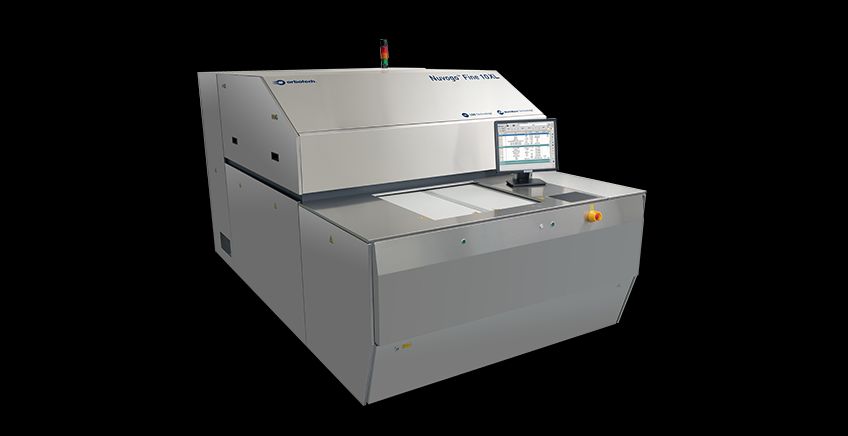
Following extensive testing in late 2016 and strong collaboration between Orbotech and its customer, Orbotech received an order for multiple direct imaging solutions to address the technological challenges involved in manufacturing next generation smart mobile devices. It includes the Paragon Ultra for complex IC substrates, and the Nuvogo 1000R, a large-format DI solution, that was also installed to enable high-quality DI for patterning and solder mask.

“Our customer had specific demands regarding production standards and specifications that presented unique challenges,” said Yair Alcobi, President of Orbotech Asia East. “Orbotech also succeeded in customizing features to satisfy the specific requirements of a number of advanced applications.”

Laser technology for smart production

Featuring Orbotech’s Large Scan Optics (LSO) Technology, Paragon Ultra Laser Direct Imaging (LDI) is used for complex IC substrate applications including Flip-Chip BGA, Flip-Chip CSP, BGA/CSP and modules manufacturing. It provides fast throughput using enhanced electronics and a powerful laser system on both conventional UV and LDI resists.

Nuvogo 1000R  utilizes a high-power laser and unique MultiWave Laser Technology that provides flexibility on a wide range of materials and applications. It is a solution for flex patterning and solder mask applications that demand fine structures on variating topography.

Orbotech Ltd. from YAVNE, Israe, provides yield enhancement, and production solutions for electronics reading, writing and connecting, used by manufacturers of printed circuit boards, flat panel displays, advanced packaging, micro-electro-mechanical systems (MEMS), LED, high speed RF on GaAs, power management device and other electronic components. Orbotech’s annual revenues for 2016 were $806 million, up 7% compared with $753 million in 2015.

OriginGPS Launched the Smallest GNSS Module

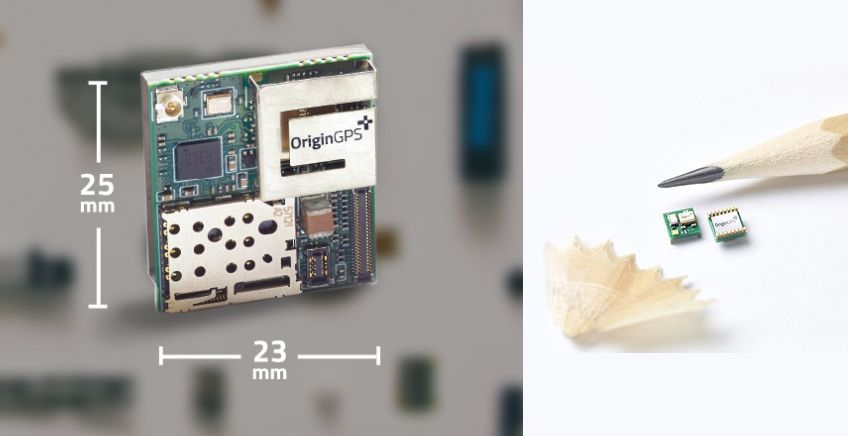
OriginGPS, from AIRPORT CITY, Israel, announced the release of its new ORG 4500 series, fully-integrated product that supports ultra-compact applications for both GPS and GLONASS. The ORG 4500, called Spider, is kin to the lean and mean ORG 4400 series introduced last year. “Our modules readily resolve the industry’s acute pain points of unreliability and sensitivity in the commercial, engineering, and defense sectors, enhancing the quality of experience and helping our customers remain competitive,” said Haim Goldberger, CEO of OriginGPS.

Measuring only 4.1×4.1×2.1mm, it is a fully integrated GPS module. Unlike GPS modules of similar size, it includes LNA, SAW Filter, TCXO and RTC crystal as well as a power management unit. The Spider module offers superior sensitivity and outstanding performance, achieving rapid time to first fix (TTFF) in less than one second, accuracy of approximately one meter, and tracking sensitivity of -163dBm.

OriginGPS offers a range of fully-integrated GNSS/GPS and antenna solutions, encompassing a wide gamut of standard and essential tools for navigation. The small form factor and high sensitivity of OriginGPS’s modules enable new business models like ‘machine as a service’, and are ideally suited for a variety of applications – wearables, like smart watches and pet tracking, and also smart cities and drones. OriginGPS modules are deployed around the globe in key sectors, such as transportation, civil engineering, precision agriculture and time reference.

Ramping up the race to offer the best NarrowBand IoT products, OriginGPS continues to expand its presence in the global navigation market with a steady stream of new IoT-enabled solutions, like its recently released IoT platform (ORG 2100).

Last year the company  announced three new products built on the flash-based SiRFstar V from Qualcomm Technologies, Inc. This latest trio of modules is now boasting key drone features like low-latency velocity and position outputs and 5 Hz position updates to their already industry leading Multi Hornet, Multi Micro Hornet and Multi Micro Spider. All of OriginGPS’ modules are designed with patented Noise Free Zone TM technology which minimizes noise, producing the maximum signal-to-noise ratio.

Powermat will align itself to Apple’s Wireless Charging

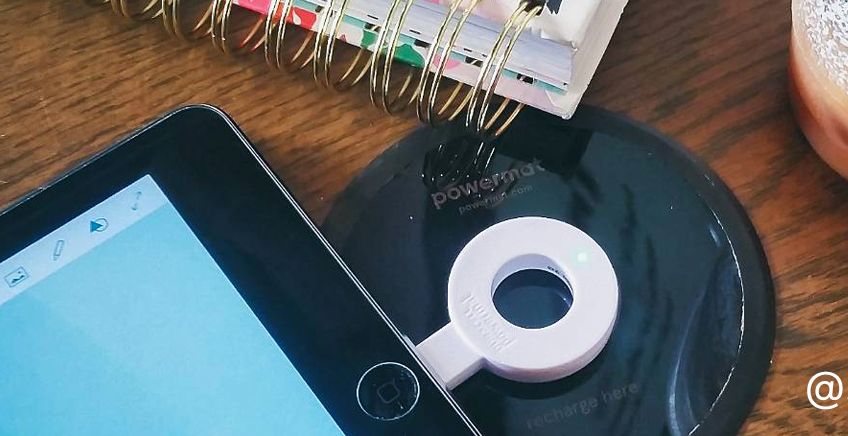
Following Apple’s decision to join the Wireless Power Consortium, Powermat announced that the company would be ready to support iPhones with whatever  wireless charging protocol Apple employs.  Recognizing Apple’s ability to bring wireless charging into the mainstream by the sheer volume of iPhones in the market, Powermat said Apple’s move will accelerate the growth of the wireless charging category.

“Regardless of which standard Apple will ultimately adopt or whether they’ll develop their own proprietary technology, we believe the category is big enough for everyone to play,” said Elad Dubzinski, Powermat CEO.  “Powermat was the first wireless charging company to develop the technology and envision a world where wireless power is ubiquitous. That was the brainchild of Ran Poliakine, our founder and the first Powermat CEO. We are delighted that Apple will help bring that vision to fruition.”

Powermat has made a decision to become the umbrella provider of wireless charging for all standards and protocols in an effort to ensure that as many people as possible could benefit from wireless power delivery. The Powermat platform has always been capable of supporting multiple protocols. For that reason, Powermat opened their network so that all industry players could connect.

Powermat beleives it currently leads the category in real estate with wireless charging capability being installed in Starbucks stores across the US and abroad.  The company reported there are currently 12,000 Powermat charging spots used regularly by consumers in public venues.  Powermat is also currently installed in over 1 million GM vehicles and more than 250 million mobile devices in the market.  Powermat’s partners also include Duracell, General Motors, AT&T and Starbucks. For more information: www.powermat.com.

Intel to Acquire MobilEye for $15.3 Billion

*[Photograph above: Prof. Amnon Shashua of Mobileye]

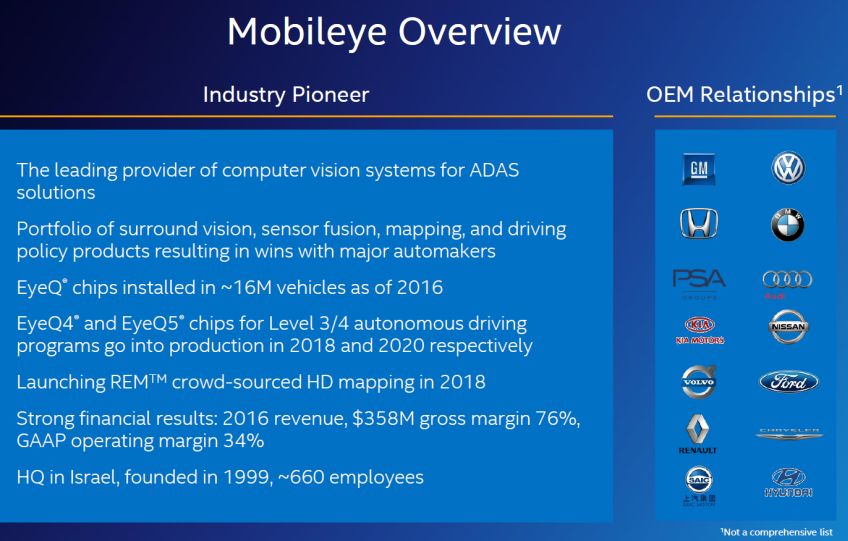
Intel Corporation an Mobileye N.V. (NYSE: MBLY) today announced a definitive agreement under which Intel would acquire Mobileye. Pursuant to the agreement, a subsidiary of Intel will commence a tender offer to acquire all of the issued and outstanding ordinary shares of Mobileye for $63.54 per share in cash, representing an equity value of approximately $15.3 billion and an enterprise value of $14.7 billion.

The combination is expected to position Intel as a leading technology provider in the fast-growing market for autonomous vehicles. Intel estimates the vehicle systems, data and services market opportunity to be up to $70 billion by 2030.

Intel’s Automated Driving Group will be based in Jeruzalem

Together with partners and customers, Intel and Mobileye expect to deliver driving solutions that will transform the automotive industry. The combined global autonomous driving organization, which will consist of Mobileye and Intel’s Automated Driving Group, will be headquartered in Israel and led by Prof. Amnon Shashua, Mobileye’s CoFounder, Chairman and CTO.

The organization will support both companies’ existing production programs and build upon relationships with automotive OEMs, Tier-1 suppliers and semiconductor partners to develop advanced driving assist, highly autonomous and fully autonomous driving programs.

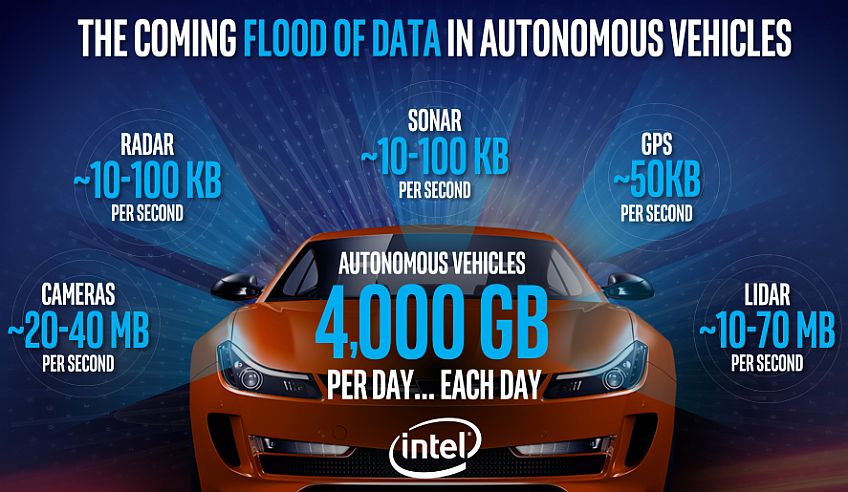
4,000GB per Car per Day

“This acquisition is a great step forward,” said Brian Krzanich, Intel CEO. “Intel provides critical foundational technologies for autonomous driving. Mobileye brings the industry’s best automotive-grade computer vision and strong momentum with automakers and suppliers. Together, we can accelerate the future of autonomous driving with improved performance at a lower cost.”

As cars progress from assisted driving to fully autonomous, they are increasingly becoming data centers on wheels. Intel expects that by 2020, autonomous vehicles will generate 4,000GB of data per day, which plays to Intel’s strengths in high-performance computing and network connectivity. The complexity and computing power of highly and fully autonomous cars creates large-scale opportunities for high-end Intel Xeon processors and high-performance EyeQ4 and EyeQ5 SoCs, high-performance FPGAs, memory, high-bandwidth connectivity, and computer vision technology.

The transaction is expected to close within the next nine months. It has been approved by the Intel and Mobileye Boards of Directors and is subject to the receipt of certain regulatory approvals and other closing conditions.

In a mail to the employees, Intel CEO Brian Krzanich explained the motivations behind the deal: “Many of you have asked why we think autonomous cars and vehicles are so important to Intel’s future. The answer is DATA. Our strategy is to make Intel the driving force of the data revolution across every technology and every industry. We are a DATA company. The businesses we focus on, and deliver solutions to, create, use and analyze massive amounts of data.”

“I recently had a chance to speak at the LA Auto show and the title of my presentation was “Data is the New Oil.” My message was simple: automobiles and the automotive industry are increasingly driven by data and computing. The saying “What’s under the hood” will increasingly refer to computing, not horsepower. At four terabytes of data per day, the average autonomous car will put out the data equivalent of approximately 3,000 people.

“Put just one million autonomous vehicles on the road and you have the data equivalent of half the world’s population. This massive amount of data requires all of Intel’s assets to provide the cost-effective highperformance solutions our customers need.”