INFINIDAT Reports 61% Overall Sales Growth in Q3

The INFINIDAT InfiniBox offers mainframe-class reliability with 99.99999% availability and up to 900K IOPS and 12.5 GB/s of throughput

The provider of advanced enterprise data storage solutions, INFINIDAT, said that the company delivered 61% quarter over quarter sales growth in Q3 2015, including a 255% increase in international sales. INFINIDAT, which has been shipping the InfiniBox enterprise storage solution since late 2013, surpassed a quarter of an Exabyte in the amount of storage shipped to customers. An Exabyte is 1000 Petabytes.

The INFINIDAT InfiniBox storage solution delivers advanced, high performance enterprise-class storage at a disruptive price point. InfiniBox offers mainframe-class reliability with an unprecedented 99.99999% availability, while providing up to 900K IOPS and 12.5 GB/s of throughput. By providing multi-petabyte capacity in a single rack, along with continuous data protection and rich storage automation, INFINIDAT is changing the paradigm of storage efficiency and productivity while dramatically reducing operational overhead, complexity and cost.

“We are consistently experiencing sizable sales growth from quarter to quarter, particularly around the world as we become further established in international markets such as EMEA and Asia Pacific,” said Moshe Yanai, INFINIDAT Founder and CEO. “While storage sales have stagnated for many traditional storage vendors, we are seeing exponential increases as a result of our ability to deliver a unique hybrid architecture with high performance, scalability, reliability and the best TCO in the industry. INFINIDAT is revolutionizing storage to provide customers with a solution that is cost-effective yet solves the challenges they are having with managing their expanding volumes of data.”

Sckipio Receives Investment from Intel Capital

Sckipio develops chips for G.fast modems. “This strategic investment is another milestone for the Intel Connected Home Division.”

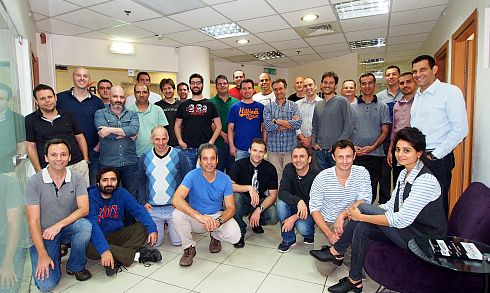
Sckipio team in Ramat-gan

Sckipio Technologies from Ramat-gan, Israel, today announced it has received investment from Intel Capital, the strategic investment and M&A arm of Intel Corp. Sckipio is a fabless semiconductor company focused on G.fast modems, that deliver 1Gbps connectivity over twisted pair copper wires.

The company was founded in 2012 to deliver fiber-like broadband access over existing wires using the new ITU-T broadband access technology standard, G.fast. The details of Intel’s total investment remain confidential. Previously, Sckipio raised $27 million from venture capital firms Amiti Ventures, Aviv Ventures, Genesis Partners, Gemini Israel Ventures and Pitango Venture Capital.

“Sckipio and Intel have been working closely together since the beginning of the G.fast market and jointly announced the first G.fast residential gateway reference design in the fall of 2014,” noted Dan Artusi, Intel vice president and general manager of its Connected Home Division. “This strategic investment is another milestone for the Intel Connected Home Division.”

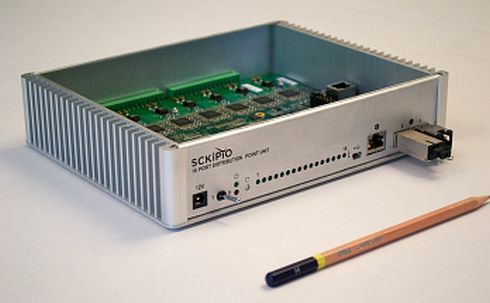
Sckipio reference design for  1Gbps modem
Sckipio reference design for 1Gbps modem

In the past year, Sckipio achieved many achievements including the first 16-port Distribution Point Unit, the first to run UHDTV content across G.fast, the first to demonstrate SDN running over G.fast (in partnership with AT&T), and the first to deliver 1Gbps at 300 meters – changing the dynamics of the broadband access market.

In October this year, Sckipio announced it can deliver up to 2Gbps of throughput over twisted pair copper wiring with G.fast. Sckipio uses standard-compliant G.fast silicon by bonding two copper pairs to a single G.fast-enabled CPE.

This solution helps telcos compete very effectively against both cable operators using DOCSIS 3.1 and against companies who have implemented fiber to the home. G.fast provides several key advantages over existing broadband technologies: Lowers the cost to deploy fiber-like speeds by as much as 90%, Eliminating home installations and installer-induced delays and simplifies deployments by using remote power feed, which eliminates complex permissions to power FTTdp field units.

Gilat Launched SDN-based Architecture for Communication Satellite Operators

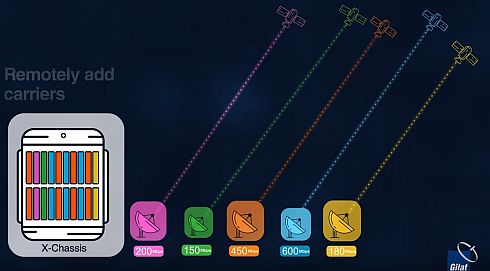
The revolutionary Gilat’s X-Architecture is a distributed VSAT ground segment architecture based on Software Defined Networking (SDN)

GILAT-X-ARCHITECTURE

Gilat Satellite Networks from Petah Tikva, Israel, announced today the launch of X-Architecture for SkyEdge II-c. It describes it as a revolutionary distributed Architecture to address the growing demands of HighThroughput Satellites (HTS) .

The The X-Architecture is based on Software-Defined Networking concept, to allow satellite operators and service providers to support mobility, enterprise, cellular and consumer broadband applications and business models from a single platform. It is a cloud-based architecture that allows networks of any size, using traditional wide-beam and high-throughput satellites, to deliver managed services in hosted or virtual network business models.

X-Architecture was built to support dynamic on-demand services. Cloud bandwidth management capabilities enable both mobility and Virtual Network Operators (VNOs) services over spot-beam satellites. Flexibility is enabled by the distributed architecture, which separates data center functions from baseband elements.

GILAT-X

The network is controlled by Gilat’s TotalNMSa, a global, unified and centralized network management system. With X-Architecture, satellite service providers can easily expand their offerings to reach a broad range of up-and-coming markets for high-bandwidth satellite communications, including broadband access, 4G/LTE cellular rapid deployments, as well as mobility applications for in-flight connectivity (IFC), maritime and trains.

“We believe that X-Architecture is the only platform on the market capable of realizing the full potential of HTS,” stated Dov Baharav, Gilat’s Chairman and Interim CEO. “X-Architecture has already enjoyed early success in major deals with leading satellite operators in Europe, China and Latin America.

X-Architecture for SkyEdge II-c will be unveiled at Gilat’s booth (J2) at the China Satellite Conference in Beijing, October 28-30, 2015, and will also be showcased at AfricaCom in Cape Town, November 17-19, 2015.

Gilat Satellite Networks provides of products and services for satellite-based broadband communications: satellite ground segment equipment and VSATs, as well as mobile SOTM (Satellite-on-the-Move) solutions such as low-profile antennas, solid-state power amplifiers and modems.

Socionext Deploys CEVA’s Imaging DSP for Milbeaut Image Processors

Socionext was established in March 2015, when Panasonic and Fujitsu span off their LSI business unit, to create a new, 2,600 employees giant in the fields semiconductor chips for Optical Communication and Image/Video Processing

SOCIONEXT-CEVA

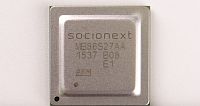
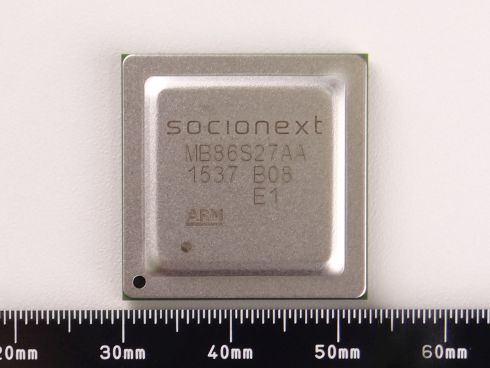
The Japanese Semiconductor newly formed vendor, Socionext Inc., has licensed and deployed the CEVA imaging and vision DSP  to power its latest-generation Milbeaut image processing LSI chips for surveillance, digital SLR, drones, action and other camera-enabled devices. The first Milbeaut image processor integrating the CEVA DSP is the MB86S27 which was announced today and will shortly be in volume production.

“The inclusion of the CEVA imaging and vision DSP in our Milbeaut series of image processors allows our customers to take advantage of its powerful vector processing engine,” said Mitsugu Naito, Corporate Vice President Head of Business Group Ⅲ at Socionext. “The DSP is ideal choice for our imaging processing products.”

CEVA’s imaging and vision DSPs offload performance-intensive tasks from the CPUs and GPUs, and reduce the power consumption of the overall system. The platform includes a vector processor developed specifically to deal with the complexities of such applications and an extensive Application Development Kit (ADK) to enable easy development environment. The CEVA ADK includes an Android Multimedia Framework (AMF) that streamlines software development and integration effort, a set of advanced software development tools and a range of software products and libraries optimized for the DSP.

Socionext is a new enterprise that designs, develops and delivers System-on-Chip products to customers worldwide. The company was established in March 2015, when Panasonic and Fujitsu span off their LSI business unit, to create a new, 2,600 employees giant in the fields semiconductor chips for optical communication systems and image/video processing.

CEVA’s DSP IP portfolio includes comprehensive platforms for multimode 2G/3G/LTE/LTE-A baseband processing in terminals and infrastructure, computer vision and computational photography for any camera-enabled device, audio/voice/speech and ultra-low power always-on/sensing applications for multiple IoT markets. For connectivity, it offers IP for Bluetooth (Smart and Smart Ready), Wi-Fi (802.11 b/g/n/ac up to 4×4) and serial storage (SATA and SAS). The company sais that one in every three phones sold worldwide is powered by CEVA by customers such as  Samsung, Huawei, Xiaomi, Lenovo, HTC, LG, Coolpad, ZTE, Micromax and Meizu.

Israeli high-tech hit a record: $3.2B capital raising in 9 months

“We expect the fourth quarter trend to go up again, and believe 2015 may end with approximately $4.4 billion capital raising by high-tech companies”

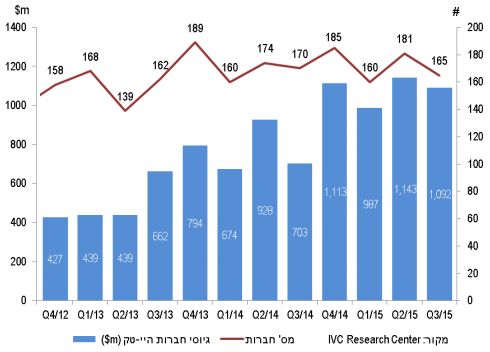
Venture Capital raised by Israeli High tech compnies

During the third quarter of 2015, about 165 Israeli high tech companies have raised $1.1 billion from venture capitalist funds and investors. The amount is extremely high at 55% above the $703 million attracted by 170 companies in the third quarter of 2014.

In the first three quarters of 2015, a total of 506 Israeli high-tech companies raised a phenomenal $3.2 billion, reaching nearly 95% of the entire 2014’s record capital raising, according to a new research from IVC-KPMG.  Koby Simana, CEO of IVC Research Center’ said that the third quarter of the is traditionally weak. “So we expected to see a slight drop from the previous quarter’s records, yet capital raising is still going exceptionally strong.

“We expect the fourth quarter trend to go up again, and believe 2015 may end with as much as $4.4 billion in total capital raising by high-tech companies.” The average VC-backed deal in the third quarter was $9.1 million, much higher than $4.9 million average VC-backed deals in Q3/2014.

Software’s Mystery

One of the continuing trends the IVC-KPMG Survey points to is the ever-increasing prominence of large deals of $20 million or more, with 20 deals reaching a staggering total of $703 million, making up 64 percent of the total capital raised in the third quarter. Koby Simana: “We are far from Silicon Valley’s $0.5 billion financing rounds, but in general large deals in Israel reflect real, rather than speculative, valuations.”

Life science companies raised a total of $327 million (30% of total capital). Internet companies followed with 26% of total investments, while the software sector fell back to the average 24%, from an exceptionally high 44% in Q2/2015. Ofer Sela, partner at KPMG Somekh Chaikin’s Technology Group, commented: “While 2015 is in the process of becoming a record year, the proportion of investments made in software companies out of the overall VC investments is a reason for concern.

“The unavailability of sufficient private equity for this segment in Israel is one of the main causes for the shortage of Israeli software companies gearing up to get listed on NASDAQ, resulting in a local ‘glass ceiling’ in terms of the size of companies established locally.”

NICE announced a Digital Policing Solution

The new platform, called NICE Investigate, collects all the digital data from various sources, and organize it in a method that helps law enforcement organizations to complete their investigation

NICE

Police departments everywhere are encountering the need to analyze huge amount of digital information. The exponential growth in digital data from an increasing number of sources, like body camera video and private and public CCTV footage, now presents the challenge of how to effectively process all of this information.

A new digital policing solution from NICE Systems, called NICE Investigate, breaks down information silos and replaces lengthy, manual processes with automated workflows to expedite the entire digital investigation process. NICE Investigate streamlines the collection, organization, and sharing of potential evidence so investigators can make sense of disparate data.
“Investigators today face some tough challenges: collecting and securely sharing potential evidence is surprisingly manual and time-consuming, while analyzing the disparate pieces to recreate the ‘who, what, where, when and why’ of an incident is more complicated than ever,” noted Ed Davis, former Boston Police Commissioner. “A software solution that addresses these issues would be invaluable to any police department.”
“Investigators today spend too much time identifying, collecting, and copying digital evidence from various sources: video from citizens, private and public CCTVs, audio recordings, photos and more, but lack tools to organize and make sense of all these pieces,” said Chris Wooten, Executive Vice President, NICE. “Inefficient processes threaten to delay investigations and prosecution. NICE has leveraged its experience working with thousands of police departments to develop a solution that addresses these issues.”
NICE Investigate gives the investigators four core capabilities:
  • Compatibility with multiple evidence sources: NICE Investigate integrates data from most existing applications and sources, including CAD and RMS systems, body camera video, physical evidence like photos and documents, public and private CCTV video, in-car video, interview recordings, citizen tips, 911 audio recordings, gunshot detection systems, automated license plate readers (ALPRs), social media and more. This enables police departments to collapse information silos, choose best-in-class systems from leading providers, and protect investment in existing systems.​
  • Automated workflow: The solution expedites case building by organizing evidence into a digital case folder, using a powerful correlation engine to suggest potential evidence, and enabling investigators to electronically initiate requests for evidence and evidence processing.
  • Content analytics and visualization: Content analytics examines digital content from connected sources, and visual tools display the information, making important patterns and relationships easier to understand. By uncovering more relevant information and visualizing it in useful ways, crimes that would otherwise go unsolved can be successfully prosecuted.
  • Secure collaboration and sharing: Investigators can easily and securely share evidence electronically, enabling multiple investigators within an agency or across agencies to collaborate on a case while maintaining chain of custody and integrity of the evidence. Investigators no longer waste valuable time copying and transporting digital evidence for prosecutors.

3D Printing to improve medical surgeries

“Having a 3D printed model comprising the patient’s kidney tumor, main arteries and vessels, provides an accurate picture of what we will see during operations”

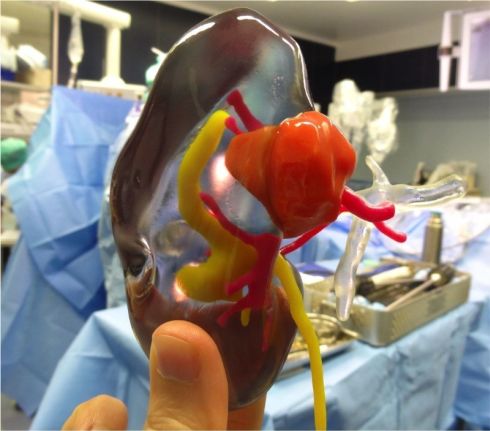
A 3D model of kidney before operation

An interesting cooperation between Stratasys and the University Hospital (CHU) de Bordeaux in France, has demonstrated surprising use of 3D printed models to improve medical operations. Physicians in the hospital use the models during pre-surgery planning of complicated kidney tumor removal, helping to perform precise and successful kidney-sparing surgery and improving patient outcomes.

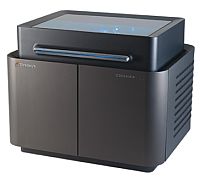
Obket500 3D printer
Obket500 3D printer

The process utilizes transparent and color 3D printed models produced on Stratasys’ color, multi-material 3D Printer, Objet500 Connex3 , in the Department of Urology and Kidney Transplantation at the University Hospital. According to CHU surgeon Dr Jean-Christophe Bernhard, this is currently the only hospital in France – and one of the first in the world – to deploy Stratasys’ technology for kidney tumor removal cases.

“Having a 3D printed model comprising the patient’s kidney tumor, main arteries and vessels – each in a different color – provides an accurate picture of what we will see during operations,” says Dr Bernhard. “The ability to visualize the specific location of a tumor in relation to these other elements, all in three dimensions, greatly facilitates our task and is not something that is easily achievable from a 2D scan.”

Opportunity for kidney-sparing surgery

According to Dr Bernhard, the clearer view offered by the 3D printed model may increase the ability to perform precise kidney-sparing surgery. The pre-surgery planning aids in identifying and avoiding damage to the delicate nearby arteries and vessels. Sparing the patient’s kidney is important because it reduces the chance of subsequently chronic kidney disease.

“A scan gives us good information, but it’s in 2D. This relies on the surgeon to mentally reconstruct the tumor volume in 3D and estimate its location inside the kidney. The same process has to be done to clearly understand the relations between the tumor, the vessels (arteries and veins) and the collecting system. As you can imagine, this is difficult and time-consuming for the surgeon.

“Having a 3D printed kidney model in your hands that corresponds specifically to that of the patient you’re going to operate offers me a view from a new perspective. The only thing more accurate than that is the patient himself,” he adds.

The CHU de Bordeaux uses three Stratasys PolyJet materials: transparent VeroClear to show the volume mass of the kidney itself, red for the arteries and yellow for the excretory tract. The red and yellow is then mixed on-the-fly – unique to Stratasys multi-material capabilities – to produce the all-important orange color of the tumor.

“The Stratasys transparent material enables us to see the arteries and the cavities that collect urine, so we can see if any of the arteries are touching the tumor. We need to remove the tumor, but not at the expense of the other vital elements that together enable the kidney to do its job. Finding that balance is much easier to achieve thanks to 3D printing.”