NASA Harvest and CropX Pto Support Sustainable Ag Initiatives

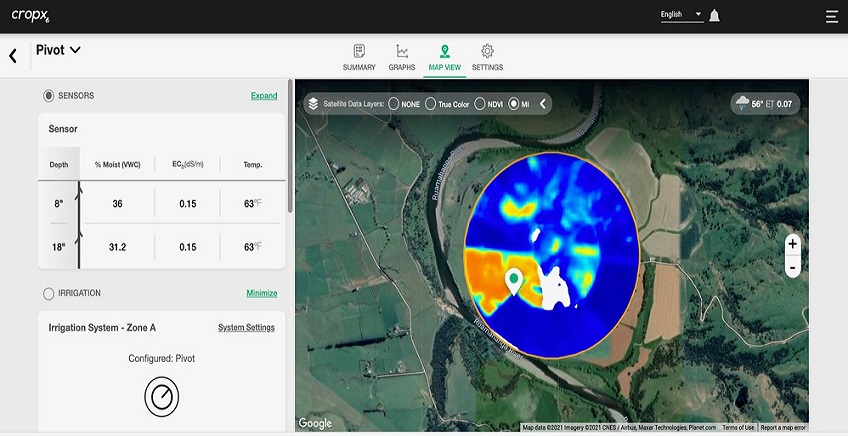
NASA Harvest (NASA’s Food Security and Agriculture Program) and CropX, a global leader in soil analytics for agriculture, today announced a strategic partnership that will give NASA Harvest unprecedented soil insights for its global agricultural monitoring efforts. Supporting a more sustainable agrifood ecosystem, together NASA Harvest and CropX will provide farmers and industry experts with the data and information they need to improve farming sustainability by conserving resources and improving crop yields.

The partnership will further NASA Harvest’s mission to improve food security and advance sustainable agriculture, supporting farmer productivity while preserving natural resources in the United States and worldwide through the use of satellite data. Combining the power of CropX soil data monitoring, comprehensive insights provided by the CropX ag analytics platform, and NASA’s network of Earth-observing satellites, NASA Harvest aims to deliver critical insights to governments and farmers around the globe in support of informed and science-driven decision making.

“Soil health and nutrient management is at the very root of food security and sustainable agriculture concerns – an accurate understanding of what is actually happening underneath the ground is essential,” noted Nadav Liebermann, CTO of CropX. “Satellite imagery has long been an integral part of CropX algorithms, and our partnership with NASA Harvest will deliver valuable agronomic insights by connecting critical data at different depths underground and from an expansive network of satellites in space. We are looking forward to working with the NASA Harvest team to improve farming decision-making worldwide – in both developed and undeveloped regions.”

NASA has deployed CropX solutions across a group of alfalfa farms in Arizona controlled by IAF Investments Group to test and finetune the algorithms that will become the foundation of nationwide, and eventually global, agriculture insights. Over a 12-month time period with the integration of NASA satellite data and synthetic aperture radar (SAR) information, the pilot program will quickly establish the parameters for water usage estimates, yield prediction, soil quality and land usage assessments based on multiple crop growing cycles. “We are delighted to collaborate with CropX and NASA Harvest on this most important deployment,” stated Jon-Michael Nahon, a Senior IAF Managing Partner, “Optimal and sustainable use of farm inputs is crucial to meeting the world’s food challenge.” Particularly in light of a renewed focus on soil moisture metrics spurred by NASA’s NISAR mission, the team hopes to build upon the pilot study in the coming years by using the best available technology to analyze and support more cost-effective and environmentally efficient farming methods.

“We are in a constant race to produce and supply enough food in order to feed a rapidly growing global population, with finite land and natural resources. NASA Harvest is dedicated to collaborating with top innovators to make the best possible use of our agricultural land; CropX unites our space-led vision with on-farm intelligence and results,” added Dr. Inbal Becker-Reshef, program director of NASA Harvest. “We were impressed by the accuracy and reliability with which the CropX soil monitoring platform was able to both pinpoint various soil health and environmental challenges, as well as determine opportunities for water, energy and nutrient conservation. CropX offers the advanced tools and global farm footprint needed to understand and improve soil health and water quality tied to farming ecosystems around the world. Paired with satellite data, this provides the opportunity to scale these insights in support of farmer productivity and more effective use of available resources.”

First introduced via their involvement in Farm2050, an ecosystem of agrifood industry leaders led by Innovation Endeavors and Finistere Ventures, the new partnership between CropX and NASA Harvest puts collaboration across the public, private and academic sectors into practice. A multidisciplinary consortium led by the University of Maryland, NASA Harvest is dedicated to creating the partnerships needed to unlock innovation in agriculture. Together, NASA Harvest and CropX plan to quickly scale the program based on learnings from the initial pilot.

Humanetics and Foretellix Bridge the Gap Between Virtual and Physical Test Flows for ADAS and ADS

Humanetics, one of the world’s leading providers of active safety testing equipment and services, and Foretellix, a leading provider of Verification & Validation (V&V) platforms for Automated Driving Systems, demonstrate a joint toolchain that bridges the gap and allows for correlation between virtual and physical testing. The demonstration, in a video released last week (Humanetics and Foretellix Video), will be followed up by a live event in May of this year at the AAA Northern California’s GoMentum Station in California.

The new joint offering combines physical and virtual testing of Automated Driving Assisted Systems (ADAS) and Automated Driving Systems (ADS). This will help OEMs and Tier 1s reduce development and validation costs while accelerating regulated and non-regulated testing to ensure safety and compliance, taking into account the ever-growing complexity of ADAS and ADS.

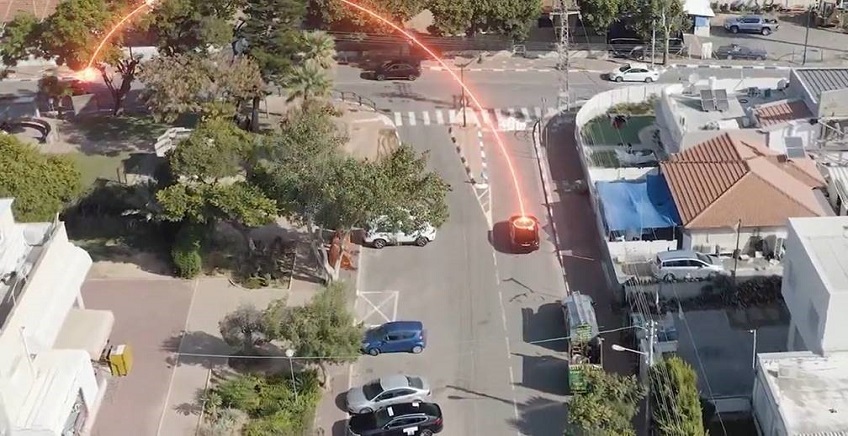
In the mentioned video released today, the companies showcase a complete Verification & Validation cycle of a scenario for testing ADAS. The scenario is first defined on Foretellix’s verification platform, Foretefiy™, using M-SDL, an open-source productivity language invented by Foretellix. This abstract scenario is then utilized by Foretify ™ to automatically create thousands of meaningful tests that can be sent to different test platforms (e.g. simulators, HIL, test tracks). In the demonstration, a set of concrete tests are subsequently sent to the Humanetics UFO Base control software. The Humanetics test robots (UFOs, Driving Robots) are then able to accurately execute these tests on the proving ground by converting the data with UFO Base Script (.ubs). Once conducted, the data from the test is sent back to the Foretify ™ productivity dashboard for KPI & Coverage Driven analysis, correlation with the virtual testing and further iterations on the different simulators – providing a visual and quantifiable coverage status of the testing process progress.

In May of this year, the partnering companies plan to conduct a joint event at AAA Northern California’s GoMentum Station in Concord, California. The event will include a live demonstration of the joint toolchain featuring Foretellix’s Foretify™ Verification & Validation platform and its unified Coverage Driven Verification productivity dashboard working together with Humanetics test robots (UFOs, Driving Robots).

“With this combined technology demonstration, we can create a complex scenario with multiple actors  such as motor vehicles, pedestrians, bicyclists and other vulnerable road users on a virtual platform, and port this scenario to Humanetics’ robots for conducting physical testing on the proving ground. This integration with Foretellix will help customers optimize their test cycles and by improving the data consistency between virtual and physical testing, we can reduce the time and resources needed to run these important tests.” Sanket Mehta, VP Business Development of Humanetics.

“Working with Humanetics enables us to demonstrate how to bridge physical and virtual testing, employing a unified toolchain that generates and executes tests on different platforms – both virtual and physical – and analyzes all that data in one unified productivity dashboard,” says Ziv Binyamini, CEO and Co-founder of Foretellix. “We believe that a unified Verification and Validation platform showing coverage data from both physical and virtual simulation testing is the way forward for the automotive industry’s quest for improving safety and ensuring a faster development cycle of Automated Driving Systems”.

Foretellix provides a revolutionary development lifecycle verification & validation platform for enabling mass deployment of automated driving systems. Foretellix is using proven approaches from the semiconductor chip industry utilizing hyper-automation, big data analytics, and AI. The platform orchestrates and manages the massive scale of testing required to ensure safety, reduce development costs, and shorten the time to market of Automated Driving Systems deployment.

Tower Semiconductor Introduced new in-Chip Capacitors

Tower Semiconductor announced a newly developed galvanic capacitor technology integrated with its 0.18um power management and mixed signal platforms, enabling  up to 12kV isolated gate driver and digital isolator ICs. The company said that its new in-chip high capacity capacitors, enhance safety and power efficiency for applications in the automotive, green power and industrial markets, addressing an estimated $1B market.

The new technology offers a cost and size advantage thanks to the integration of the galvanic isolator, saving the need for an additional device. Lead customers are prototyping initial products addressing applications such as battery chargers, power supplies and motor drivers for electric and hybrid vehicles, solar inverters and wind turbines power converters) and industrial applications.

“This new technology supports the needs of isolated power in high-growth markets such as electrical vehicles and other,” said Shimon Greenberg, Tower’s VP and General Manager of Mixed-Signal and Power Management Division. “The new technology augments our 0.18um power technology, supporting applications from 5V to 200V”.

TowerJazz is a manufacturing services provider of integrated circuits (ICs). Its technology is comprised of SiGe, BiCMOS, mixed-signal/CMOS, RF CMOS, CMOS image sensor, integrated power management (BCD and 700V), and MEMS. TowerJazz operates two manufacturing facilities in Israel (150mm and 200mm), two in the U.S. (200mm) and three facilities in Japan (two 200mm and one 300mm).

For more infotmation: Tower Semiconductor Power Management platform

Autotalks joins SECUR project to validate V2X role in road safety

Autotalks, a global leading provider of V2X (Vehicle-to-Everything) communication solutions, joined the SECUR (Safety Enhancement through Connected Users on the Road) project, coordinated by UTAC CERAM Millbrook to improve the safety of all road users. The project will provide several inputs on testing and assessing the V2X systems for the European New Car Assessment Program (EuroNCAP) in 2025. SECUR consists of the world’s leading OEMs, Tier1s and test labs, including Toyota, Honda, Renault, Volkswagen, Denso, Bosch, Continental, Valeo and many other companies. Autotalks is currently the only semiconductor and the only Israeli company in the group that will contribute its expertise in how V2X communications can improve road safety.

In the next two years, SECUR has set a goal to complete the task of defining the V2X test procedure that will serve as the basis for the new safety rating by the EuroNCAP 2025. Euro NCAP is responsible for the industry’s most important safety rating, and in recent years has increasingly focused its attention on advanced safety technologies. V2X harnesses vehicle to road users and vehicle to traffic infrastructure communications to improve road safety. Global road safety agencies project a significant reduction in traffic accidents with the adoption of V2X technology.

At the conclusion of the two-year long research period, results will be made public and will be integrated into the Euro NCAP 2025 roadmap. In the past, Euro NCAP recommendations were almost always followed by similar organizations around the world. This will no doubt be the case with V2X. Traditionally, safety features approved by EuroNCAP have become common in nearly every new vehicle within a couple of years. The significance of EuroNCAP is underscored by the fact that 89% of all vehicles sold in Europe have a 4- or 5-star rating and 97% of all new vehicles sold in Europe have a EuroNCAP rating.

“We believe our decade of experience with V2X technology can serve as a tremendous contribution in defining the standard for the industry,” said Onn Haran, CTO, and Founder of Autotalks. He added that the acceleration of V2X deployment, combined with the crucial NCAP stamp of approval, once granted, will lead to V2X being installed in every new car.

Autotalks’ production-ready chipset fully meets all the requirements for European deployment. In addition, the dual-technology operation enables a single platform, supporting both DSRC and C-V2X for reducing development costs and efforts by OEMs and tier1s.

Elbit and IDF tested a Laser and GPS Guided Mortar Munition

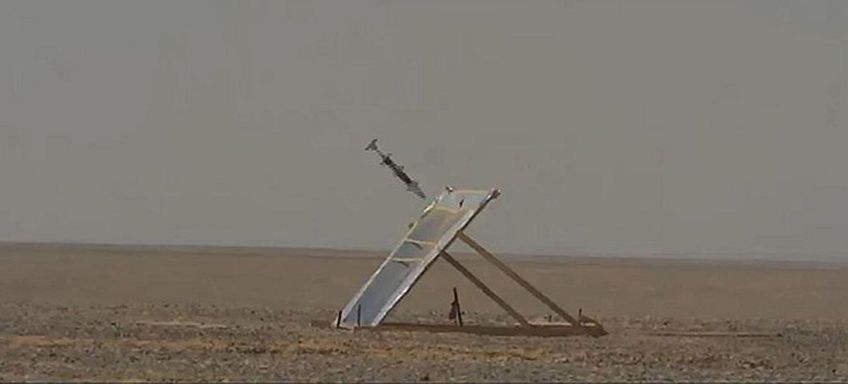
The Directorate of Defense R&D in the Israel Ministry of Defense (DDR&D), together with the IDF’s Ground Forces and Elbit Systems, revealed a precise, laser and GPS guided mortar munition named “Iron Sting“. The 120 mm mortar has recently undergone final trials in a testing site in southern Israel. The completion of testing enables the start of serial production ahead of the system’s supply to the IDF.

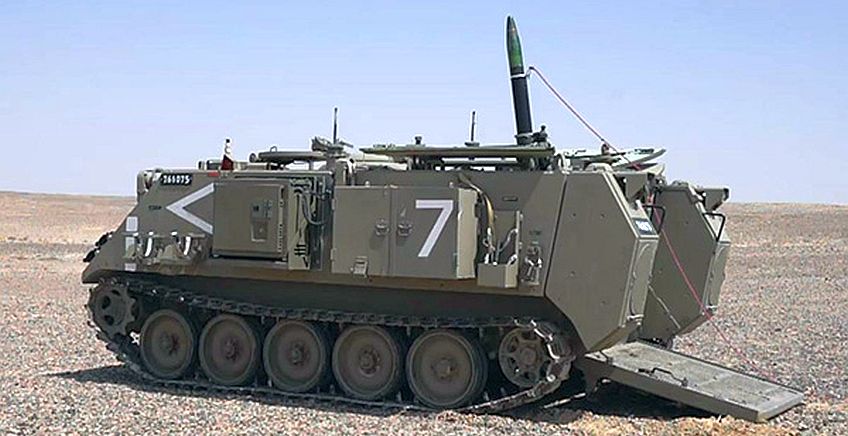
The series of tests was carried out using two networked Cardom mortar systems developed by Elbit Systems: a “Cardom” system, mounted on an M113 APC and a “Cardom Spear” system, mounted on a Hummer 4X4 SUV. The Iron Sting is designed to engage targets precisely, in both open terrains and urban environments, while reducing the possibility of collateral damage and preventing injury to non-combatants.

The Iron Sting Guided Mortar Munition offers a range of 1-12 km, depending on the mortar tube and hitting accurracy smaler than 1 m. Three modes of operation, GPS/IMU, SAL+GPS/IMU and SAL+IMU provide robust capabilities in all battlefield scenarios. Iron Sting features a seeker laser sensor capable of operating with standard pulse (NATO STANAG3722) and an encoded CW laser diode (lightweight and low-cost, suitable for small drones and UAS).

Elbit's smart mortar hit a target. No more "a statistical weapon"
Elbit’s smart mortar hit a target. No more “a statistical weapon”

Head of Research and Development in the DDR&D, Brig. Gen. Yaniv Rotem, said it was a 10 years of research and development. “Todat we can provide the IDF’s ground forces with advanced capabilities made for the modern battlefield. This laser and GPS- guided mortar munition provides troops with a precise firing capability that has only been implemented in missiles and air munition systems.”

General Manager of Elbit Systems Land Division, Yehuda Vered: “The introduction of laser and GPS guided munition transforms the mortar system from a statistical fire power into a precision fire system, thus delivering a significant change in fire capabilities at the tactical level.”

ScoutCam Appoints Yovav Sameah as the its new Chief Executive Officer

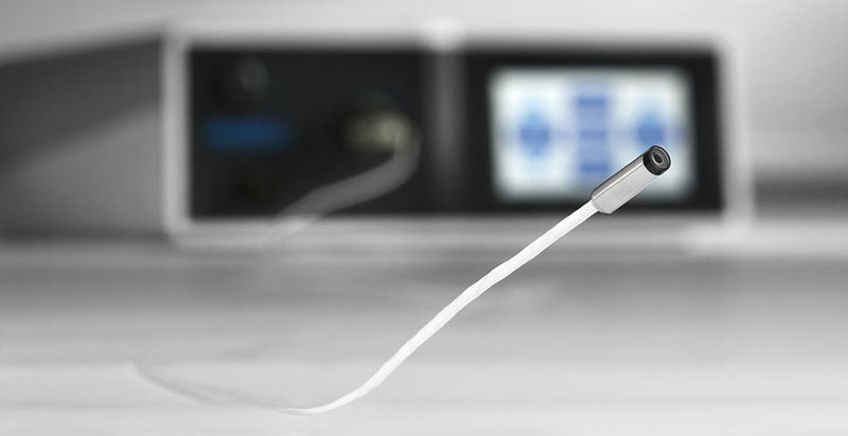
ScoutCam announced the appointment of Mr. Yovav Sameah (above) as the Company’s new Chief Executive Officer. Mr. Sameah will replace Dr. Yaron Silberman, who will step down to pursue new opportunities. ScoutCam has developed the world’s smallest cameras based on micro visualization technologies. Today it provides video camera down to, 1mm Outer Diameter, Focal Distance of down to 2mm, with wireless option or wired option of up to 30m distance.

Most recently Yovav Sameah served as CEO of Frontline PCB Solutions, a non-public worldwide provider of Pre-Production and Industry 4.0 SW solutions in the PCB industry, presently owned by KLA-Tencor Corp. Prior to Frontline PCB Solutions, he served as Corporate Vice President and Chief Products Officer at Orbotech.

Prof. Benad Goldwasser, the Executive Chairman of the Board’ said that ScoutCam is now ripe to graduate from its status as an R&D phase company. “We will look to Mr. Sameah to navigate us forward as we transition to a fully-commercialized international company with sales and customers across various industries.”

ScoutCam's miniature Camera
ScoutCam’s miniature Camera

In February 2021, ScoutCam appointed Professor Jacob Bortman as director of its business development in the field of Industry 4.0. Prof. Bortman most recently held the post of Israeli Air Force’s Head of Material Directorate, where he oversaw the maintenance of all IAF aircraft, and prior to that served as both its Head of the Aircraft Department and Head of the UAV and Space Department. Following his retirement from the IAF, he transitioned to academia where he now teaches and researches as a professor of mechanical engineering at Ben-Gurion University in Israel.

COVID-19 triggers multi-million euro in contracts for Polytex

Israeli workwear management company Polytex Technologies has witnessed explosive growth in the Spanish and French markets over the past year with multi-million euros in new contracts. The trend is continuing in both markets. Seven new hospitals throughout France and additional hospitals in Spain will be installing for the first time or expanding their use of Polytex’s solution that provides improved protection for health workers, which has become even more critical during the COVID-19 pandemic. In addition, the technology leads to a significant operation efficiency with reduction in inventory levels and therefore lower expenses on uniforms.

Spain is currently the third largest market for Polytex outside Israel and France the fifth. The pandemic triggered a 90% increase in sales in Spain and a similar increase in France.

Two significant projects for Polytex were recently closed in Spain. One is the the extension of Polytex’s project with the Bellvitge University Hospital, near Barcelona, ​​and the second is a new project for the Servicio Navarro de Salud (SNS), which will equip the operating rooms of the Navarra Hospital, the Virgen del Camino Hospital, and the Reina Sofia Hospital with systems for the management of pajamas and clogs.

Polytex entered the Spanish market in 2007 and Spain has already become the company’s third country of reference in volume beyond the borders of Israel, only surpassed by the United States and Germany. More than 200 systems have been installed to serve more than 50 clients distributed throughout the country. The pandemic has led to a strong increase in sales, of which 40% comes from existing customers, who needed to increase their capacity to meet the increase in clothing consumption, and the remaining 60% were new customers, who quickly adapted Polytex’s service in order to increase hygiene and lower operating costs.

The French market has witnessed phenomenal growth as well. Over the past twelve months, Polytex has won contracts at major French hospitals in Rouen, Rennes, Pithiviers, Dax, Poissy, Ajaccio and at a large hospital laundry service in the Paris region. This is in addition to the eight hospitals and a pharmaceutical industrial site in various parts of the country, which have already installed Polytex’s workwear and scrubs management solution.

Hospital managers in both countries report that the Polytex system helps to simplify the distribution of workwear and led to a 40% on average reduction in expenses on uniforms and laundry. The actual volume of workwear needed was reduced substantially as was the amount of storage space required.

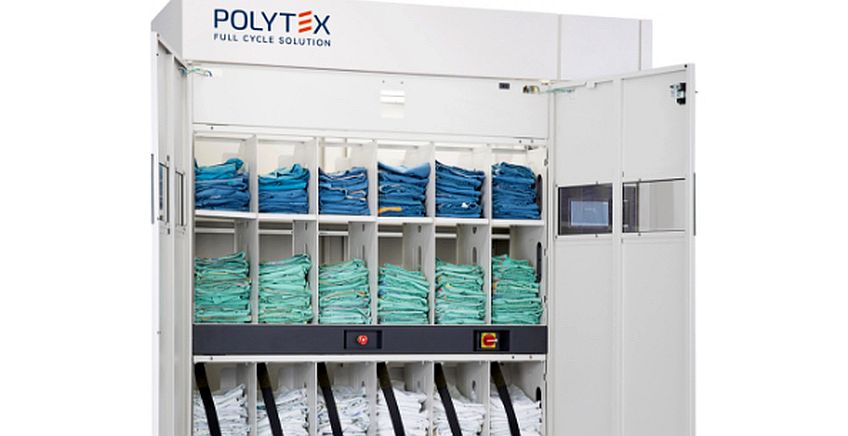
The Polytex solution is fully automated and enables hands-free dispensing and collecting of individual uniforms. The system itself is sealed, keeping garments in a clean environment that is opened only by laundry professionals during collection and restocking. The system is available on a 24/7 basis and often installed at multiple locations enabling staff to receive and return garments in seconds, thereby avoiding unnecessary crowding.

Refilling the machines with fresh clothing is very quick and takes only a couple of minutes.

The units can also be moved to special temporary wards dedicated to infectious diseases like COVID-19. The Polytex automated system is backed by a centralized cloud-based management and monitoring applications for end-to-end tracking.

“In the past year we have nearly doubled our sales in both Spain and France as the global pandemic has made hygiene an even more critical issue for hospitals,” said Yariv Matzliach, CEO of Polytex. He added that “both countries are currently among our largest and most strategic markets in Europe with tremendous growth potential in the coming years.”

Established in 2003, Polytex Technologies is a leading provider of workwear management solutions. Polytex supports the entire workwear laundry lifecycle with a wide range of automated machines backed by centralized cloud management and monitoring applications. Our solutions are used by hospitals and healthcare institutes, manufacturing sites, hospitality, and fitness centers. Polytex has over two decades of field-proven industry experience in the delivery of large-scale commercial laundry services. Polytex has over 3,000 installed machines located in North and South America, Europe, and Asia.

Polytex was established in Israel by the Poliner family. The co-founder Tomer Poliner served as the company’s CEO until Polytex received a major investment from the private equity fund Fortissimo Capital in 2019. He now leads the company’s technological and business development activities.