NanoLock will secure tens of millions of smart meters in India

The israeli industrial cyber security company NanoLock has announced a strategic collaboration with Genus Power Infrastructures, the largest electricity infrastructure company in India. The Indian electricity market has been undergoing in recent years a rapid transition into smart grids and the use of smart meters, and GPI is the leading smart meters manufacturer in the country. As part of the collaboration, Nanolock’s solution will be integrated into GPI’s smart meters and will provide protection against power fraud and cyber attacks on the grid.

The collaboration with GPI may lead to the deployment of tens of millions of smart meters equipped with the Nanolock solution. GPI is the main supplier of smart meters to India’s largest electricity company, EESL, which recently announced an ambitious plan to deploy some 240 million smart meters across the country by 2023. It is estimated that GPI will supply EESL with at least 50% of all meters. In August, GPI announced that it had already supplied EESL with about 1.5 million smart meters, and it produces 10 million smart meters a year.

Founded in 2016, NanoLock’s solution provides device level protection for IoT and industrial equipment, with minimal power, processing and memory footprint, and is therefore particularly suitable for IoT devices with limited processing resources and scant battery power such as smart meters in the gas, water and electricity industries.

NanoLock’s CEO Eran Fein told Techtime: “Our solution sits between the Flash memory and the CPU, where all the device settings are located. It blocks any attempt to alter critical settings and write to the memory, and reports any such incident to the server.” NanoLock is working with major utilities, industrial companies, and large ecosystem partners in Japan, Spain, Switzerland, Singapore, Netherlands, the U.S.¸ and Israel.

Power outage during a religious festival

Driven by rising emissions¸ energy resource constraints and outdated infrastructure¸ the global smart meter market is growing in demand. “The smart meter market is booming¸ but so too are the potential cyberthreats. Utilities and smart city solutions providers are confronting new attacks all the time and any connected device could be the entry point for attackers.”

Smart meters can be manipulated by hackers, that by altering the device reading are frauduently lowering their electricity bill. Northeast Group estimated in a report dated a few years ago that the total losses arise from electricity theft amounts to about $ 96 billion globally a year.

Smart meters vulnerabilities can also put the entire power grid at risk. In August, during an Hindu holiday, power outage affected some 300,000 households in the Uttar Pradesh state in India for several hours. An inspection by the authorities revealed that the fault was due to an error made by a technician who tried to change the settings in one of the smart meters, causing a chain reaction that distrupted the entire grid.

Fein claims Nanolock’s solution provides protection not only from intentional electricity scams but also from wrong doing by employees with access. “It was a wake-up call for the electricity market in India and exemplified the importance of cyber security. Our solution could have prevented this glitch.”

Knorr invests additional $10 million in Rail Vision

The Israeli Rail Vision signed a $10 million funding agreement with the German company Knorr-Bremse. The investment will be made at a company value of about $50 million, post-money valuation. This is a follow-on investment, arriving after an investment of $10 million made by the German company in March 2019. After the two investments, it will hold 36.79% of Rail Vision’s shares. The holdings of Foresight, which founded Rail Vision, will amount to 19.34%.

In addition, the agreement provides Real Vision with an option to call for an additional $5 million. Trains have difficulties dealing with unexpected obstacles because the braking distance of a high-speed moving train can reach up to half a mile on average, and so there is a need for a system that detects obstacles from a very long distance. Rail Vision has developed an early warning system that warns the locomotive driver of a potential collision with obstacles in all weather and lighting conditions. This is done using dedicated cameras that detect objects from a distance of slightly more than one mile (1.2 miles).

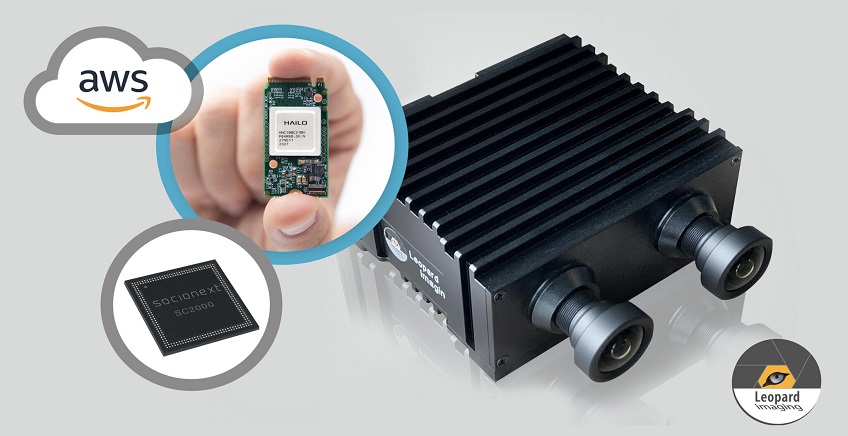
The camera array (pictured above) includes a visible light camera and two thermal cameras with complementary wavelengths. These in turn feed the information into an image processing and machine learning algorithm, which fuses all the information into a unified image and identifies the objects located on the train track. The algorithm is designed to identify objects relevant to the train’s setting, such as humans, animals, cars, bridges, interchanges, signs, signal marks along the track intended for the locomotive driver, etc.

Knorr’s investment is a strategic investment related to one of its key areas of activity. Its systems division manufactures braking, steering and control systems for trains and commercial vehicles. For the past 100 years, the parent company has been supplying driver assistance and braking systems for vehicles and trains. In 2019, its sales totaled about 6.6 billion euros.

Touchless.ai converts touch-based interface to a voice-based interface

[ictured above (right to left): Roy Baharav and Eyal Shapira, founders of Hi-Auto]

Since the outbreak of the COVID-19 crisis, numerous Israeli auto-tech companies have used their technology intended for the automotive market to develop dedicated solutions to deal with the special needs of the new reality. This action was also taken by the Tel Aviv-based auto-tech company Hi Auto, which launched a solution called Touchless.ai, which allows touch-based user interfaces, such as those found in self-service machines in clinics or fast food chains, to be turned into “sterile” interfaces operated by voice commands, i.e., touch-free.

The new solution is based on the audio-video technology developed by the company for in-vehicle voice control systems. Hi-Auto’s technology includes a microphone, a camera focused on the driver’s lips, and a deep-learning software installed on the vehicle’s computer that removes background noise. Touchless.ai is an add-on based on the same technology and can be installed on any existing touch interface. Roy Baharav, one of the founders of Hi Auto and the director of the new venture, told TechTime that as soon as the COVID-19 crisis broke out, the company identified the new need and opportunity.

“We realized very quickly that everything related to voice command would gain momentum, and that voice interfaces would transform from an application that’s nice to have, into something imperative [in light of the current reality]. We built a solution that is separate from what we do in the automotive world, that is simpler and that allows people to use voice-based interfaces in a reliable and user-friendly way, without having to make significant adjustments from business to business “.

The same challenge found within the space of the vehicle regarding voice-command interfaces – to identify the relevant speaker, i.e., the user, and separate his voice commands from background noises – exists also in public spaces. Baharav: “Even in a restaurant, airport, or train station there is considerable environmental noise that interferes with speech comprehension.”

A camera that reads lips

The Touchless.ai plugin solves the problem in two ways: it converts each and every action in the interactive interface to a defined voice command, and displays to the user on the screen what the relevant voice command is, for example, to order a particular dish in a restaurant or to issue a certain document in a governmental self-service machine. The plugin makes the interface accessible to the user and reduces the possible “conversation” scenarios between the user and the machine, thereby making it easier for the voice processor to accurately identify the command. In addition, the recognition of voice commands is also aided by a camera, which reads the speaker’s lip movements and helps to identify commands.

At this stage, the company has adapted the software to English, Japanese and Hebrew, and has begun pilots with several retail chains in the US and Europe. The market of body gesture-based control interfaces is still in its infancy, especially in the automotive sector where there is a safety need for contactless control of information and entertainment systems. However, in the field of consumer electronics and smart home, the technology has not been adopted yet. It is possible that the current need to maintain hygiene in public space will lead to a significant boost. The research company Research & Markets estimates that the market for contactless operating interfaces is expected to grow in the coming years at an annual rate of 17.6% and reach a volume of approximately $15.3 billion in 2025.

REE unveiled three fully modular EV Platforms

REE Automotive has unveiled new chassis platforms for three types of electric vehicles: an inner-city car that can also be used as a self-driving taxi, a car designed to transport passengers and cargo, and a light truck tailored to the US market and that is designed for intra-city drives. In fact, the three new platforms are targeting emerging trends in the world of smart transportation: autonomous taxis, Mobility-as-a-Service (MaaS), and the proliferation of urban delivery vehicles amid the increase of online purchases.

REE has developed a concept of a chassis in which the subsystems – suspensions, engine, steering, brakes, sensors, and the control and electronic systems – are integrated into the vehicle’s own wheels. The battery occupies the center of the vehicle throughout its entire length and width. This made it possible to develop a flat and modular platform that reduces costs and provides a great deal of freedom in vehicle design.

The P1 platform weights 1.3-ton and was designed for an urban delivery services. According to the company, it saves 67% of the chassis’ volume, which makes more room for the cargo itself. The vehicle is capable of carrying a load of 770 Ibs and driving at a speed of up to 75 mph for a distance of 136 miles on a single battery charge.

The P2 platform is designed to be used as an inner-city passenger car for up to 4 commuters, at a total GVW (Gross Vehicle Weight) of up to 2.5-tons. It provides 3 times the space saving for passengers, and can also be converted to a cargo and delivery vehicle. It reaches speeds of up to 75 mph and distances of up to 260 miles per single charge.

A blank slate for Car Manufacturers

The third platform, P4, is designed for up to 4.5-tons vehicles. It can be used as a medium-sized cargo or transport vehicle, as well as an electric convenience vehicle (ECV). The saving in space makes it possible to install a large battery that will suffice for a full day of travel. The vehicle is capable of traveling at speeds of up to 87 mph and reaches distances of to 217 miles on a single charge. It was designed for the world of autonomous driving and enables easy integration of ADAS systems. It also includes redundant systems for a high level of reliability and safety.

REE Automotive’s co-founder and CEO, Daniel Barel, said there is a growing demand for electric cars amid the growing need for deliveries, regulation standards to reduce carbon dioxide emissions, and the development of the Mobility-as-a-Service world. “Our modular platform can revolutionize electric transportation. It’s like a blank page on which the customers can build their own specific cars.”

MediaTek Invested in GaN Manufacturer VisIC

VisIC Technologies from Nes Ziona, Israel, has completed an undisclosed amount of capital raising with the participation of MediaTek, the world’s 4th largest global fabless semiconductor company. VisIC was established in 2010 by experts in Gallium Nitride (GaN) technology to develop advanced GaN-based power conversion products. VisIC said that this round of financing will help the company to enlarge its portfolio for Electrical Vehicles high power systems.

It claims that it has produced the first GaN-based transistors used in automotive inverters and is now in the development and evaluation phase with several OEMs and Tier 1s for mass production. In May 2020 it announced a partnership with the German-based automotive supplier F Friedrichshafen AG, in the creation of high-performance electric drivelines for vehicles. Based on VisIC D3GaN semiconductors technology, the two companies will developp 400-Volt driveline applications, covering the largest segment of the electric vehicle market.

VisIC’s High-voltage D3GaN technology offers reduced gate charge and capacitances with low RDS(on), so the switching energy for the GaN device is as low as 140 µJ. Consequently, the switching losses are three to five times lower as compared to comparable silicon carbide MOSFETs. “GaN has better fundamental physical properties, such as maximal breakdown field and current density, than those of silicon or SiC,” said VisIC CTO Gregory Bunin.

VisIC’s reference design of 100kW inverter based on D3GaN transistors for 800V and 900V power-bus

The growing need for GaN Technologies

According to Allied Market Research, the GaN power device market size is worth $110.3 million in 2019, and is projected to reach $1,244.9 million by 2027, to register a CAGR of 35.4%. There is an increase in adoption of GaN devices in the EV industry. The sales of electrical vehicle have increased significantly, and is expected to reach 41 million by 2040. This is anticipated to provide lucrative growth opportunity for the market growth.”

Dr. Tamara Baksht, VisIC CEO, said that MediaTek is a constant source of inspiration. “We have a lot to learn from MediaTek how to grow innovation and make a difference in the mutual Automotive market.” It appears to be a strategic investment for Mediatek: “VisIC has impressive innovation and development around GaN for high power electric vehicles that improves the efficiency and performance. We believe this technology is key to improve electric vehicle performance and affordability,” said Dr. Lawrence Loh, Senior Vice President of MediaTek.

Augury Raised $55 Million for Machine Sensors Platform

The AI-based Machine Health solution provider from Haifa, Israel, has secured $55 million growth funding round led by Qumra Capital and with participation of existing key investors, including Insight Venture Partners, Eclipse Ventures, Munich Re Venture Capital and Qualcomm Ventures. With this round Augury has raised $106 million since its initial funding six years ago.

Augury provides AI-based Machine Health solution for the Industry 4.0 production floor using vibration, ultrasound and other types of sensing technologies to detect equipment malfunctions and provide detailed recommendations for maintainanace. Its algorithms use vast amounts of collected data from over 40,000 machines to build a model of how malfunctioning equipment behaves.

Augury’s customers include manufacturers such as Hershey’s, Colgate-Palmolive, Essity, Heineken and ICL. The comapny said it ihas more than tripled its revenue n the past year. The new funding will finance the expansion of its engineering and development teams in Israel as well as its services and sales teams around the globe.

Earlier this month, ICL announced the expansion of its AI-based Machine Health program with Augury. ICL is a global manufacturer of products based on unique minerals. It said that Augury’s first installation of Machine Health solution saved ICL more than $1,000,000 in production losses and downtime costs in only 10 months. As a result ICL will implement this technology across all of its factories located in Israel, Europe, North and South America.

Electrified employee? Don’t sweat it. It’s only a VR…

Above: Engaging learning at Intel. “Young people today live and breathe technology. It can’t be ignored”

Virtual reality (VR) is often associated with gaming and leisure. Intel, however, decided to take the technology in another direction – training employees (mainly in the operation and safety), as an alternative for the oldschool classrooms or educational software. Intel’s Corporate Services Learning & Development group is responsible for about 250 courses designed for large target populations at Intel sites around the world.

Adva Goldman, manager of the group, told Techtime that about 11,000 Intel employees receive every year an electrical safety course developed by her team. “We decided to develop new technological tools for tutorials, since studies have shown that experiential and active learning is significantly more effective than frontal lectures or the use of educational software that keep students passive.”

Accurate digital model of the electrical room

“Young people today live and breathe technology. That cannot be ignored. We must adapt to the environmental and technological changes,” said Goldman. “About eighteen months ago, we conducted an experiment: we developed a course in electrical safety with the help of Compedia, which takes place using a virtual reality accessory in which the employee personally experiences performing real tasks.

As part of the course, we created an accurate digital model of the electrical room at Intel. The employee will perform tasks similar to the ones he’ll deal with during his daily routine, such as maintenance activities but also will be asked to deal with new situations. We’ve designed the tasks with failures and challenges that the employees must identify and overcome in order to progress in the course.

Adva Goldman: “When the experience is very realistic, the knowledge will remain over time”

“The experience is very similar to reality. As one of the electricians who made a mistake during the course told us: ‘Oh my God, I almost died. I will never forget it!’”. The course was enthusiastically welcomed and Intel has set up 6 VR rooms around the world. But then came 2020: exactly when it seemed that the training division at Intel had developed a successful method for training employees, the COVID-19 pandemic temporarily delayed the project. These VR rooms are now closed, since most of Intel’s employees are now working from home.

The game of training

But according to Adva, the group has not stopped working, and is developing additional VR courses for the day after the corona virus. Meanwhile the training team decided to take an innovative gaming approach: “We developed a learning experience in Ergonomics which is built in the format of a computer game that will be distributed to all Intel employees by the end of this month. We also exploring additional ideas, such as using a personal VR kit that can be sent to employees’ homes, and will replace some of the need for dedicated VR rooms. We also study the use of Augmented Reality combined with Virtual Reality. There is clearly a change in the perception of training at Intel.”