Autotalks joins SECUR project to validate V2X role in road safety

Autotalks, a global leading provider of V2X (Vehicle-to-Everything) communication solutions, joined the SECUR (Safety Enhancement through Connected Users on the Road) project, coordinated by UTAC CERAM Millbrook to improve the safety of all road users. The project will provide several inputs on testing and assessing the V2X systems for the European New Car Assessment Program (EuroNCAP) in 2025. SECUR consists of the world’s leading OEMs, Tier1s and test labs, including Toyota, Honda, Renault, Volkswagen, Denso, Bosch, Continental, Valeo and many other companies. Autotalks is currently the only semiconductor and the only Israeli company in the group that will contribute its expertise in how V2X communications can improve road safety.

In the next two years, SECUR has set a goal to complete the task of defining the V2X test procedure that will serve as the basis for the new safety rating by the EuroNCAP 2025. Euro NCAP is responsible for the industry’s most important safety rating, and in recent years has increasingly focused its attention on advanced safety technologies. V2X harnesses vehicle to road users and vehicle to traffic infrastructure communications to improve road safety. Global road safety agencies project a significant reduction in traffic accidents with the adoption of V2X technology.

At the conclusion of the two-year long research period, results will be made public and will be integrated into the Euro NCAP 2025 roadmap. In the past, Euro NCAP recommendations were almost always followed by similar organizations around the world. This will no doubt be the case with V2X. Traditionally, safety features approved by EuroNCAP have become common in nearly every new vehicle within a couple of years. The significance of EuroNCAP is underscored by the fact that 89% of all vehicles sold in Europe have a 4- or 5-star rating and 97% of all new vehicles sold in Europe have a EuroNCAP rating.

“We believe our decade of experience with V2X technology can serve as a tremendous contribution in defining the standard for the industry,” said Onn Haran, CTO, and Founder of Autotalks. He added that the acceleration of V2X deployment, combined with the crucial NCAP stamp of approval, once granted, will lead to V2X being installed in every new car.

Autotalks’ production-ready chipset fully meets all the requirements for European deployment. In addition, the dual-technology operation enables a single platform, supporting both DSRC and C-V2X for reducing development costs and efforts by OEMs and tier1s.

Elbit and IDF tested a Laser and GPS Guided Mortar Munition

The Directorate of Defense R&D in the Israel Ministry of Defense (DDR&D), together with the IDF’s Ground Forces and Elbit Systems, revealed a precise, laser and GPS guided mortar munition named “Iron Sting“. The 120 mm mortar has recently undergone final trials in a testing site in southern Israel. The completion of testing enables the start of serial production ahead of the system’s supply to the IDF.

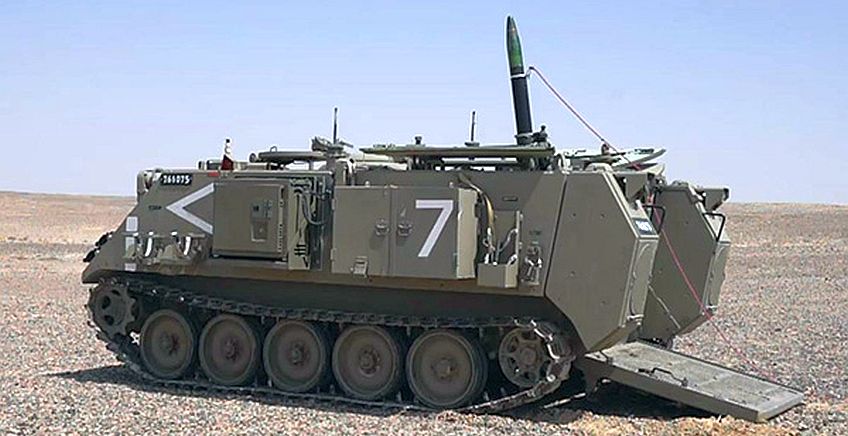
The series of tests was carried out using two networked Cardom mortar systems developed by Elbit Systems: a “Cardom” system, mounted on an M113 APC and a “Cardom Spear” system, mounted on a Hummer 4X4 SUV. The Iron Sting is designed to engage targets precisely, in both open terrains and urban environments, while reducing the possibility of collateral damage and preventing injury to non-combatants.

The Iron Sting Guided Mortar Munition offers a range of 1-12 km, depending on the mortar tube and hitting accurracy smaler than 1 m. Three modes of operation, GPS/IMU, SAL+GPS/IMU and SAL+IMU provide robust capabilities in all battlefield scenarios. Iron Sting features a seeker laser sensor capable of operating with standard pulse (NATO STANAG3722) and an encoded CW laser diode (lightweight and low-cost, suitable for small drones and UAS).

Elbit's smart mortar hit a target. No more "a statistical weapon"
Elbit’s smart mortar hit a target. No more “a statistical weapon”

Head of Research and Development in the DDR&D, Brig. Gen. Yaniv Rotem, said it was a 10 years of research and development. “Todat we can provide the IDF’s ground forces with advanced capabilities made for the modern battlefield. This laser and GPS- guided mortar munition provides troops with a precise firing capability that has only been implemented in missiles and air munition systems.”

General Manager of Elbit Systems Land Division, Yehuda Vered: “The introduction of laser and GPS guided munition transforms the mortar system from a statistical fire power into a precision fire system, thus delivering a significant change in fire capabilities at the tactical level.”

ScoutCam Appoints Yovav Sameah as the its new Chief Executive Officer

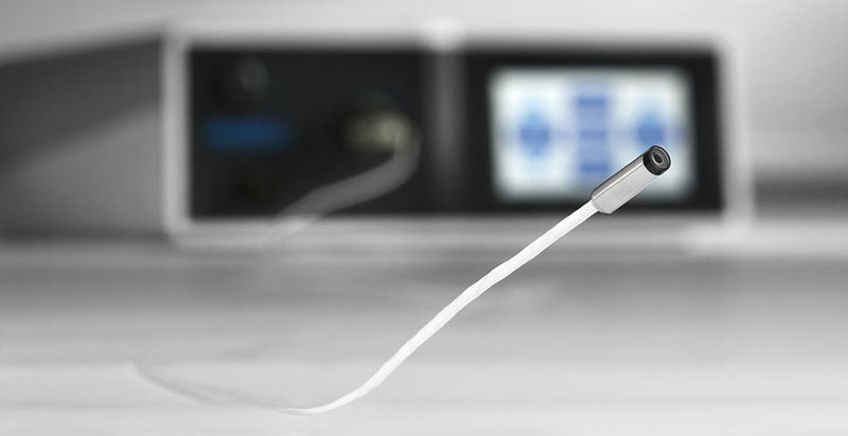
ScoutCam announced the appointment of Mr. Yovav Sameah (above) as the Company’s new Chief Executive Officer. Mr. Sameah will replace Dr. Yaron Silberman, who will step down to pursue new opportunities. ScoutCam has developed the world’s smallest cameras based on micro visualization technologies. Today it provides video camera down to, 1mm Outer Diameter, Focal Distance of down to 2mm, with wireless option or wired option of up to 30m distance.

Most recently Yovav Sameah served as CEO of Frontline PCB Solutions, a non-public worldwide provider of Pre-Production and Industry 4.0 SW solutions in the PCB industry, presently owned by KLA-Tencor Corp. Prior to Frontline PCB Solutions, he served as Corporate Vice President and Chief Products Officer at Orbotech.

Prof. Benad Goldwasser, the Executive Chairman of the Board’ said that ScoutCam is now ripe to graduate from its status as an R&D phase company. “We will look to Mr. Sameah to navigate us forward as we transition to a fully-commercialized international company with sales and customers across various industries.”

ScoutCam's miniature Camera
ScoutCam’s miniature Camera

In February 2021, ScoutCam appointed Professor Jacob Bortman as director of its business development in the field of Industry 4.0. Prof. Bortman most recently held the post of Israeli Air Force’s Head of Material Directorate, where he oversaw the maintenance of all IAF aircraft, and prior to that served as both its Head of the Aircraft Department and Head of the UAV and Space Department. Following his retirement from the IAF, he transitioned to academia where he now teaches and researches as a professor of mechanical engineering at Ben-Gurion University in Israel.

COVID-19 triggers multi-million euro in contracts for Polytex

Israeli workwear management company Polytex Technologies has witnessed explosive growth in the Spanish and French markets over the past year with multi-million euros in new contracts. The trend is continuing in both markets. Seven new hospitals throughout France and additional hospitals in Spain will be installing for the first time or expanding their use of Polytex’s solution that provides improved protection for health workers, which has become even more critical during the COVID-19 pandemic. In addition, the technology leads to a significant operation efficiency with reduction in inventory levels and therefore lower expenses on uniforms.

Spain is currently the third largest market for Polytex outside Israel and France the fifth. The pandemic triggered a 90% increase in sales in Spain and a similar increase in France.

Two significant projects for Polytex were recently closed in Spain. One is the the extension of Polytex’s project with the Bellvitge University Hospital, near Barcelona, ​​and the second is a new project for the Servicio Navarro de Salud (SNS), which will equip the operating rooms of the Navarra Hospital, the Virgen del Camino Hospital, and the Reina Sofia Hospital with systems for the management of pajamas and clogs.

Polytex entered the Spanish market in 2007 and Spain has already become the company’s third country of reference in volume beyond the borders of Israel, only surpassed by the United States and Germany. More than 200 systems have been installed to serve more than 50 clients distributed throughout the country. The pandemic has led to a strong increase in sales, of which 40% comes from existing customers, who needed to increase their capacity to meet the increase in clothing consumption, and the remaining 60% were new customers, who quickly adapted Polytex’s service in order to increase hygiene and lower operating costs.

The French market has witnessed phenomenal growth as well. Over the past twelve months, Polytex has won contracts at major French hospitals in Rouen, Rennes, Pithiviers, Dax, Poissy, Ajaccio and at a large hospital laundry service in the Paris region. This is in addition to the eight hospitals and a pharmaceutical industrial site in various parts of the country, which have already installed Polytex’s workwear and scrubs management solution.

Hospital managers in both countries report that the Polytex system helps to simplify the distribution of workwear and led to a 40% on average reduction in expenses on uniforms and laundry. The actual volume of workwear needed was reduced substantially as was the amount of storage space required.

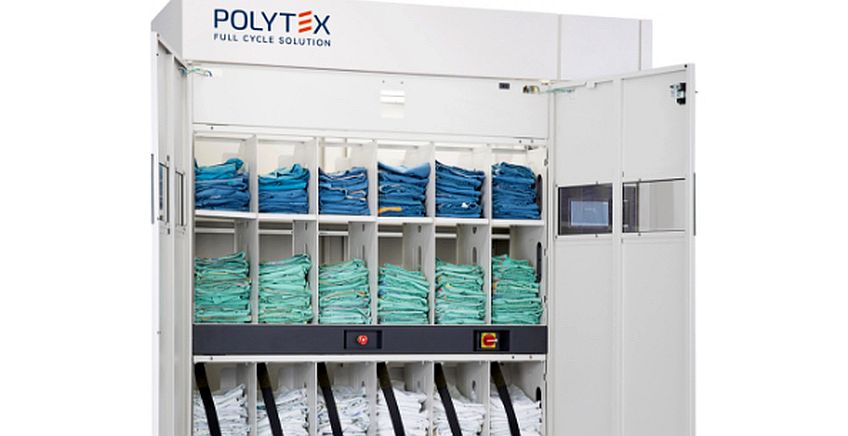
The Polytex solution is fully automated and enables hands-free dispensing and collecting of individual uniforms. The system itself is sealed, keeping garments in a clean environment that is opened only by laundry professionals during collection and restocking. The system is available on a 24/7 basis and often installed at multiple locations enabling staff to receive and return garments in seconds, thereby avoiding unnecessary crowding.

Refilling the machines with fresh clothing is very quick and takes only a couple of minutes.

The units can also be moved to special temporary wards dedicated to infectious diseases like COVID-19. The Polytex automated system is backed by a centralized cloud-based management and monitoring applications for end-to-end tracking.

“In the past year we have nearly doubled our sales in both Spain and France as the global pandemic has made hygiene an even more critical issue for hospitals,” said Yariv Matzliach, CEO of Polytex. He added that “both countries are currently among our largest and most strategic markets in Europe with tremendous growth potential in the coming years.”

Established in 2003, Polytex Technologies is a leading provider of workwear management solutions. Polytex supports the entire workwear laundry lifecycle with a wide range of automated machines backed by centralized cloud management and monitoring applications. Our solutions are used by hospitals and healthcare institutes, manufacturing sites, hospitality, and fitness centers. Polytex has over two decades of field-proven industry experience in the delivery of large-scale commercial laundry services. Polytex has over 3,000 installed machines located in North and South America, Europe, and Asia.

Polytex was established in Israel by the Poliner family. The co-founder Tomer Poliner served as the company’s CEO until Polytex received a major investment from the private equity fund Fortissimo Capital in 2019. He now leads the company’s technological and business development activities.

SuperCom Reports Succesful Coronavirus Quarantine Compliance Pilot in Israel

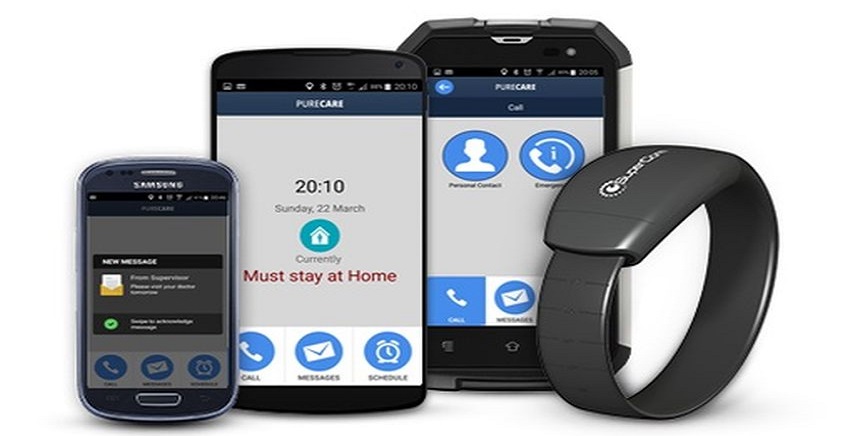
Tel-Aviv based SuperCom (NASDAQ: SPCB), a global provider of secured solutions for the e-Government, IoT and Cybersecurity sectors, announced today that the pilot in Israel for its Coronavirus (COVID-19) citizen quarantine compliance technology has been successful. The pilot is comprised of proprietary products in SuperCom’s PureHealth technology suite to include the PureCare smartphone and PureTag bracelet, which will help persons comply with their quarantine requirements. This solution is designed to assist government efforts in combating the spread of the virus through proven location tracking and stay-at-home compliance rules being implemented around the globe.

The pilot, which offered travelers arriving at Israel’s International airport to go on home quarantine for 10-14 days with the Purecare technology and program, received high demand with over 91% choosing to opt in for the program. Travelers on the program reported, through interviews on Israeli public news channels, very positive and comfortable experiences with a high rate of satisfaction for choosing the program.

Accordingly, the ministry of health in Israel expressed immediate demand for a high quantity of bracelet based covid-19 quarantine solution units to assist them in opening up the Israel international airports for large amount of passengers daily. In light of this demand and a surge in interest from multiple other nations, Supercom has significantly increased its potential production capacity to over 20,000 units per month, highest among its industry peers. The currently discussed covid-19 compliance program in Israel is full service, which means the technology itself and full services including installation, training for users, support, monitoring, and reporting.

In various full-service programs in the United States , the company typically charges above $10 per day per unit, or an annuilized run rate of above $3650 per unit. Although pricing in this program could be different.

“We are very pleased with this pilot, utilizing our proprietary technology with persons under home-quartantine in Israel, and we are proud to help Israel validate an important strategy to help mitigate the spread of the coronavirus,” commented Ordan Trabelsi, President and CEO of SuperCom.

“As new coronavirus mutations continue to spread, governments and healthcare agencies continue searching for tools that assist their efforts in fighting this pandemic. After testing different variations of our technology and program structures, we believe we may have achieved a comprehensive solution for comfortable and effective quarantine compliance. We have increased our production capacity to allow rapid deployment of thousands of units, and invite more nations around the world to pilot our technology and solution as well, ” concluded Ordan Trabelsi, President and CEO of SuperCom.

PureHealth is a non-intrusive patient friendly suite that can constantly track patient location for compliance programs; within buildings, vehicles and outside.  PureHealth works within existing healthcare containment models for control and surveillance of patients with infectious disease. The solution can operate with a mobile phone standalone or with additional security and location accessories as needed. In addition to the PureCare smartphone and PureTag bracelet, SuperCom offers a web based SAAS command and control center to manage the field based devices and compliance with program defined rules. This best-of-breed system includes a comprehensive set of innovative features, including smart phone integration, secure communication, advanced AI and security, anti-tamper mechanisms, fingerprint biometrics, voice communication and extended battery life.

50,000 dominican women will be screened for cervical cancer using MobileODT AI-based technology

According to GlobalCan data, cervical cancer is the fifth most common type of cancer among the general population in the Dominican Republic, and the second most common among women. In 2020, about 1,074 cases of cervical cancer were diagnosed. With a high cervical cancer rate among the Dominican Republic women population, early prevention can make a huge impact, saving lives and changing the outcomes for so many women. Furthermore, it can help the government save significant funds that would have been otherwise directed to the treatment.

A Mobile Colposcopy Using Smartphones

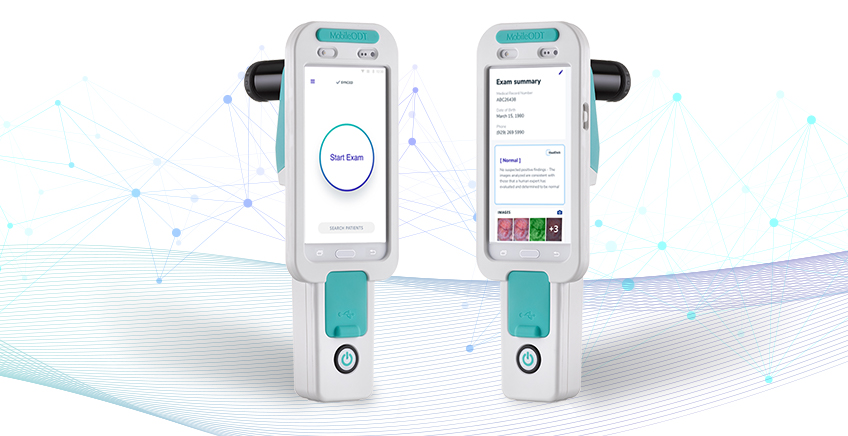
MobileODT, which was established in 2012 and is now run by the CEO Leon Boston, developed an inexpensive and mobile kit called EVA System, which is based on the smartphone’s photography and processing abilities and allows it to perform the vaginal colposcopy. The kit includes a zoom lense that is attached to the smartphone camera and a powerful lighting unit that allows clear imaging of the cervix. After the test, the images can be sent to gynecologists and experts through the application for diagnosis. In addition, the product also includes a smart decoding of the test, based on algorithms developed using machine learning performed on large databases of patient’s cervical imaging.

This assessment allows nurses, midwives and therapists to simply perform the diagnostic test even in remote locations and countries in which medical infrastructure is lacking, and thus help lessen the cervical cancer mortality rates. The EVA System kit which received FDA approval in 2016, is sold today in about 30 countries and is in use in 60 clinics in the US.

Leopard launched a smart camera empowered by Hailo’s AI chip

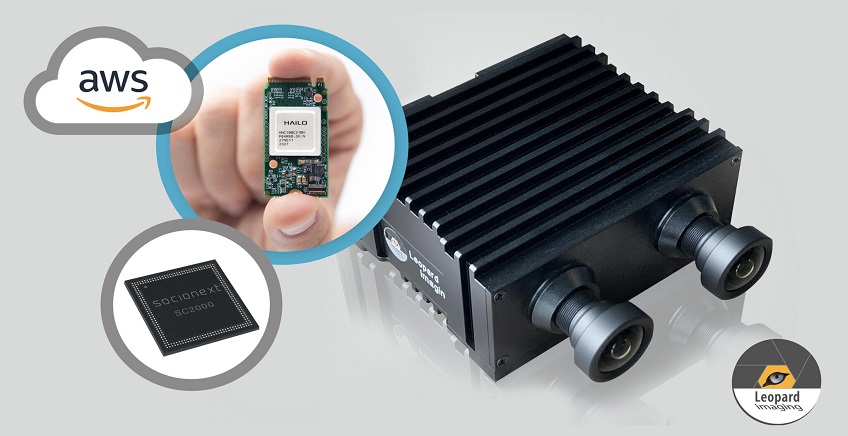
Hailo’s AI processor has been integrated into a new product launched recently by Leopard; a manufacturer of embedded cameras for smart devices. The product, named EdgeTuring, is an embedded HD camera for image processing and video analytics applications, in which deep learning inference tasks like object detection and classification are performed at the end device rather than at the cloud. The camera is equipped with the Hailo-8 AI acceleration module, the SC2000 signal processor by Socionext, a japanese provider of advanced SoC, and it is also connected by a simple network connection to Amazon AWS cloud services.

The product is designed for a wide range of applications such as robotics and industrial automation, smart security cameras, machine vision applications in the retail sector and more. According to Leopard, the EdgeTuring consumes less power, performs at a higher level, and ensures greater reliability for video analytics and privacy at the edge than alternative solutions.. The camera is currently priced at $ 900.

Faster then Google and Intel

Founded in 2008 and based in California, Leopard develops embedded HD cameras for autonomous driving systems, drones and robotics, AR/VR and scientific and medical equipment. Among its customers are Nvidia, Xilinx, Qualcomm, On-Semi, Boston Robotics and Sony.

Launched just last year, the Hailo-8 enables customers to integrate high performance AI capabilities of 26 Tera Operations Per Second (TOPS) into edge devices. Hailo reported that a comparison between the Hailo-8 average Frames Per Second (FPS) with competitors across multiple standard NN benchmarks shows that Hailo’s AI modules achieve a FPS rate 26x higher than Intel’s Myriad-X modules and 13x higher than Google’s Edge TPU modules. The Hailo-8 M.2 module is already integrated into the next generation of Foxconn’s BOXiedge with no redesign required for the PCB.