Innoviz to Ramp Up Production Tenfold

photo above: Innoviz CEO, Omer Keilaf

The provider of automotive LiDAR sensors, Innoviz Technologies (Rosh HaAyin, Israel) is gearing up towards the global launching robo-taxi autonomous driving services, planned to begin in 2026. The company has decided to increase its mass production volume of LiDAR systems tenfold at the facilities of its manufacturing partner, Fabrinet. The initial serial production of the InnovizTwo systems at Fabrinet started last month.

This was revealed by Innoviz CEO, Omer Keilaf, during the earnings call this week, following the release of Q2 2025 financial results. Keilaf also shared that the Innoviz is currently developing its fourth sensor, the InnovizThree, which will be unveiled to customers later this month at the ITS exhibition in Atlanta. “InnovizThree represent a significant leap forward in performance, cost, and size,” he said.

The is in the beginning of  a new phase: sales grew by approximately 46% compared to the same quarter 2024, to a total of $9.7 million. H1 2025 sales have already surpassed the total sales of 2024, amounting to approximately $27.5 million. Accordingly, Innoviz has updated its 2025 sales forecast to $50-60 million, double its 2024 sales.

A New Funding Program

Despite having $79.4 million in cash and cash equivalents, the company has announced a $75 million ATM (At-The-Market) Program. This mechanism allows Innoviz to sell new or existing shares as needed to raise capital for temporary requirements. Maybe this is reason for the approximately 12.6% drop in the company’s stock on the Nasdaq, bringing its market capitalization to $316 million.

According to Keilaf, Innoviz has signed a Statement of Development Work (SODW) agreement with one of the world’s five largest private car manufacturers. This agreement involves making several adjustments to the InnovizTwo LiDAR sensor in order to adapt it to the manufacturer’s specific requirements. “We have passed RFI and RFQ stages. This is a process we are familiar with, having made specific adjustments to the sensors of Volkswagen’s ID.Buzz autonomous taxi program.”

The Surprising Advantages of Robots

The ID.Buzz autonomous driving system is based on Mobileye’s solution, that includes 9 Innoviz sensors in each taxi. Keilaf also mentioned that the company has entered negotiations with other car manufacturers whose systems are based on Mobileye.

An interesting new market for Innovis is in the industrial and security applications market (outside of the automotive industry). Keilaf: “The majority of our effort, 95%, is dedicated to the automotive sector, where the leading company holds a large portion of the market. However, we recently discovered that in robotics and industrial markets, there is a need for LiDAR sensors that meet functional safety requirements.

“Because we come from the automotive market, we meet these conditions, unlike competing LiDAR manufacturers who did not come from automotive.” The company’s new sensor, InnovizSMART, is based on automotive technologies and is intended for use in industrial and robotics systems. It provides detection up to 450 meters even in challenging visibility and weather conditions.

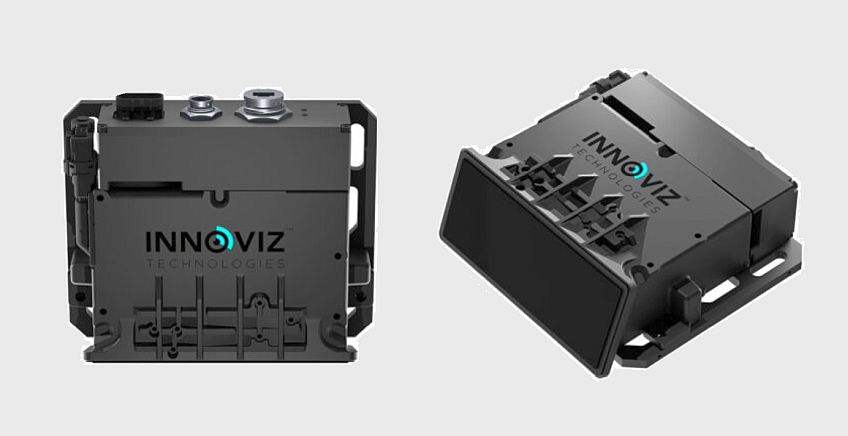
InnovizSMART LiDAR sensor

The “Gold Rush” Returns

Keilaf: We recently completed its integration within the Nvidia Jetson Orin environment and ecosystem. This means it is included in the reference designs that Nvidia provides to Orin customers. One reason for this move is that the major integrators in the industrial and robotics market frequently use Jetson.” For Innoviz, this new market offers several additional advantages: “The timelines here are much shorter, and the profit margins are very high compared to the automotive industry.”

Meanwhile, a new trend is emerging in the AV market: “It is returning to the ‘Gold Rush’ phase. Manufacturers are now working on new car models and adopting Level 3 (L3) autonomous systems. We are seeing a recovery in the market for higher-level autonomy systems, L4, but here the main push comes mainly from the commercial market: autonomous taxis, autonomous trucks, and autonomous commercial transport vehicles.”

Innoviz Enters the Security Market with InnovizSMART

[Image above: The new InnovizSMART sensor]

Israeli company Innoviz Technologies, headquartered in Rosh HaAyin, is expanding into the perimeter and facility security market through a strategic partnership with India’s Sparsh and the UK’s Cron AI. The three companies signed an agreement to jointly develop a security solution for the Indian market based on a combination of cameras, LiDAR sensors, and AI-based image processing software, designed for installation in transport infrastructure, public facilities, train stations, and other critical assets.

According to Indian research firm Grand View Research, the perimeter security market in India was valued at approximately $3.23 billion in 2022 and is expected to grow at a 14% annual rate through 2030. Cron AI’s internal research estimates that the emerging smart transport and infrastructure protection market in India represents a $1 billion opportunity for solutions that combine LiDAR and camera technologies.

Sales and distribution will be handled by Sparsh CCTV, based in New Delhi, one of India’s largest surveillance camera manufacturers. The company operates two factories that produce around 500,000 cameras per year, is active in 120 Indian cities, and exports to 10 countries. Cron AI, headquartered in London, specializes in sensor-based scene understanding. Its flagship product, senseEDGE, is a compact Android-based edge computer running deep learning software that processes data from 3D sensors such as LiDAR, radar, and camera arrays.

Compact and Rugged

Cron AI’s computer operates at just 8 watts and performs sensor fusion, integrating data from multiple sources into a unified model of the environment. The results are then transmitted to a network hub or cloud service. The InnovizSMART sensor was specifically designed for industrial and security applications, which lie outside the company’s core automotive market. It is smaller than the company’s standard sensors, features a ruggedized casing, operates at 12V, provides 3D detection at ranges of 2 to 400 meters, and uses a PoE (Power over Ethernet) interface—allowing both power and data transmission via a single cable.

The sensor was officially launched last month, alongside a separate collaboration between Innoviz and Israeli robotics software company Cogniteam. That partnership focuses on developing a joint navigation and perception solution for security and robotic systems, based on Cogniteam’s software and the InnovizSMART sensor.

Innoviz CEO Omer Keilaf described the move as “bringing technology from the automotive world into the rapidly growing Indian market for transportation and infrastructure protection.”
Innoviz is listed on the NASDAQ with a current market cap of approximately $320 million.

Fabrinet Ships First InnovizTwo LiDAR Platform Units

Innoviz Technologies announced the shipment of the first InnovizTwo LiDAR units from Fabrinet’s high-volume production line. This marks a major milestone in the move to mass production InnovizTwo LiDAR technology for the autonomous vehicles. The production ramp-up at Fabrinet’s facility follows months of collaboration and extensive training.

“Shipping the first InnovizTwo units from Fabrinet is a critical achievement for us,” said Ido Luski, Innoviz’s Co-Chief Operation Officer. On April 22, 2025, Innoviz announced that Fabrinet is the chosen manufacturing partner for the InnovizTwo LiDAR platform, encompassing both the InnovizTwo Long-Range and InnovizTwo Short- to Mid-Range LiDAR solutions. The agreement with Fabrinet comes after Fabrinet’s facility passed rigorous audits by several global leading automotive OEMs under the German automotive VDA 6.3 standard.

Lately Innoviz expanded its collaboration with Volkswagen Autonomous Mobility to accelerate the integration of InnovizTwo LiDAR units into the ID. Buzz AD,  VW’s L4 autonomous shuttle. This development is supported by Innoviz’s partnership with Fabrinet for mass production of the InnovizTwo. With a total of nine InnovizTwo LiDAR units per vehicle, Volkswagen’s Level 4 autonomous fleet features comprehensive 360° sensing coverage, designed to enable safer navigation in complex urban environments.

Innoviz’ Revenues in Q1 2025 were $17.4 million compared to revenues of $7.1 million in Q1 2024. The revenue growth resulted from a combination of NRE services, production units and sample shipments. The company targets fiscal year 2025 revenues to reach $50$60 million, more than double the 2024 levels. The company is traded on NASDAQ at capital markets value of  $280.5 millions.

Mobileye to use Innoviz LiDAR for its AV Platform

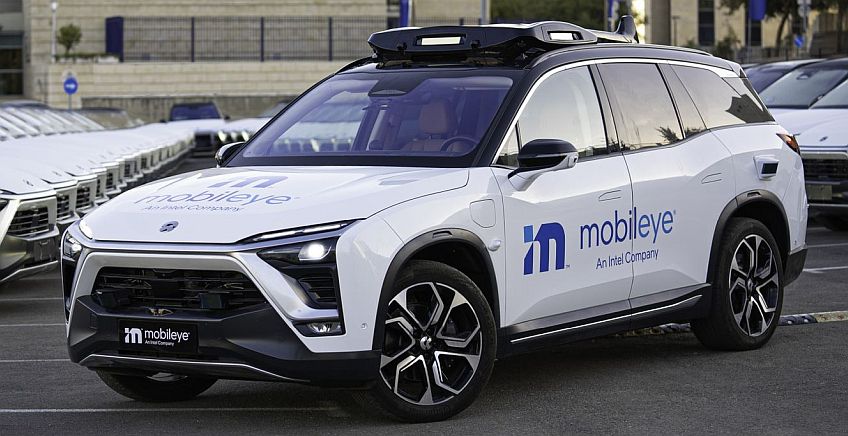
Above: Mobileye’s robotaxi in its HQ campus in Jerusalem

Mobileye and Innoviz Technologies, announced that Mobileye will use Innoviz’s LiDARs for Mobileye Drive, its AV platform. Mobileye Drive is a comprehensive driverless system that enables to provide robotaxis, ride-pooling, public transport, and goods delivery fully autonomous. It is now under comprehensive tests in EuropeNorth America, and Asia. Innoviz’s LiDAR technology will join the current cameras, radars, and imaging radars in this platform. The agreement is built upon mutual work between the two companies over the past few months, with Start of Production (SOP) beginning in 2026.

“The integration of our imaging radars and high-resolution cameras in combination with the Innoviz LiDARs will play a key role in delivering Mobileye Drive,” said Prof. Amnon Shashua, President and CEO of Mobileye. Innoviz’s InnovizTwo product platform specifically engineered for Mobileye Drive to provide the L4 autonomous platform with a complete set of LiDARs.

“Better-than-expected cost reduction”

The agreement was signed shortly after Mobileye had eneded the internal development of Frequency Modulated Continuous Wave (FMCW) LiDARs in September 2024. MobilEye explained the descision: “We now believe that the availability of next-generation FMCW lidar is less essential to our roadmap for eyes-off systems. This decision was based on a variety of factors, including substantial progress on our EyeQ6-based computer vision perception, increased clarity on the performance of our internally developed imaging radar, and continued better-than-expected cost reductions in third-party lidar units.”

The lidar R&D unit will be wound down by the end of 2024, affecting about 100 employees. Operating expenses for the lidar R&D unit are expected to total approximately $60 million in 2024 (including approximately $5 million related to share-based compensation expenses). While this action is not expected to have a material impact on Mobileye’s results in 2024, it will result in the avoidance of lidar development spending in the future.

Innoviz Announced Operational Realignment

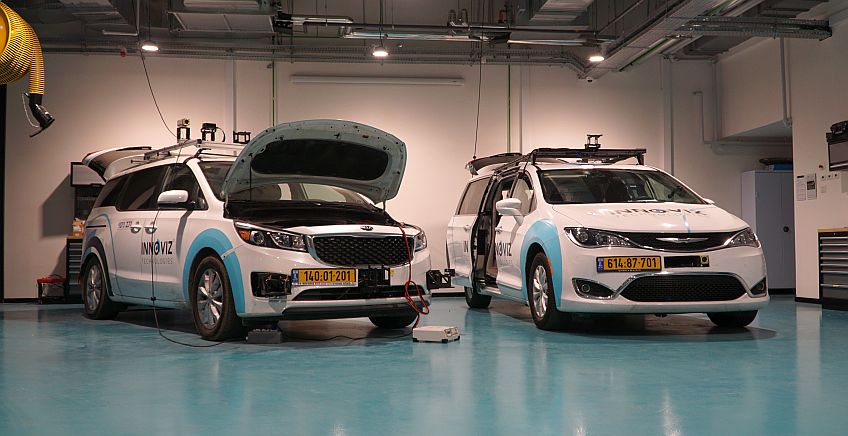
Photo above: Test cars in Innoviz’ lab. Credit: Techtime

Innoviz Technologies announced a strategic realignment of its operations to expand the Company’s cash runway and optimize its path towards cash flow generation. The realignment includes the reduction of the Company’s headcount by approximately 13%, the transition of InnovizOne LiDAR sensor into series production and the concentration of future investments on the InnovizTwo sensor and software platform. In late 2022, Innoviz employed approximately 470 employees. It means it reduces its workforce by 60 jobs.

As a result, Innoviz expects to reduce its 2024 planned cash outlays by $22-24 million on an annualized basis. Cash savings are expected to begin in the first quarter of 2024 with run rate savings expected to be achieved by the end of the second quarter of 2024.  Omer Keilaf, Innoviz Co-Founder and CEO, said there is a market capture window that will determine the market share of the LiDAR industry for the next decade.

“Today’s actions are the result of a thoughtful process to optimize the Company’s cost structure, increase our competitive positioning, and extend our cash runway through the expected remainder of the market capture window. Looking ahead, we remain confident in our ability to achieve our long-term goals and become a market leader in automotive LiDAR.”

Innoviz is a Tier 1 supplier of LiDAR sensors and perception software for the automotive industry and works with partners cross the U.S., Europe, and Asia. The company is traded in NASDAQ in a valuation of $ 282 millions. Its stock price is very low compared with it orinigal valuation of $ 1.4 billion (December 2020), following delays in the adoption of LiDAR technology across the automotive industry.

During CES 2024 last month in Las Vegas, BMW Group brought the new BMW i7 with level 3 autonomous driving capabilities enabled by the InnovizOne LiDAR is now available to order in Germany with deliveries expected to begin March 2024. Volkswagen showd its light commercial vehicle program VW ID. Buzz, utilizing InnovizTwo LiDAR for level 4 autonomous capabilities.

“LiDAR market will be a ‘Winner takes Most'”

Photo above: Omer Keilaf, Innoviz Co-Founder and CEO

The Tier-1 direct supplier of high-performance, automotive grade LiDAR sensors and perception software,  Innoviz Technologies, announced that its Revenues in Q3 2023 were $3.5 million, up 138% compared to revenues of $1.5 million in Q2 2023 and up 297% compared to revenues of $0.9 million in Q3 2022. The increase in revenues was driven by strong growth in InnovizTwo unit sales, which increased 102% sequentially.

Two major programs have moved to high gear during the quarter: BMW began shipping production units of its InnovizOne LiDAR sensor components to its first generation program. “We worked closely with the teams at Magna and BMW to complete testing and lock the final version of the software that will be installed on BMW 7 vehicles in the coming weeks,” said Omer Keilaf, Innoviz Co-Founder and CEO. “While the 7 Series was always planned to be our initial flagship launch for the InnovizOne, our technology was certified on several models and variants within the BMW Group, and our efforts are now shifting towards integration with additional models.”

Autonomous Shuttle with 6 LiDAR Sensors

The other development is a progress in a promising shuttle program with a leading automotive supplier, who had decided to change the platform from a four-LiDAR configuration to a six-LiDAR configuration. Keilaf: “We expect this program to be fully driverless (Level 4) electric vehicle capable of carrying over 20 passengers and the ability to operate 24 hours a day. The earliest applications are likely to be people movers in environments like airports, college campuses, private communities, and corporate campuses.

“This opens it up to urban centers and possibly even suburban environments where it could become a lower cost or much more flexible alternative to legacy public transportation models. In the initial stages, the shuttles can complement existing bus and train transportation systems, possibly linking different modes of transportation together or connecting otherwise uneconomical routes. Over time, it’s not hard to imagine the autonomous routes increasingly dislocating the legacy routes as adoption grows.”

They don’t know how much they don’t know

Keilf said that the BMW 7 program is a milestone for Innoviz and for the entire intustry as well: “It sends a strong signal to other OEMs that we can reach SOP (Start of Production) and hit our goals and milestones. It also differentiates us from our competition: There are a number of other LiDAR companies out there claiming to compete with us in automotive LiDAR space. But some don’t have even a single series production award yet. And some have awards but have yet to execute on SOP-related milestones. From our experience, those who haven’t executed on these milestones don’t even know how much they don’t know at this point.

“We already have BMW and Volkswagen Group as customers, and they collectively represent 15% of global automotive production. If we can secure just one or two more major OEMs as customer and we will have a substantial lead, since we believe the LiDAR market will ultimately be a ‘winner takes most’ industry. There are primarily two or three main platforms that everyone is using, either it’s NVIDIA or Mobileye or Qualcomm. We are very familiar with all of these platforms. Some of our work with these platform players is in order to learn about their hardware accelerators, so we can make use of them as best as possible.”

Innoviz updated its forecast to $6.9 billion sales

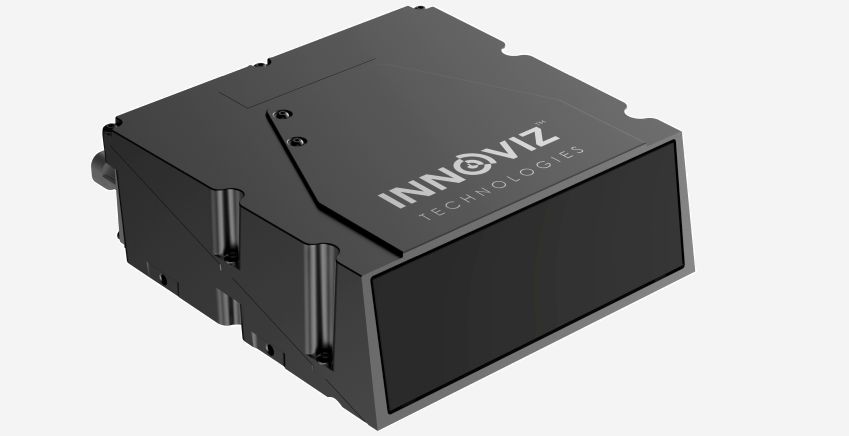
Above: Next-Generation of the Automotive-Grade LiDAR system, InnovizTwo

Following a new customer win in Asia, Innoviz Technologies, updated its forward-looking order book up to $6.9 billion, compared with $4 billion forecast approximately a year ago. The new customer is an emerging global EV manufacturer who selected InnovizTwo LiDAR sensor for its series production of passenger vehicles, starting 2024. In this deal, Innoviz will act as a Tier 1 supplier of the LiDAR solutions.

During the third quarter of 2022, Innoviz moved its corporate headquarters to a new facility in Rosh Ha’ayin (near Tel aviv). The move included improvements of the Israel-based production lines and “eliminating a key bottleneck in the overall production process” that will enable more InnovizOne units to be sold into non-automotive markets beginning in the fourth quarter of 2022 and ramping into 2023. As part of this process Innoviz has moved to the D-sample stage, which is the final step before the start of production in the Automotive industry.

Currently, Innoviz’s first high-end automotive LiDAR, InnovizOne is produced on two parallel production lines. The first is the production line in Holly, MI, which is owned by Magna and is serving the BMW program for the upcoming 2023 BMW 7 Series. The second is a production line at a contract manufacturer in Germany, which serves to support the autonomous shuttle program with a leading tier-1 automotive supplier and other customers.

The deal also marks the Company’s first production win with a new technology partner. According to rumors in the industry, Innoviz now has production wins with Mobileye and Qualcomm – two of the industry’s three major autonomous driving technology platform partners. The third one is NVIDIA. According to Omer Keilaf, CEO of Innoviz, the company now has 11 OEMs in the RFI and RFQ process, which collectively produce approximately 40 million vehicles per year. It also expects an additional 1-3 new decisions by OEMs in the next six months.