
[Image: Remote driving via a steering-wheel control system. Credit: Vay]
Israeli computer vision company Nexar announced a partnership with mobility startup Vay to integrate its AI-based accident prediction model into Vay’s remotely driven vehicle fleet. The model, called BADAS (Beyond ADAS), is designed to identify road hazards seconds before they occur and provide real-time alerts about dangerous situations.
According to the companies, the integration will add a predictive safety layer to Vay’s remote-driving system — a service considered the world’s first commercial fleet of vehicles driven remotely on public roads.
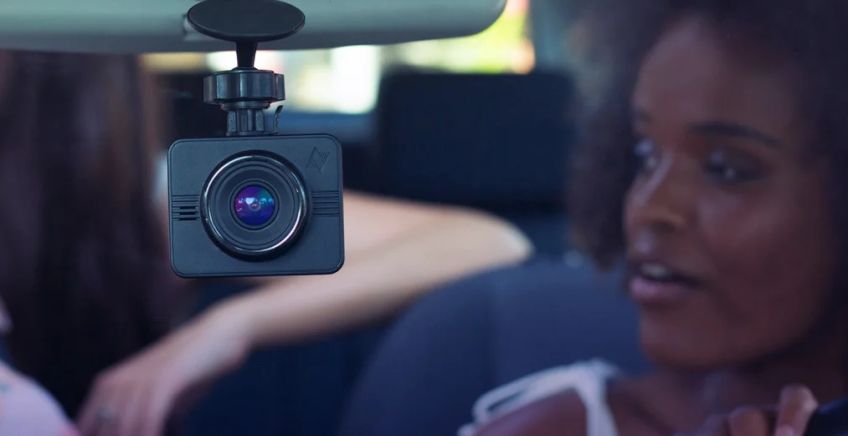
As part of the collaboration, Nexar’s AI model will analyze video streams and sensor data from cameras installed on Vay’s vehicles in order to identify potential risk situations. The goal is to add predictive capabilities that anticipate danger before the operator reacts, generating alerts for scenarios such as a nearby vehicle drifting out of its lane, a pedestrian stepping into the road, or unusual traffic patterns at an intersection.
A car that arrives without a driver
Vay is a mobility startup founded in Berlin in 2018 that is developing a new model for urban transportation: a car that arrives at the user without a driver — but is not fully autonomous.
Instead, the vehicle is delivered by a human operator located in a remote control center who drives the car using a tele-driving system.
When a user orders a vehicle through the company’s app, a remote operator drives the car to the requested location. Once the vehicle arrives, control is handed over to the user, who drives the car to their destination. At the end of the trip, the remote operator reconnects to the vehicle and either parks it or drives it to the next customer.
The model combines elements of car sharing and ride-hailing but differs from both: there is no driver inside the vehicle, yet the system is not fully autonomous. The concept is designed to offer a flexible and potentially cheaper alternative to taxi services while avoiding the complexity and high costs associated with developing fully autonomous vehicles.
Vay’s system relies on a fleet of electric vehicles equipped with multiple cameras, real-time data connectivity, and safety mechanisms that enable low-latency remote control. The operator sits at a control station that mimics a traditional driving cockpit, complete with a steering wheel, pedals, and screens displaying the vehicle’s surroundings.
The company launched its commercial service in Las Vegas and has raised more than $200 million from investors including Kinnevik, Coatue, and Atomico. Its business model relies on a shared fleet of vehicles, with remote operators responsible for delivering cars to users and managing fleet logistics between trips.
Not a driving model — a crash prediction model
The technology Nexar is integrating into the service is based on its AI model BADAS, designed to predict crashes and road risks before they occur.
The model was trained on a massive dataset of real-world driving data collected over several years from a global network of dashcams installed in private vehicles, commercial fleets, and urban monitoring systems.
Unlike traditional ADAS systems that react to events once they occur, BADAS attempts to identify early behavioral patterns that indicate a potential risk. Nexar’s dataset includes thousands of “near-miss” events — situations in which a dangerous scenario emerged but no actual crash occurred — allowing the model to learn what abnormal behavior on the road looks like.
According to the company, the model was able to predict accidents on average 4.9 seconds before they happened during testing.
Nexar does not aim to build its own autonomous vehicles. Instead, it positions the model as infrastructure that can be integrated into systems developed by automakers, insurance companies, commercial fleets, and smart city platforms.
A complementary technology stack
The collaboration combines two complementary layers of technology: a remote-driving system that allows vehicles to operate without a driver inside the car, and an AI model that analyzes the driving environment and provides early warnings of potential hazards.
In Vay’s system, the remote operator relies on live video feeds from the vehicle’s cameras to understand the road environment. Nexar’s predictive model can add an additional layer of analysis on top of that video stream — effectively acting as an AI-powered assistant that identifies dangerous patterns and alerts the operator before they notice them.
Beyond improving safety, such a system could also increase the operational efficiency of the service. A predictive monitoring layer that continuously analyzes the environment may reduce cognitive load on remote operators and allow the company to scale its fleet operations while maintaining high safety standards.
For Nexar, the partnership demonstrates how its model can serve as a foundational software layer across multiple mobility platforms — not only in private vehicles or ADAS systems, but also in connected fleets and emerging transportation services.
More broadly, the move reflects a growing trend in the transportation industry: the shift from reactive safety systems that detect danger after it appears to predictive systems built on real-world driving data.
If models of this type prove reliable at scale, they could become a core software layer in next-generation transportation safety systems — whether in autonomous vehicles, connected fleets, or remote-driving services.