
A secret war between Oracle and Microsoft will shape the future of AI

Photo above: Construction works at Stargate facility, Texas, USA. Credit: OpenAI

The developing competition between Oracle and Microsoft for OpenAI’s huge investments budgets is not accidental and was, in many ways, even expected. However, the scale and outcome of this conflict could reshape the entire ecosystem of Artificial Intelligence in the coming years. Last week, The Wall Street Journal reported that OpenAI had signed an unprecedented $300 billion cloud infrastructure agreement with Oracle, starting in 2027. Following this news, Oracle’s stock on the NYSE surged by about 40% in a single day. While it has since fallen slightly (to $291), the company is now trading at a record high market capitalization of $830 billion.

This agreement comes less than two months after the signing of a collaboration deal to build and operate a 4.5 gigawatts data center in Texas, USA, that will house over 2 million processors. “Oracle began delivering the first Nvidia GB200 racks last month and we recently began running early training and inference workloads, using this capacity to push the limits of OpenAI’s next-generation frontier research.” The project will be executed through a new subsidiary, Stargate Project, with a total investment of about $500 billion over the next four years. The main investors in Stargate Project, alongside OpenAI, are SoftBank, Oracle, and the Emirati investment fund MGX.

Don’t Upset Microsoft

“As part of Stargate, Oracle, NVIDIA, and OpenAI will closely collaborate to build and operate this computing system. This builds on a deep collaboration between OpenAI and NVIDIA going back to 2016 and a newer partnership between OpenAI and Oracle,” OpenAI stated. To appease its largest investor, the company added a note: “OpenAI will continue to increase its consumption of Azure as OpenAI continues its work with Microsoft with this additional compute to train leading models and deliver great products and services.”

Why is this comment so crucial? Because Microsoft and OpenAI have a unique relationship. Since OpenAI’s inception in 2019, Microsoft has been its primary investor. Many analysts in the industry estimate it has invested in OpenAI more than $13 billion to date. Microsoft has also provided significant technological resources to OpenAI, including access to vast computing resources on its Azure cloud for training and hosting models like GPT-3.5 and GPT-4.

In return, it gained the ability to integrate OpenAI’s technology into its products. The Azure OpenAI service allows customers to use OpenAI models through Microsoft’s platform, and Microsoft’s Copilot platform is based on integrating OpenAI technology into Office applications, the Bing search engine, and the Windows operating system. It remains unclear how the two partners will resolve the conflict created by the new alliance with Oracle.

Perhaps to calm investors and customers, they released on September 11, 2025 a joint, brief, and cryptic statement: “OpenAI and Microsoft have signed a non-binding memorandum of understanding (MOU) for the next phase of our partnership. We are actively working to finalize contractual terms in a definitive agreement. Together, we remain focused on delivering the best AI tools for everyone, grounded in our shared commitment to safety.” Is this a peace treaty or a declaration of war? It’s unclear.

The Software Giants Meet in the Cloud

In any case, the financial reports from both Microsoft and Oracle reveal that even if not explicitly stated, the two companies have long been on a collision course. Oracle’s latest quarterly report shows that nearly half of its revenue now comes from its cloud services. In the first quarter of fiscal year 2026, which ended in August 2025, Oracle’s sales totaled $14.9 billion. The main component (48% of sales) was revenue from cloud solutions and services, which grew by 28% compared to the same quarter last year, reaching $7.2 billion. The software sales component dropped to just 38%, compared to 44% last year, totaling $5.7 billion.

The cloud is also becoming the main component of Microsoft’s revenue. In the fourth fiscal quarter ending in June 2025, its sales totaled $76.4 billion. Sales from cloud services grew by 26% compared to the same quarter last year, reaching $29.9 billion, nearly 40% of total sales.

In other words, both software giants are gradually transforming into cloud-based companies. And since artificial intelligence is the largest growth engine for cloud services, they are clashing at a specific moment: when the leading company in AI services is finalizing its strategic plan for the coming years.

The Mystery of OpenAI’s New Hardware Device

photo above: Sam Altman, CEO of OpenAI (right) and Jony Ive, founder of io Products

In May 2025, OpenAI announced the acquisition of io Products, a hardware startup co-founded by legendary Apple designer Jony Ive, for approximately $6.5 billion. Ive, who led Apple’s design team for nearly three decades and was often considered second only to Steve Jobs and Tim Cook, launched io Products in 2024 with a clear mission: to design a revolutionary AI-based hardware devices.

The company worked closely with LoveFrom, the design collective Ive founded after departing Apple in 2019. In a letter to employees two weeks ago, the CEO of OpenAI, Sam Altman, and Jony Ive, confirmed the deal had closed. “The io Products team has been integrated into OpenAI,” they wrote. “Jony and LoveFrom remain independent, but are now leading deep product design across OpenAI.”

AI for everyone, everywhere

The letter also revealed that discussions between Altman and Ive began nearly two years ago, as part of an effort to rethink the user experience – one that, despite rapid advances in computing power and connectivity, has remained largely unchanged over the past 15 years. They explored a variety of ideas for next-gen hardware, ultimately deciding that a dedicated company was needed in order to bring their concepts to life.

That’s how io Products was born. It quickly assembled a team of engineers, physicists, and researchers to begin prototyping radical new devices. Now, with io fully absorbed into OpenAI, the plan is to align the hardware roadmap closely with OpenAI’s software products – particularly ChatGPT. But what, exactly, is this new hardware?

While the company remains tight-lipped, several clues are beginning to emerge. The device is rumored to be a mass-market consumer product, potentially poised to become a “third essential device, alongside the desktop and mobile phone.” These hints came to light partially through court document filed after Google sued OpenAI, alleging trademark infringement over the name “io,” which Google claims conflicts with its subsidiary iyO.

Legal documents reveal some details

iyO is reportedly developing an AI-powered, screenless wearable: a small in-ear device designed to function as a “computer without a screen,” controlled by voice and audio-only feedback. OpenAI, in its court response, explained that its hardware initiative aims to “build a family of devices that redefine how humans interact with AI,” and that it had explored various form factors, including desktop, mobile, wired, wireless, and even wearables.

Former senior Apple’s engineer and io Products co-founder, Tang Tan, is cited on this documenty, saying that OpenAI’s device is “very different” from Google’s iyO wearable. This led analysts to suspect that it may not be a wearable at all. In a promotional video released by OpenAI in May (later removed), Ive and Altman commented on how outdated our current interfaces are, relying on technology “developed more than a decade ago.”

They noted that interacting with ChatGPT today involves using a PC or opening a Cloud-based App – neither of which is ideal. Altman described the goal as delivering a device “everyone will use”, much like the smartphone. He was even quoted by news outlets expressing an ambition to make a big launch in 2026, with the intention of selling 100 million units during the initial rollout.

Will ChatGPT kill the Smartphone?

So what is it? Mystery still surrounds the device. In a podcast interview with his brother, Jack Altman, Sam hinted that the new device would surpass smartphones and computers in capability. He emphasized that it won’t be a smartphone or smart glasses, but rather a new category altogether: a personal AI assistant or companion. “I don’t have a good name for it yet,” he admitted, “but the best I can do is: My AI Companion.”

In a February 2025 interview with Nikkei Asia, Altman elaborated further, expressing hope that the new device could eliminate the need for smartphones altogether, by deeply embedding AI into the user’s day-to-day interaction with AI technology. The vision, developed in collaboration with Jony Ive, is to move beyond the screen-and-app paradigm that has dominated mobile for years. Instead, the new device will rely on seamless integration with ChatGPT to assist with communication, task automation, and a wide range of everyday needs.

OpTeamizer to help companies integrate OpenAI-based technologies

OpTeamizer, an Israel-based company that offers AI solutions and consulting services to R&D centers and startups, has announced a new suite of services in the field of generative AI.

The offerings are intended for international R&D centers as well as for startups looking for effective ways to integrate and implement technologies based on the platforms of OpenAI, developer of chatbot ChatGPT. The services will enable implementation of existing applications or support the development of new applications by implementing OpenAI’s capabilities in their functionality. The new generative AI service suite includes consulting, development assistance, and developer training and courses.

OpTeamizer has launched the OpenAI service suite against the backdrop of an international race of thousands of companies worldwide striving to implement the functionality of OpenAI tools in their existing and future solutions, as Microsoft has done in its Bing search engine, in its Teams video conferencing platform and in its Viva Sales software.

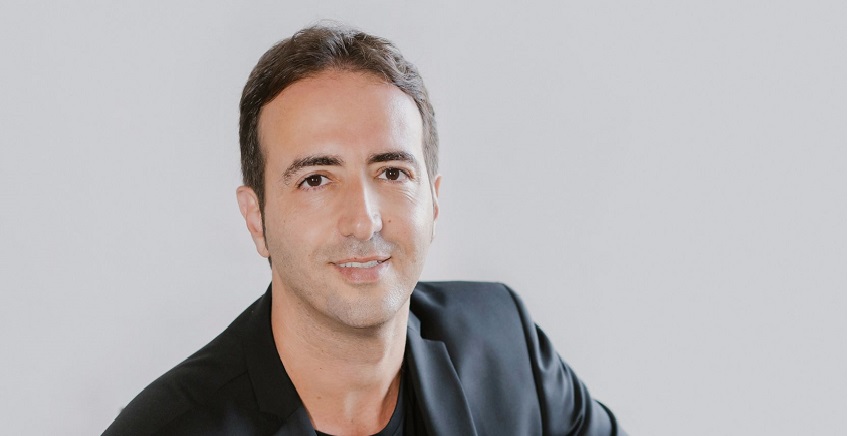
Tomer Gal [pictured above], founder and CEO of OpTeamizer: “The competition in generative AI spans the global high-tech industry. It’s clear that anyone who’s quick to integrate the kind of capabilities offered by OpenAI into their applications will gain a huge market advantage. Time is therefore critical: there’s no time to reinvent the wheel and run wasteful experiments.”

Tomer adds: “Our service suite will help R&D centers and startups significantly shorten the implementation and development of OpenAI’s capabilities in their existing and future applications, lower development costs and. More importantly, it will help them feel confident that the product is of high commercial quality and accuracy, without the growing pains typical of applications in the field. This will help these companies quickly benefit from new sources of revenue in this new market, whose economic potential is huge.”

OpTeamizer is a Preferred Partner of NVIDIA, qualified to guide Israeli industry in the research and development of artificial intelligence systems, accelerated by NVIDIA’s GPUs and software libraries (SDKs). OpTeamizer also provides turnkey development services to businesses that adopt GPU solutions as they enter the world of AI.

Since 2015, OpTeamizer has provided a range of professional services and turnkey projects to over 100 R&D centers. OpTeamizer cooperates with industry leaders in homeland security, healthcare, industrial inspection, and many other fields. OpTeamizer was recently named an NVIDIA Embedded Edge Partner by NVIDIA and will provide consulting, development, and training services to NVIDIA customers around the world developing edge devices that use its NVIDIA Jetson platform.

OpTeamizer was founded in 2015 by Tomer Gal, one of Israel’s leading AI experts, who participated in strategic developments of Intel Israel and General Electric Israel. Tomer has an MSc in computer science specializing in software optimization, and is a member of the Israel Innovation Authority, which evaluates AI startups’ grant applications. He is also a lecturer in artificial intelligence at the Software Engineering Department of ORT Braude College of Engineering, and is also an NVIDIA certified lecturer.

OpTeamizer offers professional training for developers at R&D centers on NVIDIA’s development tools for the GPU environment, including courses such as CUDA C++, CUDA Python, CUDA for multiple GPUs, Deep Learning for computer vision, and Deep Learning for multiple data types.