SolarEdge Warns of Revenue Drop, Signals Further Cost Cuts
6 November, 2026
The company expects a 20% revenue decline in Q4. CEO Shuki Nir outlines further cost reductions but leaves the possibility of additional layoffs unresolved
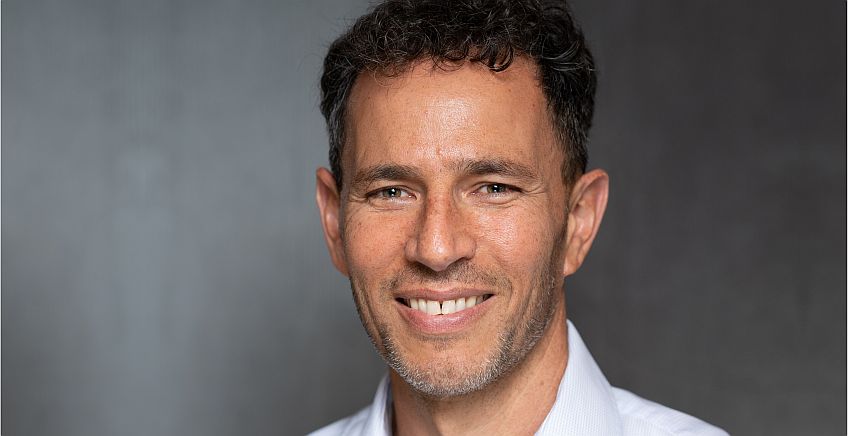
Above: SolarEdge CEO Shuki Nir
Israeli solar technology company SolarEdge expects a sharp decline in revenue in the fourth quarter of 2026 and is signaling further cost-cutting measures, following several rounds of mass layoffs over the past two years. The company reported third-quarter revenue of $326.1 million, down 5.8% sequentially and 4.1% year-over-year. For the fourth quarter, SolarEdge forecasts revenue of $245 million to $275 million, representing a decline of approximately 20% from the third quarter at the midpoint of its guidance.
Addressing the weak outlook, CEO Shuki Nir said: “Against the backdrop of continued near-term market uncertainty and our expectations for lower fourth-quarter revenue, we are taking decisive action to reduce costs, sharpen our focus and support profitability amid softer demand.”
During the earnings conference call, CFO Ma’oz Sigron provided further details about the restructuring plan. The company intends to reduce quarterly cost of goods sold by approximately $3 million and operating expenses by another $2 million. Together, these measures are expected to generate annual savings of around $20 million, with the full impact anticipated from the first quarter of 2027.
A central element of the plan involves scaling back operations in geographic markets where SolarEdge has been unable to achieve its targeted profitability. According to management, these markets currently generate approximately $40 million to $50 million in annual revenue. The withdrawal is expected to reduce fourth-quarter sales by around $10 million. The company did not identify the countries involved.
During the call, Sigron was explicitly asked whether the restructuring plan would include workforce reductions, but did not directly answer the question. Instead, he explained that, alongside geographic adjustments, the plan includes “global cost optimization, including the reallocation of resources to support investment in SST.”
SolarEdge has not clarified whether another round of layoffs is planned. Management said the measures are intended to bring the company to adjusted EBITDA breakeven during 2027, even without significant revenue growth.
The announcement follows a prolonged restructuring period triggered by declining demand for solar energy systems, excess inventory at distributors and a slowdown in installations. In January 2024, SolarEdge announced approximately 900 layoffs, followed by another 400 in July. In November 2024, it announced the closure of its traditional energy storage business, affecting around 500 employees, primarily in South Korea. A further round of 400 layoffs followed in January 2025, roughly half of them in Israel.
Altogether, the company announced the elimination of approximately 2,200 positions worldwide during this period.
Profitability Improves, but Tariff Benefits Play a Major Role
Despite declining revenue, SolarEdge reported a significant improvement in profitability during the third quarter. GAAP gross margin rose to 33.2%, compared with 27.5% in the previous quarter and 21.2% a year earlier.
Operating loss narrowed to just $1.9 million, from $16 million in the second quarter, while net loss declined to $8.4 million from $30.8 million.
On a non-GAAP basis, the company reported operating income of $23.9 million and net income of $21.1 million. Free cash flow was positive at $7.8 million, marking the fifth consecutive quarter of positive cash generation.
However, a substantial portion of the profitability improvement came from approximately $36 million in benefits related to US tariffs. Excluding this impact, GAAP gross margin would have been approximately 22.2%.
For the fourth quarter, SolarEdge expects non-GAAP gross margin of 17% to 21%, excluding potential tariff refunds, suggesting renewed pressure on profitability.
Seeking a New Growth Engine in AI Data Centers
As it navigates continued weakness in the solar market, SolarEdge is expanding into power infrastructure for AI data centers.
The company is developing solutions based on Solid-State Transformer (SST) technology, which uses advanced power electronics to convert electrical voltage and improve power delivery efficiency for high-performance computing systems.
During the earnings call, Nir said that nearly all major hyperscalers and neocloud providers are currently evaluating SST technologies as part of the industry’s transition toward 800-volt direct-current power architectures.
SolarEdge is designing its system to operate with a 34.5-kilovolt input, targeting particularly large data centers, and has already demonstrated conversion efficiency exceeding 99%.
The company is collaborating with NVIDIA and Infineon on power infrastructure solutions and has showcased its technology within the ecosystem surrounding NVIDIA’s MGX platform.
Nir said SolarEdge plans to complete a working laboratory system by the end of 2026, conduct customer pilot installations during 2027 and begin commercial volume shipments in 2028.
The company is already engaging with prospective customers, although it has not yet announced significant commercial orders in this segment. As part of its efforts to accelerate development, SolarEdge has reassigned additional employees to its SST activities.
Meanwhile, the company continues to expand its energy storage and residential solar businesses.
Its new Nexis platform generated more than $100 million in revenue during the third quarter, while energy storage became SolarEdge’s largest product category by revenue for the second consecutive quarter.
Battery sales to existing customers in Germany and the Netherlands contributed more than $30 million during the quarter, compared with over $20 million in the preceding quarter.
These figures underscore the growing importance of energy storage in SolarEdge’s business mix, even as demand across the broader solar market remains subdued.
Posted in: News