CodeValue Wins Airport Security Project in Vietnam
6 November, 2026
The Israeli technology group is expanding into homeland security, combining software, AI, cybersecurity and infrastructure expertise to deliver integrated operational solutions

CodeValue Group, which provides software development, cloud and cybersecurity services through CodeValue and other subsidiaries, has won a contract to design the security systems for an airport in Vietnam. Work on the project is already underway, marking a strategic step in the group’s expansion into homeland security and international markets. The technology services provider is seeking to leverage its engineering expertise to take broader responsibility for security solutions and operational systems.
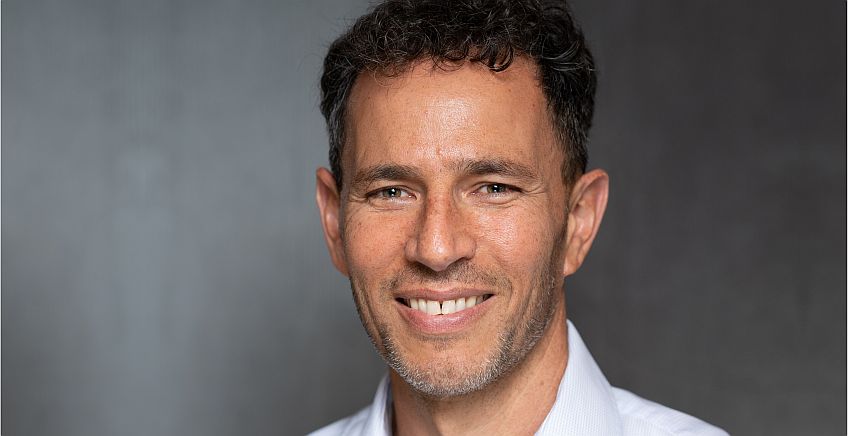
According to Shlomo Indi, VP of Security and Cyber at CodeValue, the project combines physical and technological security with cybersecurity protection. It requires a comprehensive approach encompassing the airport perimeter, screening and control systems, and passenger movements. The airport’s name and the contract value were not disclosed.
“There are many factors to consider: the height of the perimeter fence, the field of view of surveillance equipment, what kind of alert should be issued and to whom,” Indi told Techtime. “You need to design how all these systems work together, how an incident is detected and how it is handled. We’re also a systems integrator, so ultimately we need to bring all these elements together.”
The Vietnam contract represents a new direction for CodeValue. The group has an established presence in the defense sector, with Rafael Advanced Defense Systems among its major longstanding customers. Traditionally, however, its work has focused on providing software specialists and managing and executing projects initiated and defined by customers. The new approach being advanced by Indi adds another dimension: identifying operational needs, developing solutions proactively and taking responsibility for their design and implementation.
“Under the traditional model, the customer initiates and defines the project, and we manage and execute it. That’s a significant challenge in itself,” he explains. “We want to take it a step further: understand the operational requirements and offer customers additional capabilities. Our familiarity with the field allows us to work with them to initiate broader solutions.”
Indi brings experience from both sides of the relationship between technology and operational requirements. He served in the Israeli Air Force, reaching the rank of lieutenant colonel and managing a major command-and-control project. He later held management positions involving ground stations and space programs at ISI.
Another key element in the group’s capabilities is Liacom Systems, whose acquisition was completed in December 2024. The company brought expertise in cybersecurity, communications infrastructure and project management across aviation, transportation and critical infrastructure. According to Indi, Liacom has also gained experience designing security and cybersecurity systems at Israel’s Ben Gurion and Ramon airports. Combined with SpeedValue’s software, cloud and AI capabilities, this expertise enables the group to offer more comprehensive solutions.
“Our strength lies in combining technology with a deep understanding of the operational domain,” Indi says. “We can deploy our people at the customer’s site, or develop the solution in-house and deliver it for implementation.”
From Autonomous Drones to AI Agents in Air-Gapped Networks
In the unmanned systems sector, the company is in discussions with two firms about coordinating missions between drones. The proposed capabilities include transferring missions from one drone to another and maintaining autonomous operations when communication with ground control is lost.
For commercial aviation operators, the group is proposing AI-based maintenance planning tailored to individual aircraft, including the allocation of maintenance tasks across different facilities. The goal is to comply with manufacturers’ requirements while minimizing aircraft downtime.
At the same time, SpeedValue is developing a solution based on its NEO platform to address a specific challenge faced by defense customers: enabling AI agents to assist with software development in secure, internet-isolated environments, commonly known as air-gapped networks.
The solution combines AI agents with an orchestration mechanism covering the entire development lifecycle, from requirements analysis and system specifications to code generation and automated testing.
“The challenge is getting a language model to operate in a closed environment without connecting to an external model,” Indi explains. “We’ve found a way to adapt the model to this environment. It works. We’re already marketing the solution and working with several defense customers on it.”
The initiative is part of SpeedValue’s broader strategy to expand its portfolio of higher-value engineering solutions and move beyond traditional technology outsourcing.
“It takes more effort to convince a customer to adopt a comprehensive solution than to simply supply a software developer, but customers want a partner,” Indi says. “Internationally, particularly among defense organizations and air forces, we have a great deal to offer. Vietnam is just the beginning. I expect more projects like this to follow.”
Posted in: News