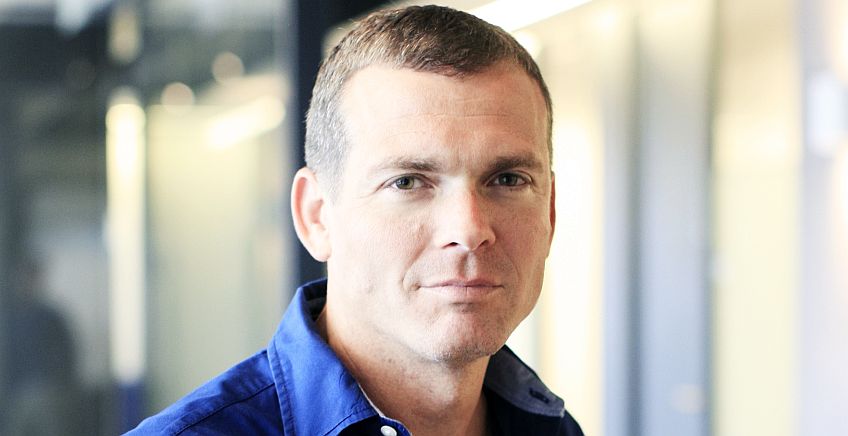
SolarEdge Technologies from Herzliya, Israel, is strengthening its management team with the appointment of Mr. Uri Bechor as Chief Operating Officer. He brings over twenty years of experience in Flextronics International where he had served in both senior VP and GM level roles. In his last position, he served as Senior Vice President, Global Operations, Europe and the Americas where he oversaw more than forty manufacturing sites and was responsible for revenues of more than $10 billion.
“I am very excited to be joining SolarEdge during its continued expansion through acquisitions and organic growth,” said Bechor. “I was the General Manager of Flextronics Israel when SolarEdge began production in 2010, and I know well the products and many of the management and operations team. I am honored and poised to address the opportunities and challenges that lie ahead.”
“Uri is a key addition to our growing executive management team,” stated Nadav Zafrir, Co-Chairman of SolarEdge. “He will significantly enhance our operations capabilities and execution. Mr. Bechor will no doubt contribute greatly to the operational aspects needed to grow both our core smart energy business and our recently acquired businesses, including lithium ion cells and batteries of Kokam.”
Established in 2006, SolarEdge provides solutions to optimize power harvesting and managements in photovoltaic (PV) systems. Its intelligent inverter solution maximizes power generation while lowering the cost of energy produced by the PV system. The company had achieved record revenues of $325.0 million during the Second Quarter 2019.
Last week, Intel and Microsoft brought together nearly 100 security and Artificial Intelligence (AI) experts to discuss new standards for Homomorphic Encryption (HE), which is emerging as a leading method to protect privacy in machine learning and cloud computing. The HE standards workshop took place on Intel’s Santa Clara, California campus. Following the first meeting in October, 2018, Intel and Microsoft initiated the founding of the HomomorphicEncryption.org group.
As more data is collected and used to power AI systems, concerns about privacy are on the rise. Casimir Wierzynski from the office of the CTO of AI Products Group at Intel, said that Intel is collaborating with Microsoft Research and Duality Technologies on standardizing HE, “to unlock the power of AI while still protecting data privacy.”
Fully homomorphic encryption, or simply homomorphic encryption, refers to a class of encryption methods envisioned by Rivest, Adleman, and Dertouzos already in 1978, and first constructed by Craig Gentry in 2009. Homomorphic encryption differs from typical encryption methods in that it allows computation to be performed directly on encrypted data without requiring access to a secret key. The result of such a computation remains in encrypted form, and can at a later point be revealed by the owner of the secret key.
It allows AI computation on encrypted data, thus enabling data scientists and researchers to gain valuable insights without decrypting or exposing the underlying data or models. This is particularly useful in instances where data may be sensitive – such as with medical or financial data. Homomorphic encryption also enables training models directly on encrypted data, without exposing its content. Such encryption would enable researchers to operate on data in a secure and private way, while still delivering insightful results.
CEVA has entered into a strategic partnership agreement with Immervision from Montreal, Canada that includes $10 million technology investment from CEVA, and securing exclusive licensing rights to Immervision’s image processing and sensor fusion software for wide-angle cameras.
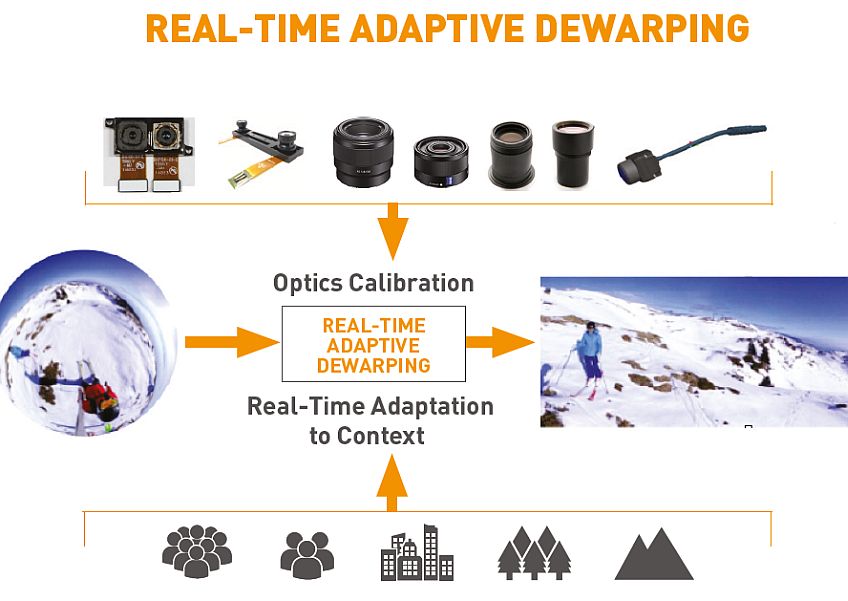
Immervision is a developer and licensor of wide-angle lenses and image processing technologies, with special expertise in software technologies that remove the inherent distortions associated with the use of wide-angle cameras, particularly at the edges of the frame. Immervision’s technologies have shipped in more than 50 million devices of costumers such as Acer, Dahua, Garmin, Hanwha, Lenovo, Motorola, Quanta, Sony and Vivotek.
Under the partnership agreement, CEVA made a $10 million technology investment to secure exclusive licensing rights to Immervision’s portfolio of patented wide-angle image processing technology and software. This includes real-time adaptive dewarping, stitching, image color and contrast enhancement, and electronic image stabilization. CEVA will also license Immervision’s Data-in-Picture proprietary technology, which integrates within each video frame fused sensory data, such as that offered by Hillcrest Labs (a business recently acquired by CEVA).
Immervision’s hardware-agnostic software portfolio will continue to be offered for all System-on-Chip (SoC) platforms containing a GPU (Graphics Processing Unit) and in a power-optimized version for SoCs containing the CEVA-XM4 or CEVA-XM6 vision DSPs. Gideon Wertheizer, CEO of CEVA, said that with the combination of Immervision’s CEVA’s , “we are lowering the entry barriers for semiconductor providers and OEM customers into this space.”
SolarEdge Technologies from Herzliya, Israel, announced the appointment of Nadav Zafrir as co-chairman and member of the board of directors. The appointment was approved unanimously by the board of directors and is being made to further strengthen the executive management of the company in light of the continued illness of Guy Sella, founder, Chairman and CEO of SolarEdge.
Mr. Zafrir brings to SolarEdge twenty-five years of experience in cyber leadership and technology development. He is the co-founder and Chief Executive Officer of Team8, a leading think tank that specialize in cyber resilience and data science. He was previously the Commander of the Israel Defense Forces’ Technology Intelligence Unit 8200 (Israel’s NSA), as well as founder of the IDF Cyber Command.
Established in 2006, SolarEdge provides solutions to optimize power harvesting and managements in photovoltaic (PV) systems. Its intelligent inverter solution maximizes power generation while lowering the cost of energy produced by the PV system. The company had achieved record revenues of $325.0 million during the Second Quarter 2019.
“Nadav Zafrir and I have worked together for decades, going back to our years of managing complex technological developments in the army,” stated Mr. Sella. “I cannot imagine a better fit for co-chairman to our board of directors than Nadav Zafrir.”
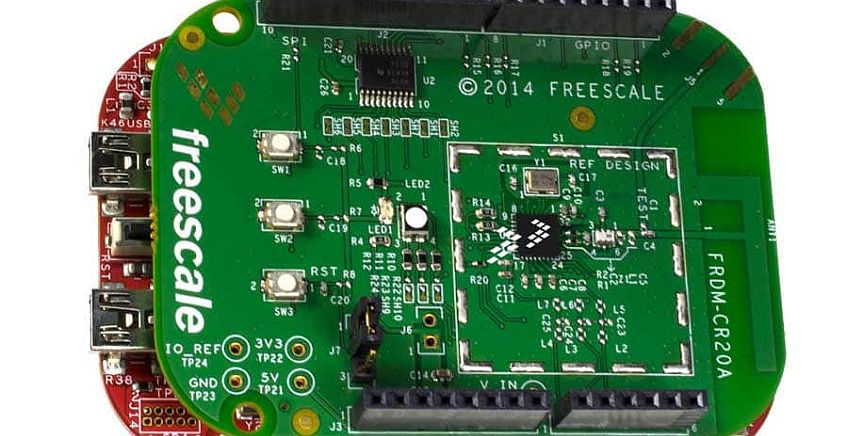
Photo above: NXP’s development board with 2.4GHz IEEE 802.15.4 compliant transceiver
NXP Semiconductors, Samsung, Bosch, Sony, ASSA ABLOY Group, HID, LitePoint and TTA Established FiRa Consortium to develop fine ranging and positioning capabilities on top of the Ultra-Wideband communication Technology describes in IEEE standard 802.15.4/4z. The new coalition is designed to grow the Ultra-Wideband (UWB) ecosystem so new use cases for fine ranging capabilities.
The FiRa name, which stands for “Fine Ranging,” highlights UWB technology’s unique ability to deliver accurate measurements of distance or determining the relative position of a target. The consortium members believe that UWB technology can outperforms other technologies in terms of accuracy, power consumption, robustness in RF connection, and security.
IEEE standard 802.15.4/4z defines the essential characteristics for low-data-rate wireless connectivity and enhanced ranging. FiRa Consortium to develop an interoperability standard based on the IEEE’s profiled features, defining mechanisms that are out of scope of the IEEE standard to support rapid development of specific use cases.
Some of these use cases include Seamless Access Control, Location-Based Services and Device-to-Device (Peer-to-Peer) Services. In Seamless Access Control, UWB can identify an individual’s approach toward or away from a secured entrance, verify security credentials, and let the authorized individual pass through the entrance without physically presenting the credential.
In Location-Based Services, UWB can offers precise positioning, even in congested multipath signal environments, making it easier to navigate large venues such as airports and shopping malls or find a car in a multi-story parking garage. In Device-to-Device use case, it may provide precise relative distance and direction between two devices, and letting devices to find the relative location of each other, even without infrastructures such as anchors or access points.
The 802.15.4 standard is widely used in a variety of applications that use ranging capabilities. In January 2018, in response to demand for enhanced operation, the 802.15.4z working group was established to define the PHY and MAC layers for High Rate PHY (HRP) and Low Rate PHY (LRP). IEEE 802.15.4z will focus on additional coding and preamble options, as well as improvements to existing modulations to increase the integrity and accuracy of ranging measurements, with a typical range of up 200 meters for the radio.
FiRa Consortium is focused on what the IEEE has already established for HRP to definemechanisms which are out of scope of the IEEE standard, including an application layer. The Consortium is also pursues other activities, such as developing service-specific protocols for multiple verticals and defining parameters for a range of applications, including physical access control, location-based services, device-to-device services, and more.
Photo above: A development team at Hailo. The Tel Aviv based company employs around 65 workers today
Tel Aviv-based Hailo is preparing for the mass production of its AI chip that meets the ASIL-B standard of the automotive industry, and start full-scale production during 2020. Company co-founder and CEO Orr Danon told Techtime that the new chip is named Hailo-8 and was developed as part of the cooperation between Hailo and auto manufacturers. The chip enables the meeting of demands for critical life-saving systems, including the meeting of working under conditions of up to 105 degrees Celsius.
According to company data, the Hailo-8 processor reaches up to 26 tera operations per second (TOPS) and 3 TOPS per Watt power efficiency. It will meet the strict ISO 26262 ASIL-B as well as the AEC Q 100 Grade 2 standards. Hailo-8 is comprised of four main components: an Image Signal Processor that improves the image from the sensor before its transfer for processing by the neural network core, an H.264 encoder that handles the video stream, an ARM-M4 processor that manages the chip, and the neural network core itself, that is comprised of a flexible matrix of software-configurable processing, controls, computational resources and memory units.
Renew the Old Idea of DFP Processors
Hailo was established in February 2017 by CEO Orr Danon, CTO Avi Baum and the Business Development Manager Hadar Zeitlin. The first investor in the company was Zohar Zisapel, who serves today as Chairman of the board. To date Hailo has raised around $24 million, of which $21 million was in the latest round of financing which was completed in January 2019. The company developed a new architecture for AI chips for edge devices that carry out the execution phase – i.e. the application of the inference of a neural network in edge devices at a rapid speed and with a huge saving in energy. According to Danon, the architecture, which is protected by dozens of pending patents, “belongs to a forgotten family of processors from the Data Flow Processors type.”
CEO Orr Danon. “Our architecture describes the structure of a neural network”
In DFP processors, the processing activity takes place only when data is fed into the processor, which conducts a fixed series of operations on top of this information, and then transfers the processed information. “In recent years, it turned out that the reliance on neural networks is an efficient and reliable means of solving many problems, and therefore most of the AI systems that we see in the market are based on neural networks. Here the challenge is structural, since the chip needs to implement a structure of a neural network. In a neural network one infuses experience into the description of a structure, and therefore it is a very efficient solution in solving problems which are based on recognizing examples.”
How is your chip designed? What are the main principles of the architecture?
Danon: “Our architecture describes the structure of the neural network and allocates resources to every layer in the network. We identified that in during the processing of inference, there were differences in the behavior of the various layers of the neural network, and therefore there was a need to provide them with different resources. This runs counter to our competitors, who use solutions such as GPU processors that allocate to each and every layer the same level of resources. Our development software learns the specific problem, characterizes it, and knows how to transfer to the chip instructions on how to manage the resources of each layer in an optimal method.”
What are the components of the chip?
“The idea is to use the memory units that are located very close to the processing units. We allocate memory and processing units in accordance with every task, and in this way achieve very fast processing, and extensive savings in the chip’s power consumption. This allows us to meet the extremely strict standards of the automotive industry, since the chip does not heat up and is capable of operating in the environmental temperatures that the industry demands.”
You claim that your chip is more efficient that other solutions in the market. However, there is no universally accepted means of measuring AI chips.
“We measure the performance of our chips by checking how many operations per Watt we execute a specific neural network. Nowadays there is the MLPerf consortium that is attempting to define a benchmark which will serve as a basis for comparing different deep learning processors. Regarding edge devices, the industry is apparently going in the direction of measuring the number of operations per Watt (TOPS/W) that the neural network carries out for a specific task, like an image.”
Today new methods are being developed for deceiving neural networks. How are you dealing with this problem?
“It is possible to relate to AI deception as a weakness, just as one relates to security vulnerabilities. At the outset, the weaknesses of the software systems surprised the industry, but gradually they found solutions. In the AI field, first of all this is a conceptual problem that lacks a solution on the silicon level. However, if the network was trained in the wrong way, and the attacker is aware of how the network was trained, then he is capable planning an attack. We also deal with this problem, and in principle it shows the advantage of installing AI systems at the edges of the network, since in this way there are less vulnerabilities along the route of transferring information.“
Hailo is growing quickly, and currently employs around 65 workers. The company is in the process of hiring additional manpower. Hailo is focusing its efforts on two key markets: the automotive and IoT. These two markets are expected to be huge and are also very demanding as in both there is a need for a product which is very reliable, low-cost, with very low power consumption. Danon: “In many respects the camera in a vehicle is no different than the IoT camera in a smart city. These are two areas that will be very dominant, and they share many common requirements.”
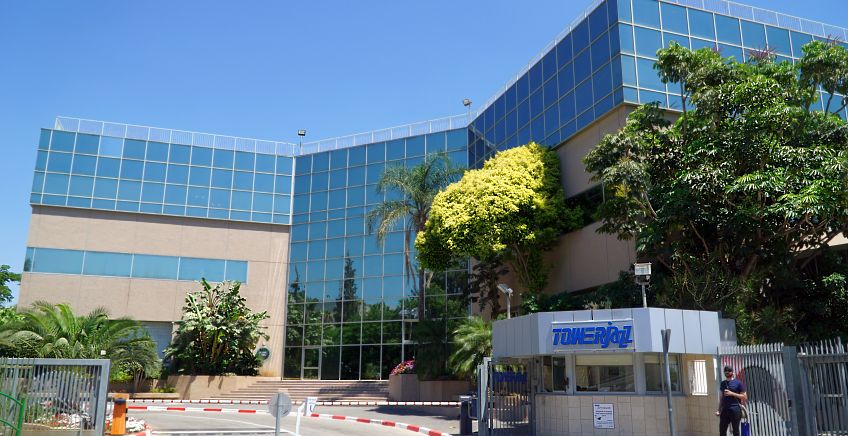
TowerJazz announced a capacity expansion plan for the Uozu fab in Japan, with total investments of approximately $100 million. The company will add capacity for the 300mm RF SOI process, the 65nm BCD Power Management and the CMOS image sensor platforms. Capacity is targeted to be installed during the first half of 2020. Russell Ellwanger, Chief Executive Officer of TowerJazz, explained: “Our 300mm activities have resulted in strong demand and forecasted excess demand for which we are now investing to fulfill.”
During second quarter of 2019 (ended June 30, 2019), revenues had reached $306 million, reflecting 11% quarter over quarter organic growth (defined as total revenue excluding revenues from Panasonic in the TPSCo fabs and revenues from Maxim in the San Antonio fab). This organic growth of $20 million is offsetting to a great extent the $22 million Panasonic revenue reduction per the revised terms of the contract and a Maxim revenue reduction per the San Antonio fab acquisition agreement.
TowerJazz expects revenues for the third quarter of 2019 to grow to approximately $312 million. Revenues for 2018 were $1.3 billion compared to $1.39 billion in 2017. TowerJazz is a manufacturing services provider of integrated circuits (ICs). Its technology is comprised of SiGe, BiCMOS, mixed-signal/CMOS, RF CMOS, CMOS image sensor, integrated power management (BCD and 700V), and MEMS. TowerJazz operates two manufacturing facilities in Israel (150mm and 200mm), two in the U.S. (200mm) and three facilities in Japan (two 200mm and one 300mm).
We use cookies to personalize content and ads, to provide social media features and to analyze our traffic. We also share anonymous information about your use of our site with our social media, advertising and analytics partners. View more
What personal data we collect and why we collect it
We collect anonymous data on visitors in this website for business purposes such as enhancing user experience, digital marketing and search engine optimization.
We collect personal data such as email address and names on various forms - all forms present in this website include consent checkboxes and clear reason for collecting the data: general inquiries on our products, newsletter subscription, professional inquiries job applications. All forms are designed in accordance with GDPR requirements.
Comments
When visitors leave comments on the site we collect the data shown in the comments form, and also the visitor’s IP address and browser user agent string to help spam detection.
An anonymized string created from your email address (also called a hash) may be provided to the Gravatar service to see if you are using it. The Gravatar service privacy policy is available here: https://automattic.com/privacy/. After approval of your comment, your profile picture is visible to the public in the context of your comment.
Media
If you upload images to the website, you should avoid uploading images with embedded location data (EXIF GPS) included. Visitors to the website can download and extract any location data from images on the website.
Contact forms and newsletter
We use Gravity Forms as our platform of choice for all forms present in this website. Forms present in this website have been modified to fit GDPR requirements.
Unless specifically specified and approved by visitor, we do not use the collected data for marketing purposes.
We use Mailchimp to collect email addresses and send periodical marketing materials to our customers.
Handling and management of all email addresses and mailing operations is conducted under GDPR terms and guidelines provided by Mailchimp.
All subscribers are able to change their subscriptions preferences or unsubscribe at any given time.
Techtime has accepted the Data Processing Addendum agreement provided by Mailchimp for all its Mailchimp accounts.
All our lead collection forms have been altered in accordance with GDPR requirements and now include unchecked checkboxes in order to accept the explicit consent of the user prior to form submission.
Cookies
If you leave a comment on our site you may opt-in to saving your name, email address and website in cookies. These are for your convenience so that you do not have to fill in your details again when you leave another comment. These cookies will last for one year.
If you have an account and you log in to this site, we will set a temporary cookie to determine if your browser accepts cookies. This cookie contains no personal data and is discarded when you close your browser.
When you log in, we will also set up several cookies to save your login information and your screen display choices. Login cookies last for two days, and screen options cookies last for a year. If you select "Remember Me", your login will persist for two weeks. If you log out of your account, the login cookies will be removed.
If you edit or publish an article, an additional cookie will be saved in your browser. This cookie includes no personal data and simply indicates the post ID of the article you just edited. It expires after 1 day.
Embedded content from other websites
Articles on this site may include embedded content (e.g. videos, images, articles, etc.). Embedded content from other websites behaves in the exact same way as if the visitor has visited the other website.
These websites may collect data about you, use cookies, embed additional third-party tracking, and monitor your interaction with that embedded content, including tracing your interaction with the embedded content if you have an account and are logged in to that website.
Analytics
We use Google Analytics regularly for monitoring user behavior and traffic sources and utilize the gathered information for enhancing user experience and for business purposes.
The use of Google Analytics in done according to GDPR terms and guidelines provided by Google.
Legal Entity: Techtime.
Primary Contact (a.k.a. "Notification Email Address"): roni@techtime.co.il - this email is designated for receiving notices under the Google Ads Data Processing Terms.
Who we share your data with
We use various cloud platforms and third party providers for the purpose of operating this website.
We do not share or sell your data for any commercial purpose other than specified above.
We use the following processors for the operating this website and executing related digital marketing campaigns:
WP Engine - Hosting Provider
Cloudflare - Cloud based security and web performance processor.
Google Cloud Platform - data centers provider for WP Engine
Sucuri - Website security provider
Mailchimp - Newsletter service provider
Google Analytics, Adwords, Webmasters
Facebook - We use Facebook for advertising and place tracking code on our website for enhancing digital marketing campaigns (i.e - Facebook Pixel).
Planwize Ltd - Digital Marketing Agency.
How long we retain your data
If you leave a comment, the comment and its metadata are retained indefinitely. This is so we can recognize and approve any follow-up comments automatically instead of holding them in a moderation queue.
For users that register on our website (if any), we also store the personal information they provide in their user profile. All users can see, edit, or delete their personal information at any time (except they cannot change their username). Website administrators can also see and edit that information.
What rights you have over your data
If you have an account on this site, or have left comments, you can request to receive an exported file of the personal data we hold about you, including any data you have provided to us. You can also request that we anonymize or erase any personal data we hold about you. This does not include any data we are obliged to keep for administrative, legal, or security purposes.
Request for Receiving Data Associated with One’s Email Address
Users may request to receive access to all related information submitted to this website for their review.
In accordance with GDPR compliance, user may further request the anonymization of such data.
In order to request access for all data associated with a given email address, users may submit the request here. Users then receive an email with a link to a page with all related information.
The link is valid for 24 hours. Users may submit additional request for the same email address once in every 24 hours.
A request for anonymization should be sent separately: User may select the data he or she wishes the site owner to anonymize so it cannot be linked to his or her email address any longer. An email confirmation will be sent once linked data has been successfully anonymized.
Where we send your data
Visitor comments may be checked through an automated spam detection service. All our processors and third party providers comply with GDPR requirements and apply privacy by design and necessary measure to ensure that personal data is being processed and handled in accordance with requirements. The list of our third party service providers and processors is listed above.
Contact information
For all privacy-specific concerns inquiries, you may contact us at mail@mail.com
How we protect your data
We use rigorous practices in order to protect our website and data collected, as well as world class cloud and hosting providers.
Communication between visitor and the server is encrypted using SSL.
The site is protected with web application firewall and is undergoing daily security scans, regular software updates by a dedicated team in order to minimize the risk of data breach.
What data breach procedures we have in place
Once a data breach is detected, our providers execute a dedicated standard operational procedure in order to assess the scope and potential damage, provide immediate remedy, patch any potential security holes and notify users who may be affected by the breach.
We may contact affected users with one or more form of communication within 72 hours and provide the needed information as to the scope of the data breach and actions taken.
What third parties we receive data from
We do not receive data from third parties for our marketing campaigns.
What automated decision making and/or profiling we do with user data
We may apply remarketing/retargeting methods while conducting online advertising using Google Facebook and the likes.
The above is conducted by applying various tracking codes into our website in order to track and retarget users based on
By visiting and using this website you are hereby provide your consent for the use of the above means and methods.