Jabil Opens Optics Innovation Center in Israel

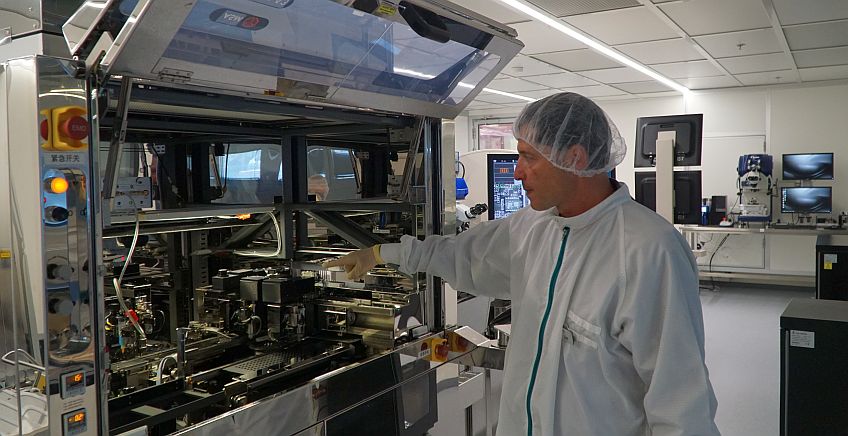
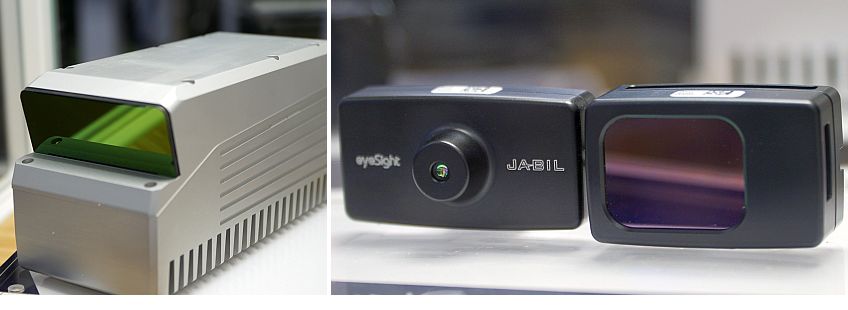
Jabil introduced last week its new 2,000 square meter Optics Technology Innovation Center in Haifa, Israel. Its core activity is performed in a 140 square meter clean room (photo above) equipped with production tools that can place optic elements in a precision of three micron. Today it is already producing advanced optoelectronic systems, including EyeSight’s  vision-based Driver Monitoring System (DMS) and a unique LiDAR Sensor developed by Innoviz for future Autonomous vehicles.

“The Optics Innovation Center is fundamental to Jabil’s mission of becoming the most technologically advanced manufacturing services provider in the world,” said Irv Stein, vice president of Jabil Optics. “We recognized the growing demand for premium optoelectronic solutions more than a decade ago, and proactively sought to address it with the acquisition of the Carl Zeiss projections systems group. Our unique services help to drive the market for mobile devices, AR/VR, automotive solutions and medical devices to name a few. We Are well-positioned as a manufacturing services leader in this fast-growing market.”

The new Jabil Optics facility – located in the Matam Park in Haifa – meets the growing demands for specialized expertise and resources for complex assembly and integration. This includes optical design; development and manufacturing capabilities for camera modules and projection systems.

Made in Jabil Optics Haifa: Innoviz LiDAR sensor (left) and EyeSight's Driver Monitoring System
Made in Jabil Optics Haifa: Innoviz LiDAR sensor (left) and EyeSight’s Driver Monitoring System

These solutions are important assets for smartphones, tablets, e-readers and laptops as they prepare to serve mobile, virtual, augmented and extended reality products seeing rapid growth and adoption. The Center will also create leading-edge automotive products and solutions including advanced driver-assistance components, DMS systems, head-up display units and LiDAR systems.

Jabil’s involvement in Israel’s innovation economy began in 2012 with the opening of its office in Tel Aviv in order to partner with start-up and emerging companies. In 2015 Jabil acquired the local manufacturer Shemer Groupand in 2016 it opened a state-of-the-art manufacturing facility in Kiryat Gat. Today, Jabil employs more than 600 people in Israel and expects that number to continue to grow in the future.

Based in St. Petersburg, Florida, Jabil is a product solutions company providing comprehensive design, manufacturing, supply chain and product management services. Operating from over 100 facilities in 29 countries and approximately 138,000 employees, its annual sales of for 2017 $19.1 billion in 2017.

BP to invest $20 Million in Super-fast EV Batteries

StoreDot from Herzeliya, Israel, announced a $20 million strategic investment made by BP Ventures. StoreDot has developed a lithium ion-based battery technology which enables ultra-fast charging for the mobile and industrial markets. Using this technology, StoreDot is also developing a new type of electric-car battery that will aim to achieve a charging experience that is comparable to the time spent to refuel a traditional car. StoreDot currently expects first sales of its flash batteries for mobile devices as early as 2019.

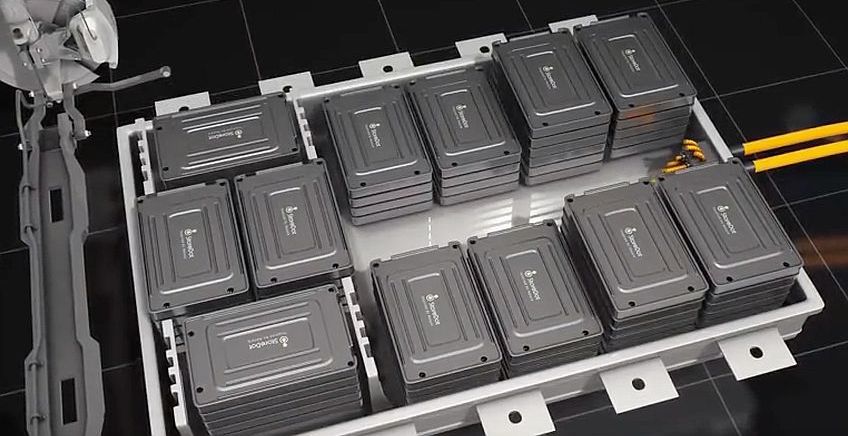
StoreDot’s Flash Battery (photo above) is based on an innovative electrode structure containing proprietary organic polymers with Metal Oxide compounds of the cathode that trigger the redox reactions. This solution enables ions to flow from a modified anode to a modified cathode at a speed that is much faster than existing technologies. Together with a proprietary separator and electrolyte, this new architecture delivers a high current and low internal resistance.

Faster than Fossil Fuel

The result is an energy pack comprising of hundreds of EV flash battery cells that can store enough energy for up to 300 miles (480 km) range on a 5-minute charge. This translates to 60 miles of travel on a 1-minute charge. BP’s investments is aimed to strengthen the eco-system around the next generation of Electric Vehicle (EV) ultra-fast charging infrastructure.

“StoreDot’s technology shows real potential for car batteries that can charge in the same time it takes to fill a gas tank,” said Tufan Erginbiglic, Chief Executive, BP downstream. “We are committed to be the fuel provider of choice – no matter what car our customers drive,” he said.

In September 2017, StoreDot had completed a $60 million round of financing led by the truck division of Daimler. The round also includes Lucion venture capital and participation of financial institutions from Israel and China, as well as existing investors such as Samsung Ventures and Norma Investments. In conjunction with the round, Daimler joins as a strategic partner to accelerate the adoption of the Flash Battery technology to the Electric Vehicles market.

Mobileye Begin Autonomous Fleet Tests

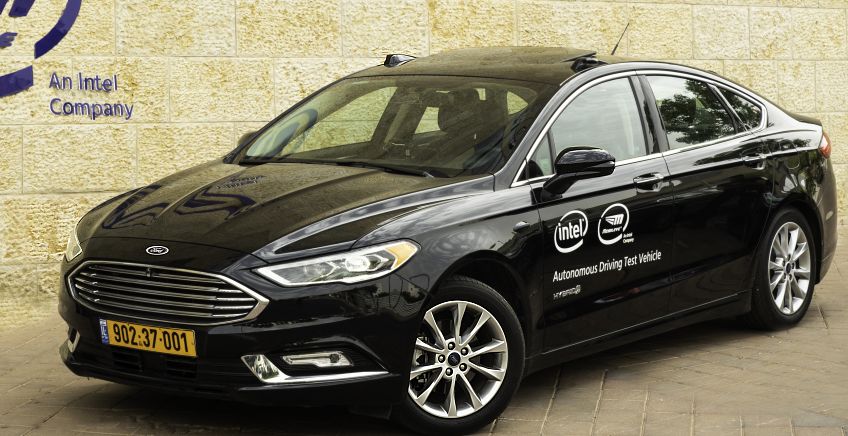
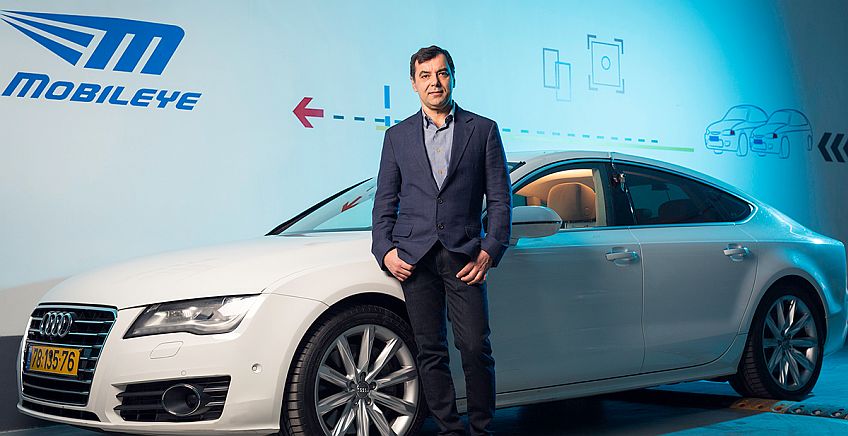
The first phase of the Intel and Mobileye 100-car autonomous vehicle (AV) fleet has begun operating in the challenging and aggressive traffic conditions of Jerusalem. This pilot is aimed to demonstrate Mobileye’s Responsibility-Sensitive Safety (RSS) model , and to integrate key learnings into the product. In the coming months, the fleet will expand to the U.S. and other regions.

“We target a vehicle that gets from point A to point B faster, smoother and less expensively than a human-driven vehicle; can operate in any geography; and achieves a verifiable, transparent 1,000 times safety improvement over a human-driven vehicle without the need for billions of miles of validation testing on public roads,” stated Professor Amnon Shashua, senior VP at Intel and the CEO and CTO of Mobileye.

Why Jerusalem?

“Mobileye is based in Israel, and Jerusalem is notorious for aggressive driving. There aren’t perfectly marked roads. And there are complicated merges. People don’t always use crosswalks. You can’t have an autonomous car traveling at an overly cautious speed, congesting traffic or potentially causing an accident. You must drive assertively and make quick decisions like a local driver.

“This environment has allowed us to test the cars and technology while refining the driving policy as we go. Driving policy makes all other challenging aspects of designing AVs: to be extremely safe without being overly cautious; to drive with a human-like style (so as to not surprise other drivers) but without making human errors. To achieve this delicate balance, the Mobileye AV fleet separates the system that proposes driving actions from the system that approves (or rejects) the actions. Each system is fully operational in the current fleet.”

The Golden Path between Safety and Assertiveness

“Our driving policy system is trained offline to optimize an assertive, smooth and human-like driving style. This is a proprietary software developed using artificial intelligence-based learning techniques. This system is the largest advancement demonstrated in the fleet. But in order to feel confident enough to drive assertively, this ‘driver’ needs to understand the boundary where assertive driving becomes unsafe. To enable this important understanding, the AI system is governed by a formal safety envelope that we call Responsibility-Sensitive Safety.”

The Intel Mobileye autonomous car is equipped with 12 cameras to create a comprehensive end-to-end solution

“RSS is a model that formalizes the common sense principles of what it means to drive safely into a set of mathematical formulas that a machine can understand (safe following/merging distances, right of way, and caution around obstructed objects, for example). If the AI-based software proposes an action that would violate one of these common sense principles, the RSS layer rejects the decision. The the AI-based driving policy is how the AV gets from point A to point B, while the RSS is what prevents the AV from causing dangerous situations along the way.”

Camera-based Redundancy

“During this initial phase, the fleet is powered only by cameras. In a 360-degree configuration, each vehicle uses 12 cameras, with eight cameras providing long-range surround view and four cameras utilized for parking. The goal is to prove that we can create a comprehensive end-to-end solution from processing only the camera data. We characterize an end-to-end AV solution as consisting of a surround view sensing state capable of detecting road users, drivable paths and the semantic meaning of traffic signs/lights; the real-time creation of HD-maps as well as the ability to localize the AV with centimeter-level accuracy; path planning and vehicle control.”

Professor Amnon Shashua, senior VP at Intel and the CEO and CTO of Mobileye

“The camera-only is our strategy for achieving a ‘true redundancy’ of sensing: multiple independently engineered sensing systems, each of which can support fully autonomous driving on its own. True redundancy provides two major advantages: The amount of data required to validate the perception system is massively lower and in the case of a failure of one of the independent systems, the vehicle can continue operating safely in contrast to a vehicle with a low-level fused system that needs to cease driving immediately. The radar/LiDAR layer will be added in the coming weeks as a second phase of our development.”

Next Generation of Hardware on the Road

Shashua announced that the end-to-end compute system in the AV fleet is powered by four Mobileye EyeQ4s. “An EyeQ4 SoC has 2.5 Terra OP/s (TOP/s) (for deep networks with an 8-bit representation) running at 6 watts of power. Produced in 2018, the EyeQ4 is Mobileye’s latest SoC and this year will see four production launches, with an additional 12 production launches slated for 2019.

“The SoC targeting fully autonomous is the Mobileye EyeQ5, whose engineering samples are due later this year. An EyeQ5 has 24 TOP/s and is roughly 10 times more powerful than an EyeQ4. In production we are planning for three EyeQ5s to power a full L4/L5 AV. Therefore, the current system on roads today includes approximately one-tenth of the computing power we will have available in our next-gen EyeQ5-based compute system beginning in early 2019.”

Boeing to Adopt Assembrix’ Virtual 3D Printing

Boeing and Israeli company Assembrix signed a Memorandum of Agreement (MOA) that will enable Boeing to use Assembrix software to manage and protect intellectual property shared with vendors during design and manufacturing. Boeing currently has additive manufacturing capabilities at 20 sites worldwide and partners with suppliers across the globe to deliver 3D-printed parts across its commercial, space and defense platforms.

Securing the digital files distributed among these facilities, and managing the production has utmost importance for Boeing, and the small startup company from Tel Aviv may have the right solution: Assembrix have developed a cloud-based platform that virtualizes industrial 3D printers and the entire 3D printing process. By controlling every machine from a central point, it can complete the production process without giving up the digital file, with all its hidden IP and confidential specifications, into the hands of a third party.

Fully Automated Process

The platform oversees the entire additive manufacturing thread from the initial part model to the verified physical part. It allocates and monitors of industrial 3D printers for multiple in-house users or external clients, to reach a fully-automated and self-controlled process. The company was founded in 2014 by the CEO Lior Polak, previously director of business development at the cyber and intelligence division of NICE Systems, and by the CTO Prof. Dan Halperin from the Computer Science Department at Tel Aviv University.

It has already gained customers, including Form 3D Foundry, the contract manufacturer UCT and ARAN. “This agreement expands Boeing’s ties to Israeli industry while helping companies like Assembrix expand their business,” said David Ivry, president, Boeing Israel. “We are pleased to partner with Boeing and value its confidence in us and in our capabilities,” said Lior Polak, Assembrix CEO. “This collaboration supports our vision to develop and implement innovative solutions that connect the world and take the additive manufacturing digital thread one step forward.”

Record Sales for CMOS Image Sensors

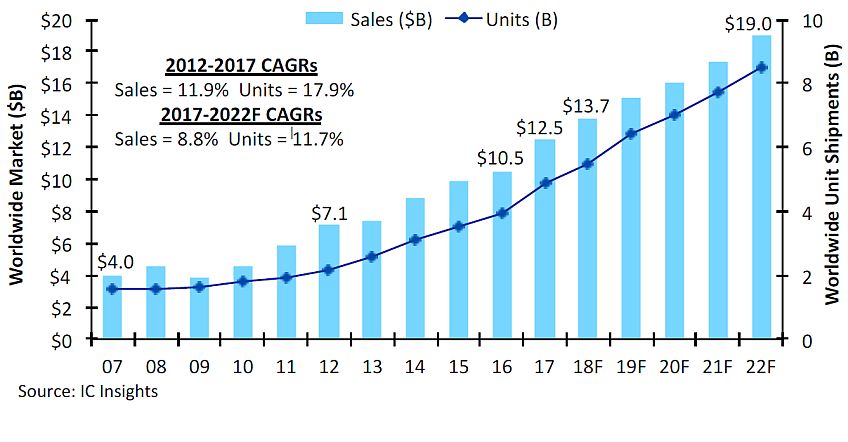
The spread of digital camera applications in vehicles, machine vision, human recognition and security systems, as well as for more powerful camera phones will drive CMOS image sensor sales to an eighth straight record-high level this year with worldwide revenues growing 10% to $13.7 billion, following a 19% surge in 2017, according to IC Insights.

CMOS image sensors continue to take marketshare from charge-coupled devices (CCDs) as embedded digital-imaging capabilities expand into a wider range of systems and new end-use applications, says the Report. With the smartphone market maturing, sales growth in CMOS image sensors slowed to 6% in 2016, but strong demand in other imaging applications played a major factor in boosting revenues by 19% to $12.5 billion last year.  Sales of CCD and other image sensor technologies fell 2% in 2017 to about $1.6 billion after rising 5% in 2016.

Worldwide CMOS Image Sensors Sales

Overall, CMOS image sensors grabbed 89% of total image sensor sales in 2017 compared to 74% in 2012 and 54% in 2007.  Unit shipments of CMOS imaging devices represented 81% of total image sensors sold in 2017 compared to 64% in 2012 and 63% in 2007.  New CMOS designs keep improving for a variety of light levels (including near darkness at night), high-speed imaging, and greater resolution as well as integrating more functions for specific applications, such as security video cameras, machine vision in robots and cars, human recognition, hand-gesture interfaces, virtual/augmented reality, and medical systems.

In new smartphones, CMOS image sensors are also seeing a new wave of growth with the increase of dual-lens camera systems (using two sensors) for enhanced photography.  Cellular camera phones accounted for 62% of CMOS image sensor sales in 2017, but that marketshare is forecast to slip to 45% in 2022.  Automotive CMOS image sensors are projected to grow the fastest among major end-use applications through the five-year forecast, rising by a compound annual growth rate (CAGR) of 38.4% to about 15% of total CMOS image sensor sales in 2022 ($2.8 billion) while camera phone-generated revenues are expected to rise by a CAGR of just 2.2% to $8.6 billion that year.

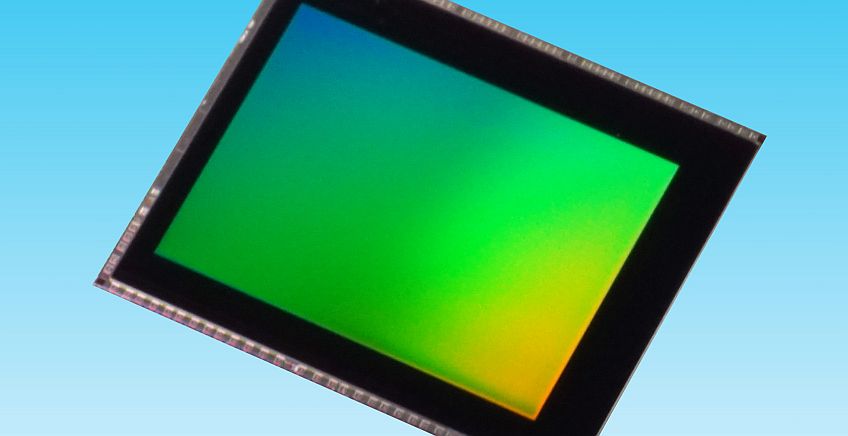
Photo above: CMOS Image Sensor from Toshiba

SolarEdge Enters UPS Market With the Acquisition of Gamatronic

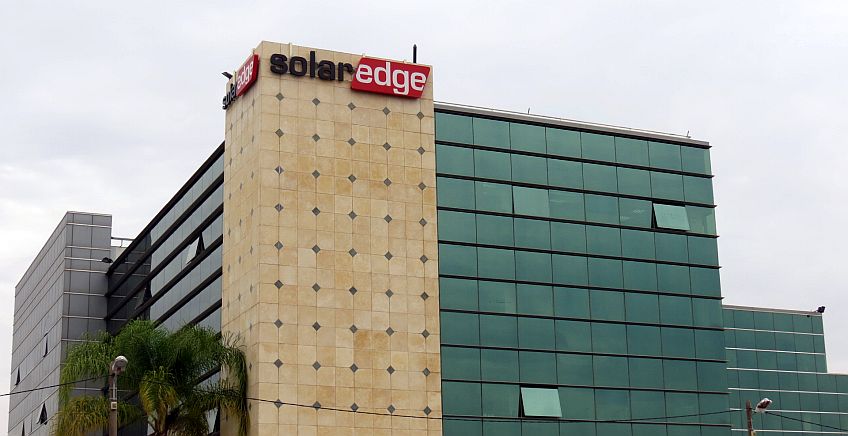
SOLAREDGE HQ

SolarEdge Technologies announced that it will enter the field of Uninterruptible Power Supply (UPS) by signing an asset purchase agreement with Gamatronic Electronic Industries from Jerusalem. SolarEdge intends to combine its power electronics expertise with Gamatronic’s know-how to build a leading global UPS business. In a filing to the Tel Aviv stock exchange, Gamatronic reported tha SolarEdge will pay NIS 41 million (approximately $11.4 million).

Gamatronic develops, manufactures, and sells UPS electrical devices that provide emergency power to appliances when the input power source fails. The company’s products include UPS systems of a wide range of outputs and monitoring and control solutions for power systems. Gamatronic has been selling its products since 1970 and today sells its products in the United States, China, Europe, South Africa, and Latin America.

In Search for New Markets

SolarEdge provides an intelligent power optimizers, inverters, smart energy management, and a cloud-based monitoring platform to manage and optimize power generation of PV modules and large scale and utility-scale solar installations. SolarEdge  from Herzliya, Israel, is a fast growing company. Its sales in Q1 2018 grew 82% to $209.9 million. The company forecasts revenues of $220 million to $230 million in the second quarter.

“This acquisition is our first step in expanding our business to new fields outside the solar arena,” stated Guy Sella, CEO and Chairman of SolarEdge. “The multi-billion dollar UPS market is expected to undergo significant changes in the coming years. Combining SolarEdge’s innovation, operational excellence and business leadership with Gamatronic’s technology and extensive experience in this field, will allow us to become a UPS market leader.”

SolarEdge is purchasing substantially all of Gamatronic’s assets, including its intellectual property. Upon closing of the agreement, approximately 120 of Gamatronic’s employees will be rehired as SolarEdge employees. The agreement is expected to close by the end of the second quarter of 2018.

Digi-Key Offers Unlimited Access to EDA/CAD Models

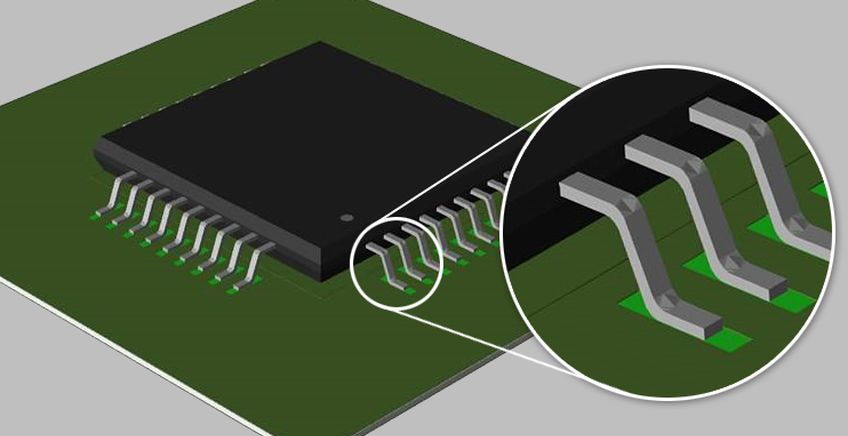
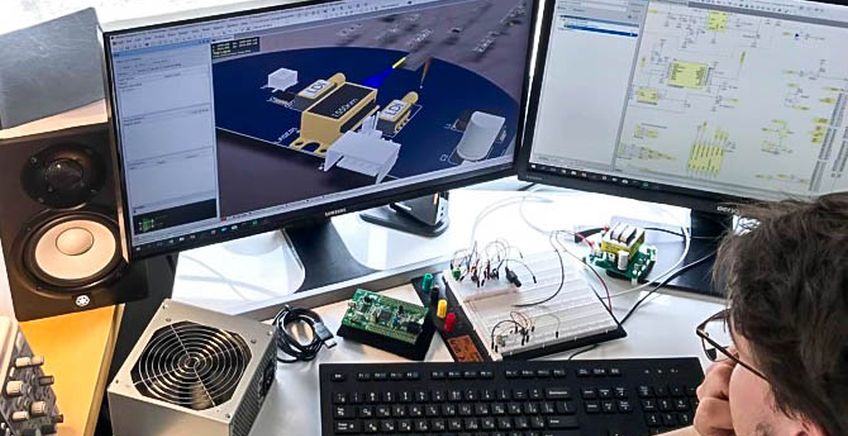
The global electronic components distributor, Digi-Key Electronics, announces unlimited access to Ultra Librarian symbols, footprints, and 3D STEP models from digikey.com. Ultra Librarian offers models in over 20 EDA and CAD formats to cover the vast majority of the PCB design tools in use, including Altium, Eagle, KiCad, OrCAD, and PADS.

Models are created using the Ultra Librarian Desktop software, which uses a combination of templates, pdf extraction, and verification algorithms to quickly capture all important component information required. The company said that in order to ensure the high accuracy, consistency, and adherence to IPC and other standards, models undergo more than 30 different verification checks, and many of the models are also verified by their respective device manufacturer.

“We have worked with EMA to remove the download limits of Ultra Librarian EDA and CAD models,” said Randall Restle, VP, Applications Engineering at Digi-Key.  “We now have model coverage for over 1.25 million parts, meaning our customers will be able to download a very high percentage of the models they need for a design.”

“Providing this improved access through Digi-Key gives our mutual customers an easy way to improve their design process,” said Manny Marcano, president and CEO of EMA Design Automation. Ultra Librarian® is a comprehensive electronic component solution for PCB design. The website www.UltraLibrarian.com allows visitors to search a database of over 40 million components to make part selection and sourcing decisions.

Registered users can download pre-authored and verified components from the world’s largest database of over 14 million CAD neutral library parts. Symbols, footprints, and 3D models from over 400 manufacturers can be exported to over 20 different CAD tools. Library creation software includes templates for over 600 part types and allows easy customization and export to the same 20+ CAD tools.

Digi-Key Electronics, headquartered in Thief River Falls, Minn., USA, is an authorized global, full-service distributor of electronic components, offering more than 6.8 million products, with over 1.4 million in stock and available for immediate shipment, from over 750 quality name-brand manufacturers. Digi-Key also offers a wide variety of online resources such as EDA and design tools, datasheets, reference designs, instructional articles and videos, multimedia libraries, and much more.

For more information: Ultra Librarian, EDA and design tools, Digi-Key website.