Elsight Sales Surge 15-Fold; Company Builds Global Defense Sales Network

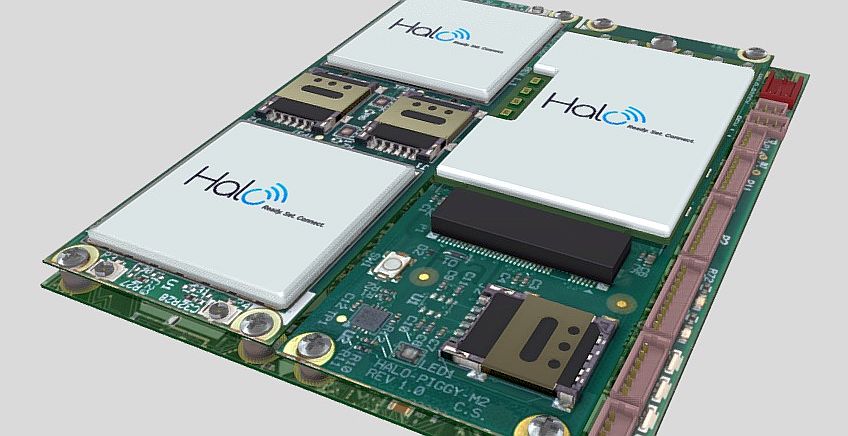
[Image caption: Elsight’s HALO drone connectivity module]

Following dramatic sales growth in 2025, Ramat Gan–based Elsight has decided to establish a global sales and business development network focused primarily on the defense market for drone and unmanned systems technologies.

As part of this move, the company announced the appointment of five senior executives with operational and defense procurement experience, working with the U.S. Department of War, Israel’s defense establishment, and NATO allied governments.

CEO Yoav Amit said the expansion of the sales organization reflects the scale of new opportunities emerging in the defense market. “Unmanned systems are becoming a central component of modern military operations, which makes reliable connectivity a mission-critical capability.”

A Turnaround After Years of Slow Growth

Elsight develops communications systems for drones, but for many years its sales remained modest. The dramatic turnaround occurred over the past year.

In 2025, sales grew more than 15-fold compared with 2023 and more than 11-fold compared with 2024. Revenue reached approximately $23 million in 2025, compared with $2 million in 2024 and $1.5 million in 2023.

For the first time in its history, the company turned profitable.

The momentum was also reflected in the company’s share performance. Its stock on the Australian Securities Exchange (ASX) has surged roughly 1,500% over the past 12 months, giving the company a market capitalization of about A$1.1 billion (approximately $770 million).

The Insight That Drove the Shift

To understand the turnaround, one must look back at the company’s origins.

Elsight was founded in 2009 by former Israeli military intelligence officers Nir Gabay and Roee Kashi. In its early years, the company developed systems for real-time video and data transmission for homeland security and defense agencies.

Its technology allowed stable video streams to be transmitted from the field by combining multiple communication networks simultaneously, such as several cellular networks, helping overcome connectivity limitations in challenging environments.

In 2017 the company went public on the Australian Securities Exchange (ASX).

Toward the end of the last decade, Elsight identified a strategic opportunity: reliable connectivity for mobile systems was one of the key bottlenecks in operating drones.

Modern drones must transmit real-time video, flight telemetry, and control commands, often across long distances and in areas with unstable cellular coverage.

To address this challenge, Elsight developed HALO, a compact communications module mounted on drones that aggregates multiple communication links — cellular, radio, and sometimes satellite — into a single stable connection.

The module enables continuous transmission of video, telemetry data, and control commands, even if one of the communication networks becomes weak or unavailable.

Demand Surge in the Military Drone Market

Elsight’s move into the drone sector coincided with a surge in demand for military unmanned systems.

As a result, the company began seeing a shift from pilot projects and technology demonstrations to actual orders from drone manufacturers.

In December 2025, Elsight reported the largest contract in its history — a roughly $21 million order from a European defense drone manufacturer.

At the same time, the company signed additional agreements with European unmanned systems manufacturers and was selected to participate in Project G.I., a program run by the Pentagon’s Defense Innovation Unit that evaluates technologies for U.S. military unmanned systems.

Building a Global Sales Infrastructure

Against this backdrop, Elsight’s latest move becomes clearer: the company is positioning itself as a connectivity infrastructure provider for military and industrial drone programs and building a presence in major NATO markets and other strategic regions.

As part of this effort, the company appointed Ryan Garay, a former U.S. Army Green Beret specializing in tactical communications, to lead engagement with the U.S. government and special programs.

Roi Lupo, who served nearly two decades in the Israeli Air Force special forces before moving into defense business development in the United States, was appointed Director of Business Development for North America.

Ron Kislev, former CEO of UAV Tactical Systems and a former senior executive at Elbit Systems, will lead the company’s activities with the UK and NATO countries.

Tobias Willuhn, previously head of ISTAR and electronic warfare programs at Elbit Systems Germany, will lead operations in Germany, the European Union, and NATO markets.

Shay Dvir, formerly involved in business development at defense robotics companies XTEND and Roboteam, will lead the company’s activities in Israel and Southeast Asia.

If in its early years Elsight focused on communications technologies for niche defense applications, the company now aims to make HALO a standard connectivity component in drone platforms.

The recent appointments suggest Elsight expects demand for its technology to grow significantly in the coming years — and intends to position itself to capitalize on that wave.


Innoviz LiDAR Sensors to Be Integrated Into Dataspeed Autonomous Vehicle Platforms

[In the photo: Dataspeed’s autonomous vehicle platform. Credit: Dataspeed]

Innoviz announced the expansion of its partnership with U.S.-based company Dataspeed, under which its InnovizSMART LiDAR sensor will be integrated into Dataspeed’s drive-by-wire platforms used to develop and test autonomous vehicles.

According to the announcement, Innoviz’s sensor will become an integral component of Dataspeed’s vehicle platforms, which enable full computer control over core vehicle systems—including steering, braking, and throttle—and are used by companies and organizations developing autonomous technologies. As part of the collaboration, Dataspeed will offer InnovizSMART sensors as part of the systems it supplies to customers, primarily in North America.

The joint solution targets a range of autonomy applications, including vehicles used in defense, agriculture, mining, industry, and ground robotics—sectors where autonomous vehicles often operate in challenging environments such as farmland, open-pit mines, and desert terrain.

Dataspeed, headquartered in Michigan, specializes in developing vehicle platforms designed for the testing and development of autonomous driving systems. The company provides drive-by-wire systems that allow computers to control vehicles through electronic interfaces, effectively transforming production vehicles into testing platforms for automotive companies, startups, universities, and research labs.

The company’s platforms are used by a wide range of organizations in the autonomy industry to integrate sensors, AI computers, and algorithms for the development of autonomous driving systems. According to Dataspeed, its technology has been deployed in more than 500 vehicles worldwide. Vehicle models converted using its platform include the Ford Fusion, Lincoln MKZ, Chrysler Pacifica, Jeep Grand Cherokee, and Ford Ranger.

Beyond civilian uses, Dataspeed’s platforms are also employed in defense and ground robotics projects, including development programs for government agencies and initiatives linked to the U.S. Army focused on autonomous ground vehicles.

The InnovizSMART sensor that will be integrated into Dataspeed’s platforms is a 3D LiDAR system designed primarily for industrial and autonomous applications outside the passenger-car market. Unlike the company’s flagship sensors—InnovizOne and InnovizTwo—designed for integration into production vehicles by automakers, InnovizSMART was developed specifically for markets such as robotics, agriculture, mining, and defense, where durability and operational flexibility are often more critical than strict automotive certification.

The sensor provides high-resolution, long-range three-dimensional mapping of the environment and is engineered to operate reliably in harsh conditions—including scenarios in which the sensor window may be covered with mud, water, or dust. These capabilities make it particularly suitable for autonomous vehicles operating in challenging environments such as mining sites, agricultural fields, or off-road terrain. The platform also enables Innoviz to address a broader market of autonomy and Physical AI applications beyond the traditional automotive industry.

doubleAI Claims 3.6x Speedup Over NVIDIA’s GPU Code

By Yohai Schweiger

Israeli startup doubleAI, founded by CEO Prof. Amnon Shashua and CTO Prof. Shai Shalev-Shwartz, announced that its AI system, WarpSpeed, has successfully rewritten and re-optimized CUDA kernels in NVIDIA’s cuGraph library — part of the RAPIDS software ecosystem for GPU-accelerated data science — achieving an average 3.6× speed improvement over versions refined by NVIDIA’s CUDA engineers over the past decade.

According to the company, every tested kernel showed some degree of improvement, with more than half delivering over 2× speedups. The optimized code has been published on GitHub, allowing users to deploy the accelerated version without modifying existing application code. The announcement was accompanied by a public post from Shashua on X and a detailed technical blog.

cuGraph is a core component of NVIDIA’s RAPIDS suite and is widely regarded as one of the leading GPU libraries for graph analytics — a critical domain for network analysis, recommendation engines, cybersecurity, bioinformatics, and financial systems. Its kernels were developed over years by engineers specializing in hardware-level performance optimization, where decisions about memory layout, thread scheduling, warp structure, and cache behavior can dramatically affect results.

Unlike conventional application development, GPU performance engineering operates in a deeply contextual decision space with no single “correct” solution — only delicate trade-offs between physical and computational constraints.

Were LLM “Gold Medals” Misleading?

Beyond the engineering achievement itself, Shashua frames the milestone as part of a broader debate over the limits of modern AI — particularly whether large language models, scaled through massive training, can truly tackle deep, complex problems where data is limited, validation is difficult, and reasoning chains are long and context-dependent.

In his post, Shashua notes that AI systems have recently “won gold medals at the IMO” and “outperformed top programmers on CodeForces,” but argues that these victories rely on unusually favorable conditions. He describes what he calls “three hidden crutches: abundant training data, trivial verification, and short reasoning chains.”

“When all three are present,” he writes, “today’s AI excels. Remove even one — and it collapses.”

GPU performance engineering, he argues, is a stress test where none of those conditions hold. “Data is scarce. Correctness is hard to verify. And performance emerges from a long chain of interdependent decisions — memory layout, warp behavior, caching, scheduling, graph structure.” In such environments, there is no synthetic benchmark with a clear answer, but rather a vast and tightly coupled search space where each design choice influences many others.

Shashua further claims that even advanced coding agents struggle in this domain. “Even sophisticated agents like Claude Code, Codex, and Gemini CLI fail dramatically here,” he writes, “often producing incorrect implementations even when provided with cuGraph’s full test suite.” According to him, “scaling alone cannot break this barrier,” and new algorithmic ideas were required to address this level of complexity.

AEI Instead of AGI

Founded in late 2023, doubleAI has raised hundreds of millions of dollars at a valuation reportedly approaching $1 billion. The company focuses on building AI systems tailored to solving particularly complex engineering and scientific problems, where — it claims — expert-level or superhuman performance can be achieved through deep algorithmic search rather than brute-force scaling of language models.

doubleAI positions the current achievement as part of a broader vision it calls Artificial Expert Intelligence (AEI): systems that consistently outperform human experts in narrow but critical domains where expertise is scarce and expensive. Rather than pursuing generalized AGI, the company concentrates on solving deep optimization problems, combining learning from limited data, probabilistic validation methodologies, and agentic search structures that navigate complex decision spaces.

The approach resembles an advanced algorithmic search system more than a conventional one-shot language model — and, if the performance gains hold up under community scrutiny, may signal a shift in how AI tackles some of computing’s most demanding low-level challenges.

NVIDIA invests in Coherent and Lumentum

By Yohai Schweiger

Chip giant NVIDIA announced this week a strategic $4 billion investment in two U.S.-based photonics companies — Coherent Corp. and Lumentum Holdings — in a move designed to support the accelerated expansion of its connectivity division and ensure the availability of critical components for next-generation AI switches and advanced optical interconnect solutions.

NVIDIA will invest $2 billion in each company through direct equity stakes, alongside multi-year supply agreements that include significant purchasing commitments and preferential access to future manufacturing capacity. The structure combines capital investment with long-term supply chain guarantees, deepening collaboration on next-generation optical connectivity components. Beyond the capital infusion, the partnerships are designed to secure steady access to critical optical and laser components for AI data centers, while expanding advanced manufacturing capabilities in the United States and increasing domestic industrial output.

Critical Links in the Optical Value Chain

Coherent, headquartered in Pennsylvania, is one of the long-standing players in the global laser and photonic materials industry. The company develops and manufactures III-V laser sources, silicon photonics components, advanced optical engines and high-precision chip packaging technologies. In data centers, lasers are far from a peripheral component — they are the heart of the optical system. Integrated into optical transceiver modules installed in network interface cards and InfiniBand and Ethernet switches, they generate the light that enables high-speed data transmission between servers, racks and large-scale GPU clusters at speeds reaching 800 gigabits per second today and advancing toward 1.6 and 3.2 terabits.

Coherent operates advanced manufacturing facilities in the U.S., and their expansion under the agreement aligns with broader American efforts to strengthen domestic production of critical infrastructure technologies. The company supplies laser and optical components to networking equipment manufacturers, semiconductor firms, hyperscale cloud providers, and to industrial, defense and aerospace customers.

Lumentum, which became an independent company in 2015 following its spin-off from JDSU — once one of the world’s largest optical communications component suppliers in the 1990s and 2000s — focuses on optical communication modules and laser components for data centers and high-speed networks. It develops high-speed transceivers, VCSEL lasers and modulation components integrated into network cards and data center switches, enabling optical connectivity between servers, racks and entire computing clusters.

If Coherent provides the light source and foundational photonic layer, Lumentum delivers the modules that transform that light into a functioning data network. As AI infrastructure scales and bottlenecks shift from compute to bandwidth, the optical layer becomes just as critical as the GPU itself.

The Fastest-Growing Division

In recent years, NVIDIA has introduced silicon photonics solutions in its InfiniBand and Ethernet switches and has been advancing co-packaged optics technologies. Yet even when optical integration occurs inside the switch, laser sources, raw materials and large-scale manufacturing of optical components are handled by specialized suppliers. The new investments secure preferred capacity access, influence over the technology roadmap and deeper control of the supply chain — a critical advantage as AI data centers expand at exponential scale.

The strategic context of the move lies in NVIDIA’s connectivity division, built on the 2019 acquisition of Mellanox and headquartered in Israel. This division now oversees InfiniBand, Spectrum Ethernet, BlueField DPUs and advanced fabric systems that connect tens of thousands of GPUs into a single computing cluster. In its latest fiscal 2026 results, the networking segment reached approximately $31 billion in annual revenue — a dramatic expansion that has turned it into one of NVIDIA’s primary growth engines and roughly a tenfold increase in scale since the Mellanox acquisition.

As data centers grow from 10,000 GPUs to 100,000 and beyond, demand for bandwidth, low latency and energy efficiency surges. Copper links are no longer sufficient, and the transition to advanced optics becomes unavoidable. The investments in Coherent and Lumentum allow NVIDIA to avoid manufacturing bottlenecks as AI infrastructure demand accelerates, while enabling faster transitions to next-generation optical connectivity. At the same time, deeper control over the optical layer strengthens NVIDIA’s competitive differentiation in networking and supports high margins in full-stack AI systems.

From an Israeli perspective, the move further reinforces NVIDIA’s connectivity arm. Future generations of InfiniBand and Ethernet switches developed in Israel are expected to rely increasingly on integrated photonics solutions. Expanded optical manufacturing capacity and closer collaboration with laser and module suppliers directly support the division’s ability to sustain its growth trajectory, meet rising demand and deliver increasingly advanced products.

Whoever controls the GPU, the memory, the switch — and the optical layer connecting them — effectively controls the architecture of next-generation data centers. NVIDIA’s investment in photonics is another step in that direction, reinforcing a growth wave that is also being driven from Israel.

Innoviz Projects Tenfold Surge in Security and Defense Revenue

[Photo: Omer Keilaf, CEO of Innoviz. Credit: PR]

Innoviz estimates that its activity in the security and defense markets will grow more than tenfold in 2026, according to comments made during the company’s earnings call following the release of its annual results.

While revenue from non-automotive markets remains marginal — accounting for about 1% of total revenue in 2025 — the company expects these segments to represent roughly 10% of revenue in 2026, potentially amounting to several million dollars.

CEO Omer Keilaf linked the projection to a sharp increase in inbound interest from the defense sector. Speaking on the call, he described a recent event hosted at the company’s offices in Israel, attended by around 80 security consultants from airports, seaports and railway operators. “We probably left that event, only that event, with tens of opportunities,” he said.

The following week, Innoviz participated in a defense conference and, according to Keilaf, left with “a few tens of leads.”

The expansion is supported by the launch of InnovizSMART, a LiDAR sensor derived from the company’s automotive platform but tailored for perimeter security, critical infrastructure, smart cities and robotics applications. The company says the sensor offers long range and high resolution, enabling accurate detection and classification of objects even in complex environmental conditions and partially obscured areas. Innoviz recently reported initial deployments of the system at critical infrastructure sites in Israel.

Production Set to Increase 3–4x in 2026

Alongside its push into security markets, Innoviz is preparing a significant increase in manufacturing capacity. Keilaf said the company continues to ramp production with contract manufacturer Fabrinet, and expects 2026 production volumes to be three to four times higher than last year.

This scale-up is intended to support both autonomous vehicle programs — including collaborations with carmakers and truck manufacturers — and growth in non-automotive markets. The partnership with Fabrinet enables the company to transition from limited-volume manufacturing to full-scale serial production.

Humanoids and “World Models”: Why LiDAR Still Matters in the AI Era

Another key theme of the earnings call was the company’s positioning in what it calls “Physical AI” — encompassing robots, humanoids and intelligent infrastructure. Innoviz recently published the first part of a white paper outlining its view of LiDAR as a foundational layer for building “world models,” and plans to host a dedicated webinar on the subject in the coming weeks.

During the Q&A session, an analyst asked whether LiDAR remains necessary in an era of rapid AI advancement. Keilaf responded that the next stage of AI requires accurate, real-world data.

“When your AI is trained by data that is also provided by AI, you are creating a very big error that is inflated, and you create a bias in your models,” he said. High-resolution LiDAR, he argued, can “connect those world models … to life” by feeding them with real-time, accurate information from the physical world.

Keilaf added that no new dedicated product is required for humanoid robotics applications. The company’s existing automotive-grade LiDAR systems, developed to meet stringent reliability and safety standards, already meet the requirements of industrial and security markets.

Financial Summary

Innoviz closed 2025 with record revenue of $55.1 million — more than double the prior year. Gross margin reached 23%, compared with a negative margin in 2024. Operating expenses declined to $80.6 million from $100.8 million in 2024, a reduction of about 20%.

For 2026, the company forecasts revenue growth of approximately 27%, targeting a range of $67 million to $73 million.

Gambit Security Raises $61 Million to Build Real-Time Cyber Resilience Platform

[Photo caption: Gambit founders. Credit: Netanel Tobias]

Gambit Security, a startup developing a cyber-focused business resilience platform, announced it has raised $61 million in funding. The round was led by Kleiner Perkins, Spark Capital and Cyberstarts. Of the total amount, $5 million was raised earlier in a Seed round.

Founded in 2024, Gambit is building an AI-driven cyber resilience platform designed to continuously measure an organization’s preparedness against evolving threats. The company’s solution connects to enterprise environments, security tools and backup systems, autonomously mapping infrastructure and backup data to expose hidden gaps that could undermine traditional recovery plans and jeopardize business continuity.

According to the company, although most organizations maintain backups, only about 5% of systems are actually prepared to withstand ransomware attacks. Such disruptions often result in significant financial losses and operational downtime. Gambit’s platform aims to bridge the gap between theoretical recovery planning and real-world readiness by continuously assessing resilience levels, identifying vulnerabilities and validating recovery pathways in real time.

Beyond cyberattacks, the system is also designed to address critical system failures and technical disruptions. Gambit says its platform enables organizations to optimize backup management, reduce cloud storage costs by an average of 10%, lower cyber insurance premiums and cut regulatory and audit-related expenses.

The company was founded by CEO Alon Gromkov, Chief Product Officer Saar Elias and Chief Technology Officer May Kogan — all alumni of Israel’s elite Unit 8200, where they served as career officers and received the Israel Security Award during their service. After completing their military service, they were among the first employees at the cybersecurity startup Sentra.

Gambit currently employs around 60 people, including approximately 50 in Israel and 10 in the United States. The new funding will be used to accelerate product development, expand partnerships with global enterprises and grow teams across research, engineering and sales.

The platform is already deployed by leading organizations across industries including high-tech, retail, finance and healthcare. According to the company, risk analyses conducted through the system have uncovered significant infrastructure gaps and helped prevent critical outages.

“Cyberattacks and infrastructure failures have become routine events that cause severe disruptions and financial losses,” said Alon Gromkov, Co-Founder and CEO of Gambit. “Pouring more and more budget into security and backup tools has become an unwinnable arms race. Recovery capabilities have lagged decades behind — what could be restored yesterday may fail today, leaving organizations exposed to catastrophic downtime. Gambit changes that equation. We eliminate the ‘expiration date’ of resilience strategies by providing real-time capabilities that help teams ensure their environments remain robust against evolving threats — not just on a periodic basis.”

Tower to Manufacture Photonic Quantum Chips for Xanadu 

Tower Semiconductor announced it will manufacture photonic chips for Canadian quantum computing company Xanadu, deepening collaboration between the two firms as they move from research and prototyping toward structured industrial production of quantum hardware components.

According to the companies, the partnership focuses on developing a dedicated fabrication process tailored to Xanadu’s chip architecture. Several tapeouts have already been completed on Tower’s silicon photonics platform. The collaboration centers on a low-loss silicon nitride (SiN) process, integration of complex photonic components on chip, and the incorporation of photodiodes and detectors within a unified architecture.

The goal is to enable precise, stable, and scalable manufacturing of photonic chips designed to serve as the hardware core of next-generation quantum computers. Transitioning quantum technologies from laboratory environments to industrial foundries remains one of the field’s most significant challenges, as many systems are still confined to research settings.

Founded in 2016 and headquartered in Toronto, Xanadu develops quantum computers based on photons — particles of light — rather than superconducting qubits or trapped ions. In its approach, quantum information is encoded not in traditional two-state qubits, but in continuous properties of light waves such as phase and amplitude. This architecture allows operation at room temperature, without the extreme cryogenic cooling systems required by many competing platforms, and is designed to integrate into photonic chips compatible with industrial fabrication — a potential advantage on the path to scalability.

Xanadu is building a full-stack quantum platform spanning both hardware and software, including PennyLane, its open-source framework for developing and running quantum algorithms in conjunction with AI workloads. Since its founding, the company has raised approximately $275 million from private investors and international venture capital funds. In 2025, it announced plans to go public via a SPAC merger in a deal valuing the company at several billion dollars. Among its technological milestones are increasingly large-scale photonic quantum system demonstrations and commercial cloud access enabling customers to run algorithms on its hardware.

For Tower, the agreement builds on its expertise in silicon photonics platforms and analog/mixed-signal chip manufacturing for optical communications and sensing applications. As an independent foundry, Tower specializes in customized fabrication processes for customers, and is now expanding into the quantum computing sector — where the ability to manufacture high-quality photonic chips at scale could become a decisive factor in commercialization.

[Photo credit: Xanadu]