Rafael-Elron Partnership Shifts Gears: RDC to Explore Acquisitions of Defense-Tech Companies

[Photo above: Lisya Bahar Manoah, Chairperson, Elron Ventures & Managing Partner, Arieli Group & Yaniv Schneider, CEO, Elron Ventures]

As part of the publication of its 2025 annual report, Elron Ventures announced a strategic shift in its joint activity with RDC, its long-running partnership with Rafael. The company said that, alongside its role as an investor in early-stage technology companies, it now intends to expand RDC’s activity into mergers and acquisitions, with a particular focus on examining controlling stakes in early-stage defense-tech companies. According to Elron, the move has been approved by the boards of Elron and RDC, and remains subject to approval by Rafael’s board as well as the required regulatory clearances. Elron also said it expects to complete between one and three exit transactions from its portfolio over the next 12 months, including secondary deals.

RDC is a joint venture between Elron and Rafael that has been operating for more than three decades. According to the company, Elron holds 50.1% of RDC and Rafael holds 49.9%. The partnership was designed to combine Elron’s investment and venture-building capabilities with Rafael’s technological, engineering and industrial strengths. Over the years, RDC has served as a platform for launching ventures, investing in technology companies and commercializing Rafael technologies in civilian markets. The company says RDC also holds rights to commercialize Rafael technologies in civilian markets, and that the partnership benefits from access to Rafael experts for technology due diligence, joint development with portfolio companies, and in some cases connections to first customers or defense markets with high barriers to entry.

In practice, each side contributes a different layer to the partnership. Elron brings the investment platform, company-building support, work with entrepreneurs, board involvement and portfolio management. Rafael contributes engineering know-how, expertise in areas such as defense systems, sensing, autonomy, software and infrastructure, as well as the ability to help evaluate technologies and open doors to defense and government markets. Over the years, a range of companies have grown out of RDC or with its support, and the current portfolio includes, among others, CyberRidge, Wonder Robotics, Red Access, Tamnoon and OpenLegacy.

The strategic shift now announced by Elron marks a move away from an emphasis on minority stakes toward a model that may also include controlling holdings. According to the company, the rationale is that in defense tech, where development cycles can be long, markets are sensitive and barriers to entry are high, control can enable deeper company-building and value creation than a small financial stake. The move also fits the broader market backdrop: rising global defense budgets, growing venture capital investment in defense technologies, and increased M&A activity in the sector. From Elron’s perspective, the change is meant to add a new growth engine to the partnership with Rafael, rather than limiting it to sourcing companies and participating in funding rounds.

Elron defines its current focus around defense tech, deep tech, cybersecurity, software, and to a lesser extent a legacy portfolio of medical device companies. Founded in 1961, the company says it has completed more than 20 exits with an aggregate value of over $2.8 billion since 2010. Today it holds, directly and indirectly, 26 portfolio companies, including through CyberFuture, the cybersecurity investment club it established with a group of global chief information security officers.

The annual report presents 2025 as a relatively positive year for the company. Elron posted net profit of about $9.3 million, following exits that generated roughly $40 million in proceeds. During the year, it made two new investments, in Addionics and CyberRidge, alongside seven follow-on investments. It also reported a new 2026 investment in cybersecurity company Raven. According to the figures presented by the company, its consolidated NAV stands at about $183.9 million, of which about $54.9 million was in liquid resources as of mid-March 2026. The company also returned about $15 million to shareholders during 2025 through dividends and share buybacks.

Looking ahead, Elron is trying to maintain several tracks at once: continuing to invest in growth companies across cybersecurity, deep tech and defense tech; pursuing exits from parts of the portfolio; and at the same time building a new layer with Rafael around acquiring and holding companies. The move still requires approvals and will need to prove itself in execution, but it clearly signals the new direction of the partnership between the two companies.

NVIDIA Brings the CPU Back to Center Stage — While Pushing Intel to the Margins

NVIDIA yesterday unveiled, for the first time, the full architecture of its Vera Rubin platform at GTC — the company’s next-generation AI infrastructure designed for the era of agentic AI. Unlike previous generations built around discrete servers, Rubin is presented as a complete rack-scale system, where multiple specialized racks operate together as what NVIDIA describes as an “AI factory.”

The architecture consists of several types of racks, each responsible for a different layer of the system. GPU racks, powered by Rubin processors, handle the most compute-intensive workloads — training large models and running real-time inference. CPU racks manage environments, agents and orchestration logic. Storage racks handle memory and large-scale context management, while networking racks connect the system through high-speed interconnects. In addition, dedicated inference accelerators are integrated to optimize response generation.

The CPU Returns to Center Stage

One of the most notable innovations in the architecture is the Vera CPU rack — a dedicated system designed to address the emerging workloads of autonomous AI agents.

In traditional AI systems, GPUs handled most of the heavy lifting, while CPUs played a supporting role. In the agentic era, however, a growing share of the workload shifts to the CPU: running code, invoking tools, orchestrating workflows, validating outputs and managing simulations.

According to NVIDIA, each CPU rack can include up to 256 Vera processors, capable of running tens of thousands of independent CPU environments in parallel. The processor itself features 88 custom-designed cores, with a strong emphasis on single-thread performance and high memory bandwidth — reaching up to 1.2 TB/s — alongside significant gains in energy efficiency.

A key architectural element is the direct connection between CPU and GPU via NVLink, enabling far faster data exchange than traditional server interconnects. As a result, the CPU is no longer just coordinating GPU workloads — it becomes an integral part of the computation pipeline itself.

Meanwhile, Intel Remains — But in a Reduced Role

At the same time, Intel announced that its Xeon 6 processors have once again been selected as the host CPU for NVIDIA’s DGX Rubin NVL8 systems — servers equipped with eight GPUs that serve as a fundamental building block of the platform.

In these systems, Xeon continues to perform its traditional role: managing GPUs, scheduling workloads and handling data movement. Its strengths remain in large memory capacity, high I/O bandwidth and broad compatibility with existing infrastructure.

However, within the broader Rubin architecture, this role is becoming increasingly limited.

From Blackwell to Rubin: A Shift in Power

The transition from Blackwell to Rubin clearly illustrates the shift. In previous generations, AI infrastructure was largely built around DGX or HGX servers, each combining NVIDIA GPUs with CPUs — typically from Intel. In practice, Xeon processors were present in nearly every system.

With Rubin, the architecture evolves. Instead of uniform servers, the system becomes a heterogeneous, rack-scale infrastructure, where each component is purpose-built. The CPU takes on a more central role — but not necessarily through Intel.

The Vera CPU rack now serves as the layer responsible for running agents and orchestrating the system, while Xeon processors are largely confined to host roles within NVL8 systems. In other words, Intel remains inside the system — but no longer defines its foundation.

The Big Picture: Vertical Integration of AI Infrastructure

The broader picture is clear: NVIDIA is steadily moving toward full-stack control of AI infrastructure — from GPUs to CPUs, networking and storage.

While its partnership with Intel continues, NVIDIA is simultaneously building an internal alternative that strengthens its long-term position. Where the CPU once represented a critical external dependency, it is now becoming another layer under NVIDIA’s own control.

For the data center market, this marks a fundamental shift: from general-purpose servers to AI-native infrastructure — where even the CPU is purpose-built for the agentic era. The result could redefine the balance of power among chipmakers in the years ahead.

Advancing Smart Traffic Management with Edge AI

This article is sponsored by Advantech.

As traffic congestion, urban expansion, and increasing safety expectations place growing pressure on transportation networks across the Middle East, governments are accelerating investment in intelligent mobility infrastructure. Intelligent transportation systems are emerging as a key priority to improve real-time traffic visibility, enhance incident response, and support long-term urban sustainability goals.

According to IDC, artificial intelligence spending across the Middle East, Turkey, and Africa is expected to grow from approximately USD 4.5 billion in 2024 to around USD 14.6 billion by 2028, highlighting strong regional momentum in digital infrastructure and smart city deployment. Within this transformation, traffic monitoring, incident detection, and real-time mobility management are increasingly viewed as critical applications.

Advantech, a global IoT leader, is supporting this shift through a comprehensive portfolio of edge AI computing platforms and industrial networking solutions designed specifically for transportation environments. Leveraging more than 40 years of experience in industrial automation and embedded computing, the company enables system integrators and city authorities to deploy scalable intelligent traffic architectures across roadside infrastructure, traffic control centers, railway systems, and connected vehicle applications.

Real-Time Traffic Intelligence Powered by Edge AI

Advantech’s edge computing platforms enable real-time processing of video streams and sensor data directly at the network edge. This capability helps transportation operators detect congestion patterns, identify safety incidents, and optimize traffic signal coordination with greater speed and accuracy.

Industry research from Grand View Research indicates that the global edge AI market is projected to grow from approximately USD 24.9 billion in 2025 to nearly USD 118.7 billion by 2033, reflecting increasing demand for localized analytics across data-intensive environments such as intelligent transportation systems.

To support these requirements, Advantech’s solutions provide high-performance GPU expansion options, ruggedized system design for outdoor deployment, and long-term reliability for continuous 24/7 traffic operations. By enabling distributed analytics alongside centralized monitoring integration, cities can build more responsive and resilient mobility infrastructures.

Real-World Intelligent Transportation Deployments

Advantech has supported wide range of intelligent transportation deployments worldwide. In one implementation, an AI-enabled video traffic monitoring platform was used to support adaptive traffic signal control, enabling authorities to improve congestion management and optimize signal timing during peak periods.

At major urban intersections, AI image detection technologies have been deployed to automatically recognize pedestrians and vehicles in real time, helping reduce waiting times while enhancing safety for both drivers and pedestrians.

In large-scale smart city projects, high-performance GPU servers have also been introduced to support intensive video analytics workloads, enabling continuous urban monitoring and faster incident response.

In addition, distributed digital video processing systems are supporting on-site traffic monitoring applications, improving situational awareness across transportation networks.

These real-world implementations demonstrate how edge AI technologies can help cities enhance mobility efficiency, strengthen safety outcomes, and support data-driven traffic management strategies.

Integrated Networking and Scalable Infrastructure for Smart Mobility

Beyond edge AI computing, Advantech provides industrial networking solutions that enable seamless connectivity across roadside cabinets, transportation hubs, and centralized control centers. Secure communication architectures support stable data transmission between field devices and monitoring platforms, helping cities coordinate responses to traffic disruptions and maintain operational continuity.

Research conducted by Seagate in collaboration with IDC suggests global data creation will reach approximately 175 zettabytes by 2025, with a significant proportion generated and processed at the edge. These trends are reinforcing the need for resilient computing platforms capable of supporting mission-critical transportation operations such as traffic monitoring, incident response, and urban safety coordination.

Join the Webinar: Discover Edge AI Innovations for Smart Traffic and Public Safety

To explore the latest intelligent transportation technologies and deployment strategies, Advantech will host a webinar focused on edge AI applications for smart traffic management and urban safety.

The session will feature industry experts and regional partners sharing implementation insights, infrastructure design considerations, and emerging opportunities in smart mobility development.

Israeli Air Force Deploys In3D XR Simulator to Train Firefighting Teams

Israeli company In3D has announced a new collaboration with the Israeli Air Force to deploy an advanced simulation system based on extended reality (XR) technologies for training firefighting teams at air force bases. The system is designed to simulate complex fire scenarios inside aircraft hangars—sensitive operational environments that contain aircraft, fuel systems, and technical equipment—allowing crews to practice emergency response in a safe yet realistic setting.

The simulator developed by the company uses detailed 3D modeling of hangar environments to create an interactive training experience that includes simulated flames, smoke, and noise, alongside dynamic scenarios that replicate different emergency situations. Trainees enter the virtual environment using VR or mixed-reality headsets and perform firefighting and response procedures in real time, while instructors monitor their actions on an external display and analyze the decision-making process.

The system enables firefighting teams to train for a wide range of complex fire scenarios inside hangars without disrupting operational activity or conducting drills involving live fire. In the past, such training often required clearing an entire hangar and sometimes igniting controlled fires for practice—an approach that involved safety risks and logistical challenges. The new simulator allows multiple scenarios to be run within a virtual environment that replicates real-world conditions, including extreme situations that are difficult or impossible to reproduce in physical drills.

“Virtual reality enables teams to prepare for extreme situations in a highly realistic way while maintaining a controlled level of pressure,” said Nathanael Reicher, CEO of In3D. “This allows organizations to conduct high-quality training without disrupting operations or exposing people and equipment to unnecessary risk.”

A Startup Born from Operational Training Needs

In3D was founded in 2017 by Nathanael Reicher and Ran Chaikin, both veterans of Israel’s defense establishment who served in command and training roles during their military careers. During their service, the two identified a gap between traditional military training methods and the advanced technologies emerging in the gaming and virtual reality industries.

They launched the company to develop simulation systems based on virtual reality (VR), augmented reality (AR), and mixed reality (MR) technologies designed to replicate real operational environments as accurately as possible—whether on a battlefield, in an operating room, or in an industrial facility.

The company’s technology is built around creating detailed 3D models of real-world environments, sometimes using field scans and measurements, and transforming them into interactive simulations where different scenarios can be executed. Users enter the environment using XR headsets, move within the space, and perform actions in real time, while the system records and analyzes their behavior for training and feedback purposes.


Expanding Activity in Defense and Healthcare

Beyond its work with the Israeli Air Force, In3D has developed additional projects for defense and training organizations. The company has created simulation systems designed to rehearse emergency scenarios and disaster sites, allowing professionals to train under conditions that closely resemble real-world situations.

For example, In3D developed a mixed-reality simulation system for Israel’s Military Rabbinate, used to train battalion rabbis for complex battlefield and disaster scenarios. The system enables personnel to practice procedures such as casualty identification and evacuation under operational pressure.

The company’s technology has also found applications in healthcare. In3D has developed systems that convert CT and MRI scans into interactive 3D models, allowing surgeons to enter a virtual environment, examine patient anatomy from different angles, and plan surgical procedures in advance.

In addition, the company operates in areas such as professional training, industrial maintenance, and engineering visualization, often using digital twin principles—creating virtual replicas of physical environments that enable simulations and scenario analysis.

Training Closer to Reality

The new project with the Israeli Air Force reflects a broader shift in defense and industrial training, where extended-reality technologies are increasingly used to prepare personnel for extreme situations. By combining 3D simulation, real-time interaction, and instructor oversight, such systems allow organizations to conduct complex training exercises more frequently and at lower cost.

For Israeli Air Force firefighting teams, the result is the ability to repeatedly train for hangar fire scenarios—among the most hazardous environments at air bases—and improve operational readiness for real emergencies.

Model Poisoning and AI Manipulation: New Cyber Risks Reach the Automotive Industry

Artificial intelligence is rapidly becoming a core technology in the transportation industry. Automakers and technology companies are integrating AI systems into autonomous driving platforms, advanced driver-assistance systems (ADAS), fleet management, and smart services within connected vehicles. Advanced models are trained on massive volumes of driving and sensor data to improve driving performance, optimize operations, and enable new smart mobility services.

However, alongside these technological benefits, the rise of AI is also creating a new layer of cyber risk.

According to the annual report by Upstream Security, which maps cyber threats across the automotive and smart mobility ecosystem, the accelerated integration of artificial intelligence into transportation systems is introducing a new range of attack vectors. This year marks the eighth edition of the report, which places particular emphasis on emerging risks associated with AI technologies.

The report is based on an analysis of 494 publicly reported cyber incidents recorded in 2025, as part of a database of 2,371 incidents documented since 2010, alongside intelligence gathered from deep- and dark-web sources and monitoring of about 1,996 active threat actors in the field.

Researchers note that “AI is reshaping the cyber landscape for automotive and smart mobility.” According to the report, AI systems are now integrated across multiple layers of the mobility ecosystem—from development environments and cloud services to vehicle applications and customer-facing services—meaning that vulnerabilities in models or surrounding interfaces can become entry points for attackers. The report also warns that AI is not only a target of attacks but increasingly a tool used by attackers themselves. It estimates that roughly 80–90% of cyber operations worldwide can already be executed autonomously by AI, enabling attacks to be carried out at far greater scale and speed than before—a trend likely to affect smart mobility systems as well.

Manipulating Driving Models

One of the key threats highlighted in the report is Prompt Injection attacks, in which an attacker feeds malicious input into an AI system to manipulate the model. According to the report, the risk is particularly relevant for AI systems integrated into cloud services, vehicle applications, and customer service platforms—systems that accept text or voice input from users or other services. In such cases, attackers can craft malicious inputs designed to trick the AI into performing unintended actions, bypassing authorization mechanisms, or exposing sensitive information.

The report also highlights additional risks associated with AI systems, including training data poisoning, sensitive data exposure, and model manipulation. Researchers note that the integration of large language models into mobility services creates new vulnerabilities, writing that “LLMs are being integrated across development, operations, and customer-facing mobility services, introducing new vulnerabilities.” The weakness may arise not only during model deployment but throughout the model lifecycle. In the case of training data poisoning, attackers may attempt to influence the datasets used to train models—either by inserting malicious data into data repositories or through external systems and third-party services that supply data to AI systems. The report also points to risks such as sensitive information leakage through models connected to enterprise systems, manipulation of models through crafted inputs, and attacks designed to disrupt the operation of the model itself. In connected mobility environments—where AI models operate alongside cloud services, APIs, and operational platforms—a vulnerability in one component can become a broader entry point into vehicle and mobility systems.

Another risk stems from the broader ecosystem in which AI systems operate. Many of these systems rely on cloud infrastructure and software interfaces, meaning that a breach in one service could affect others. The report warns that the adoption of AI-powered third-party services “introduces new supply chain risks,” where vulnerabilities in external providers could potentially impact the systems of multiple automakers.

Cyber Attacks on the Rise

These concerns are reinforced by broader trends in cyber threats targeting the mobility sector. According to the report, 494 publicly reported cyber incidents were recorded in the automotive and smart mobility sector in 2025—nearly double the number recorded in 2024—as part of a dataset of more than 2,300 incidents documented since 2010. Ransomware attacks have become a major threat in the industry, accounting for 44% of incidents and often carried out by organized cybercrime groups.

The report also shows that most attacks do not require physical access to vehicles. About 92% of incidents are conducted remotely via the internet or communication networks, and many target the digital infrastructure surrounding vehicles. In practice, the primary attack surface is not necessarily the vehicle itself but the cloud systems and APIs connecting it to external services. Researchers emphasize that “backend servers and APIs remained the dominant exposure point” in connected mobility systems.

The nature of the damage is also evolving. Data breaches have become the most common impact of cyber incidents in the transportation sector, accounting for 68% of cases. Other incidents involve service disruption, system control, or digital fraud.

The report concludes that as artificial intelligence becomes more deeply embedded in mobility systems, the cybersecurity perimeter of the vehicle continues to expand. Protecting connected transportation will therefore require securing the entire ecosystem—from the vehicle itself to cloud infrastructure, software interfaces, and the AI systems increasingly powering modern mobility services.

Main image source: Upstream Security

Israeli Concept, Iranian Drone, American Copy

photo above: US made LUCAS loitering munition

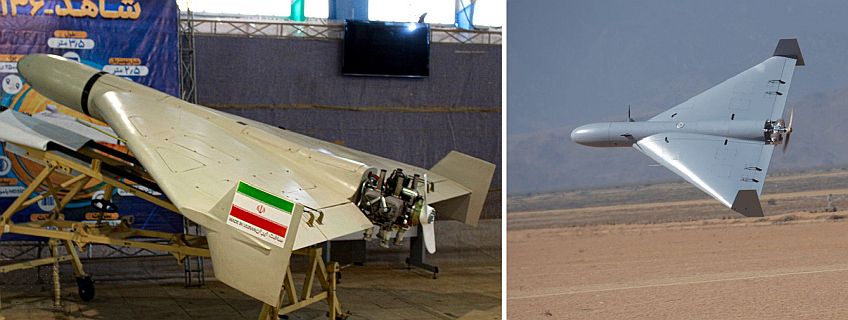
One of the most surprising weapons in the current war in Iran is the U.S. Army’s LUCAS suicide drone, which only entered service in September 2025 and is already influencing the course of the war. This drone is unusual: it is essentially the American copy of the Iranian Shahed-136 drone, which Iran unveiled in 2021 and soon afterward supplied to Russia in large quantities. Today, Russia manufactures it domestically under the name Geran-2.

In June 2025 the United States unveiled the new Low-Cost Uncrewed Combat Attack System (LUCAS). In July 2025 the Secretary of Defense approved accelerated procurement, and by December 2025 the U.S. Central Command (CENTCOM) announced the establishment of a dedicated task force to operate it — Task Force Scorpion Strike (TFSS) — along with the deployment of the first operational squadron in the Middle East. Ten days ago, when the joint Israeli-American attack on Iran began, CENTCOM released a special statement: “For the first time in history, TFSS has deployed one-way attack drones. These low-cost systems were developed based on the Iranian Shahed and are manufactured in the United States.”

A Training Concept That Became a Weapon

How did it happen that the United States copied an Iranian design and began producing it? And is the design Iranian at all — or Israeli? Let us begin with the United States. Behind these inexpensive attack drones stands SpektreWorks, a company based in Phoenix, Arizona. The Pentagon asked the company to develop a training platform that would allow air-defense crews to practice intercepting attack drones. To assist the development process, the company was provided with an Iranian Shahed drone captured in the Middle East.

SpektreWorks conducted a comprehensive examination of the Iranian design. To provide an authentic training experience, the company performed reverse engineering and produced an American version of the Iranian drone. Not coincidentally, it named the system FLM-136, hinting at its Iranian origin (Shahed-136).

From right to left: SpektreWorks FLM-136 and Shahed-136

The platform is small, weighing about 80 kg, and equipped with a small, inexpensive rear internal-combustion engine that gives it a flight range of slightly more than 800 km at a speed of 130–140 km/h. It carries a payload of up to 20 kg and can cover its maximum distance within about six hours of flight.

The model achieved one of its most important goals: an extremely low price. The platform proved so successful that the U.S. Army decided to procure it as a weapon, not merely as a training system. The price played a decisive role in that decision, since it allows the launch of hundreds or even thousands of drones, creating an effect of deception, confusion, and shock — thereby breaking the asymmetry that often characterizes conflicts between sophisticated armies such as the Israel Defense Forces and the U.S. Army and their adversaries.

The Liberty Ship Model

In an interview with a U.S. Army publication, the Director of Experimentation at the Office of the Under Secretary of War for Research and Engineering, Colonel Nicholas Law, explained that the inspiration came from the Liberty Ship production model, which enabled the rapid manufacture of thousands of cargo ships during World War II. “LUCAS will fulfill a similar role in the new era of warfare,” he said. “There is a price point at which we want to produce large numbers of these systems very quickly.” It is not a single manufacturer: the system is designed to move to multiple manufacturers so it can be built in mass quantities.

The combat version differs slightly from the training version. It carries an 18-kg warhead and has a range of 650–800 km. The American version also includes AI-based navigation and mission-management capabilities, enabling operation as part of a swarm. The most important detail is the price: about $35,000 per unit, compared with roughly $20,000 for the Iranian version.

An Idea from Israel Aerospace Industries

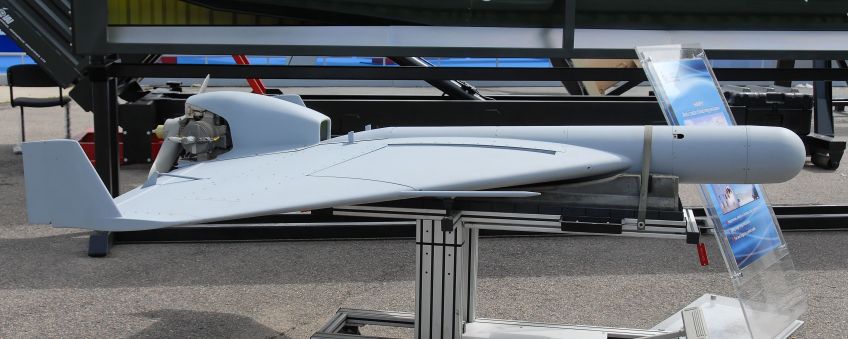
Sharp-eyed observers have noticed the strong resemblance between the Iranian Shahed drone and the Israeli Harpy attack drone developed more than 30 years ago by Israel Aerospace Industries (IAI). Like its Iranian counterpart, the Harpy is a loitering munition with a broad delta wing and a small rear internal-combustion engine.

Both are launched using a booster rocket that separates after launch, both fly autonomously according to pre-programmed route data, and both can be launched from trucks and ships. However, the Harpy was more sophisticated and more expensive because its primary mission was detecting electromagnetic emissions in order to destroy radar systems.

IAI Harpy at Paris Air Show 2007. Source: Wikipedia

There is no any official confirmation of the widespread assumption within the industry that the Shahed is a low-cost copy of the Harpy. Nevertheless, its history provides several possible points where the Iranians might have obtained the knowledge necessary for some form of reverse engineering. The first is the Chinese deal: in 1994 Israel sold Harpy drones to China in a transaction that caused a crisis with the United States and eventually led to the resignation of Israel’s Defense Ministry Director-General, Amos Yaron.

Under U.S. pressure, the Chinese drones were not upgraded in 2004 as originally planned. Later reports suggested that China conducted reverse engineering on them and developed its own version called ASN-301. The Harpy is used by several militaries, including those of India, Morocco, Turkey, and Azerbaijan (which borders Iran). Azerbaijan used the system in its battles with Armenia, and during those conflicts there were reports of drones that strayed from their course or were shot down.

Close military ties between China and Iran, along with the loss of drones in Azerbaijan, could help explain how design knowledge from the Israeli UAV — which was the first of its kind in the world — might have found its way into the Iranian drone. However, fully copying the Israeli concept does not necessarily require complete reverse engineering: its core characteristics — such as a broad delta wing, slow long-range flight, a small rear pusher engine, and container launch using a booster rocket — can be replicated even without reverse engineering.

Israeli Doctrine vs. Iranian Doctrine

There are also notable differences between the two platforms. The Israeli Harpy uses a Wankel engine produced by Elbit, which is very efficient and extremely quiet but expensive to manufacture. The Iranian Shahed is based on a small scooter like piston engine, which is cheap and noisy. It is so widely available. Similar engines can be purchased worldwide, even through online model-aircraft parts stores. In general, the Shahed relies on cheap, easily obtainable civilian components, while the Israeli drone is built from military grade expensive components.

The largest difference lies in the avionics systems: The Israeli Harpy searches for specific radiation sources and can navigate toward them; if it does not detect a radar signal, it can abort the mission. The Iranian Shahed, by contrast, is equipped with what might be described as “poor man’s avionics”. A set of coordinates is entered into the system, and the drone flies toward them using GPS. The bottom line is that the differences between the two are less about technology and more about combat doctrine. In this sense, the American LUCAS drone has adopted the Iranian operational concept almost in full.

Vay to Integrate Nexar’s AI Accident Prediction Model into Remotely Driven Vehicle Fleet

[Image: Remote driving via a steering-wheel control system. Credit: Vay]

Israeli computer vision company Nexar announced a partnership with mobility startup Vay to integrate its AI-based accident prediction model into Vay’s remotely driven vehicle fleet. The model, called BADAS (Beyond ADAS), is designed to identify road hazards seconds before they occur and provide real-time alerts about dangerous situations.

According to the companies, the integration will add a predictive safety layer to Vay’s remote-driving system — a service considered the world’s first commercial fleet of vehicles driven remotely on public roads.

As part of the collaboration, Nexar’s AI model will analyze video streams and sensor data from cameras installed on Vay’s vehicles in order to identify potential risk situations. The goal is to add predictive capabilities that anticipate danger before the operator reacts, generating alerts for scenarios such as a nearby vehicle drifting out of its lane, a pedestrian stepping into the road, or unusual traffic patterns at an intersection.

A car that arrives without a driver

Vay is a mobility startup founded in Berlin in 2018 that is developing a new model for urban transportation: a car that arrives at the user without a driver — but is not fully autonomous.

Instead, the vehicle is delivered by a human operator located in a remote control center who drives the car using a tele-driving system.

When a user orders a vehicle through the company’s app, a remote operator drives the car to the requested location. Once the vehicle arrives, control is handed over to the user, who drives the car to their destination. At the end of the trip, the remote operator reconnects to the vehicle and either parks it or drives it to the next customer.

The model combines elements of car sharing and ride-hailing but differs from both: there is no driver inside the vehicle, yet the system is not fully autonomous. The concept is designed to offer a flexible and potentially cheaper alternative to taxi services while avoiding the complexity and high costs associated with developing fully autonomous vehicles.

Vay’s system relies on a fleet of electric vehicles equipped with multiple cameras, real-time data connectivity, and safety mechanisms that enable low-latency remote control. The operator sits at a control station that mimics a traditional driving cockpit, complete with a steering wheel, pedals, and screens displaying the vehicle’s surroundings.

The company launched its commercial service in Las Vegas and has raised more than $200 million from investors including Kinnevik, Coatue, and Atomico. Its business model relies on a shared fleet of vehicles, with remote operators responsible for delivering cars to users and managing fleet logistics between trips.

Not a driving model — a crash prediction model

The technology Nexar is integrating into the service is based on its AI model BADAS, designed to predict crashes and road risks before they occur.

The model was trained on a massive dataset of real-world driving data collected over several years from a global network of dashcams installed in private vehicles, commercial fleets, and urban monitoring systems.

Unlike traditional ADAS systems that react to events once they occur, BADAS attempts to identify early behavioral patterns that indicate a potential risk. Nexar’s dataset includes thousands of “near-miss” events — situations in which a dangerous scenario emerged but no actual crash occurred — allowing the model to learn what abnormal behavior on the road looks like.

According to the company, the model was able to predict accidents on average 4.9 seconds before they happened during testing.

Nexar does not aim to build its own autonomous vehicles. Instead, it positions the model as infrastructure that can be integrated into systems developed by automakers, insurance companies, commercial fleets, and smart city platforms.

A complementary technology stack

The collaboration combines two complementary layers of technology: a remote-driving system that allows vehicles to operate without a driver inside the car, and an AI model that analyzes the driving environment and provides early warnings of potential hazards.

In Vay’s system, the remote operator relies on live video feeds from the vehicle’s cameras to understand the road environment. Nexar’s predictive model can add an additional layer of analysis on top of that video stream — effectively acting as an AI-powered assistant that identifies dangerous patterns and alerts the operator before they notice them.

Beyond improving safety, such a system could also increase the operational efficiency of the service. A predictive monitoring layer that continuously analyzes the environment may reduce cognitive load on remote operators and allow the company to scale its fleet operations while maintaining high safety standards.

For Nexar, the partnership demonstrates how its model can serve as a foundational software layer across multiple mobility platforms — not only in private vehicles or ADAS systems, but also in connected fleets and emerging transportation services.

More broadly, the move reflects a growing trend in the transportation industry: the shift from reactive safety systems that detect danger after it appears to predictive systems built on real-world driving data.

If models of this type prove reliable at scale, they could become a core software layer in next-generation transportation safety systems — whether in autonomous vehicles, connected fleets, or remote-driving services.