Hitachi Astemo to integrate TriEye’s SWIR sensor in its ADAS

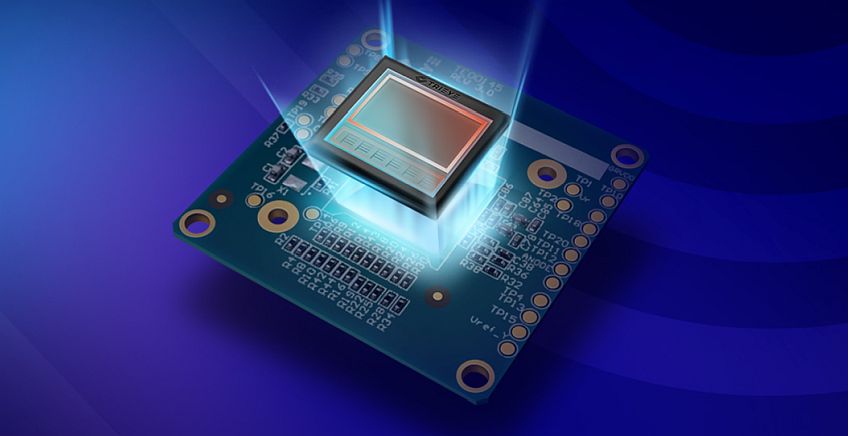
Hitachi Astemo, Tier-1 automotive supplier formed from a merger between Hitachi and Honda affiliates, will integrate TriEye’s Short-Wave Infrared (SWIR) sensor in its advanced driver assistance systems (ADAS). Hitachi Astemo’s systems are based on two cameras and a radar, and integrating the new sensor will broaden its capabilities in adverse weather and low-light conditions, where cameras’ performance is insufficient. 

Hitachi is going to use TriEye’s latest technology, the SEDAR (Spectrum Enhanced Detection and Ranging). This is an entire solution for the automotive world. Using this technique, it is possible to generate a detailed depth-map for automated driving applications, based on raw information obtained from the sensor in HD resolution and a detailed in-depth map of the environment outside the vehicle – all this even in adverse weather conditions.

Hitachi Astemo was founded in 2019 as a joint venture of Hitachi Automotive Systems (66%) and Honda (33%). It is composed of three Honda’s parts divisions and Hitachi’s subsidiary Hitachi Automotive systems. The annual revenue of the merged company is about $20 billion, and with more than 75,000 employees, it is considered the second Tier 1 Company in the world. The company develop and produce powertrain systems for Automatic Vehicle, electronically control units,  shock absorbers, chassis parts, steering systems and, as mentioned, safety systems.

ny was founded in 2017 by Avi Bakal (CEO), Prof. Uriel Levy (CTO), and Omer Kapach (VP R&D), and is headquartered in Tel Aviv, Israel. Its technology enables cost-effective, high-resolution image data and depth perception in all weather and lighting conditions. Short-Wave Infrared (SWIR) cameras are known to can allow for object and hazard detection even under the most challenging visibility conditions.

But the current utilization of Indium-Gallium-Arsenide (InGaAs) material to produce SWIR sensors, is complex, expensive and involved with long lead times. Following a decade of nanophotonics research by TriEye’s CTO, Prof. Uriel Levy, the company succeed to fabricate CMOS sensor,  allowing SWIR to enter mainstream use. According to TriEye, its sensor’s prices are thousand times lower than the existing InGaAs-based cameras.

Bosch to manufacture IRP’s powertrain components for E-Vehicles

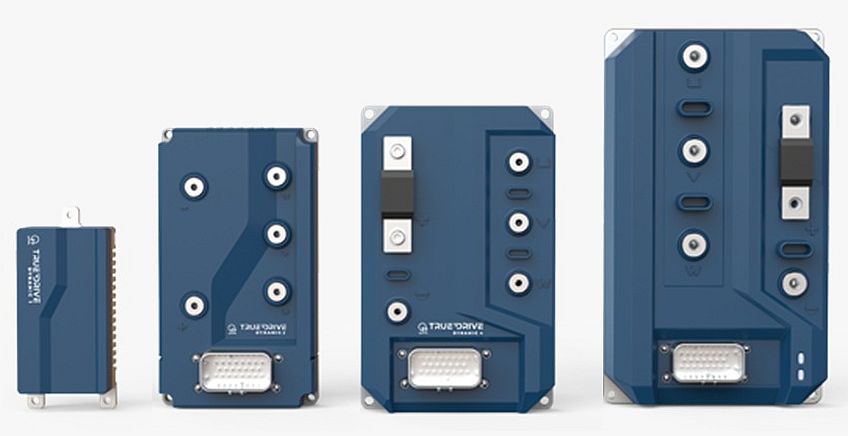
IRP System Company from Nes-Ziona, Israel, announced it has signed a strategic agreement with Bosch Company for serial manufacturing of IRP’s personal mobility electric motor controllers. Along the product it develops and manufactures Bosch offer industrialization and production services for other companies in the automotive world. The new cooperation will focus on manufacturing controllers for Electric personal mobility vehicles (scooters, motorcycles, 3-wheelers and quadricycles), IRP’s largest market segment as of today. Some of the company’s solutions are already integrated in several commercial models, and in order to meet growing demands it extends its production capabilities through the agreement with Bosch.  

IRP has developed the TrueDrive technology, an array of engines and controllers running by patented algorithm, which improve electric engines efficiency, reduce costs and enlarge the vehicle’s driving range. Dan Shoshani, VP Marketing & Product Management at IRP Systems, explains to Techtime: “The main challenge in the Electric Vehicle controllers’ world is to craft a controller that offers high performance with maximum safety, together with competitive price. Our cutting edge technology meets the highest standards of the automotive industry. We put a lot of attention in the driver’s experience and in providing outstanding ‘in-control’ driving feeling for its e-vehicle. We manage to achieve this through our unique algorithmics which is built-in the controller”.

IRP Systems was co-founded by CEO Moran Price and CTO Paul Price. At start, they aimed their technology for the aviation’s world applications, but in later years the company has changed focus and migrate its technology for the automotive world. Today it develops powertrain solutions for scooters, motorcycles, 3-wheelers and quadricycles with power up to 150kw and for passenger’s cars. The solution is composed of three major components: controllers, engines and battery management system.

A successful joint experiment with Renault

In the last year, IRP Systems took part at Renault-Nissan innovation lab in Tel-Aviv. Within this experiment, the company’s technology was tested in a Renault’s light vehicle. As a proof of concept, four electric engines and IRP’s control array have been installed in a Renault Twizy car. Company has reported that the size of the four new engines is only one third of the original engines’ size, and they managed to double driving range between charging with higher the ratio of speed thanks to the engines’ higher torque (power).

Bosch Company announced that the production will be performed in the frame of its DfX (Design for eXcellence) service. This service integrates the production, tech and automation constraints in the engineering design – early at the planning stages. The industrialization and manufacturing of IRP’s products will be led by Bosch Electronic Manufacturing Services (EMS) business unit headquarters in Mondeville, France, together with Bosch Technology local team in Israel.

Blockchain security startup Redefine raised $11M in seed round

Blockchain security startup, Redefine, has raised an $11M seed round based on its offering of the first Crypto Firewall. The seed round was led by Palo Alto-based Ribbit Capital, with participation from Jump Capital and ParaFi Capital at a valuation of $50M. Ribbit Capital is a well-known venture capital fund that focuses their investments in the FinTech and Blockchain Industries and has a successful track record with  early investments in companies such as Coinbase, Robinhood and Chainalysis. ParaFi Capital and Jump Capital, both US-based, are extremely well-respected funds that take part in early stage investments of Blockchain-centric companies through their venture capital arms.

This funding comes in addition to a pre-seed round of $3 million raised in June of last year, led by More VC and Accomplice Blockchain, who also participated in the current round. The two joined forces with Redefine early on and brought a mix of cyber and blockchain expertise to the table.

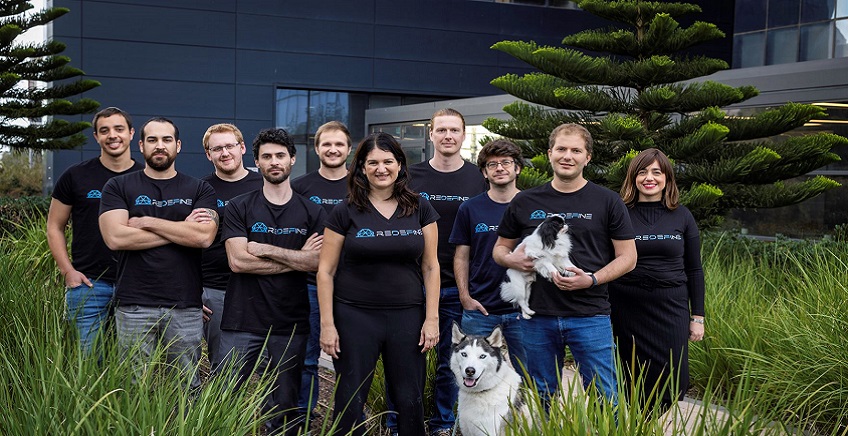
The company currently employs 14 people, many of whom served in elite IDF technology units. The funds raised in this round will contribute to recruiting top talent for the Israeli and US offices, furthering research and development efforts, and building out a robust product that can serve their customers’ needs.

Redefine was founded in June 2021 by Dr. Shira Brezis (CEO) and Alon Ram (CTO). Alon earned his Master’s in Biomedical Engineering from the Technion-Israel Institute of Technology, and Shira holds a PhD in Law and Economics from the University of Chicago. They both worked for the Israeli government in different capacities and accumulated over a decade of cybersecurity experience before meeting in the then newly-established innovation department in 2018. With an already extensive knowledge base in cryptocurrencies and digital asset technology, they quickly joined forces and founded the FinTech Labs, integrating their passion for crypto into their professional careers for the first time.

Redefine operates in the heart of the fascinating and fast-growing blockchain-sector of Decentralized Finance (DeFi). Much like the verb DEFY, this new sector challenges the status quo of traditional finance and brings with it opportunities that were not previously available. Users are able to generate high-yields on their crypto investments, take out loans, trade derivatives and provide liquidity in a transparent, decentralized and permissionless manner.

At the time of writing, there is over $100B being utilized by various DeFi protocols. With this amount of money at play, it is no surprise that so far, more than $12B have been stolen from investors through dozens of sophisticated hacks and cyber attacks.

Redefine is a pioneer in DeFi security catering to institutional investors in order to help them manage investment risks through a smart platform that automatically analyzes risk, monitors market changes in real time, and proactively protects capital in the event of a cyber attack. Emphasis is placed on automating due-diligence and risk-monitoring processes that are usually performed manually today, allowing investors to deploy capital into the latest projects and to monitor the risks associated with their positions in a scalable manner.

Redefine has already secured high-profile partners across the digital asset spectrum, such as Fireblocks. Redefine is also working closely with a number of prominent beta customers, such as Celsius Network, to iterate and focus their offering to ensure maximum value is provided to the market.

Dr. Shira Brezis, co-founder and Redefine’s CEO explains: “Creating a safe environment is critical for the development and adoption of DeFi. By promoting equal access to financial services for all, DeFi is a powerful movement towards democratizing the global economy and the latest step in the implementation of blockchain ideology. It removes the autonomy held by centralized third parties to decide what products and services are available and to whom. The idea is that anyone in the world can participate and all that is required is an internet connection and a digital wallet”.

Credit photos: Eric Sultan

PepsiCo saves water with WINT

PepsiCo has started to integrate WINT’s water management and leak detection systemin dozens of its factories around the globe. This step is part of the American food and beverage giant to cut expenses of water consumption. PepsiCo has set an initial goal of reducing water consumption by 15% until 2025, as part of a wider perennial program aimed to save resources and reduce environmental damage caused by the company’s activity.

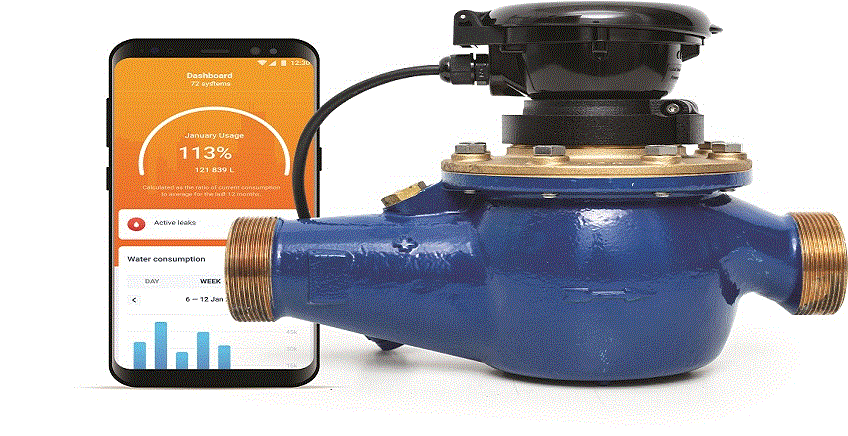
WINT’s platform interfaces with the factory’s existing water systems, and is capable of identifying – using AI algorithms – water consumption anomalies at the production line, whether it is a technical issues like faulty engine/valve or merely water waste.

Yaron Dycian, WINT’s Chief Product and Strategy Officer, says to Techtime he experiences a change in industries’ attitudes towards water usage. “The industrial sector is responsible for fifth of the global water consumption. As water are considered a cheap resourse, saving water was not the primary concern of the industrial companies. Today, with the arousal of environmental consciousness, and since water waste increase carbon footprint, we witness a change and desire to use water effectively. Our cooperation with PepsiCo is strategic and sustained, and our intent is to extend our technology integration to more PepsiCo factories”.

Identifying a leaking toilet at the 20th floor

Together with the industrial sector, the main target market for WINT is the residential and office buildings, which suffer from a chronic water waste problem. For example: there are estimates that water damage in facilities is a major source of insurance claims, with over $13 billion in annual payouts.  At the UK, this amount is estimated at £1 billion.

WINT’s platform is an analytic one, based on detection of water leaks and waste using AI to identify anomalies in the facility’s water consumption graph. In order to gather the required data, unique devices are installed on the water meters at a various strategic points across the building. Using machine learning algorithms, the system learns site’s usage patterns, and alerts the maintenance managers on any anomaly that may indicate a leak. According to the company, the solution may save 20%-25% of water expenses.

Dycian: “People are unaware of the amount of water wasted in their building. Current estimates are that around 25% of the amount of water entering a building – is wasted. Main issue is that leaks are detected in late stages, for example – when a pipe is exploded. Our system can detect a leaking toilet in a skyscraper”. Currently, WINT has around 400 clients in Israel and around the globe, to include the real estate company TIDHAR, Mellanox, several Israeli insurance companies as well as financial worldwide institutes such as Bank of America and Citibank. Together with its offices in Rosh-HaAyin, the company holds offices in the UK and the USA and employs a total of 50 employees.

Meanwhile, WINT announced it had completed a $15 million Series B funding round. The round was led by New York-based global private equity and venture capital firm Insight Partners and with participation from existing investors which include Marius Nacht, one of Israel’s leading serial entrepreneurs, founders, and investors. The round also included numerous global construction and real-estate companies, who are keenly looking to solve the challenges posed by water sustainability and damage in their facilities and construction sites. These include Suffolk Construction, a national technology-driven general contractor, the Consensus Business Group, the UK’s largest owner and manager of residential and commercial property, Tidhar, Electra, Ashtrom, Rogovin, and the Israel-Canada group. 

CADY developed solution for automatic PCB design inspection in the planning phase

Israel-based start-up CADY, the developer of AI-based technology for PCB inspection, completed a $3M funding round. The current round is led by Teramips Technologies and Udi Peless, the founder and former CEO of Friendly Robotics, which developed robotic lawn mower s. Friendly Robotics acquired by the American MDT in 2017 for $45 million, and Peless currently holds the position of CADY’s Chairman of the Board. Teramips Technologies is managed by Pavel Radziviovsky and Vadim Zlotnik, former founders of Visionmap, which was awarded the Israel Defense Prize and later acquired by Rafael in 2013. Other participants in the current round are TAU Ventures – Tel-Aviv University’s Venture Capital, which also invested in CADY at earlier stages – as well as Today Ventures, Aristagora VC, Tal Ventures, Atooro, Amit Gilon, Rafi Gidron and additional private investors. 

CADY was founded in 2020 by Gilad Shapira, CEO of the company, Tal Ben Porath, CTO, and Or Shabtai, Head of Research, who met during their joint service in the intelligence unit of the IDF. Including the current funding round, a total of $4M raised by the company since it was founded.

CADY operates in the emerging market of PCB (Printed Circuit Board) planning. As chips are being more and more complex, it’s been more complex to plan the electric circuits connecting the PCB’s components. As opposed to the chips’ planning area, where powerful verification and testing tools are highly available, the engineer planning the PCB is required to perform most of the tests manually or use colleagues. As a result, most of the electrical failures are coming to light only at the physical stage of the product, that is – at the prototype stage. When such failure is detected in the prototype, the engineer is forced to go back to the sketch table, locate the fault and re-send the modified design to reproduce the prototype. The process is a cumbersome, prolonged and costly process, adding the fact the PCB development processes require multiple prototypes production (re-spin) before mass production. 

Gilad Shapira, CADY CEO says to Techtime that his company’s solution is designed to meet the lack of automatic PCB inspection tools. “At present, there and no comprehensive automatic tools to assist the engineer at the planning stage’s inspections, and those processes are have to be carried out manually. This is a highly time consuming process and usually, not all failures will be detected by the engineer. Studies showed that at every planning contains at least several errors, a fact that requires issuing a re-spinning process.

CADY’s solution makes it possible to perform this inspection early at the sketching stage. The company developed designated software for PCB planning automatic inspection, based on an AI (Artificial Intelligence) technology. Using machine learning algorithms, the software scans the technical specifications of chips and other components and “understands” the requirements and characteristics of each component, such as voltage requirements, temperature and connections. At the next phase, the software compares the insights against the sketch, in order to identify planning failures at the early planning stages, before producing the prototype. The platform provides a promptly feedback to the engineer”.  

Shapira: “Current solutions available in the market are trying to base the inspection on electricity principles basics; these solutions are insufficient as they don’t take into account the varied requirements of each components and each manufacturer. Our advantage is not coming of unique expertise in electricity, rather it is the ability to convert technical specifications, usually written in natural language and saved as PDF, to formal language that makes it possible of running an automatic inspection of the circuit against the planning. Our main goal is to provide a solution that will reduce the number of re-spins to minimum or even to totally eliminate it”.

POCs with Intel and defense companies

According to the company, detecting failures at early stages improve and accelerate the planning phase, significantly save resources, shorten delivery schedule and increase quality and reliability of final product. Shapira: “Together with the chips market, the PCB market also experiences a dramatic increase in the planning and inspection complexity. Circuit made for vehicles, computers, phones and other devices becomes more dense and complex, embedded with more components, and thus harder to inspect. Now, more than ever, there is an imminent need for an automatic inspection tool, based on AI technology, to inspect electrical schemes. 

CADY has conducted several successful pilots with multinational technology corporate business units and Israeli defense companies, in which it successfully detected errors at early stages of the design process. Furthermore, CADY was admitted to Intel’s startups program, Intel Ignite, batch #5 and already conducted fruitful pilots with three different Intel business units. The raised funds will allow the company to recruit additional employees and advance to a commercial phase with its clients, leaving the pilot stage behind. 

BIRD Foundation to invest $8 million in 9 new projects

During its meeting on December 13, 2021, held via video conference, the Board of Governors of the Israel-U.S. Binational Industrial Research and Development (BIRD) Foundation approved $8 million in funding for nine new projects between U.S. and Israeli companies. In addition to the grants from BIRD, the projects will access private sector funding, boosting the total value of all projects to $22 million.

The BIRD Foundation promotes collaborations between U.S. and Israeli companies in various technological sectors for joint product development.  In addition to providing conditional grants of up to $1 million (up to $1.5m for exceptional projects), the Foundation assists by working with companies to identify potential strategic partners and facilitate introductions.

Projects submitted to the BIRD Foundation are reviewed by evaluators appointed by the National Institute of Standards and Technology (NIST) of the U.S. Department of Commerce, and the Israel Innovation Authority.

The nine projects approved by the Board of Governors are in addition to the more than 1000 projects that the BIRD Foundation has approved for funding during its 44-year history. To date, BIRD’s total investment in joint projects is over $370 million, helping to generate direct and indirect sales of more than $10 billion.

The projects approved include:

  • Civan Lasers (Jerusalem, Israel) and AMET, Inc. (Rexburg, ID) to develop an Advanced Laser Welding System based on Dynamic Beam Laser.
  • TempraMed Israel (Tel Aviv, Israel) and Concept Group Corporation (Palm Beach Gardens, FL) to develop thermal insulation to shield the EpiPen Auto-Injector from exposure to high temperatures that can degrade the drug performance.
  • Cordio Medical (Or Yehuda, Israel) and International Healthcare (Norwalk, CT) to develop and validate the HearO® system that remotely monitors Congestive Heart Failure patients.
  • Mego Afek (Kibbutz Afek, Israel) and Edamame Health (Napa, CA) to develop a Lymphedema remote patient monitoring system.
  • Kav-Medida (Herzliya, Israel) and Skycatch (San Francisco, CA) to develop a high precision indoor scanning and analytics system to monitor progress in real time throughout all phases of construction.
  • Sixgill (Tel Aviv, Israel) and Basis Technology Corporation (Somerville, MA) to develop AI-based technologies, based on natural language processing, to identify emerging and imminent cyber threats.
  • Agridrones (Kfar Saba, Israel) and ISCA Technologies (Riverside, CA) to develop an intelligent drone-fitted precision dispersion system for natural pesticides and pollination enhancement products.
  • HIL Applied Medical Proton International (Jerusalem, Israel) and Proton International (Alpharetta, GA) to develop ultra-compact, affordable proton laser based beam therapy.
  • SirT6 (Ness Ziona, Israel) and Regulus Therapeutics (San Diego, CA) to develop an innovative treatment for geriatric frailty based on increasing SIRT6 protein levels.

Dr. Eitan Yudilevich, Executive Director of the BIRD Foundation [pictured above], said: “The selected projects include breakthrough innovations that will benefit from both the U.S.-Israel partnerships and the risk-sharing funding mechanism provided by the BIRD Foundation. The awards can be a significant factor for companies seeking to raise funding, especially in an environment in which investments are often focused on less risky sectors.”

The deadline for submission of Executive Summaries for the next BIRD cycle is March 1, 2022. Approval of projects will take place in June 2022.

Smart Shooter reveals ultra-precise fire control system for UAVs

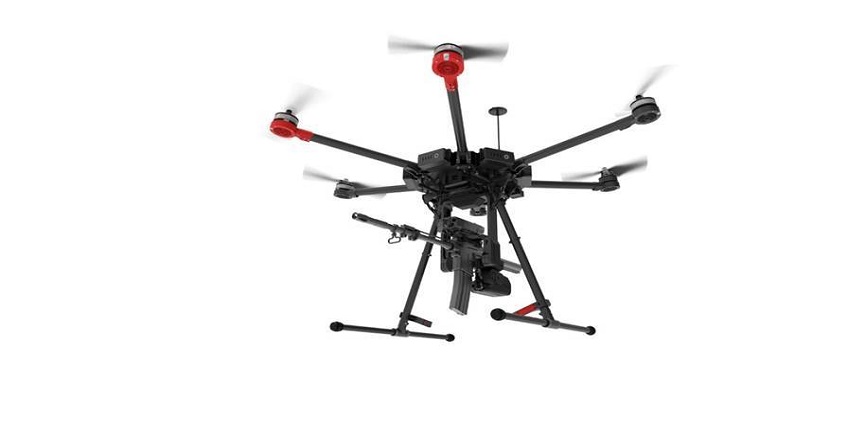
SMART SHOOTER, a designer, developer, and manufacturer of innovative fire control systems that significantly increase the accuracy and lethality of small arms, reveals the SMASH Dragon: an armed drone system incorporating Smart Shooter’s combat-proven SMASH Technology that ensures precise target elimination.

Presented by the company for the first time, SMASH Dragon is an advanced robotic weaponry payload that can be mounted on different drones and other unmanned aerial platforms. It can incorporate various types of assault rifles, sniper rifles, 40mm, and other ammunition with great precision. Extremely lightweight and therefore allowing long mission endurance, SMASH Dragon integrates a unique stabilization concept with the SMASH technology that enables the system to accurately hit static and moving targets while flying.

Featuring SMASH’s proprietary target acquisition and tracking algorithms as well as sophisticated computer vision capabilities, the remotely operated SMASH Dragon Offers the SMASH technology’s fast and precise hit capabilities and other exclusive benefits while engaging targets from the air.

The company stated that the system has successfully completed live firing tests and is currently under advanced stages of development. 

Michal Mor, SMART SHOOTER CEO: “Smart Shooter’s SMASH technology offers precise elimination of threats at ground, air and sea. We are now happy to offer the same precise, combat-proven target engagement technology mounted on an unmanned aerial platform that can be controlled from a distance. When it comes to drones, platform weight is a critical factor as it impacts mission endurance and cost, and we are proud to announce that the extremely lightweight SMASH Dragon meets this criterion”.

One shot – one hit

SMART SHOOTER is a world-class designer, developer, and manufacturer of innovative fire control systems that significantly increase the accuracy and lethality of small arms. With a rich record in designing unique solutions for the warfighter, SMART SHOOTER technology enhances mission effectiveness through the ability to accurately engage and eliminate ground, aerial, static or moving targets during both day and night operations.

Designed to help military and law enforcement professionals swiftly and accurately neutralize their targets, the company’s combat-proven SMASH Family of Fire Control Systems increase assault rifle lethality while keeping friendly forces safe and reducing collateral damage. With a unique technology that makes it possible for every battlefield element to be connected with every other battlefield element, SMASH creates a micro-tactical network that dramatically enhances real-time situational awareness and ensures that the entire platoon shares a common operational picture.

The company’s experienced team of engineers combine electro-optics, computer vision technologies, real-time embedded software, ergonomics, and system engineering to provide cost-effective and easy-to-use solutions for modern conflicts. 

Fielded and operational, Smart Shooter SMASH family of solutions provides end-users with a “One Shot – One Hit” capability across multiple mission areas, creating a significant advantage for the infantry soldier and ultimately revolutionizing the world of small arms and optics.

SMART SHOOTER’s headquarters are based in Yagur, Israel, and its American subsidiary, Smart Shooter Inc., is located in Virginia. Smart Shooter also has offices in Düsseldorf, Germany, and in Canberra, Australia.