Skylock Excels in NATO Counter-Drone Exercise

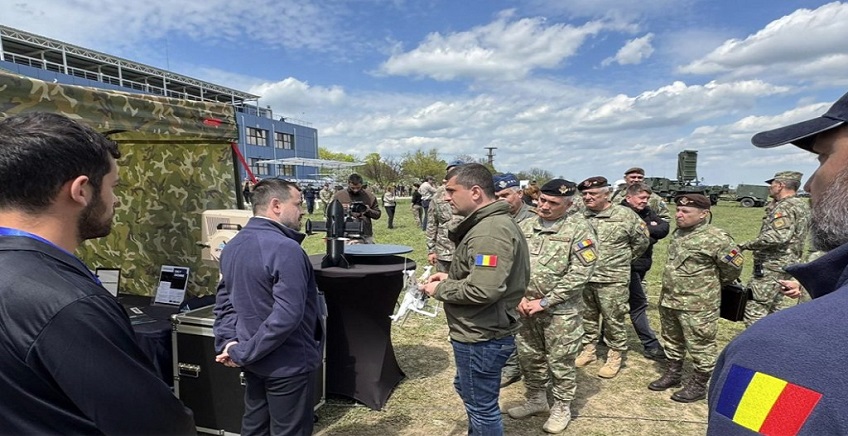
[Image: Scene from the NATO exercise in Romania. Courtesy of Autonomous Guard]

Last week, NATO conducted a large-scale operational exercise in Romania to evaluate advanced counter-drone systems—an increasingly critical capability in modern battlefields such as Ukraine. The exercise brought together 21 countries and tested more than 200 technological solutions, including the integrated Sky Dome system developed by Israeli company Skylock, a subsidiary of Autonomous Guard.

According to the company, Sky Dome consistently demonstrated the highest performance in detecting and neutralizing drones throughout the exercise. Autonomous Guard believes these results position the system as a strong contender for future procurement programs across NATO member states.

The exercise, held at the Capu Midia range on the Black Sea coast under the name LCI-X Crucible Eastern Phoenix 2026, was designed as a full-scale field trial rather than a controlled demonstration. Systems were required to operate under realistic combat conditions, handling complex scenarios such as coordinated drone swarms, timed attacks, and multiple simultaneous intrusions. Around 150 different types of drones were deployed, enabling a broad evaluation across diverse threat profiles.

The testing process included several phases. Following an initial screening round, only four systems advanced to the final stage—those developed by Skylock, Rheinmetall, Cognifly, and Bluespace. The final evaluation was attended by senior Romanian defense officials, including the Minister of Defense and the Air Force Commander. Systems that performed well are expected to be listed in NATO’s procurement portal, making them eligible for future acquisition programs.

Sky Dome is built on a multi-layered architecture combining radar, RF sensors, electro-optical systems, and acoustic sensors to deliver precise detection, classification, and tracking. The system operates across multiple ranges and is designed to counter drones that do not rely on GPS, including those using alternative navigation methods. Interception is primarily achieved through “soft-kill” techniques such as communication jamming and navigation spoofing, allowing effective neutralization even against drone swarms.

The company noted that the system also performed well against larger drones, which are typically more challenging to intercept using kinetic methods. Participation in the exercise has reportedly generated interest from additional European NATO members.

Alongside its operational efforts, Skylock is working to establish a local presence in Romania through the SAFE framework—an accelerated defense funding mechanism—in collaboration with a local partner. The company is also exploring the integration of additional interception technologies, including laser-based solutions, in line with evolving battlefield requirements.

Xtend Inaugurates Drone Manufacturing Facility in the U.S.

Xtend, a Tel Aviv-based drone company, inaugurated a new production facility this week in Tampa, Florida. The plant spans 8,000 square meters and is located near MacDill Air Force Base, home to the headquarters of U.S. Special Operations Command (SOCOM), one of Xtend’s primary clients. The new facility has the capacity to produce several thousand drones per year across all of the company’s models and is expected to employ several dozen workers. Xtend also has the option to double the plant’s size in the future.

Production at the site is already underway, fulfilling an order placed in 2023 by the U.S. Department of Defense for hundreds of drones manufactured by Xtend. CEO Aviv Shapira told Tampa Bay’s Channel 13 that the proximity to SOCOM is no coincidence, noting that “SOCOM was our first client, and it remains the company’s largest customer since day one.”

The facility will serve as Xtend’s main manufacturing hub, supporting growing demand not only from U.S. defense agencies but also from NATO member states. “This will be a production arm capable of fulfilling orders worldwide,” said co-founder Rubi Liani in a statement to Techtime. Initially, the factory will focus on producing drones already ordered by the U.S. Department of Defense. Later on, it will expand to manufacture key components such as communication modules, motors, and controllers, which will be supplied to other drone manufacturers operating in the U.S.

During the inauguration ceremony, company representatives highlighted the plant’s importance for U.S. national security, aligning with the federal government’s current strategy to strengthen domestic supply chains. “We are not just building drones—we are building capabilities, resilience, and trust. This is a major milestone for Xtend in the United States,” said Shapira. The company also emphasized the strong support it received from local authorities in establishing the facility.

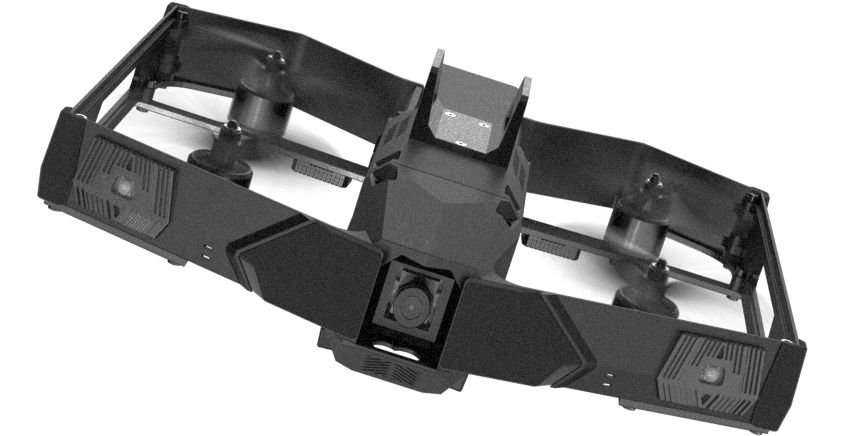
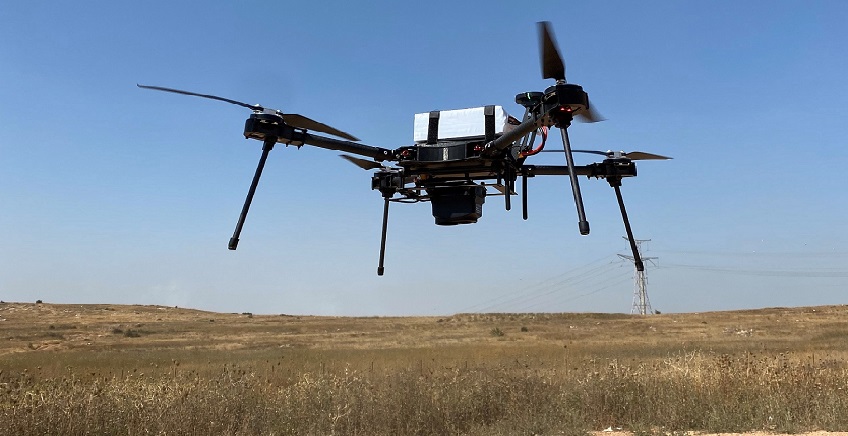
Xtend’s portfolio includes three drone models, all of which have been ordered by the U.S. Department of Defense. The Wolverine is a tactical multi-mission drone equipped with advanced surveillance and maneuvering capabilities, as well as a robotic arm that can lift and remove suspicious objects without destabilizing the drone. The Griffone is a lightweight interceptor drone, weighing just one kilogram, designed to neutralize small- to medium-sized drones. It can hover up to five kilometers away, reach speeds of 130 kilometers per hour, and intercept targets using a ramming arm. It is also compatible with external command and control systems.

The third model, Xtender, is a micro-tactical drone designed for operations in complex urban environments. Its unique capability lies in entering buildings, gathering intelligence, and exiting the scene undetected. The combination of these three platforms enables a wide range of mission profiles to be executed seamlessly from end to end.

All three drones are operated remotely via Xtend’s proprietary operating system, which allows users to control the drones using simple hand gestures—even during complex maneuvering. For example, to instruct a drone to enter a specific window or remove an explosive device, the operator simply points at the location and issues the command. The user interface leverages gaming and virtual reality technologies, giving the operator the sensation of seeing through the “eyes” of the drone. Thanks to this intuitive system, even untrained users can learn to operate the drones after just a few hours or days of instruction.

[In the photo: from the inauguration ceremony. Source: Xtend]

Xtend to acquire Singapore-based Performance Rotors

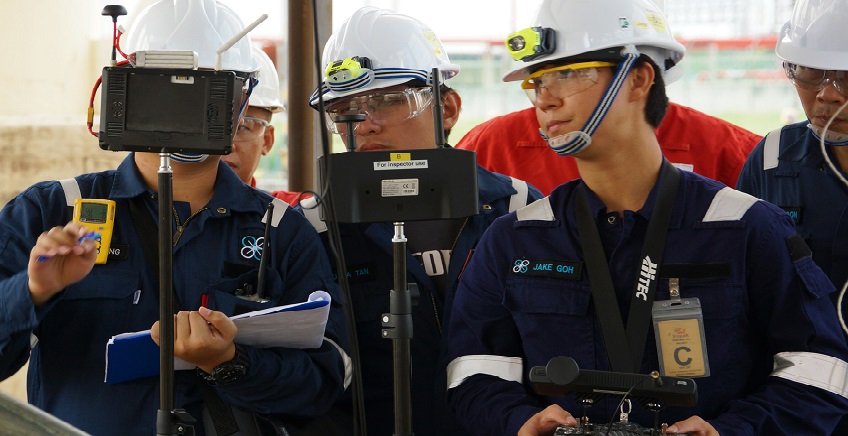
Performance Rotors, founded in 2016, develops small, innovative aerial drone solutions designed for inspection missions. The company focuses on monitoring oil and gas infrastructure and the maritime inspection of containers and cargo ships. Together with thermal and visual sensors, the company’s flagship product, Raven, is equipped with ultrasonic depth detectors (UTG/UTM), providing high-resolution depth images. In addition, due to its small size – 12×16 in – the drone can fly in narrow spaces and is GPS-independent.

One of the strategic investors and also a client of Performance Rotors is the Dutch Royal Vopak, which specializes in storing and maintaining materials for the chemicals, shipping, gas, and oil industries. Although based in Singapore, an international maritime trade hub, Performance Rotor’s activity spans Asia, Europe, and the U.S, and its clients carry out projects in the oil, gas, infrastructure, and shipping markets. 

Xtend developed  operating system for drones operators, that enables anyone to efficiently operate the drone, even on complicated maneuvering missions, with short hours or days of training. In addition, the interface is based on gaming and VR technologies and gives the operator a sense of watching events through the eyes of the drone.

Thus, for instance, to command the drone to enter a building through a specific window or move out an explosive device, the operator is required to point the window in the building or mark towards the explosive device and order the operation. The IDF already uses this system and successfully intercepts thousands of incendiary balloons and kites in the Gaza Envelope. In addition, the company signed a contract last year for delivering more than 100 drones to the US Army, and it currently develops new solutions for the IDF and the US Ministry of Defense.

Xtend also owns a drone line branded Wolverine, mainly used for battlefield missions such as removing explosive loads, entering buildings, and leading troops. However, Xtend is primarily a software company, and its flagship product is the operating system.

[Picture above: by Xtend]

Xtend offers its drone operating system for civil customers

Israeli drone company Xtend has announced that its drone operating system, supplied until now to military customers, is now available for integration into civilian drones. This step marks the expansion of the company’s activity, which has focused on the military market and worked extensively with the US army and the IDF towards civil applications, such as inspection missions, homeland security, rescue, firefighting, and more.

It was reported to Techtime that the operating system has already been integrated into the drone of an American agtech company, an Israeli drone company, and ground robots of an American defense company. According to Xtend, the operating system intensifies the drone’s capabilities and simplifies its operation, and provides the drone’s manufacturer with a competitive advantage.

The uniqueness of the operating system, which was used until now for military drones, is in that it provides the ability for everyone to efficiently operate the drone, even on complicated maneuvering missions, with short hours or days of training. In addition, the interface is based on gaming and VR technologies and gives the operator a sense of watching events through the eyes of the drone.

Thus, for instance, to command the drone to enter a building through a specific window or move out an explosive device, the operator is required to point the window in the building or mark towards the explosive device and order the operation. The IDF already uses this system and successfully intercepts thousands of incendiary balloons and kites in the Gaza Envelope. In addition, the company signed a contract last year for delivering more than 100 drones to the US Army, and it currently develops new solutions for the IDF and the US Ministry of Defense. 

Drone’s apps store

One of the main civil fields targeted now by Xtend is the inspection field, such as aerial inspection of infrastructures and buildings. In a conversation with Techtime, CEO and co-founder Aviv Shapira explained that a human operator carries out most drone missions, and complete autonomy is a long way off.

“Autonomous drones perform only 10% of the inspection missions. Our solution was designed for any mission that requires a human being  to make decisions in real-time, such as in an engineering inspection of bridges for detecting fractures and corrosion. Missions of this kind require the drone to maneuver in very dense spaces; currently, no autonomous drone can accomplish this mission. In general, in unknown environments, when real-time decisions are required, our system provides the operator with the capability of effortlessly operating, on premise or from anywhere in the world, even five drones and robots parallelly”. 

Shapira: “Using our operating system, drones can be operated in complicated missions where the current interface is insufficient. In addition, drone manufacturers can develop designated applications, for example, for corrosion detection. It also makes it possible for them to enter new areas and offer their customers a variety of applications. It provides them with a competitive advantage”.

The drone as a Swiss knife

Xtend also owns a drone line branded Wolverine, mainly used for battlefield missions such as removing explosive loads, entering buildings, and leading troops. However, Xtend is primarily a software company, and its flagship product is the operating system.  

According to the company, a drone should serve as a “Swiss Army knife”, capable of performing various activities based on switching payload (sensors, robotic arm, etc.) or installing new apps. This concept extends the basic drone’s capabilities beyond the manufacturer’s original specifications. The company’s operating system makes it possible for drone manufacturers and for developers to develop designated applications to be installed on drones in the same way it is done on a smartphone. To achieve this, the company provides the developers with their proprietary SDK.  

Xtend Company, headquartered in Tel Aviv, was founded in 2018 by brothers Aviv and Matteo Shapira. The brothers are also co-founders of Replay Technologies, the developer of FreeD system, which allows viewers to see and experience real-life scenes through immersive camera views at sports events. In 2016 it was purchased by Intel and was the basis for the Intel Sports Group.


ASIO to integrate its optical navigation system into a US-based drones

ASIO Technologies from Rosh-Ha’ayin, Israel, has disclosed it is integrating its NavGuard optical navigation systems into the drone platforms of a new US defense customer. NavGuard is a navigation system for tactical drones based solely on optical sensors, thus eliminating the dependency on GPS that exposes it to jamming attacks. Launched earlier this year, ASIO supplies the system to the IDF – directly and through drones’ manufacturers. 

Jamming is one of the most significant weak spots of military drones, who base their  navigation on GPS for location and orientation in air. However, as the GPS signals arrive from remote satellites, they are easily jammed. There are two methods for signals jamming:  transmission of strong signals that mask the original satellite signals and thus prevent their reception or transmission of false signals that send wrong information, causing the receiver to “think” that it is somewhere else. 

There are few electric protection systems on the market designed to block jamming  transmissions. Asio offers complete immunity against jamming through a navigation system that relies on optical navigation rather than GPS. NavGuard is based on day and night  cameras who provide real time visual sensing of the drone’s surroundings. In order to understand the geographic location of the drone, the system compares the visual  information from the cameras with a 3D map of the mission area, sets the location of the drone relative to the map, and provides the vessel’s command and control unit with the coordinates in a GPS format. 

For instance, if the drone flies over the Azrieli towers, the system will be able to identify this landmark on the map and “understand” the location coordinates of the drone. The optical  navigation system can be used as a backup for GPS-based navigation system or as the  primary system. 

In a conversation with Techtime, David Harel, ASIO’s CEO, says that NavGuard is a unique solution in the tactical drones’ world: “There are similar systems designed for fighter planes,  battleships and armored fighting vehicles, but they are heavy and expensive. Asio managed to develop a light-weight solution that meets the tactical drone’s requirements.” In order to adjust the system for additional platforms, Asio is currently developing smaller versions of the system for various flight outlines. 

Harel: “Our system increase the drone’s latitude and the operational confidence in  completing the mission. We see tremendous interest in this solution, and it even increased following the war in Ukraine, where drones are heavily used”. 

Currently, Asio supplies its solution to the military market, but according to Harel, the  jamming threat is relevant for the commercial drones, as well: “This problem worries the whole drones market, not only the military one. As soon as shipment of commercial packages will start to fly over populated areas – there will be a need for jamming solution”. 

“The payload is the system. Drones become sub-systems”

By: Roni Lifshitz

Thirdeye Systems received a grant of NIS 900,000 from the Israel Innovation Authority and the Ministry of Defense for the development of a Non-GPS based navigation solution, totaling in NIS 1.8 million. Non-GPS based navigation eliminates the dependence on satellite communications and immune to GPS jamming efforts. This is a new market for a company that was known mainly for its electro-optical smart algorithmics.

Lior Segal, CEO and co-founder  of the Natanya-based company (in the center of Israel), told Techtime the market is rapidly changing: “In the past, the drone was considered by customers as a ‘main system’. “However, today we see a different approach:, drones are becoming a sub-system within the complete solution. The center of interest has shifted towards the payload. This dramatic change helped us to win a Ministry of Defense NIS 9 million project, in which we take the place of a main contractor.”

Locating people inside buildings

Thirdeye was founded 12 years ago by Lior Segal, the CTO Yoel Motola and the COO Gil Barak. The idea for the company resulted military service were Lior and Yoel took active role in urban warfare events in 2009 in their role as combat infantry officers. Segal: “We started talking about a problem we faced as warriors: how to find out a person inside a room without using a screen. This is how the idea of ‘third eye’ was born: A thermal camera that identifies human beings and provides a silent warning to the warrior. We needed to find a way how to integrate this capability into a compact kit, flashlight-like gadget, placed on the personal weapon.”

With the help of Ministry of Defense Thirdeye had developed its unique algorithm and IR sensors for the warrior personal weapon, which were delivered to IDF special units that immediately put them into operational use. In 2015 it won a NIS 2 million order from the MoD for these systems called Cerberus. However, at that drones began to play a vital role in the civil and military markets, and Thirdeye decided to adjust its technology to be used with drones.

Thirdeye's Chimera payload for drones. Credit: Techtime
Thirdeye’s Chimera payload for drones. Credit: Techtime

The first product for the new market was Chimera: An electro-optical system that includes a thermal camera, a daylight camera, and people identification algorithmics, enabling identification across wide areas. The system performed its first baptism of fire during Operation Guardian of the Walls in middle of 2021. Segal: “Our main market today is the local market. We collaborate with companies such as Elta Systems, Elbit, Aeronautics and the Israel Aerospace Industries.”

“The company employs fifty employees, with all the development, manufacturing and assembly works done in Israel. Even the AI systems’ database was developed here by us, without using external databases or sub-contractors. Our systems are platform-agnostic and can be installed on any drone – civil or military- as well.”

In April 2021 you went public on TASE. Why?

Segal: “This was our way of bringing funding to the company without being considered as a business partner of any costumer, to avoid deterring other costumers.”

What are your main current projects?

“Several products are currently in transition from R&D to serial production. We develop the Chimera-X to provide wider area grip. It is expected to reach maturation early next year. We are developing a platform for drones’ detection called Medusa and a new system for ground platforms. Unmanned vehicles will be able to use our systems for various missions, such as people tracking an people avoidance to prevent unwanted damages, especially in difficult terrain conditions.”

The core of your market is the military. What are the main trends in this market?

“We believe that Western societies refuse to pay heavy prices in a human’s lives, and therefore the need for autonomous instruments is growing. Western armies need many robotic tools in order to save human lives. The war in Ukraine illustrates how modern warfare turns into a multidimensional warfare: The warrior should be aware to everything that is happening around and above him.”

Translated by P. Ofer


Percepto Autonomous Drones to Monitor One of the World’s Largest Hydro-Floating Solar Farms In Thailand

Percepto, an israeli provider of autonomous inspection by industrial robotics, announced a successful completion of a proof-of-concept (POC) with the Electric Generating Authority of Thailand (EGAT) for the monitoring of a 250 acre floating solar farm, one of the largest of its kind in the world.

The size of 70 soccer fields and located 350m from the nearest shoreline, the solar farm is on the Sirindhorn dam basin in Southeastern Thailand, consisting of seven sections floating on buoys. Partnering with Top Engineering Corporation, a Thai drone consultancy and equipment provider, Percepto AIM software and Percepto Air drone-in-a-box will enable autonomous routine inspections of panels and other equipment to ensure proper operation and detect anomalies before they turn into bigger issues.

Joining Thailand’s electrical grid last October, the $34 million project reflects the country’s push to achieve carbon neutral status by 2050 with 145,000 solar panels harnessing power from the sun during the day and converting energy from flowing water at night. The country is seeking to use more renewable energy sources and reduce its reliance on natural gas, the current largest source for electricity generation.

Given the solar farm’s size and distance from land, equipment inspection and maintenance are cumbersome. Without drones, inspection staff would need to access the panel by boat to manually review the panels or go offshore to simply launch a drone that could provide visual inspection. Inspectors also face obstacles due to weather conditions such as extreme heat, rain and fog. Percepto drone-in-box is a robust system that was the first to pass Level 5 hurricane testing at wind speeds of up to 155 mph, and sturdy enough to handle the heat and humidity of Thailand’s tropical climate.

Percepto’s automated drones will provide regular operations and maintenance reports, map the location of the panel, and perform inspections of substations, transformers, floating fences and solar floaters which hold the panel above water. When an anomaly is detected, workers can know the exact problem, and where it is located. While one person must be in the vicinity of the panel for regulatory reasons, the inspection can be conducted remotely from Bangkok, more than 600 km away from the dam.

“We are very excited to partner with EGAT and Top Engineering Corporation on this unique and environmentally sustainable electricity project,” said Percepto Co-founder and CEO Dor Abuhasira. “Autonomous drones are strengthening the sustainable positioning of renewable energy facilities to achieve global climate targets. With Percepto drones, solar farms such as EGAT can be consistently monitored and inspected regardless of their size or location to further unleash the potential of renewable energy sources.”

“This project illustrates the breadth of our unique capabilities as countries explore innovative solutions in their push to reduce their reliance on traditional energy sources. We’re looking forward to full drone deployment and working with EGAT and Top Engineering to leverage the many benefits of our platform,” adds Ehud Ollech, Head Of Business Development and Partnerships.

“Percepto drones will dramatically improve the consistency at which the panel provides customers with electricity, how quickly repairs are made, and the safety level of our employees,” said EGAT Chief, Fuel Business Development Department, Chanapan Kongnam. “Rather than sending out staff to inspect the panel, we will deploy inspections much more frequently than could be achieved manually. Staff are only sent out when repairs are necessary and they will know the nature of the problem and where it will be located to spend as little time on the water as possible.”

“We applaud Thailand for its innovation and commitment to developing sustainable energy sources,” said Top Engineering Managing Director, Kornnarong Tungfung. “By deploying autonomous drones powered by AI technology, Thai solar farms will be continuously observed for a variety of factors to ensure they consistently generate electricity for the people of Thailand.”

Percepto’s AIM platform fully automates visual data workflows from capture to insight, leveraging the Percepto Air drone-in-a-box portfolio, alongside other robots and visual sensors. Using advanced machine learning and AI, Percepto AIM provides an end-to-end autonomous inspection and monitoring solution, to assess risk, minimize downtime, drive efficiency, increase safety and reduce operational costs.

Percepto’s solutions are trusted by Fortune 500 customers on six continents including Siemens Energy, Delek US, Koch Fertilizer and ICL Dead Sea Works. The company is the recipient of multiple prestigious awards including Edison Gold Award and Frost & Sullivan Global Enabling Technology Leadership Award.