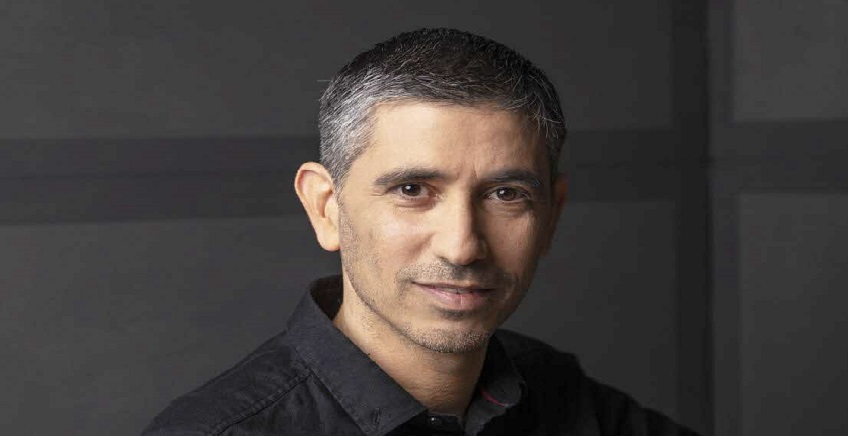

[In the photo: Eyal Bar-Oz. Credit: PR]
Webiz sits precisely at the intersection where the tech industry is changing: between development services for large companies undergoing transformation, and a new generation of entrepreneurs building products on their own using AI. The company’s CEO, Eyal Bar-Oz, lives in both worlds — managing global teams on one hand while launching products himself on the other. “There are many changes in the industry… I personally launched four products. What used to take six months of work, I now do alone.”
According to Bar-Oz, artificial intelligence is creating a sharp divide between new startups and large enterprises. Startups, he says, hardly need development teams anymore. “Startups and new companies barely outsource developers, because the product is built from scratch using AI tools. Today you can reach a POC independently.”
Large organizations, however, require more manpower than ever. “In big companies with legacy systems you can’t replace everything with AI. You need to maintain the existing while introducing the new. Transformation requires more people.”
The result, he predicts, will be an explosion in the number of companies. “We will see far more startups — 100 times more. Anyone can start one. It will allow more countries to become startup nations.”
The developer role is changing — and the winners
The most dramatic shift is happening inside the profession itself. Coding is no longer the center. “Being only a coder is no longer relevant.”
Front-end development, he argues, is already fading: “Today you can build it with vibe-coding tools. We see far fewer front-end hires. In a few years it won’t be relevant.”
In its place emerges a new role — the AI-era full stack. “Full stack today means understanding product, infrastructure, data, project management and DevOps. Being a wrapper.”
The biggest beneficiaries, he says, are product professionals. “Product people are the biggest winners of the revolution — the Steve Jobs types.”
Developers, in turn, will have to evolve into that role: “It will be interesting to see how they bring out the product person within themselves.”
Despite the rise of individual productivity, Bar-Oz sees renewed logic in the return to the office. “Collaboration creates human value. That’s the advantage of humans over AI. The power of the team is stronger than the individual.”
As for SaaS, he rejects claims the model is dying. “SaaS isn’t dead. There’s security, backup and storage… the market volatility reflects uncertainty, not existential risk.”
The academy: teaching people to build alone
Against this backdrop, Webiz is launching a new international training academy. The courses are no longer traditional programming studies but training a single person to create a product.
“AI-era entrepreneurship — from A to Z in a month — so you can reach a POC alone, without a designer, without product, without a developer.”
Demand comes directly from what the company observes in the market. “We see startups doing the process independently, so we want to teach it.”
The curriculum focuses on data, product thinking and AI tools. “The world needs to learn much more than before. If people don’t adapt, they won’t survive.”
The academy will operate in Israel and Georgia, Webiz’s main activity hub. “We’re launching our first course in Georgia next month… People are very confused right now, and the courses also provide mentoring.”
Ultimately, Bar-Oz describes a tech industry that is not shrinking but splitting: more solo entrepreneurs on one side, massive organizations needing more workers on the other — and in between, one person with an idea and AI tools.