NVIDIA Launches AI Models for Quantum Processor Calibration and Error Correction

By Yohai Schwiger

NVIDIA has announced NVIDIA Ising, a family of open-source AI models aimed at accelerating the development of quantum computers capable of running practical applications. The models focus on two of the field’s most critical challenges: precise quantum processor calibration and quantum error correction—engineering hurdles that currently limit the scalability of quantum systems.

Quantum computing relies on qubits—units of information that are highly sensitive to environmental noise. As a result, quantum systems are inherently unstable, prone to errors, and require continuous calibration alongside complex error-correction mechanisms. Without effective solutions to these issues, scaling such systems and running real-world workloads remains difficult.

The Ising family is designed to directly address these challenges using AI-based tools. One of its key components, Ising Calibration, is a vision-language model (VLM) capable of analyzing measurements from quantum processors and responding in real time. According to NVIDIA, the model can reduce calibration processes from days to hours by automating adjustments, while relying on a significantly smaller model footprint compared to existing approaches.

Another component, Ising Decoding, is based on a 3D convolutional neural network designed for real-time decoding in quantum error correction. It is offered in two variants—optimized for speed or accuracy—and demonstrates improved performance over existing tools, delivering faster processing and higher accuracy in decoding tasks.

The models are accompanied by supporting tools, training data, and microservices, enabling developers to tailor them to specific hardware architectures and use cases. NVIDIA emphasizes that the models can run locally, allowing organizations to maintain full control over their data and infrastructure.

The technology is already being adopted by a range of industry players, including quantum companies such as IonQ and IQM Quantum Computers, as well as leading research institutions like Harvard, Fermilab, and Lawrence Berkeley National Laboratory.

Beyond its functional capabilities, the launch reflects a broader approach by NVIDIA to integrating AI with quantum computing. The two central challenges—calibration and error correction—are fundamentally problems of real-time pattern analysis. Quantum systems generate streams of noisy, non-linear measurement data, and the task is to interpret and respond to these signals efficiently. In this context, deep learning models are particularly well suited, as they excel at identifying complex statistical structures and operating under uncertainty.

The Calibration model effectively serves as a “perception layer” for the quantum system: it receives data from the hardware, interprets it, and determines how to adjust the system. Meanwhile, the Decoding model operates across a vast space of possible error configurations, estimating the most likely solution in real time. This represents a shift from rigid algorithmic approaches toward learning-based methods that leverage statistical generalization rather than exhaustive computation.

At the same time, NVIDIA is not positioning Ising as a large-scale language model in the traditional sense. Instead, it applies advanced AI architectures tailored to specific tasks. The models themselves are relatively compact, require less training data, and are optimized to operate in complex and sensitive computational environments.

Ising integrates into NVIDIA’s broader quantum computing platform, which includes CUDA-Q for quantum application development, cuQuantum for GPU-accelerated simulation, and NVQLink for connecting quantum processing units (QPUs) with GPUs. Together, these components are designed to enable hybrid systems in which quantum and classical computing operate in tandem.

From a market perspective, quantum computing remains at a relatively early stage, but is expected to grow as solutions to error correction and scalability challenges mature. In this context, the use of AI as a system-level control layer could become a key factor in advancing the field.

The launch of Ising reflects an emerging view that quantum computing is not solely a physics or hardware challenge, but also a software and machine learning problem. The central question is whether this approach will gain traction as an industry standard—and to what extent it will help bridge the gap between experimental systems and practical quantum computing.
Credo to Acquire DustPhotonics for $750 Million

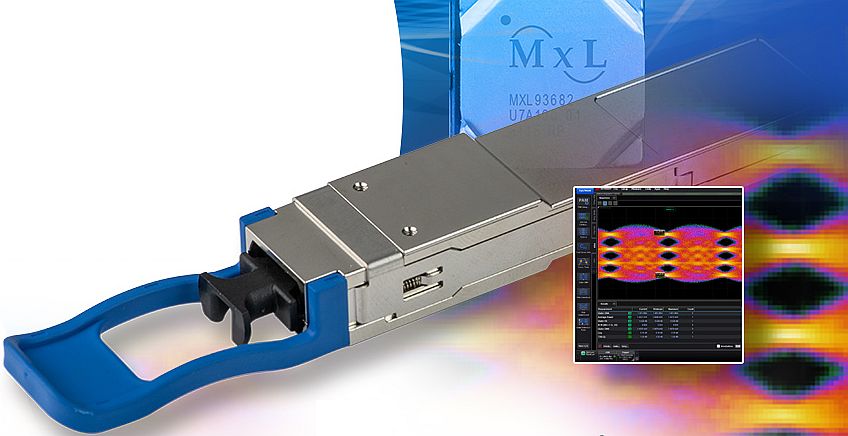
Credo Technology has entered into a definitive agreement to acquire Isdraek-based DustPhotonics, a leading developer of Silicon Photonics Photonic Integrated Circuit (SiPho PIC) technology for optical transceivers. The acquisition will position Credo with a vertically integrated connectivity stack spanning SerDes, Digital Signal Processing (DSP), Silicon Photonics and system integration for scale out and scale up networks.

Credo will acquire DustPhotonics for upfront consideration of $750 million cash and approximately 0.92 million shares of Credo common stock, subject to the terms and conditions of the definitive agreement. In addition, Credo may pay incremental contingent consideration of up to approximately 3.21 million shares based on the achievement of certain financial milestones. The transaction is expected to close in the second quarter of calendar 2026, subject to customary closing conditions and regulatory approvals.

DustPhotonics is a fabless semiconductor company developing SiPho PICs for high-speed optical transceivers. Founded in 2017 and headquartered in Israel, DustPhotonics has developed a differentiated PIC portfolio spanning 400G, 800G, and 1.6T, with a roadmap that extends to 3.2T, and with integrated and external laser configurations. DustPhotonics has assembled a team of approximately seventy employees with deep expertise in photonic integration. The company operates a fabless model and has secured design wins with leading hyperscale cloud customers, providing a platform for expansion.

Since its founding, the company has raised approximately $84 million in capital. The acquisition of DustPhotonics accelerates Credo’s optical interconnect roadmap and expands its served addressable market in the global optical industry. DustPhotonics has developed a differentiated portfolio of SiPho PICs spanning 400G, 800G, and 1.6T, with a roadmap extending to 3.2T, that integrates key optical functions onto a single chip, reducing component complexity, improving manufacturing yields, and enabling meaningfully lower cost at scale as port speeds advance beyond 800G. These SiPho PICs are deployed in transceivers at leading hyperscale AI clusters and are also in design for leading Near Port Optics (NPO) and Co-Packaged Optics (CPO) applications.

SiPho PIC technology is a foundational component of Credo’s ZeroFlap (ZF) Optical Transceiver platform. Bringing this capability in-house mitigates external supply dependencies, accelerates product development cycles, and creates a pathway to substantial cost structure improvement at volume. Combined with Credo’s industry-leading SerDes and DSP intellectual property and products, the acquisition creates an end-to-end optical connectivity solution platform.

Credo believes it has reached an inflection point in its optical business. With the addition of DustPhotonics, the company expects its combined portfolio of ZeroFlap Optical Transceivers, Optical DSPs, and Silicon Photonics products to generate greater than $500 million in optical revenue in fiscal 2027, reflecting strong customer traction and expanding adoption across hyperscale AI deployments.

Nano Dimension Sells Off Its PCB Printing Business

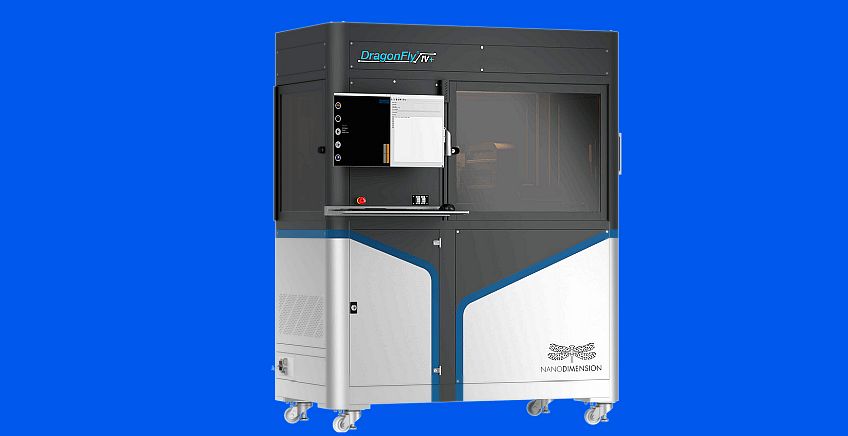
Image: DragonFly system for on-demand 3D printing of printed circuit boards (PCBs)

By Yohai Schwiger

Nano Dimension is divesting the business that once defined it. The company announced the sale of its Additively Manufactured Electronics (AME) division to Inspira Technologies in a deal worth up to $12.5 million. The transaction includes $2 million in cash at closing and up to $10.5 million in performance-based payments over the coming year.

Under the agreement, Inspira will acquire not only AME’s product lines but also its intellectual property, engineering know-how, manufacturing and laboratory infrastructure, and parts of its workforce. Operational control will transfer immediately, while formal closing remains subject to regulatory approvals.

The move carries both symbolic and strategic weight. AME is built around Nano Dimension’s original breakthrough: on-demand manufacturing of printed circuit boards using systems such as the DragonFly. Developed in Ness Ziona, the technology aimed to revolutionize electronics development by allowing engineers to print functional circuit boards in-house, dramatically shortening prototyping cycles.

The deal also includes what remains of the Fabrica product line—high-precision micro-3D printers originally developed by Israel’s NanoFabrica, which Nano Dimension acquired in 2021 for approximately $55–60 million. The company estimates the divestment will reduce its annual cash burn by around $10 million.

A Bargain Sale of a Once-Promising Technology

The buyer is intimately familiar with the technology it is acquiring at what appears to be a steep discount. Inspira is a relatively small Nasdaq-listed company with a market capitalization of about $20 million. It operates primarily in the medical device space, focusing on advanced respiratory systems that also monitor blood parameters.

In 2025, the company reported less than $300,000 in revenue and a net loss exceeding $13 million, reflecting its early commercialization stage and ongoing search for growth directions.

Its CEO and founder, Dagi Ben-Noon, is no stranger to Nano Dimension. He was one of the company’s co-founders and a key developer of its PCB-printing technology, serving as COO in its early years before leaving around 2017. That same year, he founded Inspira.

Announcing the deal, Ben-Noon said: “We have deep and intimate knowledge of the AME technology, and we believe in our ability to unlock its potential in new directions.”

Inspira plans to repurpose the technology for quantum computing applications—specifically, for building components used in dilution cryostats, ultra-low temperature cooling systems required to operate quantum processors at near absolute zero (10–20 millikelvin). The company believes AME’s ability to produce complex 3D electronic structures could help address connectivity challenges inside these systems.

Dual Strategy: Medical Devices and Quantum Ambitions

Inspira emphasized that its core medical device business will not be abandoned. Instead, it will be transferred into a wholly owned subsidiary and continue operating independently. This effectively creates a dual-structure company: one arm focused on medical technologies, and another on quantum computing—an area that appears to be emerging as its primary strategic focus.

The company is even planning a rebranding to “QTREX” to reflect this shift.

From Breakthrough Promise to Strategic Exit

Founded in 2012, Nano Dimension set out to transform electronics manufacturing with its inkjet-based PCB printing technology, combining conductive and insulating materials in a layered 3D process. The technology achieved notable milestones, including the production of aerospace-grade circuits with embedded passive components such as capacitors, resistors, and coils.

The vision attracted significant investor enthusiasm. The company raised hundreds of millions of dollars through public and private offerings, peaking in 2021 with approximately $1.4 billion in cash on its balance sheet.

However, commercial adoption fell short of expectations. Over time, Nano Dimension shifted its focus through a series of acquisitions, most notably Markforged, which specializes in metal and advanced materials printing.

The company also pursued additional acquisitions that, in retrospect, appeared less cohesive, including an unsuccessful attempt to acquire Stratasys. Management turbulence followed, culminating in the departure of CEO Yoav Stern.

Gradually, electronic printing products faded from investor discussions, and Nano Dimension repositioned itself as a broader digital manufacturing solutions provider. At the same time, its geographic center of gravity moved away from Israel.

Last week, the company announced a re-domestication process expected to conclude in the first half of 2026, after which it will operate as a fully U.S.-based company.

Against this backdrop, the sale of the AME and Fabrica businesses marks more than a divestment—it represents a definitive exit from the technology and geography that once defined Nano Dimension. Technologies that attracted hundreds of millions of dollars in investment are now being sold for up to $12.5 million.

Q-Factor to Build Million-Qubit Quantum Computer

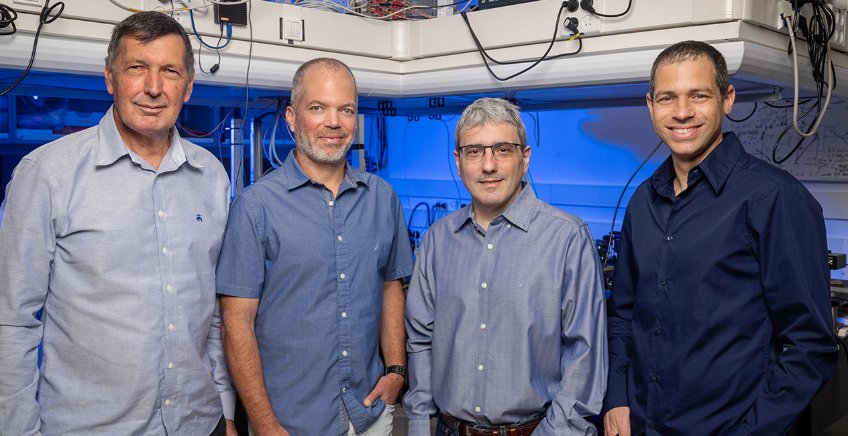
Photo above (left to right): Prof. Nir Davidson, Dr. Guy Raz, Prof. Yoav Sagi, Prof. Ofer Firstenberg

Tel Aviv based  Neutral Atom quantum computing company, Q-Factor, announced $24 million in seed funding. The round was led by NFX and TPY Capital, with participation from Intel Capital, Korea Investment Partners, Deep33, and the Matias family. The Technion and Weizmann Institute of Science are also shareholders in the company. Neutral atoms have rapidly emerged as one of the most promising approaches to quantum computing. They are naturally inert, capable of holding quantum information for extended periods, yet precisely controllable using light alone, without the need for extreme cooling or complex wiring.

However, current quantum computers remain too small by orders of magnitude to deliver real commercial value. Breaking past a few thousand qubits to the hundreds of thousands or millions required for useful computation demands. Q-Factor was founded to tackle this challenge. Q-Factor was founded by Prof. Nir Davidson, a world-renowned authority in ultracold atoms with 280 published papers and former dean of physics at the Weizmann Institute of Science; Prof. Ofer Firstenberg of the Weizmann Institute, an expert in quantum optics and Rydberg atoms, formerly of Harvard and MIT; Prof. Yoav Sagi of the Technion, a leading authority in neutral-atom manipulation, formerly of JILA and the University of Colorado; and Dr. Guy Raz, a physicist with 20 years of technical leadership for multiple deep tech startups.

The founders closely analyzed the limitations of current neutral atom quantum computing, and have identified the architectural bottlenecks that prevent current platforms from scaling beyond a few thousand qubits. Q-Factor has developed an approach to overcome them and scale to over one million. “The quantum computing industry needs a revolution, not an evolution,” said Prof. Ofer Firstenberg, co-founder and chief scientist of Q-Factor.

“Current systems are too small to deliver on the promise of quantum computing, and incremental improvements alone aren’t going to close that gap. We’ve developed an architecture designed for continuous scalability, a Moore’s Law-like trajectory that can take neutral atom systems from thousands of qubits to millions and beyond.”

“Q-Factor’s founding team combines world-class scientific depth with a clear-eyed understanding of what it will take to build a commercially viable quantum computer,” said Lisa Cohen, Investment Director at Intel Capital. “They’ve watched the field evolve, learned from the challenges others have encountered, and assembled the right expertise to tackle the hardest remaining problem in quantum computing: scale.”

Stop Chasing the Next Model — Fix Your Data

Imagine hiring the best chef in the world. They have a state-of-the-art kitchen, premium knives, a skilled team — everything needed to create a perfect dish. And then you hand them wilted vegetables, expired meat, and a sauce that’s been left out for two days.
You might still get a plate that looks impressive — but the first bite will be a disaster.

That’s more or less what’s happening today in thousands of organizations rushing to adopt the next AI model, without stopping to examine what they’re feeding into it. The arms race between Anthropic, OpenAI, and Google generates headlines almost weekly — but it also creates a smokescreen. As executives scramble to check the “we have AI” box, they often skip the least glamorous — and most important — question: is the underlying data even fit for use?

Take, for example, an airline launching an AI-powered customer service assistant. The company invests heavily, connects it to internal databases, and presents a polished demo to the board. On paper, everything looks great. In reality, the system relies on poorly maintained data: baggage policies updated in one system but not another, destination names appearing in multiple formats, and refund information spread across three systems that don’t always align.

The result? One customer is told they’re allowed a suitcase, another is told they’re not, and a third is issued a refund they weren’t entitled to. This is no longer just a bug — it’s operational, service, and reputational damage.

This is where much of today’s confusion begins.

Many people talk about models as if they’re the magic itself — as if choosing the right model automatically delivers intelligence, accuracy, and value. But a model isn’t magic. It’s an engine. And if you feed it duplicate, incomplete, inconsistent, or outdated data, it won’t fix reality. At best, it will recycle the problem. At worst, it will do so fluently, quickly, and with complete confidence.

We used to call this “Garbage In, Garbage Out.” Today, it’s far more dangerous — because the garbage out no longer looks like a mistake. It looks like a professional answer.

And that’s what makes this issue so critical. Once AI systems start influencing decisions — in customer service, pricing, marketing, healthcare, banking, or operations — data quality stops being just a “data team” problem. It becomes everyone’s problem.

Data preparation is the Cinderella of the tech world: unglamorous, painstaking, invisible work — but without it, the entire promise of AI collapses.

What does that actually mean in practice? Not just “cleaning data,” but ensuring it is complete, consistent, reliable, and up to date. It sounds basic, yet in many organizations this is exactly where things fall apart: the same customer appears in multiple versions, the same product is described differently across systems, one policy is updated while another isn’t, prices differ between the website and the CRM. All this chaos is fed into a model — and people expect a miracle.

There won’t be one. At best, you’ll get a decent-looking demo that barely works.

Of course, models do matter. There are real differences between them, and in some cases those differences are significant. But in many organizations, model selection isn’t the primary problem. The real issue is that leaders want to feel like they’re “in the game” — without doing the slow, messy, unsexy work of building solid data foundations.

And that’s exactly the work that separates organizations experimenting with AI from those actually generating value from it.

So before asking “which model should we choose?”, it’s worth asking three far less exciting questions: what data are we relying on, who is responsible for its quality, and what price are we already paying because it isn’t good enough?

That’s the real story: data doesn’t just determine whether an AI system works — it determines whether it saves money, wastes money, improves service, or creates damage at a scale and speed we’ve never seen before.

The race for the next model will keep making headlines. But the real question isn’t who won this week’s benchmark — it’s who is finally willing to fix their raw materials.

ParaZero Deepens Defense Shift with XTEND Partnership

[Image credit: ParaZero]

By Yohai Schwiger

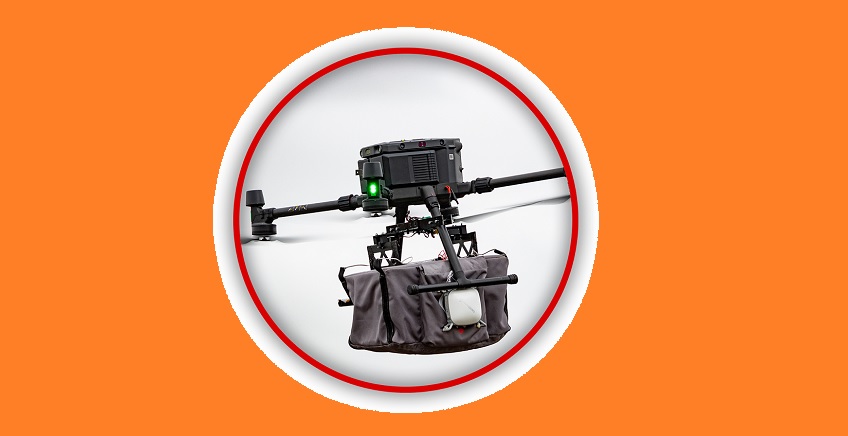
A collaboration between two Israeli drone companies is targeting the defense market: ParaZero has announced a strategic partnership with XTEND, under which XTEND will integrate ParaZero’s Net Pod into its Scorpio 1000 interceptor drone. The system deploys a net designed to capture hostile drones and is embedded as the interception mechanism within XTEND’s platform.

The combination of XTEND’s fast, semi-autonomous drone with ParaZero’s capture capability is designed to deliver a non-destructive counter-drone solution. Instead of destroying a target, the interceptor drone pursues it and captures it using a net. This so-called “soft-kill” approach is particularly suited for urban environments and sensitive infrastructure, where kinetic interception could cause collateral damage.

First order likely tied to partnership

The Net Pod is a compact interception module that includes a deployable net and a rapid-launch mechanism. It operates without explosives, using pressurized gas to propel the net forward. Upon deployment, the net opens within a fraction of a second, with weighted edges allowing it to spread and envelop the target drone. The net entangles the propellers, disrupting flight and causing the drone to lose lift and fall. Its lightweight, modular design enables integration across multiple platforms, including interceptor drones, without significantly impacting performance.

The partnership was announced in late March. Just days later, ParaZero reported an order worth over $650,000 from a “Tier-1 international drone interception company,” including a commitment to purchase at least 2,000 Net Pod units. While the customer was not disclosed, the timing, product type, and reference to platform integration strongly suggest XTEND — potentially marking the first commercial execution of the partnership.

The Net Pod is part of ParaZero’s broader DefendAir system, a multi-layered counter-drone solution that includes ground-based detection (such as radar and sensors), command-and-control systems, interceptor drones, and handheld tools. Within the XTEND partnership, ParaZero supplies only the Net Pod component, delivered under an OEM model that allows integration into third-party platforms.

From civilian safety to defense growth

The latest move reflects a broader transformation at ParaZero. Founded in 2014, the company initially focused on drone safety systems, developing parachute solutions (SafeAir) to prevent crashes in populated areas. It later expanded into precision airdrop systems (DropAir). Today, ParaZero is increasingly focused on the defense market, particularly counter-drone technologies.

In a recent shareholder letter, the company’s CEO described 2025 as a “transformational year,” stating that ParaZero is “positioning itself as a Tier-1 defense provider and focusing on execution and sales in the defense market.” Financial results reflect a company in transition: revenue reached approximately $1.05 million in 2025 (up about 12%), while net losses widened and operating expenses increased significantly. At the same time, ParaZero reported approximately $1.28 million in orders early in 2026 — exceeding its full-year 2025 revenue.

In recent months, ParaZero has announced multiple business developments, including partnerships with drone companies, orders from defense customers in Israel and abroad, distribution agreements in Europe, and live demonstrations for NATO-related stakeholders — all part of an effort to establish a foothold in the growing counter-UAS market.

ParaZero is listed on the NASDAQ with a market capitalization of roughly $20 million, reflecting its early-stage position. The company went public in July 2023 at a valuation of around $50 million, and its stock has since lost nearly 70% of its value.

Three Israeli Companies Named Among Intel’s Top Global Suppliers for 2026

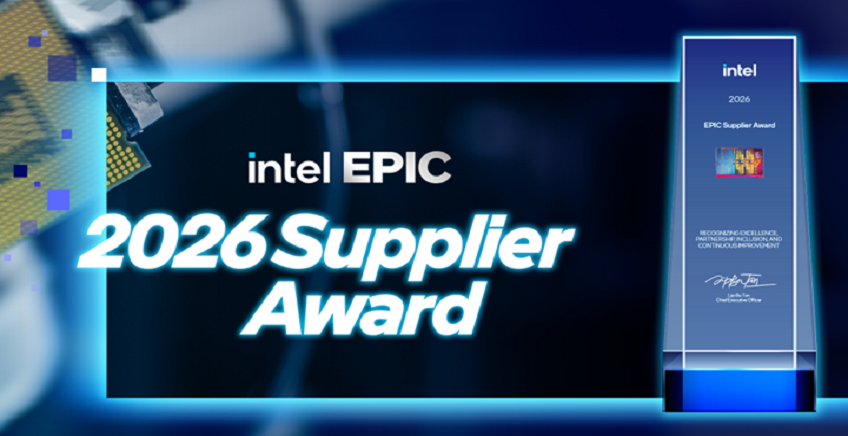
Intel has announced the recipients of its 2026 EPIC Supplier Award, the company’s highest recognition for business partners. Selected from thousands of suppliers worldwide, only a small group of companies demonstrating exceptional performance across key metrics — Excellence, Partnership, Inclusion and Continuous Improvement — make the final list. This year, three Israeli firms — Camtek, Nova and U.P.Pro — secured their place among the global elite.

The EPIC award is considered a key indicator of which companies play a critical role behind Intel’s advanced manufacturing operations. Winners span a broad range of capabilities, from semiconductor equipment and inspection systems to materials, cleaning solutions and operational services. Alongside the Israeli companies, the list includes global players across the semiconductor value chain, reflecting the complexity and scale of Intel’s supply ecosystem.

Within this ecosystem, the three Israeli companies represent distinct yet complementary layers. Camtek provides inspection and metrology systems used directly on semiconductor production lines, scanning wafers to detect defects and improve yield. Nova, a global leader in metrology, delivers advanced measurement solutions that enable precise control over manufacturing processes — from material composition to structural layers. Intel has maintained a long-standing relationship with Nova, including early-stage collaboration and investment.

U.P.Pro operates in a different domain: supply chain optimization. The company provides tools and systems for managing suppliers, inventory flows and complex operational processes, helping Intel maintain continuity across highly sensitive manufacturing environments.

Together, the three companies illustrate the depth of Israel’s integration into the core of Intel’s operations — not merely as component suppliers, but as strategic partners embedded in the most critical stages of semiconductor manufacturing in the AI era.