Intel’s New vPro Can Automatically Detect and Repair PC Issues

Intel has unveiled the latest generation of its enterprise PC platform, vPro, introducing new capabilities in cybersecurity, remote management, and AI-driven system diagnostics—including the ability to detect and resolve issues before users are affected.

The new platform is built on Intel Core Ultra Series 3 processors manufactured using the company’s 18A (2-nanometer-class) process, alongside Xeon 600 processors and the new Arc Pro B-series graphics cards. It is designed to deliver enterprise-grade security, manageability, and resilience—features not typically found in consumer PCs.

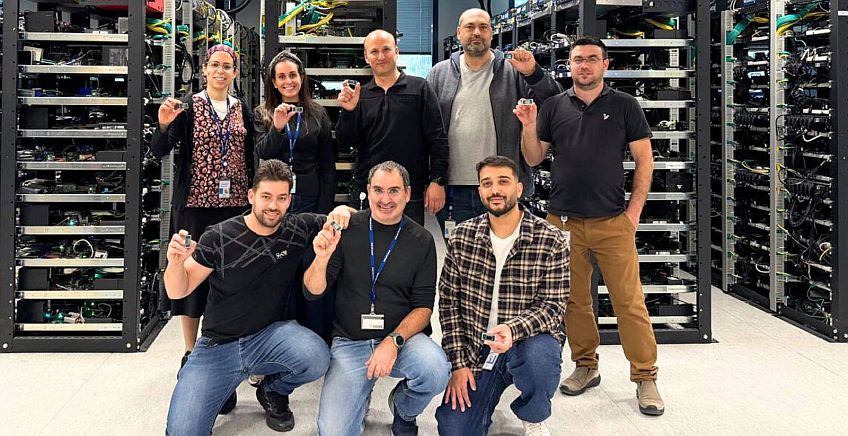
For Intel’s Israeli operations, the launch carries symbolic weight. Exactly 20 years ago, the first generation of vPro was defined and developed by Intel engineers in Israel. Today, Intel Israel continues to lead much of the platform’s architecture, development, and support, with nearly 200 engineers involved across its lifecycle.

Unlike conventional security solutions that operate within the operating system, vPro is built on a combination of hardware and software components that function independently of the OS. This architecture allows systems to be monitored, secured, and even repaired remotely—even if the operating system has been compromised or is completely non-functional.

The platform includes a dedicated microcontroller and a separate operating environment that can verify system integrity during boot, before the OS loads. In some cases, systems can even be managed while powered off, thanks to components that operate via the motherboard’s internal power supply.

Beyond its technical architecture, vPro also serves as a strategic business framework for Intel. It functions as a certification standard for enterprise PCs, requiring manufacturers to integrate Intel hardware—such as CPUs, chipsets, graphics processors, and connectivity components—and meet specific performance, security, and manageability criteria in order to receive vPro certification.

The newly released version introduces several upgrades, including total storage encryption and AI-based telemetry capabilities. These allow the system to identify potential failures in advance and automatically resolve them, as well as detect malicious activity through behavioral “fingerprinting.”

Intel has also expanded its remote management offering, vPro Fleet Services, with a shift toward a SaaS-based model that enables IT teams to connect and manage devices directly via the cloud.

According to Intel engineers involved in the project, the platform’s development is distributed across multiple sites, with hardware primarily developed in Haifa and firmware in Jerusalem, while some AI components are developed globally.

The renewed focus on remote management follows high-profile system failures in recent years, including the widespread disruption caused by a faulty cybersecurity update from CrowdStrike in July 2024. The incident led to global outages affecting airlines, hospitals, and financial systems. According to Intel, systems equipped with vPro were able to recover significantly faster, as IT teams could remotely access affected machines and remove faulty components.

Intel says the latest iteration of vPro is designed to streamline recovery processes further, enabling fixes to be deployed remotely—either via OEM supply chains or through Intel’s cloud services—while adhering to strict identity verification and security standards.

[Image: Intel engineers in Jerusalem working on the vPro platform. Credit: Intel]

NoTraffic Raises $90 Million to Expand North American Operations

Israeli traffic management startup NoTraffic has raised $90 million in a Series C funding round led by PSG Equity, with participation from M&G Investments, Grove Ventures, LifeX, Next Gear Ventures, and Meitav Investment House. The latest round brings the company’s total funding since its founding in 2017 to $165 million.

According to the company, its platform is expected to be deployed across approximately 10% of cities and transportation departments in the United States and Canada by mid-2026.

NoTraffic develops an AI-based platform designed to manage signalized intersections in real time. By combining IoT sensors, cloud computing, and machine learning, the system replaces traditional traffic light models—typically based on fixed timing schedules—with a dynamic, responsive approach.

Installed directly at intersections, the platform identifies and classifies different types of road users—from private vehicles to pedestrians and micromobility—and continuously optimizes signal timing based on real-time traffic conditions, municipal policies, and changing demand.

The system is already deployed in hundreds of cities across North America, including major metropolitan areas such as Phoenix, Houston, and Oklahoma City. Among its capabilities, it enables prioritization for emergency vehicles and public transportation.

Based on data from multiple deployments, the company reports double-digit improvements in traffic flow, reduced travel times, shorter pedestrian wait times, and gains in safety metrics, alongside lower emissions.

A central component of NoTraffic’s model is its “Mobility Store”—an app-store-like layer that allows cities to add new capabilities on top of the existing infrastructure, such as advanced traffic analytics, public transport prioritization, or safety event detection, without requiring hardware upgrades.

This approach aligns with the broader shift toward software-defined infrastructure, in which physical systems—such as traffic lights and intersections—are increasingly managed through continuously updated software layers. For cities, this enables more flexible, real-time traffic policy management without the need for costly and complex infrastructure overhauls.

[Image: NoTraffic smart intersection system deployed in an urban setting. Credit: NoTraffic] 

AIR Reports $1 Billion Order Backlog for Electric Aircraft

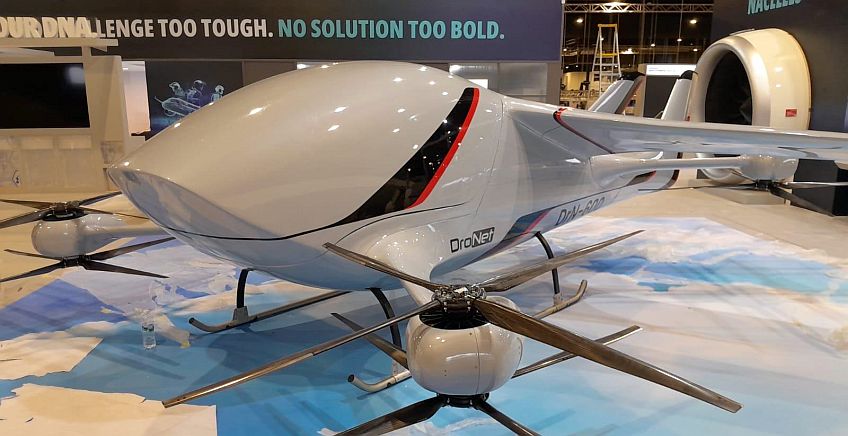
Israeli eVTOL developer AIR says it has surpassed $1 billion in its order backlog, driven primarily by early demand for its personal electric aircraft, the AIR ONE.

According to the company, the backlog includes approximately 3,290 pre-orders for the two-seat AIR ONE, alongside more than 25 orders for unmanned cargo aircraft.

At the same time, AIR reported revenues of over $35 million, largely generated from the sale and delivery of heavy-lift unmanned aerial systems (UAS), ground control stations, spare parts, and service packages—segments where the company is already making customer deliveries.

The AIR ONE is a two-seat electric aircraft designed for personal use. It is expected to offer a range of around 160 kilometers, a top speed of up to 250 km/h, and a payload capacity of approximately 250 kilograms. AIR positions the platform as an intercity personal mobility solution, emphasizing simplified operation, multiple safety systems, and a digital control layer aimed at enabling use by non-professional pilots.

Orders for the aircraft are based on a pre-order model, under which customers place a $1,000 refundable deposit to secure a future delivery slot. Actual deliveries will depend on regulatory progress and the company’s transition to serial production.

Beyond the consumer market, AIR is also active in cargo aviation and defense-related applications. The company has already delivered cargo platforms to customers, including defense and logistics organizations, and is continuing to develop additional capabilities in this segment.

In recent months, AIR completed the establishment of its first production line in Israel, enabling the parallel assembly of multiple aircraft as part of its ramp-up strategy.

The company is also advancing regulatory processes in the United States, including engagement with the Federal Aviation Administration (FAA), while working to expand its footprint in the U.S. market.

“The rapid expansion of the smart aircraft market, combined with AIR’s capabilities, is expected to reshape the future of efficient and accessible transportation,” said founder and CEO Rani Plaut. “Our mission is to make aviation routine and accessible, bridging private, commercial, and defense use cases.”

[Image: AIR ONE two-seat electric aircraft prototype. Credit: AIR]

HP Indigo Signs Largest Deal in Its History Worth Hundreds of Millions of Shekels

Israeli digital printing company HP Indigo has announced the largest deal in its history, signing an agreement worth hundreds of millions of shekels with U.S.-based Shutterfly. Under the deal, Shutterfly will upgrade its entire B2-format industrial print fleet to the HP Indigo 120K, the company’s fifth-generation press.

The agreement covers not only the printing systems themselves, but also the supply of consumables and services over a three-year period.

The deal was finalized during a sensitive period, after Shutterfly’s management canceled a planned visit to Israel due to the security situation. Despite this, both sides proceeded as scheduled—an outcome seen by industry observers as a vote of confidence in HP Indigo’s ability to deliver under uncertain conditions.

The upgrade is expected to significantly enhance Shutterfly’s production capabilities, particularly in terms of throughput, capacity, and print quality, while enabling it to better handle seasonal demand spikes. The 120K model is designed for high-volume, continuous industrial printing and has become a key growth driver for HP Indigo in recent years.

Founded in 1999, Shutterfly is a leading U.S. provider of personalized products and digital printing services. Its business is built around a print-on-demand model, allowing users to upload personal content and turn it into physical products ranging from photo books and albums to gifts and home décor. The company also operates a B2B division offering marketing and print solutions to enterprises, as well as a school photography arm through Lifetouch. Since 2019, Shutterfly has been privately held by Apollo Global Management.

The latest agreement builds on a long-standing relationship between the companies spanning roughly 25 years, dating back to the installation of Indigo’s first press at Shutterfly in the early 2000s. Over time, the partnership has evolved into a strategic collaboration, with Shutterfly consistently adopting HP Indigo’s latest technologies.

The deal follows another major agreement announced earlier this year with packaging company ePac, valued at approximately ₪150 million. In that case, ePac purchased 12 Indigo 200K presses along with consumables and services for three years. Compared to that transaction, the Shutterfly deal—defined as larger and involving a full fleet upgrade—suggests a significantly broader deployment, although the exact number of systems has not been disclosed.

HP Indigo is widely regarded as a global leader in digital printing, with an estimated market share of around 70% and more than 7,500 systems installed across over 115 countries. Its operations in Israel, including R&D and manufacturing in Ness Ziona and Kiryat Gat, represent a meaningful contribution to the local economy, accounting for roughly 0.5% of GDP and about 2% of high-tech exports.

[Image: HP Indigo 120K digital press. Credit: HP Indigo]

TSG Goes on Acquisition Spree to Build End-to-End Drone Interception System

TSG, an Israeli company specializing in command-and-control (C2) systems, is accelerating its entry into the fast-growing counter-drone defense market, following a series of deals that signal a strategic shift in its business model.

In a filing to the Tel Aviv Stock Exchange on Monday, the company announced it had signed a binding agreement to acquire Mabat 3D Technologies, while also signing memoranda of understanding to invest in drone company Robotican and to acquire defense manufacturer Production Floor. According to TSG, all three companies align with its strategy to expand its footprint in the defense sector, with a focus on solutions for detecting and countering UAV and drone threats.

In a presentation released alongside its annual results, TSG framed these moves as part of a broader plan to build a comprehensive drone interception system—an integrated solution combining AI-based command-and-control software, connections to radars and sensors, and interceptor and capture drones.

Sensing, effectors, and manufacturing

The acquisition of Mabat adds a sensing and mapping layer to TSG’s capabilities. Based in Herzliya, Mabat specializes in 3D mapping and documentation using LiDAR technologies and provides solutions to defense customers. TSG says these capabilities will support the creation of precise spatial situational awareness, enabling improved detection, analysis, and operational planning in counter-drone systems.

Mabat generated approximately NIS 17.8 million in revenue in 2025, with operating profit of about NIS 4 million. The upfront consideration stands at roughly NIS 14.4 million, with contingent payments that could bring the total deal value to around NIS 45 million.

The planned investment in Robotican adds the effector layer. Under the terms of the MOU, TSG intends to invest $9 million for a 26% stake. Robotican, based in Omer, develops autonomous aerial and ground systems for intelligence and interception missions, including drones designed to capture hostile UAVs.

The move highlights TSG’s adoption of a growing concept in modern warfare: drones intercepting drones. This approach is gaining traction as it offers a more precise and cost-effective response to low-cost threats, reducing reliance on expensive missile-based interception systems.

The third deal, a proposed $5 million acquisition of Production Floor, adds manufacturing and integration capabilities. The Tirat Carmel-based company provides end-to-end production services, including engineering, manufacturing, assembly, and integration of complex systems, primarily for defense customers. This layer is intended to give TSG greater control over delivering fully integrated operational systems—not just software.

The core: TSG’s C2 backbone

At the center of this strategy is TSG’s core expertise in command and control. The company develops systems used for managing national airspace pictures, naval C2, border protection, special operations, and intelligence applications. These systems integrate data from radars, satellites, RF sensors, and other sources, fusing them into a unified real-time operational picture. Among other uses, they support threat trajectory analysis in Israel’s Home Front Command alert system.

In a recent conversation with Techtime, TSG President Pini Yungman described the company’s transition from a provider of core subsystems—primarily C2—to a company aiming to deliver full operational solutions. He said the company is expanding its systems so they not only manage the air picture, but also activate effectors, including interceptor drones. “The company is evolving from managing the air picture to enabling systems that can detect, track, and execute interception as an integral part of the same architecture,” he said.

Yungman also emphasized that one of TSG’s key assets is the data accumulated through its C2 systems, which are embedded in operational environments, including air defense frameworks in Israel. This data includes large volumes of information related to detection, tracking, and interception of threats—particularly UAVs. “The company has a data repository that no other company possesses, built on operational activity and massive volumes of data collected in recent years,” he said, adding that “the systems fuse inputs from multiple sensors, filter noise, and generate accurate predictions—enabling AI to deliver real operational advantage.”

The company’s focus on AI is also reflected in its investor presentation, where it highlights accelerated development of AI capabilities built on its data fusion and C2 expertise, including a dedicated large language model for intelligence and operational systems. The combination of operational data, accumulated experience, and advanced algorithms is presented as a key competitive advantage.

Growth driven by defense momentum

TSG’s strategic push comes on the back of strong financial performance. In 2025, the company reported revenue of approximately NIS 430.3 million, up 33.6% year-over-year. Operating profit reached NIS 37.2 million, net profit totaled NIS 16.3 million, and adjusted EBITDA stood at NIS 63.8 million. The defense segment accounted for NIS 336.5 million, or roughly 78% of total revenue.

The company also highlighted additional business developments in its presentation, including initial deliveries of low-altitude air defense licenses for the U.S. Army, expanded activity in Europe through defense partnerships, entry into markets in Asia and Africa, and new AI-related orders. Together, these moves suggest that TSG sees counter-drone and low-altitude defense not just as a technological direction, but as a major global growth engine.

TAT Continues to Grow, but Supply Chain Disruptions Weigh on Momentum

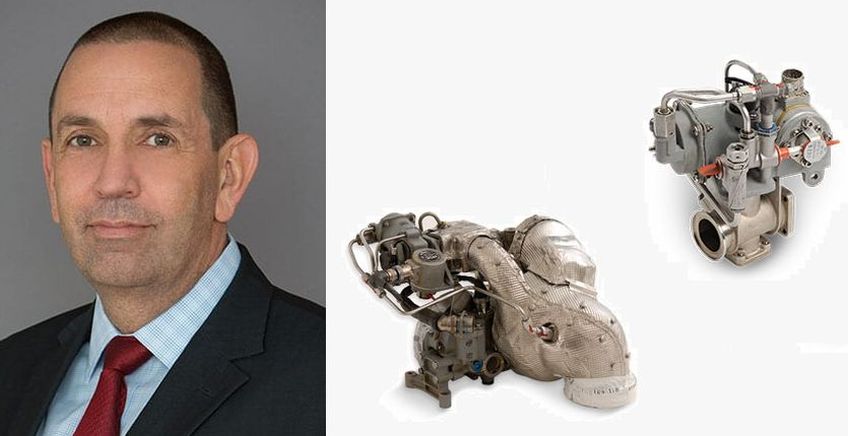
[Image: TAT CEO Igal Zamir alongside power modules supplied by the company for F-16 aircraft]

TAT Technologies reported record results for 2025, continuing its growth trajectory in revenue, profitability, and backlog — but also warned that ongoing and worsening supply chain disruptions could weigh on near-term performance.

According to the company’s annual report released last week, fourth-quarter revenue reached $46.5 million, up 13% year-over-year. For the full year, revenue grew 17% to $178 million, alongside a sharp improvement in profitability: net income rose by about 50% to $16.8 million, while adjusted EBITDA reached $25.5 million, representing 14.3% of revenue.

Demand trends remained strong. The company’s backlog and long-term agreements increased to approximately $550 million, up from $429 million at the end of 2024. Management noted that the growth in backlog was driven בעיקר by new contracts and long-term agreements, rather than deferred work.

At the same time, TAT continues to shift toward maintenance, repair, and overhaul (MRO) services, which now account for more than 71% of revenue. This reflects broader industry dynamics, including extended aircraft lifecycles and delays in new aircraft deliveries, which are driving sustained demand for maintenance services.

The Bottleneck: Supply Chain Constraints

Beneath the strong financial performance, however, lies a significant operational challenge. During the earnings call, management emphasized that supply chain disruptions — which had shown signs of improvement earlier in 2025 — worsened again in the fourth quarter and continue into 2026.

According to CEO Igal Zamir, the impact is most pronounced in two key areas: auxiliary power units (APUs) and landing gear — both complex systems that depend on the availability of numerous components and sub-parts.

“In the last quarter, it completely reversed,” Zamir said. “All of a sudden, we are facing challenges again, especially in APUs and landing gear, with dramatically extended lead times and no advance warning.”

He added that the issue is not necessarily a broad shortage, but rather the unavailability of specific parts — which can delay entire systems:

“When it comes to an engine, there are hundreds of different parts that we need… all it takes is one bolt or one seal or one screw that we need to replace, and we cannot send the engine.”

The implications are both operational and financial. In some cases, the company is forced to procure parts on the open market at higher prices than under contractual terms, putting pressure on margins. Longer turnaround times can also delay revenue recognition.

In addition, management pointed to another structural constraint: a shortage of teardown aircraft, which typically supply used serviceable material (USM). These refurbished components are a key element in the economics of APU maintenance. As airlines continue to keep older aircraft in service, the supply of such parts remains limited.

Looking Ahead: Strong Demand, Supply-Dependent Execution

Despite these challenges, TAT remains optimistic about 2026. The company reported strong intake levels at the start of the year, with demand for MRO services continuing to grow.

The outlook is supported by several factors: a record backlog, newly signed long-term agreements, and a global aviation market that continues to expand while relying more heavily on existing fleets. In addition, TAT’s financial position — including over $50 million in cash and low debt — provides flexibility to invest in growth and pursue acquisitions.

However, management made clear that while demand is not a constraint, execution remains closely tied to supply chain conditions.

“We do not yet see a broad recovery in overall supply chain performance,” Zamir said, adding that the company nonetheless enters 2026 “from a position of strength.”

Shahaf PY Expands into Concrete 3D Printing Manufacturing

By Yohai Schweiger

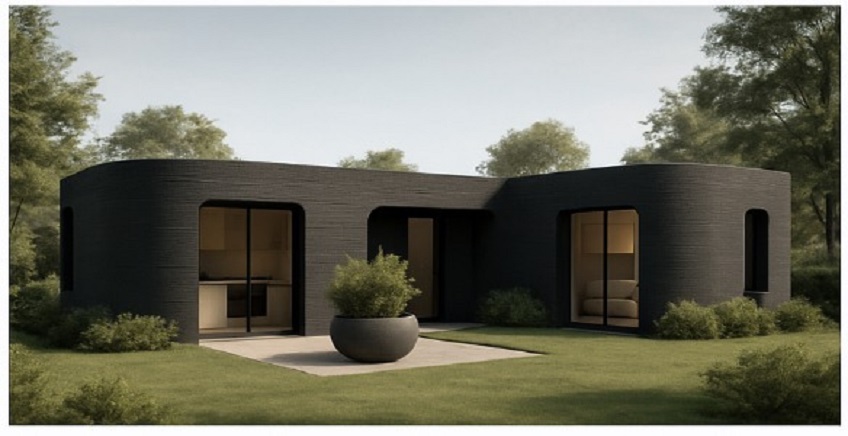
Shahaf PY, a company based in Kibbutz Moran and active in 3D concrete printing for the construction industry, is looking to expand its business model beyond supplying printing systems and build a full manufacturing operation — from service bureaus for prototyping and production runs to the future deployment of robots on construction sites and in defense applications.

According to founder and CEO Eran Carmi, speaking with Techtime, the move is driven by growing demand in the construction sector for solutions that can shorten processes, reduce dependence on manpower, and enable greater design freedom. “There is a shortage of labor in construction, while demand for building continues to rise. Younger generations are less interested in entering construction work, while projects themselves are becoming more complex. This is exactly the space where automation and concrete printing can create real value.”

“Concrete is a living material”

The company’s roots lie in the world of complex architectural projects. About five years ago, it decided to enter the field of printed architecture after identifying a gap between the design vision of architects and engineers and the production capabilities available in the market.

“We went out into the world looking for printers capable of producing facades and complex architectural elements, and realized there were no printers truly designed for architecture, design, and construction,” Carmi said. “The challenge was both scale and raw material, and that is where we realized our advantage would be in concrete printing.”

Shahaf’s system is based on proprietary mixing and feeding systems, printheads, and software developed by the company for large-scale 3D concrete printing in complex geometries. The printing method is FDM — layered printing — but its application in concrete presents very different challenges from those known in plastics or metals. For the physical execution of the print movement, the system is integrated with robotic arms from KUKA and ABB, fitted with printing components developed by Shahaf.

According to Carmi, the core of the technology is not only the machine itself, but the ability to manage a material that changes in real time. “Concrete is a living material. From the moment it meets water, chemical processes begin and its properties change dynamically. That means there must be a very strong connection between the hardware, the software, and the material. You need to precisely control print speed, geometry, and material behavior.”

To address this challenge, the company has also developed software that manages the printing process, plans work paths, supports BIM integration, and aims to translate complex design into industrial execution.

From thermal-management walls in data centers to fortifications

According to Carmi, the technology’s main advantage is its ability to break free from the constraints of traditional formwork and molds. Instead of producing each component according to a rigid قالب, different and complex shapes can be printed in customized form, with relatively fast transitions between versions and products.

“Architects today do not want to remain loyal to a mold,” he said. “Partly because AI tools now allow designs to be generated very quickly, there is a growing need for much more flexible execution.” In his view, the combination of digital planning, robotic printing, and material control opens a new space for formal freedom alongside functional manufacturing.

That capability is not intended only for aesthetics. Shahaf is targeting applications in which geometry itself creates engineering or economic value. These may include walls with internal cavities that can help manage heat in data centers, acoustic walls whose tailored internal structure can significantly reduce the amount of concrete required, complex concrete molds, landscape architecture elements, infrastructure components, roads, large industrial tanks, as well as solutions for marine architecture and underwater systems.

“We are not enslaved to the mold,” Carmi said, “which means we can rethink not only the shape of an element, but also its function.”

This direction aligns with broader needs in the global construction market. The sector faces a chronic labor shortage, rising costs, long schedules, and growing demands for efficiency as well as lower waste and emissions. The cement industry is also one of the most polluting in the world, so any solution that enables structural optimization, reduced material use, and less dependence on manual formwork attracts increasing attention.

For Shahaf, this is not only a technological opportunity but also a business opportunity: offering the construction sector a way to produce complex components faster, with greater flexibility, and with more precise use of material.

A full platform, from AI-based design to on-site printing

Against this backdrop, the company is trying to build a broader business model than system sales alone. One of its main directions is the establishment of robot farms that would serve as service bureaus for concrete printing. In such a model, customers could bring in a design, order a prototype, and later produce small batches or complex components without having to build a full manufacturing operation of their own.

“In my opinion, the major breakthrough between prototype manufacturing and serial production will happen דווקא in concrete,” Carmi said.

Alongside its civilian activity, Shahaf also sees potential in the defense market. According to Carmi, work in this sector began after October 7, with the rapid printing of fortifications for communities. Since then, the company has also been examining ballistic protection applications and direct field printing.

His longer-term vision is a system that could move on a tracked platform, connect to a concrete source, and print in the field according to the required geometry, with as high a level of autonomy as possible. “The goal is for the end user to be able to do everything in the field,” he said.

Looking ahead, Carmi sees Shahaf as a company that connects digital design, AI, and industrial manufacturing. One of the capabilities the company is developing is software that can convert a design generated in AI tools into a plan that is adapted for execution by the printer.

If that direction matures, Shahaf will seek to position itself not only as a supplier of printing systems, but as a manufacturing platform for printed concrete — one that links architecture, engineering, robotics, and materials, and is aimed at serving the construction, infrastructure, and defense markets.

[Main image: Shahaf PY]