SolarEdge Ships US.-Made Inverters to Europe

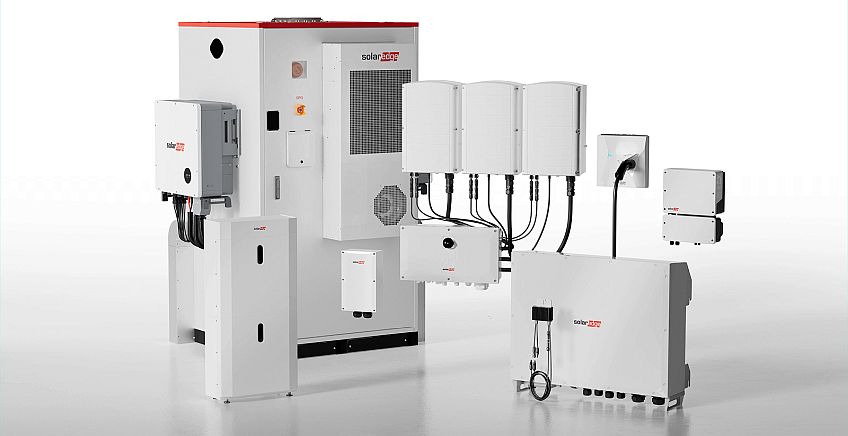
photo above: SolarEdge’s solutions portfolio

SolarEdge has ramped up production at its three manufacturing facilities in the United States and has begun shipping U.S.-made products to Europe. This move marks the culmination of a process that has been unfolding gradually for more than a year and now appears to be complete. The company has shut down manufacturing operations in China, Mexico, and Hungary, while retaining a limited production footprint in Asia, primarily through a contract manufacturer in Vietnam.

In Israel, SolarEdge continues to operate the Sela-1 manufacturing facility, located in the Ziporit industrial zone. This site is dedicated to short production runs and manufacturing optimization, leveraging its proximity to the company’s R&D center in Israel.

The Texas facility focuses on single-phase inverter production, the Utah plant specializes in residential battery systems, and the Florida site manufactures three-phase inverters and solar panel power optimizers. The scope of this transformation was disclosed during the company’s earnings call in September 2025. The CEO, Shuki Nir, stated that SolarEdge intends to anchor the majority of its manufacturing in the United States. “We plan to manufacture in the U.S. and distribute U.S.-made products both locally and globally for many years to come.”

Today, SolarEdge employs approximately 3,400 people worldwide. While the company does not provide a geographic breakdown, it reported in June 2025 that its three U.S. manufacturing plants employ around 2,000 workers. This week, SolarEdge announced a key milestone in executing its new manufacturing strategy: the shipment of its first U.S.-made residential inverters to Europe, with initial deliveries to Italy, France, and the Netherlands. The company is now preparing for the first European shipments of its commercial and industrial systems, scheduled to leave the Florida plant in early 2026.

The Generic Solution Strategy

Alongside the reconfiguration of its global manufacturing footprint, SolarEdge is redefining its portfolio to improve marketability while streamlining manufacturing, logistics, and the supply chain. Under this new approach, the company is consolidating product lines to reduce the number of SKUs, with each SKU designed to serve multiple applications or markets. SolarEdge refers to this strategy as Single SKU—an ambition to deliver a unified model, or a very small set of models, capable of addressing a broad range of use cases and geographies, instead of maintaining a large portfolio of distinct variants. In Europe, this concept is marketed under the name MultiRange.

For example, rather than producing separate inverters for Europe and the U.S., SolarEdge aims to manufacture a single inverter platform, with market- or application-specific customization handled through software, configuration settings, or auxiliary components. The company has indicated that this approach will be implemented in upcoming products, including the SolarEdge Nexis Solution, an integrated residential system combining solar energy generation and storage.

The goal is to deliver a unified platform that supports solar production, energy storage, self-consumption, and backup power during grid outages. SolarEdge is now applying the same design philosophy to its commercial and industrial product lines, with the objective of aligning them as well with the Single SKU strategy.
Four-Minute Heart Attack Risk Assessment: AccuLine Completes Clinical Trial in Israel

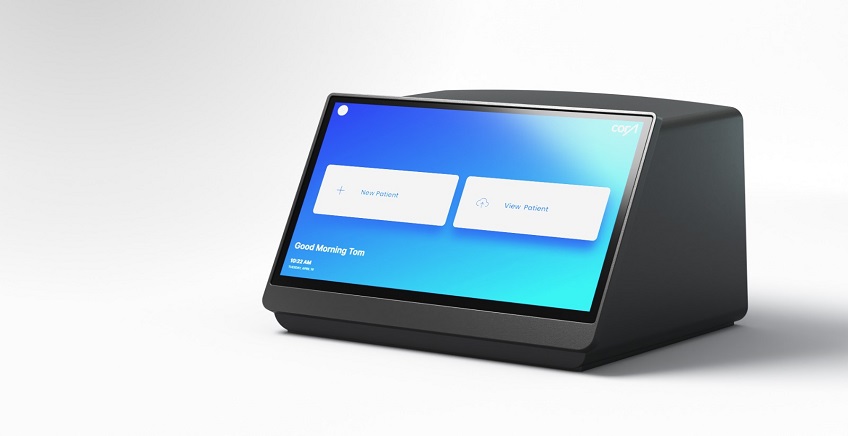
AccuLine announced on Thursday the successful completion of a multi-center clinical trial in Israel evaluating its CORA system for the early detection of coronary artery disease—the leading cause of heart attacks. According to the company, the test takes approximately four minutes, is designed to be performed in a clinic setting, and does not require catheterization, radiation, or contrast agents.

The clinical trial was conducted across seven medical centers in Israel, including Ichilov Medical Center, Poriya Medical Center, Assuta Tel Aviv, Shamir Medical Center, Wolfson Medical Center, Assuta Ashdod, and Hillel Yaffe Medical Center.

The study included 305 participants, with results benchmarked against coronary angiography, considered the gold standard for diagnosing coronary artery disease. According to the data, the CORA system achieved 94% sensitivity in identifying patients with significant coronary artery stenosis, alongside a negative predictive value (NPV) of 99% for ruling out the disease. The company notes that these results represent a substantial improvement over commonly used stress tests in community healthcare settings.

“Early and accurate diagnosis at the initial stages could save the lives of millions of people who are not diagnosed in time,” said Moshe Bar-El, AccuLine’s CEO and co-founder. “For the first time, we are providing primary care physicians with a tool that allows them, within minutes, to distinguish between patients who require further evaluation and those who are not at risk—while avoiding unnecessary and costly tests.”

No Radiation, Powered by AI

The CORA system is based on an artificial intelligence algorithm that simultaneously analyzes electrical signals from the heart, blood oxygen levels, respiratory rate, and the patient’s medical background. The output is an immediate report on the condition of the coronary arteries—without the need for invasive procedures or advanced imaging equipment.

Beyond its clinical implications, AccuLine also emphasizes the economic potential of the technology. Cardiology accounts for hundreds of billions of dollars in healthcare spending annually, and a solution capable of reducing expensive diagnostic tests and complex treatments following heart attacks could have a significant impact on healthcare systems and insurance providers.

Following the successful results of the Israeli trial, AccuLine is preparing for a large-scale clinical study in the United States. The trial will take place across 20 medical centers and include approximately 2,000 patients. It will be conducted in collaboration with Mayo Clinic and represents a key step toward FDA approval and the system’s entry into the U.S. and global markets.

AccuLine was founded in early 2022 and has raised approximately $5.5 million to date, led by eHealth Ventures with participation from Maccabi Healthcare Services. The funding includes grants from the Israel Innovation Authority and Google, as well as a strategic investment and collaboration with Mayo Clinic.

The company’s team includes CEO Moshe Bar-El, CTO Dr. Amit Raches, CBO Don Crawford, CMO Prof. Aharon Frimerman—head of the catheterization unit at Hillel Yaffe Medical Center—and CSO Prof. Shay Revzun from the University of Michigan. AccuLine currently employs seven people at its offices in Petah Tikva.

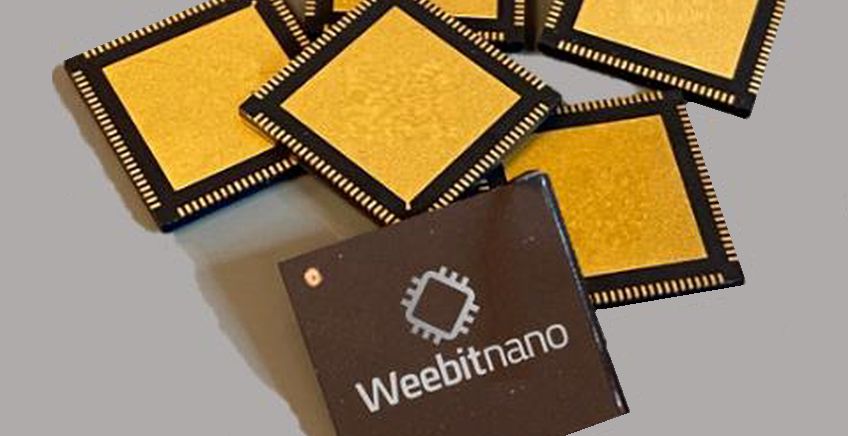
Following TI Deal, Weebit Nano Forecasts Sharp Revenue Growth in 2026

Weebit Nano has published annual revenue guidance for the first time since becoming a public company, projecting revenues of at least A$10 million (approximately US$6.5 million) in 2026—more than double its A$4.4 million revenue in 2025. The forecast was released as part of the company’s quarterly report published over the weekend and marks a significant inflection point: a shift from a company primarily reporting technological milestones and licensing agreements to one seeking to anchor expectations around measurable revenue growth.

Weebit Nano’s shares, traded on the Australian Securities Exchange (ASX), have risen 140% over the past 12 months, giving the company a market capitalization of A$1.12 billion.

The main driver behind the forecast is the largest commercial agreement in the company’s history: the licensing of Weebit’s ReRAM technology to Texas Instruments, one of the world’s leading semiconductor manufacturers. The agreement includes IP licensing, technology transfer, and the design and qualification of Weebit’s ReRAM in TI’s advanced manufacturing nodes for embedded processing chips.

Weebit Nano CEO Coby Hanoch said the agreement represents a major milestone in the company’s commercialization path, stating: “Our agreement with TI marks a major milestone in our commercialisation trajectory, reflecting the quality of our Non-Volatile Memory (NVM) technology, evolving industry perceptions, and Weebit’s growing reputation as the leading independent provider of ReRAM.”

Hanoch added that TI’s adoption is already having a broader market impact: “TI’s adoption of our ReRAM is already accelerating our commercial discussions with multiple foundries, Integrated Device Manufacturers (IDMs) and product companies, and momentum is continuing to build.”

He noted that while a third target fab agreement originally planned for 2025 has slipped into 2026, negotiations with multiple parties are advancing and the company remains committed to closing additional deals during the year.

Alongside the commercial momentum, Weebit announced the establishment of a wholly owned U.S. subsidiary, aimed at supporting expanding engagement with customers in North America. The company says the move reflects growing commercial activity in the region and the need to support sales and business development efforts more closely. In practical terms, beyond the branding and signaling effect of the TI deal, Weebit is adjusting its organizational structure to deepen its footprint in the U.S. market, where many of its most relevant semiconductor customers are based.

Gideon Intrater to Lead AI Efforts

Beyond the headline commercial news, the quarterly report highlights technological progress designed to support the next phase: moving from demonstrations and agreements to product integration and manufacturing. During the quarter, Weebit completed technology qualification of its ReRAM at South Korean foundry DB HiTek, based on industry-standard JEDEC requirements for non-volatile memory. The process involved demanding tests, including high-temperature operation, program/erase endurance, and long-term data retention across multiple silicon wafer lots. The company says it is now working with DB HiTek to prepare for high-volume manufacturing readiness.

Another key technical update relates to demonstration chips manufactured at onsemi. Weebit reports that functional testing confirmed the chips are “performing as expected,” including full programming and readout of ReRAM arrays using smart algorithms and error-correcting code (ECC). The chips are now undergoing further qualification, expected to be completed later this year. The 65nm BCD Treo platform used for manufacturing is aimed primarily at automotive, industrial, and data-center applications that require reliable operation in harsh, high-temperature environments.

On the product commercialization front—working with “product customers” that integrate ReRAM directly into finished chips—Weebit says several products are already in design using its technology, and that it expects to complete the first product customer tape-out in 2026. During the quarter, the company also signed an agreement with a new U.S.-based product customer, reflecting what it describes as a broader industry shift in which ReRAM is increasingly viewed as the successor to embedded flash in next-generation applications.

In this context, Weebit cites a forecast by market research firm Yole Group, which predicts that ReRAM will grow 45-fold over the next six years and account for more than half of the US$3.26 billion embedded emerging NVM market by 2030. For Weebit, the data serves not just as market background, but as a way to frame the TI deal and its progress with DB HiTek and onsemi as part of a broader adoption wave.

Further signaling an expanded strategic focus, Weebit announced the appointment of Gideon Intrater as VP Systems and AI. The company notes that Intrater brings around 40 years of experience in the semiconductor industry, including senior roles at IP companies and leadership positions at Adesto and MIPS, as well as involvement in industry standards through JEDEC. Weebit says it plans to formalize an AI offering built around the advantages of ReRAM for edge AI applications, with an initial solution expected later this year.

Cognata’s Surprising Military Box

By Yohai Schwiger

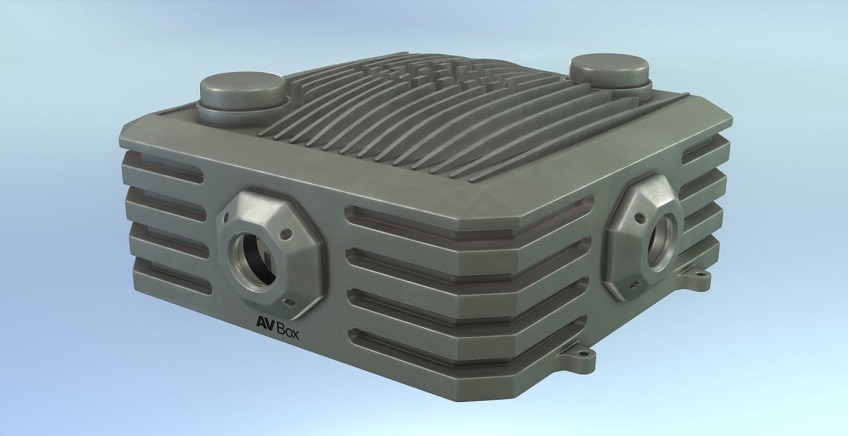
Cognata, a Rehovot-based company best known for developing simulators for training and testing autonomous driving systems, has unveiled a surprising new product that marks a strategic pivot into the defense market—an arena entirely new for the company. Until recently, Cognata focused almost exclusively on commercial automotive customers. But at CES this month in Las Vegas, it introduced AVBox: a compact hardware-software kit that enables standard military vehicles, both light and heavy, to operate autonomously in off-road environments.

AVBox is a self-contained unit mounted on the vehicle’s roof, integrating a sensor suite, onboard computing, and vision- and navigation-focused algorithms. It is designed specifically for off-road scenarios—unstructured terrain without lanes, traffic signals, or civilian infrastructure—and is built around predefined, mission-oriented autonomy. Rather than full autonomy, the system supports limited operational autonomy: independently navigating a vehicle over several kilometers, primarily for logistical and operational tasks, even in the absence of GPS, digital maps, or continuous communication with a remote operator.

Bridging Remote Control and Autonomy

This is not a prototype but a finished commercial product. AVBox is already undergoing advanced evaluation by a potential customer, following pilot trials in which it was installed on operational armored vehicles to convert them for remote or unmanned operation—particularly relevant for dangerous or logistics-heavy missions. Cognata’s solution effectively bridges the gap between remote control and autonomy. While many military vehicles today rely on remote operation, loss of communication—due to terrain, interference, or distance—often renders them immobile.

In such cases, AVBox can assume control and autonomously complete the mission based on predefined objectives, ensuring operational continuity without requiring full, always-on autonomy. Similar concepts are already being applied in Ukraine’s drone warfare. Designed for easy integration into existing platforms, AVBox enables rapid upgrades of current fleets without lengthy and costly development or procurement cycles. Cognata is actively marketing the system in Europe and the United States, which is why it chose to debut AVBox at CES.

AVBox is offered in three sensing configurations. The base “Scout” version relies on daytime cameras. A more advanced variant adds thermal cameras for night operations, while the most sophisticated configuration incorporates LiDAR to handle complex terrain. The system’s modular design allows customers to tailor it to mission requirements, terrain conditions, and budget constraints, with an emphasis on broad deployment rather than limited, high-cost use.

A Military Product Born from a Civilian Demo

The transition to an operational autonomous system emerged from two parallel developments in recent years. On one hand, Cognata’s simulator expanded into off-road driving domains, including robotic training and open-terrain simulation. Initially, customers for these capabilities came primarily from civilian sectors such as agriculture and mining, but over the past two years, the company has also begun supplying them to the Israeli military. This exposure highlighted real-world defense needs and the gap between available technology and operational requirements.

Shay Rotman, Cognata’s Vice President of Business Development and Marketing, told Techtime that some automotive OEMs were skeptical about the reliability of simulation and synthetic data for training computer-vision systems. “To prove that the technology works,” Rotman said, “we developed a computer-vision stack in 2023 that included sensors, processors, and algorithms. Initially, it was meant as a technological demo to show potential customers how advanced vision systems could be built using purely synthetic data.”

As part of that effort, Cognata developed a monocular depth technology capable of estimating distances and 3D structure from a single image. The system was trained on hundreds of thousands of images generated entirely in simulation. “It started out as a response to our own pain point and a way to prove the value of our simulation,” Rotman said. “At some point, we realized we had the foundation for a completely new type of system.”

According to Rotman, the decision to focus on limited, mission-oriented autonomy rather than full autonomy was also shaped by lessons learned from the automotive sector. “Civilian automotive aims for full autonomy, but that’s still far off and requires massive resources. In the military—especially in off-road driving—you can solve real problems today with task-focused autonomy.” That philosophy also influenced pricing. “In many militaries, there’s a gap between development and procurement because advanced systems are so expensive,” he said. “We wanted to offer something affordable enough for wide deployment—not a system that remains stuck in the experimental phase.”

A Growing Market Offsetting a Stalled One

AVBox emerges against the backdrop of a challenging reality in Cognata’s original market. Global investment in automotive technology has declined steadily in recent years, while major carmakers—particularly in Europe and the United States—face mounting business pressures. “Auto-tech today is a tough market,” Rotman said. “Many manufacturers are dealing with competitive and financial challenges and are investing less in autonomous driving development.”

As a result, Cognata significantly reduced its workforce over the past two years, adapting to delayed projects, slower investment cycles, and the prolonged path to commercialization in civilian automotive. “It’s a heavily regulated market with long development cycles and very high costs,” Rotman noted. “Not every company can keep moving at the same pace as before.”

With AVBox, Cognata is now positioning itself as a company operating in two parallel domains: simulation, where it continues to support the development and training of autonomous systems, and operational autonomy tailored to clearly defined defense needs. “We’ve moved from being a pure simulation provider to a company with two products,” Rotman concluded. “And in defense, there is openness, demand, and a genuine opportunity today.”

“AI Is Like Magic — but It Also Creates a Lot of Organizational Chaos”

For more than a decade, software development services company CodeValue has been accompanying organizations and technology firms at moments when transformative technologies reshaped the rules of the game. It began with large-scale cloud migration projects, continued with enterprise-grade application development, modern architectures, and advanced development methodologies. Today, as AI transitions from an experimental layer to a core business tool, the company once again finds itself at the forefront — this time facing an even deeper shift.

CodeValue employs more than 400 developers, architects, and technology professionals, working with a wide range of clients: large enterprises, startups, banks, insurance companies, and defense organizations. Its activity spans development services, consulting, and training — a combination that takes on new significance in an era where organizations are trying to understand not only how to use AI, but how to build stable, sustainable development and operational processes around it.

According to Shay Friedman, recently appointed CTO of CodeValue after co-founder Amir Zucker transitioned into the role of chief architect, there is a growing gap between the pace at which organizations are adopting AI tools and the level of process maturity required to run them at scale. “Companies want to build agents, deploy models, train internal systems — but they still don’t really know what this is supposed to look like in production,” he says.

Building expertise in data curation

Over the past year, CodeValue has been developing new capabilities around supporting organizations in training internal models, setting up enterprise AI infrastructures, and upskilling teams. At the same time, the company is establishing a dedicated data and data-curation practice, aiming to define new development methodologies suited to a non-deterministic world.

“CodeValue is not a product company,” Friedman emphasizes. “We provide development services, consulting, and training. Our product is our people. As CTO, my goal is to make sure everyone is constantly advancing technologically. If our people aren’t at the frontier, we have nothing to sell.”

The AI era sharpens that challenge. “AI changes how work gets done inside organizations. Suddenly you don’t need hundreds of employees to perform certain tasks — one person with the right tools can do the work of several. That creates fear, but it also reinforces one thing: strong, experienced people will always be needed. Our advantage is that we live the technology while it’s still taking shape.”

Pressure, constraints, and chaos in the enterprise sector

From his experience in recent months, Friedman describes an enterprise sector under constant pressure. “Even the largest organizations understand that AI is something they must adopt. Those who don’t will fall behind. But the path forward is anything but uniform.”

In traditional organizations such as banks, insurance companies, and defense bodies, the barriers are sometimes very concrete. “There’s no external internet access, you have to build internal infrastructure, and everything slows down. Even when they try to deploy an internal chatbot, it’s trained only on organizational data. The dataset may be large, but it can’t compare to the open web — which leads to more hallucinations and less stable models.”

Even in connected organizations, the situation is far from orderly. “It’s often pure chaos. When it’s hard to define a single strategy, every division and every team does whatever seems right to them — like mushrooms after the rain. The problem is that AI tools pull code from the existing codebase. If that code is old, bloated, and poorly maintained, low quality simply propagates. That’s a real risk, and I think we’ll be dealing with the consequences in six months to a year.”

Data, training, and the leap to production

This is where data becomes critical. “We’re now building a data-curation practice internally. It’s still early, but it will grow, because data is the bottleneck — especially when companies train their own models. In that case, data is everything.”

Training is becoming equally essential. “A lot of people work with tools like Claude Code and don’t even tap into half of their potential. Good training turns every employee into a power user, and that can transform an organization from the inside.”

One of the most complex challenges, Friedman says, is the transition from experimentation to production. “AI makes it incredibly easy to generate things. One prompt, and it feels like magic. But AI isn’t deterministic — it’s probabilistic. You really understand that in QA, when a bug appears and no one knows where it came from. This is a new reality.”

As a result, CodeValue is developing training programs and best practices around safety, performance, and cost management. “Some companies rush into AI and then discover that usage costs aren’t sustainable. Everyone is running into this right now. We’re still in the infancy stage.”

Being a CTO when the product is people

For Friedman, the role of CTO in a development services company is fundamentally different from that role in a product company. “My goal is for every employee to have a clear professional horizon — to be fluent in the most advanced tools and technologies.”

That model, he says, also explains the company’s organizational stability. “Anyone can consult with anyone else. People work on a wide variety of projects — it’s like moving between companies without actually leaving. Burnout is lower.”

Looking ahead, Friedman concludes, uncertainty itself is the engine. “It’s exciting to be at the frontier, facing a challenge and then figuring out a solution. These are challenges that didn’t exist a year or two ago — and that’s exactly why we’re here. We’re living in a historic moment.”

BIRD Foundation Fosters Partnerships Between Israeli Startups and Global Mining Industry

The BIRD Foundation — the binational U.S.–Israel foundation for industrial R&D cooperation — is expanding its scope to include mining technologies, one of the least discussed yet fastest-growing segments of the global energy and industrial landscape. As part of this effort, the foundation recently hosted Mark Freeman, Managing Partner at the technology investment arm of Orion Resource Partners, for meetings in Israel with local entrepreneurs and startups.

The gathering, held at the foundation’s offices in Tel Aviv, was designed to expose Israeli startups to commercial and investment opportunities in the global mining industry, while exploring potential collaborations in advanced technologies for the extraction of critical minerals and metals. Representatives from venture capital funds and other players in Israel’s innovation ecosystem also took part.

Orion Resource Partners is among the world’s largest private investors in metals, mining, and raw materials. The group manages approximately $8.6 billion in assets and focuses on investments in critical minerals, industrial technologies, energy, and supply-chain innovation. Over the years, Orion has been involved in more than 80 mining operations worldwide, acting both as a financial investor and a strategic partner in large-scale industrial projects.

According to Limor Nakar-Vincent, Director of the BIRD Energy Program, the meeting reflects a broader structural shift. “The transition to clean energy, electric mobility, and advanced manufacturing depends on the availability of critical minerals — an issue that often remains outside the public conversation,” she said. “Without metals such as copper, cobalt, and graphite, the green transition simply cannot happen.”

The scale of the challenge facing the global mining industry continues to grow. Industry forecasts suggest that over the next three decades, the world will need to mine twice as much copper as has been extracted throughout all of human history to date. Demand for other minerals, including graphite and cobalt, is expected to rise between six-fold and thirty-fold, driven by battery technologies and energy storage systems. To keep pace, annual global investment in mining is projected to increase from roughly $45 billion today to about $75 billion by 2030.

At the same time, supply is struggling to catch up with demand. Success rates in mineral exploration using traditional methods are below one percent, while the average development timeline for a mine — from discovery to commercial production — stands at around 16 years. In parallel, ore quality is declining, and many countries are grappling with a shrinking number of active mines and increasingly stringent environmental regulations.

This reality underscores the need for technological innovation across the entire mining value chain — from subsurface exploration and characterization, through drilling and operations, to processing, refining, environmental management, and recycling. “This is a capital-intensive industry where mistakes can cost billions,” Nakar-Vincent noted. “Advanced technologies enable greater precision, shorter timelines, and reduced risk.”

In recent years, a dedicated entrepreneurial sector focused on advanced mining technologies has begun to take shape. It includes AI and deep-learning solutions for subsurface analysis, chemical and electrochemical processes for extracting metals from low-grade ores, direct lithium extraction technologies, and sensor systems that provide real-time operational data. Funding rounds totaling hundreds of millions of dollars signal that this is an emerging industry with significant long-term potential.

According to the foundation, Israel holds a clear comparative advantage in this arena. “Israel excels in platform technologies that are critical to modern mining — artificial intelligence, robotics, autonomy, cybersecurity, electrochemistry, and synthetic biology,” said Nakar-Vincent. “These capabilities can be directly applied to mineral exploration, operational optimization, ore processing, water treatment, and metal recycling.”

BIRD emphasizes that realizing this potential requires proactive connections between global mining corporations and the Israeli innovation ecosystem, exposure of entrepreneurs to real industrial needs, on-site pilot projects, and access to active mining facilities. “Innovation in mining is not only an industrial necessity — it is also an economic and national interest,” Nakar-Vincent concluded. “Countries and companies that develop advanced technological capabilities in critical minerals will strengthen their energy independence and their position in the global economy.”

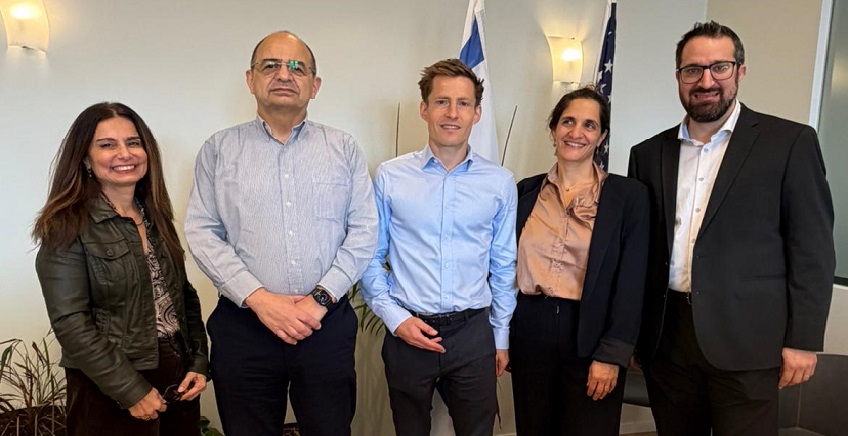
[Ib the photo above: From right to left: Brian Rosen, Chief Scientist at Israel’s Ministry of Energy, Yael Herman (Ministry of Energy), Mark Freeman, Yaron Lotan, CEO of the BIRD Foundation, and Limor Nakar-Vincent, Director of the BIRD Energy Program]

New AI Platform Automates Recruitment Processes and Introduces a Collaborative Compensation Model

[In the photo: Eyal Bar Oz, CEO of Hrmony. Courtesy]

Hrmony has launched an AI-based recruitment platform designed to streamline and accelerate hiring processes in technology companies, while reshaping the prevailing working and compensation models in the recruitment industry. The platform is aimed primarily at independent recruiters and companies, offering more precise matching between job requirements and candidates, alongside a collaborative model that is not solely based on placement fees.

The platform uses AI algorithms to analyze job requirements, screen candidates from global databases, and match skills, experience, and operational needs. According to the company, automated screening significantly reduces the time spent reviewing résumés and allows recruiters to focus on more advanced stages of the hiring process. Hrmony is connected to international candidate pools, including technology talent databases, providing access to candidates worldwide.

In addition, the system enables collaboration between recruiters. A recruiter can invite others to participate in a hiring process, suggest candidates, or provide targeted assistance, and receive compensation based on predefined terms. This model is intended to reduce dependence on a single successful placement as a source of income, while creating a flexible professional network that expands candidate supply and shortens response times.

The launch comes against the backdrop of broader shifts in the global labor and high-tech markets. Technology companies are hiring more cautiously, demanding faster and more precise matches, and reducing the resources allocated to lengthy recruitment processes. At the same time, experienced candidates expect short and efficient hiring cycles and are more likely to drop out of cumbersome processes in favor of other opportunities. Recruiters, for their part, are seeking more advanced technological tools and diversified compensation models.

According to Eyal Bar Oz, co-founder of Hrmony, “Companies are no longer willing to invest the same resources in recruitment and are looking for highly precise and concrete matches. The platform makes hiring processes faster, more accurate, and more dynamic, in a way that is more cost-effective for both companies and recruiters, while improving the candidate experience.”

Beyond candidate screening, Hrmony consolidates recruiters’ core working tools into a single system, including job and candidate management, sourcing, scheduling, interviews, task management, and collaboration. The goal is to replace the parallel use of multiple separate tools—a practice that increases costs and creates operational friction.

The company emphasizes that artificial intelligence is not intended to replace human judgment, but rather to serve as a horizontal intelligence layer that provides insights, recommendations, and identification of collaboration opportunities, helping recruiters work more efficiently and adapt to the evolving realities of the labor market.