TAT Opens U.S. Innovation Center for Electric and Autonomous Aviation

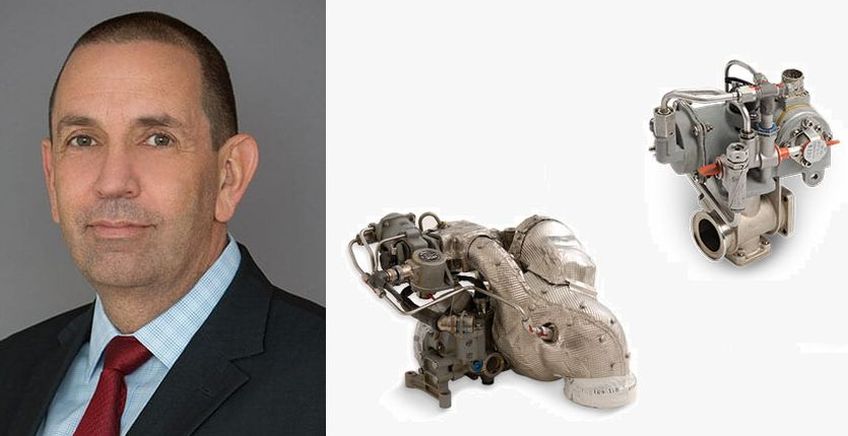
[In the photo above: TAT CEO Yigal Zamir alongside power modules supplied by the company for F-16 aircraft]

TAT Technologies has announced the launch of a new innovation and development hub in Charlotte, North Carolina, dedicated to advancing the next generation of aerospace technologies — including electric, hybrid, and autonomous aircraft. The facility, called FutureWorks – TAT’s Center for Aerospace Innovation, will feature a specialized high-voltage thermal testing lab, as well as advanced infrastructure designed to accelerate product development and validation cycles.

At the heart of the new center’s mission is the development of cutting-edge cooling and thermal management systems. These solutions are seen as critical to ensuring safe, efficient, and sustainable operation of electric and hydrogen-powered aircraft, as well as autonomous platforms. Robust thermal systems are essential for achieving stable performance, withstanding extreme operating conditions, and reducing both weight and energy consumption — challenges that the aviation industry must overcome as it moves toward greener and more autonomous flight.

The initiative aligns with TAT’s long-term strategy, as outlined in its recent quarterly reports, to expand into advanced aerospace domains and capture emerging opportunities in electric and autonomous aviation. The company has already disclosed an initial partnership to co-develop a next-generation universal thermal system, while additional collaborations with aircraft manufacturers and aerospace technology developers are currently in progress.

The Charlotte center is scheduled to be fully operational by November and will serve as a hub for international cooperation with OEMs and leading aerospace firms. Alongside its growing innovation agenda, TAT continues to provide maintenance and support for aircraft auxiliary power units (APUs) and landing gear systems. The company views this move as a significant step in strengthening its role as a key player in the evolving global aviation market.

Smart Shooter Unveils Smart Sight for Heavy Machine Guns

Israeli defense company SMART SHOOTER will debut a new configuration of its SMASH 3000 fire-control system at the DSEI 2025 exhibition in London next week — this time adapted for use on heavy machine guns (HMGs).

Heavy machine guns are large-caliber automatic weapons, typically over 12.7 mm, designed to engage vehicles, drones, and light structures, and usually mounted on tripods or armored vehicles. Until now, SMARTSHOOTER’s SMASH systems were primarily paired with small arms carried by individual soldiers or remote weapon stations. Their integration with heavy machine guns marks a significant expansion of operational capability and use cases.

The SMASH family of smart sights is built on algorithm-driven fire-control technology that detects, tracks, and locks onto targets in real time. Its uniqueness lies in turning a standard weapon or firing position into a highly precise system capable of intercepting fast, unpredictable drones. The system also connects to battle management networks, giving soldiers updated situational awareness, conserving ammunition, and dramatically increasing first-shot hit probability.

The new HMG configuration follows a series of trials under Project VANAHEIM/FLYTRAP, a joint UK–U.S. initiative aimed at integrating counter-drone (C-UAS) technologies into frontline units. In exercises held across Europe from June to August, U.S. and British troops tested multiple advanced systems in realistic battlefield environments. SMASH was operated in handheld, vehicle-mounted, and remote-controlled configurations — and for the first time, the SMASH 3000 was mounted on a heavy machine gun. In parallel, the SMASH Hopper system was installed on a reconnaissance vehicle.

The trials demonstrated successful interception of drones at ranges of up to 400 meters, considered a major achievement against small unmanned aerial systems. A key advantage was system connectivity: SMASH integrated with the Android Tactical Assault Kit (ATAK) and battle management systems (BMS), enabling real-time transfer of target data directly to the shooter’s sight. This gave troops advanced situational awareness and allowed precise coordination against aerial threats.

According to SMARTSHOOTER CEO Michal Mor, “Project VANAHEIM gave us the opportunity to test our systems in a complex combat environment and to validate their effectiveness for general-purpose combat units. Expanding the SMASH family to heavy machine guns and vehicle-mounted stations underscores our commitment to delivering flexible, effective solutions against evolving threats.”

The joint trials also highlighted a broader lesson: there is no single “silver bullet” against the full spectrum of drone threats. The key takeaway from the Flytrap exercises was the need for layered defense — combining kinetic effectors, electronic jamming, optical and acoustic sensors — to create comprehensive, adaptable protection in the field.

Foxconn pours $30 Millions into RoboTemi

Israeli robotics company RoboTemi expects to increase its revenue fivefold by 2028 following a strategic $30 million investment from Taiwanese technology giant Foxconn. The funds will be used to expand manufacturing in Taiwan and accelerate penetration of the U.S. telemedicine market, with a particular focus on nursing homes.

According to co-founder Yaron Yoels, “In the U.S., a significant market for remote healthcare has opened up. There are about 30,000 nursing homes, and elderly residents don’t always have access to a doctor on site. Our robot enables smooth and convenient video consultations, and insurers reimburse the service because every video call saves an in-person visit.”

During consultations, the Temi robot autonomously navigates to the patient’s bedside carrying medical instruments — including a stethoscope, blood pressure monitor, ECG device and diagnostic cameras — while displaying the physician live on screen. Eighty percent of medical visits in nursing homes can be resolved this way, from skin conditions and wounds to psychological counseling,” Yoels noted.

Since the COVID-19 pandemic, U.S. government insurance programs Medicare and Medicaid have incentivized telemedicine, rewarding facilities for every virtual visit that replaces an in-person appointment. This has created a strong incentive for nursing homes to adopt robots. In some cases the service is provided free, under a revenue-sharing model, as facilities are reimbursed for each remote consultation. “We’ve decided to scale up — to tens of thousands of units within the next two years,” Yoels added. To achieve that, most production is concentrated in Taiwan with Foxconn, which is now shipping hundreds of robots each month.

The Temi robot itself is a mobile smart platform designed for telemedicine and remote interactions. It features an autonomous navigation system with LiDAR sensors, depth cameras and Time-of-Flight sensors, enabling it to move accurately to a patient’s bedside and avoid obstacles. A 13.3-inch FHD touchscreen, combined with high-quality speakers and microphone arrays, allows for natural communication by voice, gesture or touch. Temi can carry medical equipment, operate continuously for up to eight hours on a rechargeable battery, and travel at speeds of up to one meter per second with zero-turn capability. This combination of mapping, communication and medical instrumentation delivers a complete and reliable telehealth experience.

Beyond the U.S., RoboTemi has also secured a major European contract: supplying 600 robots for Spain’s national home-hospitalization program. The company currently operates as part of Robocore, incorporated in Hong Kong with operations spanning China, Singapore and Israel, and aims to leverage the Foxconn partnership to establish itself as a leading global player in healthcare robotics.

Intel Seeks Patent for Software-Defined “Supercore”

[Image: Intel Xeon 6 server processors]

By Yohai Schwiger

Intel has filed a U.S. patent application describing a new technology it calls the “Software Defined Supercore.” According to the filing, the company envisions a way to link several physical cores so they function as a single, massive core capable of executing many instructions in parallel.

The idea is to push CPUs closer to the kind of parallel processing long associated with GPUs—without the cost and complexity of designing a physically enormous core. A CPU core is the basic unit that executes software instructions. In early computers, there was only one. Today, most processors include multiple cores, allowing them to run different tasks at once.

Intel’s proposal would make multicore processing more flexible and dynamic: when an application demands concentrated compute power, several cores could be fused into one broad “supercore.” Once the demand subsides, they would return to operating independently.

The implications are especially relevant for artificial intelligence. GPUs have become the workhorses of AI training and inference thanks to their ability to handle thousands of parallel calculations simultaneously. Intel’s approach aims to give CPUs a similar advantage—enabling a core to “scale up” by tapping into additional cores to handle complex workloads, from AI to simulations and high-performance computing.

A Software-First Mindset
In some ways, the concept echoes Nvidia’s CUDA software environment, which allowed developers to tap into GPU architecture in smarter ways and helped transform GPUs into essential engines for AI and advanced computation. Intel is seeking to provide a comparable software layer, though here the goal is to orchestrate CPU cores rather than hundreds or thousands of GPU threads.

What makes this effort especially noteworthy is the signal it sends about Intel’s software ambitions. In the company’s most recent earnings call, new CEO Lip-Bu Tan admitted Intel had lost its edge in software innovation in recent years, vowing to bring it back to the forefront. The Supercore patent filing may be an early sign of that strategy, reminding the industry that Intel’s focus extends beyond silicon into the software that directs it.

Still, it is important to stress that this is only a patent application—not a finished product. Implementing such a concept would require significant changes at multiple levels, from hardware design to operating systems and developer tools. In other words, the Supercore remains an intriguing idea with clear potential, but one that could take many years to materialize—if it ever does—in Intel’s commercial processors.

Cato Buys Aim at a High Premium, Underscoring the Fierce Race to Secure AI

[Photo: Cato Networks founder Shlomo Kramer. Credit: Leonid Yakubov]

Cato Networks announced the acquisition of Israeli cybersecurity start-up Aim Security, in a deal valued by financial media at around $350 million. The figure is striking for a company founded only in 2022 that had raised just $28 million to date.

The acquisition, Cato’s first, reflects the extraordinary buzz around AI security and the urgent need for larger companies to stay ahead of competitors.

Alongside the deal, Cato reported it has surpassed $300 million in annual recurring revenue and expanded its most recent funding round to $409 million with an additional investment from Acrew Capital. Shlomo Kramer, Cato’s co-founder and CEO, said the AI revolution is likely to eclipse the digital revolution. Integrating Aim’s technology into the Cato SASE Cloud, he added, will allow enterprises to adopt AI agents and public or private AI applications securely.

Aim Security has positioned itself as a pioneer in enterprise AI security, offering a comprehensive portfolio across three pillars: securing employee use of public AI applications, real-time protection of internal AI agents and applications via a dedicated firewall, and lifecycle security management for AI app development. The platform combines endpoint sensors to monitor usage, a unique engine that detects attacks in real time, and an AI-SPM system that identifies vulnerabilities during training. This gives Aim a full-stack security framework – from the individual employee all the way up to complex enterprise systems.

The deal represents an unusually high return for Aim’s investors, at an estimated 12–13 times total invested capital. Compared with other cyber acquisitions, the premium highlights the market’s urgency around AI security. Palo Alto Networks’ $650–700 million purchase of Protect AI and SentinelOne’s $250 million acquisition of Prompt Security illustrate a broader global push to lock down strategic positions in the space. For Cato, the Aim deal is more than just a technological upgrade – it’s a cornerstone of its strategy. As enterprises rapidly adopt AI while fearing potential risks, Cato can now offer them an integrated solution: a secure SASE-based network paired with a dedicated AI security layer.

The combination of Cato’s transparency and modular SASE platform with Aim’s all-encompassing security suite positions the company to emerge as a key player in the fast-developing AI security market in the coming years.

Germany to Acquire Rafael’s Targeting Pods for its Eurofighter fleet

The German parliament has authorized the procurement of 90 Litening 5 targeting pods for its Eurofighter Typhoon fleet, to enhance the precision strike and reconnaissance capabilities of the Bundeswehr. According to media publications in Germany, the deal worth approximately EUR 358 million. Rafael made Litening 5 is a fifth-generation targeting system already operational with 28 air forces worldwide. More than 2,000 units delivered to Global costumers and reached over 2.2 million operational flight hours.

Litening 5 has been integrated on over 26 aircraft types, including F-15, F-16, Gripen, A-10, Mirage 2000, Embraer, and Eurofighter. It is considered one of the most widely used targeting pods in service today. In fact, Germany’s air force is moving from Litening 3 systems to Litening 5 systems. The pod’s sensor suite includes mid-wave and short-wave infrared, high-resolution color imaging, and dual-wavelength laser designation, with an optional synthetic aperture radar (SAR) for wide-area, all-weather imaging.

Litening 5 supports both air-to-ground and air-to-air missions, including ground moving target indication, multi-target tracking, and automatic target recognition. For air-to-air operations, it enhances target identification at range, supports detection of low-RCS threats, and provides missile cueing when integrated with the host platform. It also offers capabilities for detecting and engaging unmanned aerial vehicles (UAVs).

Samsung’s AI Strategy Hits Variscite

Photo above: Variscite production floor at Kiryat Gat, Israel. Credit: Techtime

Samsung Electronics’ primary focus is currently on competing with Korea’s SK Hynix for manufacturing orders of memories for NVIDIA’s AI computers. As part of this effort, it is even diverting the output of memory production lines from industrial products toward manufacturing of HBM memory devices needed in the largescale AI data centers. This move is being carried out quietly, without public press releases or announcements to investors. Nevertheless, it is already being felt keenly in the industry. The manufacturer of Industrial System on Modules, Israel-based Variscite, is now dealing with a memory shortage as a result of Samsung’s clandestine move.

The Sales Engine of Telsys

Variscite isa fully-owned subsidiary of Telsys. In its Q2 2025 earnings report published last week, Telsys explained that Samsung supplies Variscite with about 20% of the memory components it uses. “Due to delays in the supply of memory components,” a Samsung memory supplier explained to Variscite’s management, “the company has decided to divert its memory production line in favor of manufacturing products for the AI market.”

Samsung has not released an official statement on the move, but the information was received verbally in July 2025 from Samsung’s Israeli supplier. “This obliges Variscite to purchase memory from other manufacturers, including Micron, which even today supplies a large portion of the memory components used by the company.”

Variscite specializes in the development and manufacturing of System on Modules (SoMs) intended for integration into its customer’s systems, along with Development Kits and Expansion Boards for these modules. The company’s SoM manufacturing facility is located in Kiryat Gat (south of Israel). It currently accounts for the majority of Telsys Group’s sales. In the first half of 2025, its sales totaled approximately NIS 142 million (compared to NIS 146.7 million in the first half of 2024).

Samsung Woos NVIDIA

Samsung is currently concentrating a major effort on manufacturing large, high-speed memory components (HBM3E) for NVIDIA, and on gaining an advantage in the production of the next-generation components, HBM4. These new memories are intended for use in large data centers running primarily AI applications and AI Large Language Model (LLM). In the coming weeks, it is expected to receive final approval that its HBM3E memories have successfully passed NVIDIA’s qualification tests.

Morgan Stanley’s research department estimates that upon receiving certification, it will begin mass production for NVIDIA as early as November 2025. Telsys clarified that Variscite still has a stock of memory components that should be sufficient to fulfill short-term customer orders. However, if Samsung’s decision does not change, “Variscite may be required to extend delivery times for some of its customers, while simultaneously securing the purchase of memory components from other manufacturers.”