Elron Ventures Enters Addionics as Strategic Investor, Targeting Defense and Space Markets

Elron Ventures has entered Addionics as a strategic investor as part of a pre-Series C round, in a move aimed at supporting the company’s preparations for a larger financing round ahead. The size of the investment was not disclosed. The transaction is intended to accelerate Addionics’ operations and sharpen its focus on strategic markets, particularly defense and space, where advanced batteries are considered mission-critical components.

The round is defined as a pre-Series C—an interim stage typical of deep-tech companies that have already achieved initial market adoption and are preparing for a significant capital raise to support global expansion, increased manufacturing capacity, and deeper penetration into strategic markets. For Addionics, this phase represents a shift from a primary focus on civilian and infrastructure applications toward domains in which energy performance directly impacts operational capability, most notably defense and space.

To date, Addionics has raised approximately $80 million from strategic and industrial investors, including GM Ventures and Deep Insight, alongside global partners from the automotive, materials, and industrial sectors such as Avery Dennison, Scania, Magna, Novelis, and JX Nippon. Elron’s entry is expected to enhance Addionics’ access to investors and strategic partners from the defense ecosystem.

At the core of Addionics’ technology is the development of smart metals and three-dimensional current collectors for lithium-ion batteries, replacing flat metal foils with an advanced porous architecture. This structural redesign improves electrical conductivity within the cell, enables more efficient heat dissipation, extends battery lifespan, and supports high-power charging and discharging—without altering battery chemistry or requiring changes to existing manufacturing lines. This chemistry-agnostic approach is considered a significant advantage in conservative markets such as defense and space, where lengthy qualification cycles often slow the adoption of new technologies.

In defense applications, battery requirements extend far beyond those of the civilian market. Unmanned systems and military drones demand extreme energy-to-weight ratios, the ability to handle high-power discharge, and reliable operation under heat, cold, vibration, and fluctuating loads. In these environments, batteries are not merely power sources but determinants of range, loiter time, sensing capability, and operational survivability. Addionics’ ability to deliver high power without compromising stability or cycle life positions its technology as a relevant solution for next-generation electric and hybrid military platforms.

The demands in the space sector are no less stringent. Satellites, particularly those in low Earth orbit, operate through sharp charge-discharge cycles over many years, under constant radiation exposure and without the possibility of maintenance. Any battery failure can result in complete mission loss. The combination of thermal stability, mechanical robustness, and predictable long-term behavior makes Addionics’ structural approach attractive for space applications, where reliability takes precedence over all other considerations.

The move into defense and space complements Addionics’ broader growth strategy. Only recently, the company announced a collaboration with South Korea’s PNT Materials to develop prismatic LFP battery cells for data centers and large-scale energy storage systems—a partnership that underscores the flexibility of its technology across energy-intensive markets, from AI infrastructure to mission-critical systems.

Elron Ventures views Addionics as part of a broader strategic push toward deep-tech and technologies of long-term industrial and security relevance. As part of the investment, Lisya Bahar Manoah, Chairperson of Elron Ventures and MP of Arieli Group, has joined Addionics’ board of directors, strengthening the company’s strategic guidance at a pivotal stage and reinforcing the link between its technology platform and highly regulated, performance-driven markets such as defense and space.

According to Bahar Manoah, the investment reflects Elron’s focus on deep-tech companies with a clear path to growth and scale. “Addionics’ solution is based on a physics-driven, chemistry-agnostic approach that does not require changes to existing manufacturing processes,” she said, adding that this combination enables improved power and energy density while positioning the technology for rapid adoption in markets such as space and defense.
Dr. Mosheial Biton noted that Addionics is now entering its next growth phase and expressed confidence in the company’s ability to lead the field and set a new standard for high-performance batteries for defense and space applications.

Relocation Spikes Among Israel-Based Multinational R&D Staff

photo above: Karin Mayer Rubinstein, CEO and President of IATI

A new annual report by Israel’s Advanced Technology Industries (IATI) paints a complex picture of multinational corporations (MNCs) operating in Israel following a year of conflict. While the sector remains a primary growth engine of the Israeli economy, cracks are beginning to show in human capital stability and global sentiment.

The report highlights that approximately 430 multinational companies currently operate in Israel, employing 90,000 people. While these employees represent 23% of the high-tech workforce, their economic footprint is far larger: MNCs accounted for 80% of the average M&A volume in Israel over the last five years. In 2024, that figure surged to 91%, with MNCs driving 58 deals valued at $9.2 billion out of a total of $10.1 billion deals.

The findings suggest a mixed reality for global tech giants in Israel: Approximately 57% of companies reported stable business operations throughout the war, and 21% actually expanded their local footprint—a testament to the deep-rooted trust in the Israeli ecosystem. Conversely, 22% reported a hit to business activity. Some noted a “weakening of influence” within their global parent organizations and a cooling of relations with overseas headquarters.

Troubling Undercurrents

Beyond the macro figures, the report identifies alarming trends regarding human capital. 53% of companies reported an increase in relocation requests from Israeli employees citing security concerns and geopolitical instability. The IATI warns that this “brain drain” poses a long-term threat to Israel’s ability to retain its technology advantage. Quietly, some corporations are diversifying their risk by shifting investments or supply chain dependencies to other regions. This “silent erosion” often occurs beneath the surface of official press releases but represents a significant shift in how global boards view Israel’s risk profile.”The high-tech industry, including the global companies operating here, has once again proven its resilience and ability to lead in innovation and creativity even during a difficult war,” said Karin Mayer Rubinstein, CEO and President of IATI.

Resilience is Not a Guarantee

Despite the challenges, the report emphasizes that MNCs are not short-term players. Significant investments and acquisitions continued throughout 2024, signaling that many still view Israel as a critical hub for high-end R&D and infrastructure. “The high-tech industry, including the global companies operating here, has once again proven its resilience and ability to lead in innovation and creativity even during a difficult war,” said Karin Mayer Rubinstein, CEO and President of IATI.

However, the IATI issues a clear warning: Israel’s resilience cannot be taken for granted. Without proactive government measures to ensure regulatory, fiscal, and geopolitical stability, the country faces a gradual but persistent decline in its status as a preferred destination for global corporate giants.

TI to Adopt Weebit Nano ReRAM Technology

Hod Hasharon-based Weebit Nano has signed a major technology licensing agreement with Texas Instruments (TI) to integrate its Resistive Random Access Memory (ReRAM) technology into TI’s embedded processing portfolio. Under the terms of the agreement, TI will incorporate Weebit’s ReRAM into its advanced signal processing products designed for embedded systems, utilizing TI’s advanced manufacturing processes. Operating on an IP-licensing business model, Weebit will receive licensing fees and integration service payments and ongoing royalties for every product sold.

Redefining Non-Volatile Memory

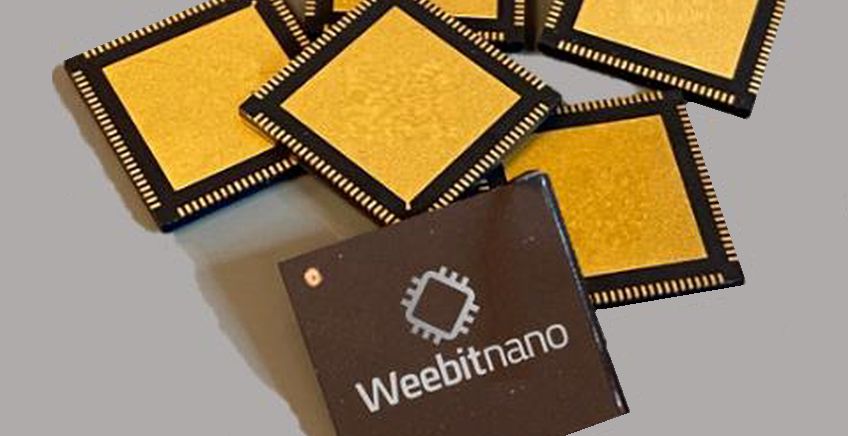
Weebit Nano’s ReRAM is a next-generation Non-Volatile Memory (NVM) solution. The technology utilizes materials that change their electrical resistance in response to voltage, allowing them to “remember” data states even after power is disconnected. The technology offers the non-volatility of Flash memory, combined with the low power consumption and high endurance typically associated with DRAM. Weebit estimates its solution is 1,000 times faster and 1,000 times more energy-efficient than traditional Flash memory, positioning it as an important enabler for IoT, Artificial Intelligence, and data center applications.

A Strategic Milestone for the Embedded Sector

Built using standard CMOS fabrication processes, ReRAM devices has already demonstrated high-temperature resilience up to 150°C and meets the rigorous AEC-Q100 standards required for the automotive industry. Amichai Ron, Senior Vice President, TI Embedded Processing, said: “The TI and Weebit Nano collaboration will enable our customers to get access to industry-leading NVM technology in performance, scale, and reliability which will enable us to enhance our position as a leading embedded processors provider.”

Coby Hanoch, CEO of Weebit Nano, said: “TI is one of the world’s foremost integrated device manufacturers. This agreement is a strong signal that the industry is moving towards ReRAM as the successor to flash memory in SoC designs. It also reinforces Weebit’s position as the leading independent provider of ReRAM technology.”

Market Impact and Financial Outlook

The partnership represents a massive strategic win for Weebit. Texas Instruments is a global semiconductor titan, reporting $4.75 billion in revenue for Q3 2025 (a 14% year-over-year increase). While analog components accounted for $3.7 billion of that total, TI’s embedded processing revenue reached $700 million for the quarter. With TI currently sporting a market cap of approximately $161 billion on the NASDAQ, the news sent ripples through the markets. Weebit Nano’s shares surged 18% on the Australian Securities Exchange (ASX), bringing its market valuation to approximately $820 million USD.

Cyata Uncovers LangChain Flaw That Puts AI Agents at Risk

Israeli cybersecurity company Cyata has disclosed a critical security vulnerability in langchain-core, one of the most fundamental and widely used components in the AI agent ecosystem. The flaw, tracked as CVE-2025-68664 and assigned a high severity score of CVSS 9.3, can under certain conditions lead to the leakage of sensitive secrets—including API keys, tokens, and login credentials—and even trigger unintended code execution. The issue stems from a mechanism long considered relatively safe: serialization.

LangChain is one of the core software libraries used to build AI agents—systems designed to perform complex tasks, connect to external services, retain memory, and operate as digital workers. The langchain-core package serves as the library’s foundational layer, responsible for object representation, data structure management, and the way agents, tools, and memories move through the system and are reloaded. According to publicly available telemetry, langchain-core alone has amassed hundreds of millions of downloads, while the broader LangChain package sees tens of millions of downloads each month—underscoring the potential scale of exposure.

The issue identified by Cyata’s researchers originates from flawed handling of the serialization process—the stage in which in-memory objects such as agents, tools, or data structures are converted into a simple data format for storage or transfer between system components. Deserialization is the reverse process, in which that data is loaded back and reconstructed as an active object in code. While most known vulnerabilities typically emerge during deserialization, this case is unusual in that the weakness is introduced earlier, at the point where data is first created and written out. By manipulating an internal key known as lc, an attacker can cause data saved as ordinary information to later be interpreted as a legitimate LangChain object when reloaded. As a result, when the data reenters the system, it is treated not as passive input but as an active entity with access to the agent’s execution context.

In common AI agent workflows—where data is stored in memory, passed between agents, or reloaded as part of automated pipelines—the flaw may allow attackers to extract sensitive environment variables from the running process. These variables typically store API keys, tokens, and credentials required to access external services. Because AI agents often operate with broad permissions to cloud platforms, databases, and enterprise systems, and are sometimes connected to secret vaults that dynamically supply credentials, such leakage can significantly amplify the impact of an attack. In certain cases, the report notes, attackers may also trigger the execution of code classes from within the project’s namespace—software components already available in LangChain’s runtime environment—leading to unintended side effects and altered agent behavior during data loading.

According to Yarden Porat, the Cyata security researcher who discovered the vulnerability, what makes the finding particularly notable is that it challenges a long-standing assumption among developers. “What makes this issue unusual is that it starts in the serialization path, not the deserialization path,” Porat said. While deserialization has long been viewed as a known risk area, serialization is often assumed to be safe because the data is leaving the system. In the context of AI agents and continuous event-driven workflows, Porat emphasized, “that assumption no longer holds—what goes out can come back in under a different identity.”

The severity of the vulnerability was also reflected in the response from the LangChain development community, which awarded the researchers a $4,000 bug bounty—the highest ever granted by the project. Cyata recommends that organizations and developers using LangChain promptly upgrade to the patched versions and apply strict least-privilege principles and hardened default configurations for AI agents.

Shahar Tal, co-founder and CEO of Cyata, said organizations must begin treating AI agents as full-fledged operational entities rather than just code. “When it comes to AI workers, the key question isn’t only what code is running, but what permissions it runs with and what can go wrong,” Tal said. In an environment where AI agents often have wide access to systems and data, he added, effective security design must focus not only on rapid detection and remediation, but also on smart defaults that limit potential damage from the outset.

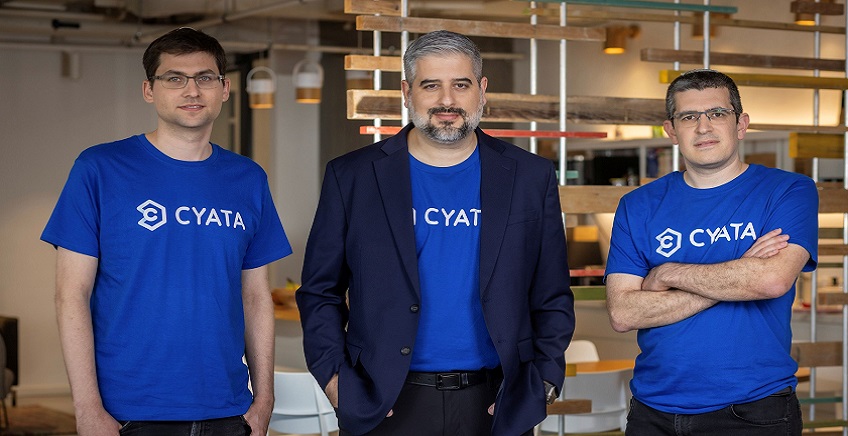
[Image above: Cyata’s founders. Credit: Eric Sultan]

Quantum X Labs Files Patent for Quantum-Accelerated Clinical Trial Analytics

By Yohai Schweiger

Israeli company Quantum X Labs has filed a U.S. patent application for a technology designed to accelerate and improve the analysis of clinical-trial data by integrating quantum computing. According to the disclosure, the invention centers on a computational algorithm built to handle large volumes of complex biological and clinical data, enabling more efficient inference about treatment responses, patient sub-populations, and probabilistic patterns using quantum capabilities.

The patent filing was reported on Wednesday by Geeks Internet, a publicly traded company on the Tel Aviv Stock Exchange. Geeks Internet holds approximately 26.42% of Viewbix, which is currently in the process of acquiring Quantum X Labs. Viewbix stated that Quantum X Labs—the acquisition target—submitted the U.S. patent application, and that development was carried out in collaboration with CliniQuantum, a portfolio company of Quantum X Labs focused on applying quantum computing to clinical-trial analysis.

The patent application is titled “Generating Quantum Markov Chain Monte Carlo Sampling Points for Continuous Distribution Functions.” The title offers a clear window into the technology’s core. At its heart lies a well-established statistical and AI framework known as Markov Chain Monte Carlo (MCMC)—a family of algorithms used for probabilistic sampling and inference when systems are too complex for direct calculation, such as those involving many variables and high uncertainty. In clinical trials, MCMC methods help model treatment responses, estimate probabilities, and uncover hidden patterns within noisy or incomplete datasets.

According to the public description, the innovation Quantum X Labs seeks to protect does not alter clinical protocols themselves, but rather the algorithmic sampling methodology. In a clinical-trial context, “samples” are not only lab measurements but computational representations of possible scenarios—different combinations of patient characteristics, treatment responses, dosages, and outcomes over time. MCMC algorithms rely on such samples to construct a probabilistic picture of how a therapy performs, even when data are partial or imperfect. The disclosed algorithm introduces a quantum component to generate these sampling points more efficiently and accurately from complex, continuous distributions. This approach could shorten computation times, improve statistical precision, and potentially enable comparable conclusions with fewer patients or fewer real-world measurements. In that sense, the patent targets the algorithmic and methodological layer, with a clear application to medical research.

Importantly, the algorithm is not intended to run entirely on a standalone quantum computer. Instead, it follows a hybrid architecture: the overall statistical computation runs on classical computers, while a quantum processor is integrated as an accelerator for specific stages—primarily the generation of complex sampling points. This design aims to leverage today’s available quantum advantages without depending on fully mature, large-scale quantum hardware.

Development was carried out in collaboration with CliniQuantum, which focuses on applying advanced computing—including quantum methods—to clinical-trial analytics. CliniQuantum positions itself as a platform for identifying patient sub-populations, response patterns, and biological signatures within complex datasets, supporting probabilistic decision-making throughout clinical studies. Quantum X Labs develops quantum technologies across multiple domains, centralizes the intellectual property, and leads the core algorithmic work, while CliniQuantum serves as the applied arm for clinical use cases.

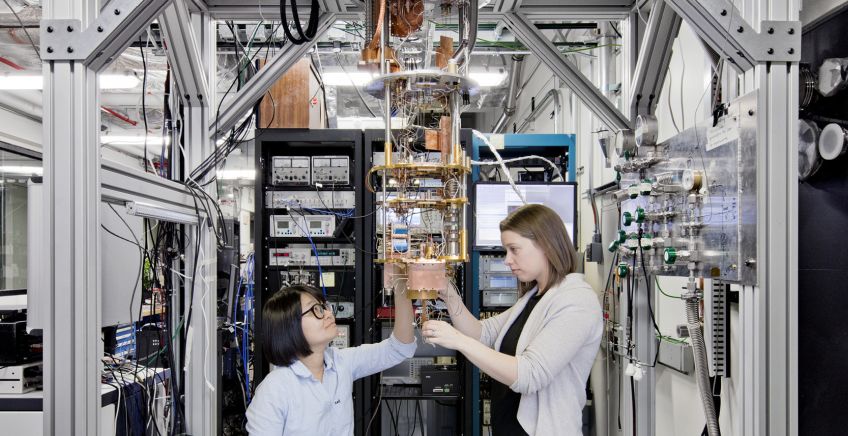
[Image above: Construction of a commercial-grade quantum computer at IBM. Photo: IBM]

Innoviz Unveils InnovizThree, Expanding Its Vision Beyond Autonomous Vehicles

Innoviz has officially unveiled InnovizThree, the next generation in its LiDAR sensor portfolio, marking a significant step forward both technologically and strategically. The new sensor, which will be demonstrated publicly for the first time at the upcoming CES exhibition, was designed from the ground up to be integrated inside the vehicle cabin, behind the windshield—a location long considered particularly challenging for LiDAR systems but increasingly favored by automakers.

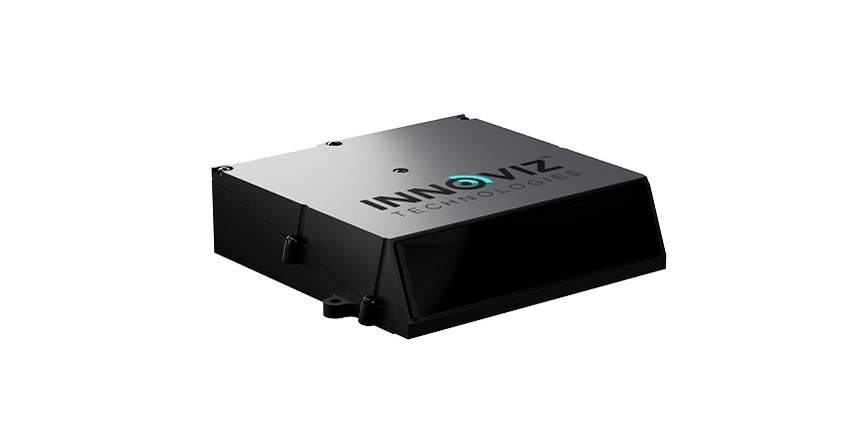
InnovizThree is based on 905-nanometer Time of Flight technology and delivers a roughly 60% reduction in volume compared with its predecessor, alongside improved performance and lower power consumption. The sensor comes in an exceptionally compact form factor, measuring about 34 millimeters in height and weighing roughly 600 grams, enabling seamless behind-the-windshield integration. According to the company, it offers a detection range of up to 300 meters, high angular resolution of around 0.05 degrees, a wide horizontal field of view of up to 120 degrees, and a scanning rate of up to 10.6 million points per second. It supports operating modes of 10 or 20 frames per second and enables configurable regions of interest, allowing higher point density and resolution to be concentrated in critical areas of the field of view. The system is also designed to deliver a continuous point cloud without gaps within these regions and to detect multiple returns from a single laser pulse, improving performance in rain, fog, glass interference, and complex lighting conditions.

The emphasis on behind-the-windshield installation goes beyond aesthetics. In addition to improving vehicle design, internal placement protects the sensor from physical damage, dirt, and harsh weather, enables the use of existing heating and cleaning systems, and simplifies installation and maintenance. At the same time, it presents a significant optical challenge due to glass distortion and signal attenuation—challenges Innoviz says it has addressed through a combination of optical design, algorithms, and thermal management.

Alongside its core focus on autonomous driving, Innoviz is clearly signaling an expansion into new markets. InnovizThree is positioned as a general-purpose, high-precision 3D sensing platform suitable not only for vehicles but also for humanoid robots, drones, and physical AI systems—domains that demand compact, lightweight, low-power sensors with industrial-grade reliability.

Although this marks the product’s official launch, Innoviz CEO Omer Keilaf revealed InnovizThree several weeks ago during the company’s latest earnings call, as previously reported by TechTime. At the time, Keilaf emphasized that the product was born directly out of discussions with automakers, noting that placing LiDAR behind the windshield requires a smaller, more efficient sensor with sufficient performance headroom to compensate for optical signal degradation.

During the call, Keilaf also addressed competing sensing technologies such as FMCW and OPA, arguing that they are not yet mature enough for mass production. According to him, Innoviz’s choice of 905-nanometer Time of Flight enables the use of proven, widely available components, making the technology suitable for large-scale manufacturing and compliance with automotive standards.

The launch comes amid strong business momentum. Innoviz reported a 238% year-over-year increase in quarterly revenue to $15.3 million, a sharp rise in unit shipments, and continued progress in pilot programs and validation processes with major automakers for Level 3 and Level 4 systems, ahead of a planned start of serial production in 2027.

Israeli Tech Deepens Its Foothold in Europe, Employing Over 30,000 and Posting Nearly 5% Annual Growth

[Photo (right to left): Dina Pasca-Raz, Partner and Head of Technology at KPMG Israel; Eden Dvir-Zano, Managing Director of EIT Hub Israel; and Elle Taitou Spruch, Investor at pan-European VC fund Planven. Credit: Eyal Regev, Linus Seemann and Nicky Westphal]

Israeli technology companies have significantly expanded their footprint in Europe over the past three years, emerging as an increasingly influential force within the continent’s economy and innovation ecosystem. According to a comprehensive study conducted by EIT Hub Israel, pan-European venture capital fund Planven, and consulting firm KPMG, Israeli tech companies now employ more than 30,000 people across Europe, reflecting an average annual employment growth rate of 4.8%.

The report shows that most Israeli companies have chosen to base their European operations within EU member states, with Germany, Spain, and France serving as the primary innovation hubs. At the same time, Central and Eastern European countries including Poland, Romania, and the Czech Republic have become preferred destinations for engineering, R&D, and shared services centers, driven by lower operating costs. The study also highlights countries such as Lithuania and Bulgaria, where Israeli firms are establishing large-scale service centers employing hundreds of workers and creating significant local employment clusters.

The findings portray a relatively mature profile of Israeli companies active in Europe. Around 60% are established businesses that have been operating for eight to twelve years, rather than early-stage startups. Research and development roles account for roughly 40% of the workforce, underscoring the innovation-driven nature of Israeli high-tech. In addition, 31% of the companies maintain senior executive representation in Europe at the CEO or VP level, a figure that rises to 71% among large enterprises.

“The data shows that Israeli companies are deepening their long-term presence in Europe, which offers access to a major market, stable regulation, and advanced industrial partners,” said Elle Taitou Spruch of Planven. She added that “the alignment between Israel’s strengths in AI, cybersecurity, and health and Europe’s priorities is creating opportunities that are expected to accelerate further in the coming years.”

According to Dina Pasca-Raz, Partner and Head of Technology at KPMG Israel, “unlike the familiar model of a young startup initially targeting the U.S. market, most Israeli companies operating in Europe are mature businesses with local management. There is a natural synergy between Israeli strengths and leading European economies, particularly in areas such as security, AI, and sustainability.”

The authors conclude that Europe is not viewed as a substitute for the U.S. market, but rather as a complementary strategic destination, enabling Israeli companies to build deep, stable, and long-term operations at the heart of the European economy.