
Israeli Tech Deepens Its Foothold in Europe, Employing Over 30,000 and Posting Nearly 5% Annual Growth

[Photo (right to left): Dina Pasca-Raz, Partner and Head of Technology at KPMG Israel; Eden Dvir-Zano, Managing Director of EIT Hub Israel; and Elle Taitou Spruch, Investor at pan-European VC fund Planven. Credit: Eyal Regev, Linus Seemann and Nicky Westphal]

Israeli technology companies have significantly expanded their footprint in Europe over the past three years, emerging as an increasingly influential force within the continent’s economy and innovation ecosystem. According to a comprehensive study conducted by EIT Hub Israel, pan-European venture capital fund Planven, and consulting firm KPMG, Israeli tech companies now employ more than 30,000 people across Europe, reflecting an average annual employment growth rate of 4.8%.

The report shows that most Israeli companies have chosen to base their European operations within EU member states, with Germany, Spain, and France serving as the primary innovation hubs. At the same time, Central and Eastern European countries including Poland, Romania, and the Czech Republic have become preferred destinations for engineering, R&D, and shared services centers, driven by lower operating costs. The study also highlights countries such as Lithuania and Bulgaria, where Israeli firms are establishing large-scale service centers employing hundreds of workers and creating significant local employment clusters.

The findings portray a relatively mature profile of Israeli companies active in Europe. Around 60% are established businesses that have been operating for eight to twelve years, rather than early-stage startups. Research and development roles account for roughly 40% of the workforce, underscoring the innovation-driven nature of Israeli high-tech. In addition, 31% of the companies maintain senior executive representation in Europe at the CEO or VP level, a figure that rises to 71% among large enterprises.

“The data shows that Israeli companies are deepening their long-term presence in Europe, which offers access to a major market, stable regulation, and advanced industrial partners,” said Elle Taitou Spruch of Planven. She added that “the alignment between Israel’s strengths in AI, cybersecurity, and health and Europe’s priorities is creating opportunities that are expected to accelerate further in the coming years.”

According to Dina Pasca-Raz, Partner and Head of Technology at KPMG Israel, “unlike the familiar model of a young startup initially targeting the U.S. market, most Israeli companies operating in Europe are mature businesses with local management. There is a natural synergy between Israeli strengths and leading European economies, particularly in areas such as security, AI, and sustainability.”

The authors conclude that Europe is not viewed as a substitute for the U.S. market, but rather as a complementary strategic destination, enabling Israeli companies to build deep, stable, and long-term operations at the heart of the European economy.
Addionics and PNT Join Forces to Develop Energy Storage Batteries for Data Centers

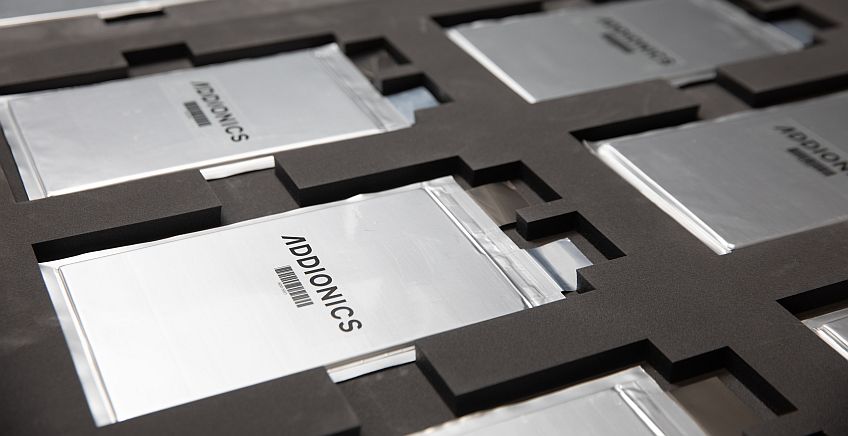
Israeli battery technology company Addionics and South Korea’s PNT Materials have announced a strategic partnership to develop, manufacture and commercialize prismatic LFP battery cells designed for large-scale energy storage systems. The collaboration is aimed primarily at addressing the surging energy needs of AI-driven data centers, as power consumption rises sharply across high-performance computing infrastructure and demand grows for stable, reliable and cost-efficient energy supply.

Prismatic LFP cells, based on lithium iron phosphate chemistry, are housed in rigid rectangular casings optimized for dense, controlled deployment in large energy storage systems. Unlike smaller cells used in consumer devices, these batteries are designed for long operational lifetimes, thousands of charge and discharge cycles, and a particularly high level of safety. For data centers, where batteries play a critical role in grid stability and as a backbone for uninterrupted AI workloads, the combination of safety, durability and effective thermal management makes prismatic LFP chemistry an increasingly preferred choice.

The partnership is intended to combine Addionics’ structural battery technology with PNT’s industrial manufacturing capabilities, with the goal of developing a new generation of energy storage batteries tailored for continuous data center operation and large-scale deployment in renewable energy and energy storage system projects. In this context, batteries are no longer viewed as a short-term backup solution, but as a long-life infrastructure component required to handle fluctuating loads while maintaining high reliability over many years.

Addionics is an Israeli startup focused on structural improvements to lithium-ion batteries without altering their underlying chemistry. The company’s core technology is based on three-dimensional current collectors that replace flat metal foils with a smart, porous structure offering significantly larger surface area. This architecture improves electrical conductivity within the cell, enables more efficient heat dissipation, extends battery lifespan and supports high-power charge and discharge — all critical characteristics for energy-intensive AI infrastructure.

Under the collaboration, Addionics’ technology will be integrated into the manufacturing processes of PNT Materials, a South Korean company with extensive experience in producing materials, equipment and industrial processes for the battery industry. PNT has long served as an infrastructure supplier to the global battery market and in recent years has expanded into LFP cells and large-scale energy storage applications, with a strong focus on scalability, reliability and cost reduction.

The decision to focus on prismatic LFP cells reflects a broader shift across the energy and AI sectors, where the emphasis is moving away from the pursuit of maximum energy density toward stable, safe and economically viable solutions at infrastructure scale. The combination of Addionics’ three-dimensional battery architecture with PNT’s manufacturing expertise is intended to position energy storage as a foundational pillar of the AI-driven digital economy.

Dr. Moshiel Biton, founder and CEO of Addionics, said that “combining our technological advantage with PNT’s manufacturing capabilities will enable us to deliver high-quality, cost-effective batteries that help accelerate the AI revolution and support the global transition to clean energy.”

Germany and Israel Deepen Defense-Tech Ties with New Cooperation Agreement

Germany’s Minister for Economic Affairs, Katherina Reiche, signed last week a memorandum of understanding (MoU) during an official visit to Israel aimed at strengthening cooperation in the defense-tech sector. The agreement focuses on fostering innovation, technology transfer, and closer ties between Israeli startups and German industry. The MoU was also signed by Aharon Appelbaum of Israeli defense-tech investment fund Kinetica and Michael Wöltz, founder of the German startup incubator SouthWestX. As part of the initiative, a “Startup Leaders” program will be launched to facilitate knowledge exchange, business connections, and joint projects between companies in both countries.

Kinetica is an Israeli investment fund specializing in defense-tech and dual-use technologies, operating at the intersection of security, advanced industry, and artificial intelligence. Beyond capital investment, the fund emphasizes strategic guidance, access to international markets, and partnerships with global corporations and defense organizations. Its activity reflects the growing global momentum in defense-tech, driven by rising demand for solutions in areas such as autonomy, sensing, cybersecurity, and advanced defense systems.

SouthWestX, for its part, is a German innovation hub and startup incubator focused on connecting technology ecosystems across Europe, Israel, and the United States, with an emphasis on strategic industries including defense, aerospace, energy, and smart manufacturing. Based in southwestern Germany—an area known for its strong industrial and defense manufacturing base—the incubator acts as a bridge between early-stage startups and large corporations, research institutions, and government bodies. The partnership with Kinetica is designed to leverage Israel’s innovation capabilities alongside Germany’s industrial infrastructure, regulatory framework, and market access.

Reiche’s visit also carried clear security and geopolitical significance. She was accompanied by an unusually large delegation of senior executives from Germany’s defense industry, signaling a renewed strengthening of defense relations between Berlin and Jerusalem after a period of strain. Tensions peaked in August, when the German government under Chancellor Friedrich Merz imposed a partial arms embargo on Israel over disagreements related to the fighting in Gaza. The embargo was lifted in recent weeks, and around the same time Germany operationally deployed the Arrow 3 air defense system purchased from Israel—a strategically significant move, albeit one that was not accompanied by high-profile public political appearances.

Overall, the newly signed MoU reflects a dual track of technological and entrepreneurial cooperation alongside a clear political and security signal, positioning defense-tech as a central pillar in the deepening relationship between Germany and Israel in the years ahead.

From Drones to Command: XTEND Software Integrates into Lockheed Martin’s U.S. Military C2 Stack

Lockheed Martin has announced a collaboration between its advanced development arm, Skunk Works, and Israeli drone manufacturer XTEND, aimed at integrating XTEND’s XOS operating system into Skunk Works’ MDCX command-and-control platform. As part of the partnership, the two companies conducted an operational pilot in which a large drone carried a smaller drone into the operational area, deployed it for a tactical mission, and enabled seamless control of both platforms through a single system operated by one user. The demonstration underscores a fundamental shift in how modern militaries design and operate unmanned systems on the battlefield.

To understand the significance of the move, it must be viewed in the broader context of the Pentagon’s evolving command-and-control doctrine. In recent years, the U.S. Department of Defense has been advancing the JADC2 concept—short for Joint All-Domain Command and Control—designed to connect all branches of the military, across all domains, into a single, continuous command network. The core idea is that every sensor, of any type, can contribute to a shared operational picture, enabling rapid decision-making and coordinated action even in contested environments marked by jamming and electronic warfare.

Skunk Works plays a central role in translating such concepts into operational systems. As Lockheed Martin’s advanced innovation and development division, it operates as a semi-autonomous unit and has been responsible for breakthrough defense technologies for decades. In recent years, Skunk Works has expanded its focus beyond platforms and airframes toward software, artificial intelligence, and command-and-control layers that connect multiple systems into a single coordinated force.

XTEND as a Tactical Control Layer: Linking Large and Small Drones

Skunk Works’ MDCX platform is designed as a multi-domain command-and-control layer that integrates sensors, manned and unmanned platforms, and diverse data sources into a single interface. MC-MDCX—the configuration into which XTEND’s operating system was integrated—is specifically intended to manage platforms from different categories, such as a large drone and a small tactical drone, within a single mission flow, without requiring control to be handed off between operators.

This is where XTEND comes in. While the company is best known as a manufacturer of tactical drones, its core technology lies not in the airframe itself but in the operating system developed to control it. XTEND’s XOS is designed to enable intuitive and precise control of tactical drones in complex operational environments, while reducing operator cognitive load and shortening training time. Accordingly, the collaboration with Lockheed Martin is primarily focused on software rather than on a specific drone platform, and on how this tactical control layer integrates into broader command-and-control architectures.

XTEND’s XOS is integrated within Skunk Works’ MDCX command-and-control platform, which serves as the top-level control layer in Lockheed Martin’s multi-domain C2 experiments. Within this framework, XOS functions as the operating layer for the small tactical drone, creating a continuous interface between the operation of the larger aerial platform and the deployment of the smaller drone. The integration allows a single operator to manage transitions between platforms within the same mission context, without switching between separate systems or losing operational awareness—reducing cognitive burden and minimizing real-time points of failure.

The operational need to combine large and small drones has become increasingly evident in recent years. Small drones are inexpensive, precise, and difficult to detect, but limited in range and endurance. Larger drones can travel long distances, loiter for extended periods, and serve as carrier platforms, but are more expensive and more conspicuous. Combining the two enables deep penetration and the deployment of low-cost, precise effectors at the right place and time—provided the command-and-control system can support such integration.

Another Layer in a Deepening Relationship with the U.S. Military

While Skunk Works remains an innovation laboratory rather than a full-scale acquisition program, a successful maturation of the concept could eventually see XTEND’s control system embedded at the heart of U.S. military command-and-control architectures. In this context, the collaboration with Lockheed Martin represents another step in XTEND’s deepening ties with the U.S. military, which already makes extensive use of the company’s solutions. XTEND supplies the U.S. Army with thousands of drones, operates a manufacturing facility in the United States, and is developing advanced capabilities for the simultaneous control of multiple drones, in line with the military’s transition toward autonomous and multi-platform formations.

The fact that Lockheed Martin—one of the Pentagon’s most significant defense contractors—is integrating XTEND’s software layer into an advanced command-and-control platform points to a deeper level of integration between the company’s Israeli-developed technology and the U.S. operational ecosystem, as well as alignment with the emerging drone strategy of the U.S. Army.

Lotus Neuro Spins Out of Insightec to Develop Ultrasound-Based Therapy for Brain Cancer

Medical device company Insightec has announced the creation of a new spin-out, Lotus Neuro, dedicated to developing advanced therapies for brain tumors. The move is based on Insightec’s focused ultrasound technology and its clinically demonstrated ability to temporarily and precisely open the blood–brain barrier (BBB), enabling more effective delivery of drugs to brain tissue. The new company marks a strategic deepening of Insightec’s brain-therapy activities and aims to translate clinical insights accumulated over recent years into targeted therapeutic applications. Lotus Neuro will operate in the field of neuro-oncology, with an initial focus on glioblastoma—one of the most aggressive and lethal forms of brain cancer.

Internal Leadership and a Familiar Investor: The Spin-Out Structure

Lotus Neuro will be led by Dr. Arjun J.J. Desai, currently Chief Strategy Officer at Insightec, who will assume the role of founder and CEO of the new company. His designation as founder suggests that the spin-out was driven from within Insightec itself. The company has not disclosed whether Lotus Neuro will be based in Israel or how many employees it will initially employ.

The venture will be funded by Nexus NeuroTech Ventures, an investment firm well known to Insightec’s management and to the market. Nexus was among the key investors that backed Insightec in 2024, during a period of severe financial challenges that included a “going concern” warning and liquidity constraints that threatened the company’s continued operations. At the time, Nexus participated in a capital raise of approximately $150 million, helping stabilize Insightec’s financial position and ensure business continuity.

While the announcement did not disclose the size of Nexus’s investment in Lotus Neuro or its ownership stake, Nexus is the only investor named at this stage—suggesting it may hold a significant share in the new company. The spin-out may also reflect a strategic move by Nexus to unlock additional value from its investment in Insightec by opening a new therapeutic market built on the same underlying technology.

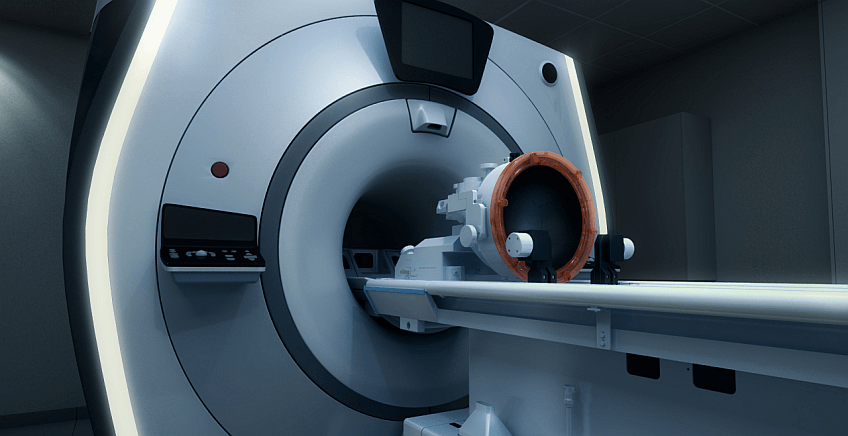
Founded in 1999 and headquartered in Tirat Carmel, Israel, Insightec operates in the U.S. and Europe as well. The company developed the Exablate system, an MRI-guided focused ultrasound device used for non-invasive treatments of neurological conditions such as essential tremor and Parkinson’s disease, as well as certain brain tumors.

From Liquid Biopsy to Therapy: The Clinical Foundation of Lotus Neuro

The scientific roots of the spin-out lie in the LIBERATE clinical trial launched in 2022, in which Insightec explored the use of low-intensity focused ultrasound in glioblastoma patients to enable liquid biopsy. Brain tumors present a unique challenge due to the blood–brain barrier, a natural defense mechanism that complicates both diagnosis and effective drug delivery.

In the trial, researchers demonstrated for the first time that ultrasound activation could enable the release of tumor-derived genetic material into the bloodstream, allowing diagnosis and disease monitoring without invasive procedures. This capability—initially observed as a byproduct of a diagnostic study—became the foundation for the spin-out.

If ultrasound can influence the tumor environment to allow materials to move outward, the same mechanism can potentially be harnessed to deliver drugs and biological therapies more effectively into the tumor itself. This is where Lotus Neuro enters the picture. The company will focus on developing combinations of ultrasound with existing and novel drugs, aiming to enhance their effectiveness in brain cancers where treatment options remain severely limited.

Glioblastoma is widely regarded as one of the greatest challenges in modern medicine, with poor survival rates and few effective therapies. Any technology that improves access to the tumor or boosts the efficacy of existing drugs could represent a meaningful breakthrough. For Insightec, the spin-out allows the company to remain focused on its role as a platform and medical device provider, while Lotus Neuro operates as a therapy-development company with broader scientific, strategic, and commercial flexibility.

In the background stands Nexus, which recently raised a large fund worth hundreds of millions of dollars for investments in advanced technologies, positioning Lotus Neuro as part of a broader strategy focused on deep, long-term innovation. The spin-out reflects not only technological progress, but also a calculated business move to extract new value from a technology that has already proven itself in clinical settings.

Rivian Unveils Autonomous Driving Platform, Signals Shift Into an AI Company

[Pictured above: Rivian R1S SUV. Source: Wikipedia]

At its Autonomy & AI Day event held last week, electric vehicle manufacturer Rivian unveiled its technological roadmap toward advanced autonomous driving and, for the first time, revealed the core of its next-generation autonomy platform. The announcements centered on a proprietary compute chip developed in-house, a new software platform based on a large driving model, and deep integration of artificial intelligence across all layers of the system.

Rivian is a U.S. electric vehicle manufacturer focused on premium electric SUVs and pickup trucks, best known for its R1T and R1S models. In 2024, the company delivered approximately 50,000 vehicles. According to the roadmap presented, the new technologies will be rolled out gradually across Rivian’s next-generation vehicles—led by the upcoming R2 platform, expected to reach the market starting in 2026. Initial deployments will offer advanced semi-autonomous capabilities, paving the way toward Rivian’s longer-term goal of Level 4 autonomous driving. Taken together, the announcements position Rivian not merely as an EV manufacturer, but as a company architecting the future of autonomy through a vertically integrated AI system—more akin to cloud and deep-tech companies than to traditional automakers.

A Custom Chip as the Foundation of Autonomy

At the heart of Rivian’s autonomous driving platform is a custom inference chip, designed specifically to run real-time autonomous driving models after several years of internal development. The chip delivers roughly 1,600 TOPS in sparse mode—an efficiency-oriented compute approach that skips unnecessary operations—and is optimized for continuous, low-latency processing of multi-sensor data streams while maintaining controlled power consumption. According to Rivian, the chip is a central pillar of its next-generation autonomy platform and is expected to replace the NVIDIA-based compute solutions used in earlier generations of the company’s driver-assistance systems.

With this move, Rivian joins a very small group of automakers that have chosen to develop their own dedicated processors for autonomous driving—a path previously taken primarily by Tesla. The decision reflects a strategic view of AI hardware as a long-term competitive asset rather than an off-the-shelf component.

Sitting above the hardware layer is a software platform built around large AI models for driving. Rivian describes a unified model that combines visual perception, scene understanding, and decision-making, replacing the traditional pipeline of separate functional modules. This marks a shift from a conventional ADAS architecture to a foundation-model approach to driving—one that learns from massive datasets, improves continuously, and is better equipped to handle edge cases. Training and refinement of the model are driven by data collected from Rivian’s vehicle fleet and fed back into the system through ongoing software updates.

LiDAR and the Sensor Stack Debate

Central to Rivian’s strategy is a clear commitment to a multi-modal sensing architecture, combining cameras, radar, and the future integration of LiDAR sensors. This choice represents one of the company’s most significant points of differentiation from Tesla. While Tesla adheres to a camera-only approach and has entirely abandoned LiDAR for ideological and cost reasons, Rivian has opted for a more pragmatic path—viewing LiDAR as a critical enrichment layer for three-dimensional spatial understanding.

From Rivian’s perspective, LiDAR is not a replacement for vision-based perception, but a complementary system that adds redundancy, improves object-detection accuracy, and is particularly valuable in challenging lighting conditions and edge-case scenarios. The decision also sends a clear signal to the sensor ecosystem that LiDAR still has a meaningful role to play in autonomous driving, especially when deeply integrated into a unified AI stack. For companies such as Israel-based Innoviz, Luminar, and others, this represents significant potential—not only because Rivian could emerge as an important customer, but because its architectural choice reinforces LiDAR’s position as a core component of automotive sensing systems.

Autonomy as Rivian’s Core Value Engine

Beyond the specific technologies, Rivian’s announcements reflect a broader strategic shift in which autonomy and AI are positioned as the company’s future value engine. Autonomous driving is not framed as another vehicle feature, but as part of a comprehensive AI system built on vertical control over chips, software, and models—designed to turn these capabilities into internal strategic assets rather than dependencies on external suppliers.

In parallel, Rivian emphasized that it is embedding AI across its broader operations, from data collection and fleet analytics to optimization of development and manufacturing processes, as well as maintenance, logistics, and customer service. This mindset brings Rivian closer to the operating model of cloud and AI companies than to that of traditional automakers, aligning it philosophically with technology-driven players such as Tesla and Apple.

The broader implications for the industry are clear. The battle for autonomy is no longer about which sensor is superior, but about who controls the entire AI loop—from data to models to compute. Custom chips are becoming strategic tools, large driving models are replacing modular architectures, and autonomy is increasingly viewed as an evolving platform rather than a one-time promise. Rivian may still be some distance from fully realizing Level 4 autonomy, but the direction it has outlined offers a glimpse of what the industry is likely to look like in the years ahead—one in which the vehicle is, above all, an AI system on wheels.

NVIDIA Acquires SchedMD, Deepening Its Grip on the AI Infrastructure Scheduling Layer

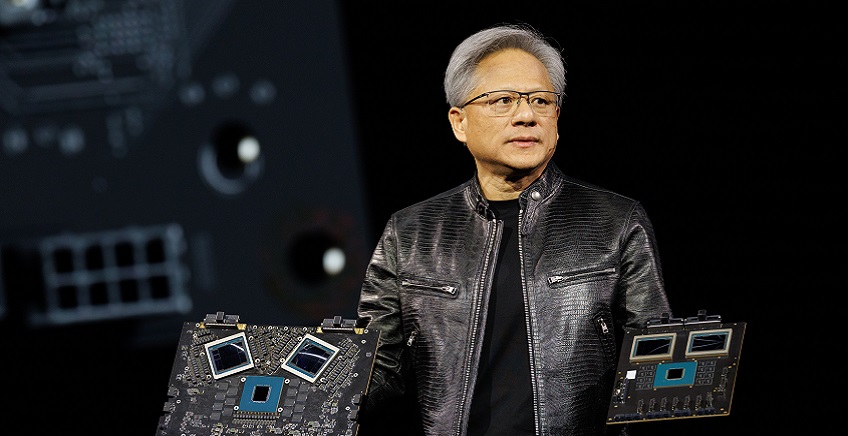
[Pictured: NVIDIA founder and CEO Jensen Huang]

NVIDIA has announced the acquisition of SchedMD, the company behind Slurm, the world’s most widely used workload manager for high-performance computing (HPC) and AI. While the financial terms were not disclosed, the move marks another step in NVIDIA’s broader strategy to extend its control beyond acceleration hardware and into the critical software layers that govern how the most valuable compute resources in AI are actually used.

SchedMD is a U.S.-based company founded in 2010 by the original developers of Slurm, though the technology itself dates back even further. Slurm was first developed in the early 2000s at Lawrence Livermore National Laboratory, as an open alternative to proprietary schedulers for large-scale computing clusters. Since then, it has become the de facto standard: today, Slurm runs on roughly half of the world’s top supercomputers listed in the TOP500, and is used by universities, research institutes, defense organizations, pharmaceutical companies, financial institutions—and increasingly by enterprises operating in-house AI infrastructure.

At its core, Slurm is the engine that decides who gets compute resources, when, and how. It manages queues, allocates CPUs, memory, and GPUs, and ensures workloads are executed fairly and efficiently across clusters that may span thousands of servers. In the AI era—where model training consumes massive amounts of GPU capacity—Slurm has become a mission-critical component of the workflow. Without intelligent scheduling, a significant portion of these extremely expensive resources would simply go to waste.

Slurm’s primary users are not application developers, but infrastructure teams—the operators of data centers and compute clusters. AI developers typically encounter Slurm only indirectly, when submitting jobs, without visibility into the allocation logic running behind the scenes. In public cloud environments, similar scheduling mechanisms usually exist as internal systems, largely opaque to customers.

It is also important to distinguish Slurm from platforms such as Run:AI, which NVIDIA acquired earlier. While Slurm operates as the foundational scheduler of a cluster—a low-level infrastructure layer that is aware of physical resources—Run:AI sits above Kubernetes as an intelligent optimization layer, with awareness of teams, projects, experiments, and business priorities. Put simply: Slurm allocates the “iron,” while Run:AI allocates it in an organizational and business context. Together, they form a continuous stack—from hardware all the way up to enterprise-level AI workload management.

This is where the strategic significance of the acquisition becomes clear. Although Slurm is open source, control over the organization that leads its development gives NVIDIA substantial influence over the project’s direction, development velocity, and hardware optimization priorities. Slurm is already well tuned for NVIDIA GPUs, but the acquisition paves the way for even tighter integration with CUDA, NVLink, InfiniBand, and capabilities such as MIG (Multi-Instance GPU), which allows a single GPU to be partitioned for parallel workloads. The result is higher GPU utilization—ultimately translating into greater demand for NVIDIA hardware.

More broadly, NVIDIA continues to assemble end-to-end vertical control over the AI infrastructure stack: processors, networking, software libraries, workload scheduling, and enterprise management. While the SchedMD acquisition may appear modest compared to some of NVIDIA’s blockbuster deals, it targets one of the most critical choke points in the AI world: who controls compute time. In a domain where every minute of GPU usage carries significant economic value, that level of control is nothing short of strategic.