Counterfeit Components in the Electronics Industry

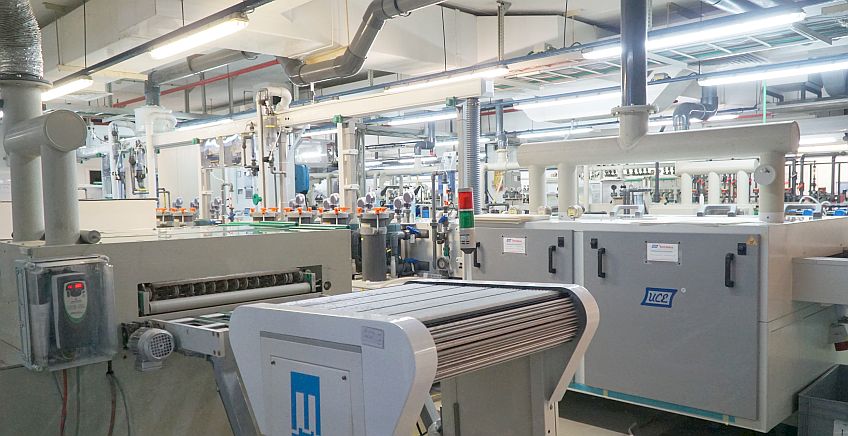
Photo above: Quality assurance lab at A2 Global

Guest article by:

Oren Gadel, Regional Manager, A2 Global Electronics + Solutions

A decade ago, I published an article addressing the dangers and the scale of counterfeit components in the electronics industry. The article highlighted the threats posed to supply chains, manufacturers, and critical systems due to unreliable and counterfeit components. Now, ten years later, I find it worthwhile to reflect on whether anything has changed and what is still required to combat the ongoing threat of counterfeit components, which today threaten industries more than ever.

A Brief History and a Look Forward

Ten years ago, the electronics industry faced widespread counterfeiting issues. Lack of transparency in supply chains, insufficient quality testing, unawareness and lack of oversight when dealing with the open market, and the pressure to reduce costs. All combined to create fertile ground for counterfeit components to enter the market. These components, which did not meet required standards, posed risks not only to product quality but also to the safety of many users. Counterfeits infiltrated critical systems in Aviation, Medical, and Defense industries, creating significant risks.

Has Anything Changed?

Between 2020 and 2023, the Electronics shortage became a critical issue affecting many industries, including automotive, medical, technology, and defense sectors. This shortage created a “perfect storm”: A combination of factors that created chaos unprecedented in the electronics world. The reasons included a sharp increase in demand for electronic devices and medical equipment due to the COVID-19 pandemic, supply chain disruptions caused by pandemic restrictions, changes in production priorities, and even natural disasters impacting critical manufacturing facilities.

Then came the war between Russia and Ukraine, further exacerbating the situation with a sharp rise in global defense demand and disruptions in the supply of essential materials used in chip manufacturing. As a result, the shock was immense, and the problem of counterfeit components worsened.

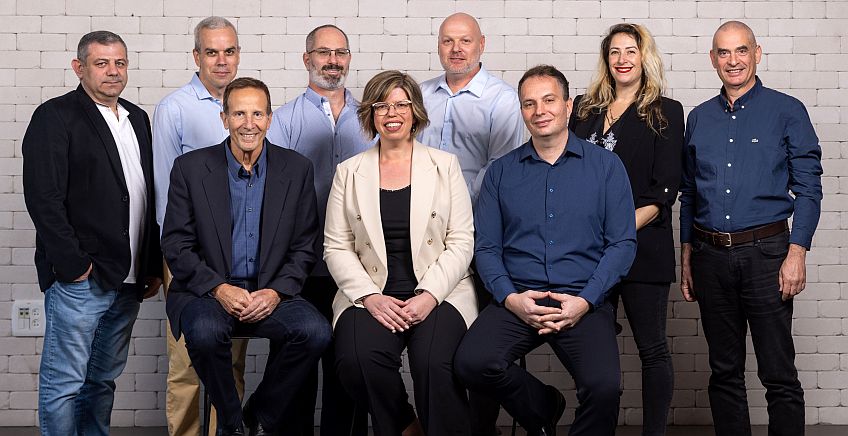
Oren Gadel: "Counterfeiting is a major threat"
Oren Gadel: “Counterfeiting is a major threat”

Obsolete Components: A Breeding Ground for Counterfeits

One of the major challenges—then, now, and likely in the future—is obsolete components. What Makes a Component Obsolete? Technological advancements, changes in standards and regulations, declining demand, raw material supply issues, manufacturers mergers and acquisitions, or simply the manufacturer’s economic impracticality. Obsolete components have become a particularly fertile ground for counterfeiting for several reasons:

  1. High Demand in the Open Market: Obsolete components are no longer available from original manufacturers and can only be obtained through the open market. This creates high demand from product manufacturers, maintenance companies, and critical industries that still need these components for repairing and upgrading existing systems. This high demand invites unreliable players to offer counterfeit components.

  2. Lack of Verified Sources: Once production of certain components ceases, finding reliable sources that ensure quality and reliability becomes challenging. Open market suppliers may not adhere to the same standards as original manufacturers, facilitating the entry of counterfeit components into critical systems.

  3. Difficulty Identifying Genuine Components: Obsolete components, especially those on the market for many years, may be harder to verify due to packaging changes, different markings, or material degradation. High-quality counterfeits can appear identical to the originals to the naked eye, making it difficult to spot differences without in-depth testing.

  4. High Costs: The scarcity of obsolete components drives up prices significantly, creating opportunities for counterfeiters to make large profits by producing and selling counterfeit components at prices close to the originals’ market prices.

  5. Use in Critical Industries: Obsolete components are often found in critical systems such as defense, aviation, and energy, where redesigning or upgrading an entire system isn’t always feasible or economical. The need for original components for maintaining and operating these systems, or fulfilling new orders requiring obsolete components that are no longer in production, makes this market especially vulnerable to counterfeits.

  6. Lack of Mandatory Standards in the Open Market: Unlike original manufacturers, the open market lacks clear and enforceable standards, making it easier for counterfeiters to introduce unreliable components. While major companies adhere to rigorous testing and verification protocols, the open market operates under looser rules, exploited by counterfeiters.

Beyond Counterfeits: The Challenge of Obsolete Components

Counterfeiting is a major threat, but it is not the only one. Obsolete components are often very old, have passed through multiple hands, and may have been stored in conditions that do not meet long-term preservation standards. As a result, even if a component appears authentic, it may be unfit for use due to issues like corrosion, material fatigue, loosened internal connections, wire bonding or reduced functional reliability.

Additionally, older components may not comply with current standards, and even those in good physical condition may suffer from poor performance or failure under extreme temperatures or different operating conditions. This poses a significant risk, particularly in critical industries such as aviation, defense, and medicine, where the failure of a single component can lead to severe consequences.

About the Author:
Oren Gadel, Regional Manager at A2 Global Electronics + Solutions, has over 20 years of experience in consulting and business management in the field of electronic components. Oren specializes in finding solutions for critical industries and works with a wide range of clients both in the Middle East and internationally.

A2 Global Electronics + Solutions provides supply chain management solutions in the field of electronic components: Global component sourcing, obsolete component management, shortage mitigation, and inventory management. Through a global network of offices and certified laboratories, the company conducts advanced quality testing and component verification using cutting-edge technologies to ensure the reliability and quality of components for clients in critical industries such as aviation, defense, and medicine.

SNUG Israel 2024 Explored Chip Design in the Era of AI

Photo above: SNUG Israel 2024. Credit: Yoni Reif

The Synopsys Users Group (SNUG) held its annual Israel conference, SNUG Israel 2024 in Herzliya last week. Executive Chair and Founder of Synopsys, Dr. Aart de Geus, delivered a keynote which explored the profound shifts shaping the semiconductor industry. Dr. de Geus delved into the exponential semiconductor technological advances of this decade, emphasizing how AI is driving vertical-market opportunities and redefining products, processes, and innovation.

“The ingenuity of our industry cannot be overestimated,” said Dr. Aart de Geus. “We are surrounded by the acceleration from ‘scale complexity’ to ‘systemic complexity’, and with it, a great opportunity to shape the future of silicon and software-defined systems. It is the collaboration across the ecosystem that has brought us to this moment, and it is this collective force that will continue to redefine what’s possible.”

The customer keynote was presented by VP of Engineering at Google Cloud, Uri Frank. His keynote, “It’s All About AI!”, offered a deep dive into the transformative AI trends reshaping technology. He shared his perspective on the challenges and opportunities AI presents to the systems and silicon industries, emphasizing the pivotal role of AI in the design and development of next-generation technologies.

SNUG Israel 2024 is the 20th annual SNUG event in Israel. The conference featured more than 35 technical presentations, with dedicated tracks covering critical topics such as digital design implementation & signoff, verification software and hardware, analog/mixed-signal (AMS) design & simulation, successful IP integration into SoCs, formal & functional safety (FuSa), emulation & FPGA prototyping and energy-efficient SoCs.

SNUG is one of the world’s largest user conference in the electronics industry, with over 12,000 Synopsys tool and technology users participating across North America, Europe, Asia,  and Israel.

Valens: Three Automotive Design Wins

by: Roni Lifshitz, Editor

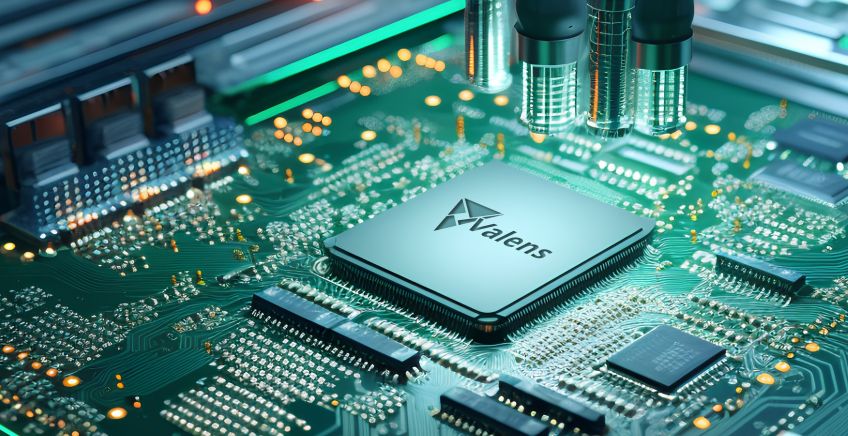
Valens Semiconductor (NYSE: VLN) has achieved three automotive design wins from leading European OEMs for its VA7000 MIPI A-PHY chipsets. The OEMs, which belong to a group of automotive brands, plan to embed Valens’ MIPI A-PHY chipsets in certain vehicle models with Start of Production (SoP) in 2026. The expected production volume may reach approximately 500,000 vehicles per year. Valens estimates that upon commercialization ramp up, the design wins will generate over $10 million dollars in annual revenue, for a period of 5-7 years.

Valens achieved these design wins in collaboration with leading Automotive Tier-1s on the camera side and on the System on Chip (SoC) side, both of which now offer native A-PHY support in their platforms. The selection of Valens chipsets follows intensive testing of a variety of connectivity solutions. Valens is a key contributor to the MIPI A-PHY standard, and offers the automotive industry a solution for sensor connectivity with immunity to electromagnetic noise.

The VA7000 chipsets was the first in the industry to implement the MIPI A-PHY standard for advanced driver-assistance systems (ADAS) and autonomous driving systems (ADS). MIPI A-PHY specifies in-vehicle high-speed data transmission over lightweight wiring harnesses for up to 15 meters, with adaptive noise cancellation and retransmission mechanisms to guarantee superior EMC/EMI performance. The VA7000 family has been designed to support the current and future gears of MIPI A-PHY – from 2Gbpps to 16Gbps as defined in version 1.0, and with a roadmap to 48Gbps and beyond as expected in future versions.

Valens’ second quarter 2024 revenues reached $13.6 million, compared to $24.2 million in the second quarter of 2023. Automotive revenues accounted for approximately 40% of total revenues at $5.5 million, compared to $8.7 million in the second quarter of 2023, due to lower demand from Mercedes-Benz. The company expects third quarter revenues to be between $14.7 million to $15.4 million.


Nanovel Unveiled Fruit Harvesting Robot

Israel-based Nanovel unveiled an AI-powered autonomous fruit-harvesting robot capable of picking tree fruits. It features a telescopic multi-arm platform equipped with advanced vision systems, edge computer and AI software to identify, assess, and selectively pick fruit with precision that meets fresh market quality standards.

Currently, the robot is towed by a tractor. Future versions are planned to include an internal driving unit and autonomous navigation capabilities. In the first phase, the robot is planned to harvest oranges, with later expansion to other types of citrus. The company’s crop roadmap includes lemons, grapefruits, avocados, mangoes, peaches, and nectarines.

The California Citrus Research Board (CRB) has signed a non-dilutive funding agreement with Nanovel, which includes the delivery of a robot after a series of field trials in California, totaling $900,000. The field trials are set to start in the spring of 2025, and will be conducted in cooperation with leading citrus growers.

Nanovel was established in 2018 by the company’s CEO Isaac Mazor, former Founder and CEO of Jordan Valley Semiconductors, which was acquired by Bruker International in 2015. Nanovel will showcase the AI-powered autonomous fruit harvesting robot at the World Agri-Tech Innovation Summit, which will take place in London between September 30 and October 1.

Stratasys to cut its workforce by approx 15%

Following weak sales during the last year, and a comprehensive strategic review, Stratasys is taking focused restructuring actions to strengthen its balance sheet .The company announced it will streamline operations and enhance its go to market strategy to focus on the highest growth potential products, materials and software solutions. By the end of this year, the Company will have rightsized its current 2,000 employees workforce by approximately 15%. These steps are expected to produce approximately $40 million in annual cost savings beginning in the first quarter of 2025.

Dr. Yoav Zeif, Stratasys’ Chief Executive Officer (photo above), stated, “We continuously evaluate and assess our business model to ensure we are optimally aligned with evolving market conditions. This realignment is critical to ensure that we can achieve our objectives to deliver sustained profitability and cash flow, while remaining ready to capture opportunities when the spending cycle improves.”

Stratasys provides additive manufacturing with 3D printing solutions for industries such as aerospace, automotive, consumer products, healthcare, fashion and education. For the Second Quarter 2024, the company reported a net loss of $26.8 million. Revenues totaled $138.0 million, compared to $159.8 million in the second quarter 2023. Based on current market conditions, the Company is updating its outlook for the full year 2024 and expects revenue of $570 million to $580 million, compared with $627.6 million for the full year 2023.

.


Eltek Receives Purchase Orders Totaling $3.5 Million

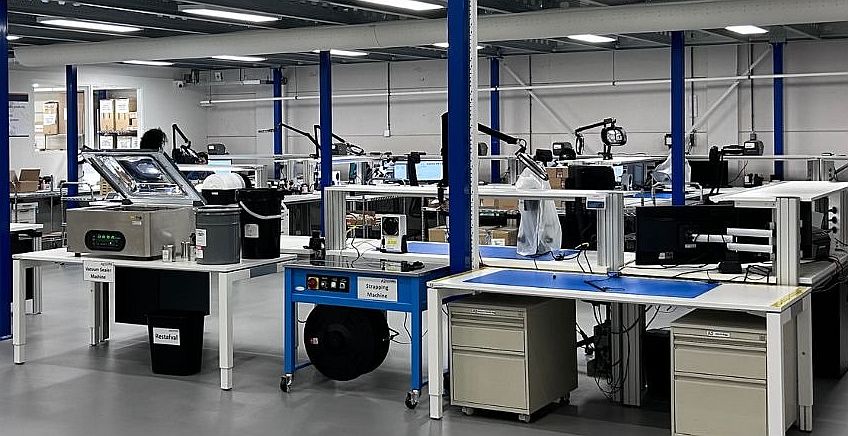
Photo above: Eltek Production floor in Petach Tikva, Israel

The PCB manufacturer Eltek Ltd. (PETACH TIKVA, Israel), announced that it had received orders totaling $3.5 million from two defense customers. The products are with high technology requirements and to be delivered beginning in the fourth quarter of 2024 through the end of 2026. The Company expects to receive additional long-term orders from these customers in the near term. “The orders are in accordance with our policy of striving for long-term orders which allow optimal production planning and maximum efficiency and profitability,” commented Eli Yaffe, CEO of Eltek.

Eltek specializes in the manufacture and supply of complex PCBs, HDI, multilayered and flex-rigid boards for high-end markets. Its customers include major companies in the defense, aerospace and medical industries in Israelthe United StatesEurope and Asia. Its revenues for the second quarter of 2024 were $10.5 million compared to $11.0 million in the second quarter of 2023. During the first six months of 2024 the revenues totaled $22.2 million compared to $22.5 million in the first six months of 2023.

The company attributed the decline of sales in the second qurter to a significant timing shift by some key customers. Due to the ongoing war in the Middle East, many defense customers  prioritized urgent orders for PCBs with medium technology requirements, resulting in lower prices and margins. “Orders for more complex, higher-margin PCBs were pushed back and are scheduled to be produced in the third quarter.”

Eli Yaffe: “We expect to return in in the third quarter to the profitability parameters of previous quarters, as product mix strategies are realigned. Our backlog as of today increased by 30% since the beginning of 2024. While this has impacted our short-term financial performance, we remain confident in our long-term strategy and market position.”


Avnet ASIC Team Launches Ultra-Low-Power Design Services for TSMC’s 4nm Process Node

Avnet ASIC, a division of Avnet Silica, an Avnet company (NASDAQ: AVT), today announced that it has launched its new ultra-low-power design services for TSMC’s cutting-edge 4nm and below process technologies. These services are designed to enable customers to achieve exceptional power efficiency and performance in their high-performance applications, such as blockchain and AI edge computing. TSMC is the world’s leading silicon foundry and Avnet ASIC division is a leading provider of ASIC and SoC full turnkey solutions.

The new design services leverage a comprehensive approach to address the challenges of operating at extreme low-voltage conditions in the 4nm and below nodes. This includes recharacterizing standard cells for lower voltages, performing early RTL exploration to optimize power, performance, and area (PPA) tradeoffs, implementing an optimized clock tree, and utilizing transistor-level simulations to enhance the power optimization process.

The Avnet ASIC team built a full-scale technical A-Z approach to enable PPA optimization of high-performance chips working at extremely low voltage and proved it in TSMC’s 4nm process. Performance, dynamic and leakage power estimations have been confirmed by post-silicon validation.

The customer defined the board solution and chip implementation concept, requirements, and executed front-end design based on library characterization for near-threshold voltage operation. Avnet ASIC then executed this design to meet aggressive market targets, enabling the ultra-low-power performance of the customer’s application.

“One of the industry challenges today is to optimize application performance by choosing the correct technology to meet customer needs,” said Pavel Vilk, GM and Head of Engineering at Avnet ASIC.

“TSMC’s 4nm process provides a great opportunity to save power and area without compromising target performance. However, operating at low voltages puts a lot of effort on voltage drop, which needs to be optimized through a holistic solution of board-package-chip design. Being a TSMC Value Chain Aggregator and a full turnkey partner to customers, we believe this new achievement could bring great value in helping our customers deliver their products to market competitively.”

The new announcement follows the announcement of the Avnet ASIC team from February that it has been appointed as a Value Chain Aggregator (VCA) by TSMC. The appointment positions the Avnet ASIC team as a channel for TSMC ASIC customers, offering a full turnkey solution from design inception to layout and mass production, implemented in TSMC’s most advanced silicon processes.

The collaboration signifies a landmark agreement within Avnet, enhancing the offerings by combining the strong technology of TSMC with the ASIC design and manufacturing capabilities of Avnet ASIC. This initiative enables access to TSMC’s most advanced silicon processes for customers, establishing Avnet ASIC as a channel partner of TSMC for comprehensive ASIC SoC solutions.

[Photo credit: Eyal Touge]