
Three Israeli drone companies are on the fast track to receive permanent FAA license 

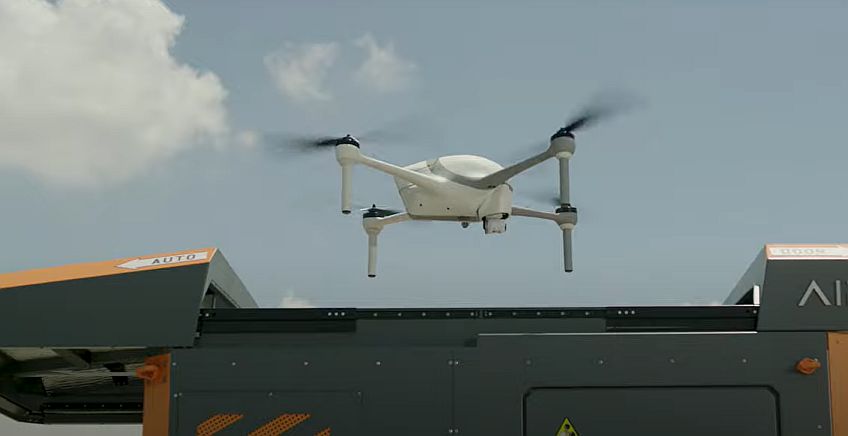
[Pictured above: Aerobotics’ Optimus EX-1 drone]

First time in the autonomous Unmanned Aircraft industry, the FAA is close to issue a global certification for drones, similar to manned ones. As no unified standards exist for unmanned aircraft, the FAA has developed a designated Durability and Reliability verification process to establish criteria as an element of the proposed certification. The FAA has published last month the Airworthiness Criteria for Special Classes of Unmanned Aircraft Systems (UAS), following public comments, which includes 10 drones of several companies, among them three Israeli companies: Airobotics, Flytrex and Percepto.    

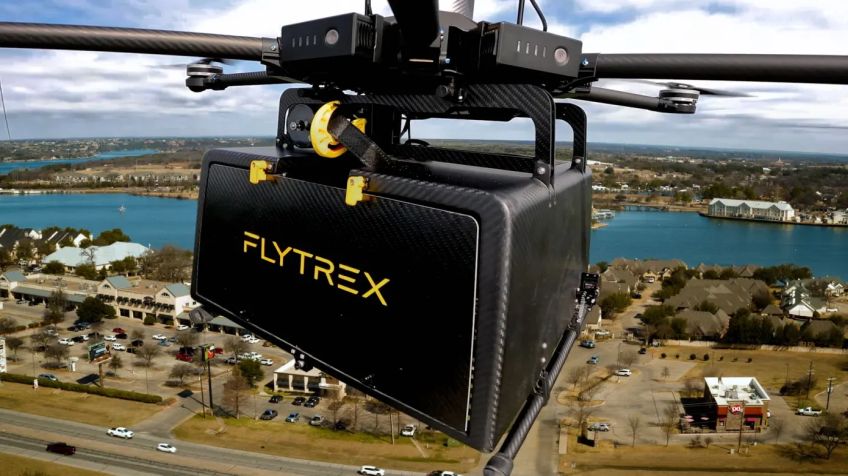
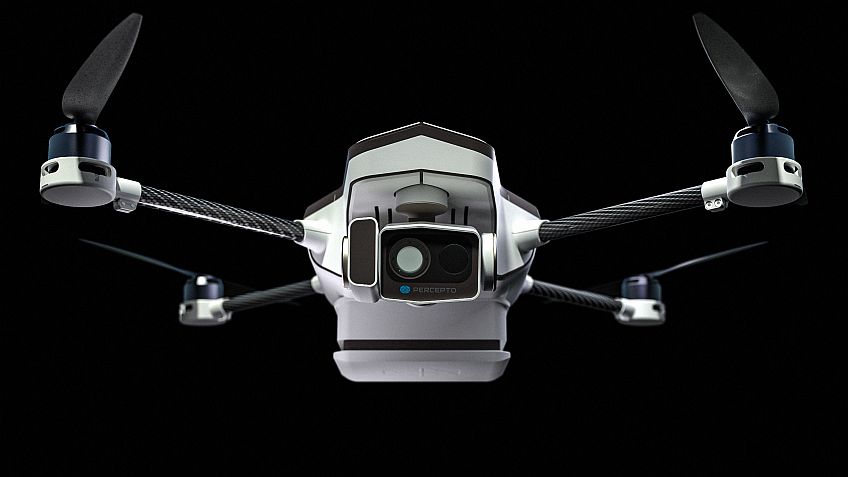
Percepto Company has received a final criterion for its 2.4 UA drone, designed for monitoring and lookout missions. This certificate will allow the drone to fly over populated areas at an altitude of 393 ft and 28 mph. Flytrex Company has received a final criterion for its FTX-M600P drone, designed for delivery of packages. This criterion covers a relatively low altitude – 230 ft and a speed of 34 mph. Airobotics Company has received a final criterion for its Optimus EX-1 drone, allowing it to fly over populated areas at an altitude of 393 ft and 31 mph.

The process of gaining the approval in front of the FAA has started for Airobotics at September 2019. Currently, in order to fly a drone it is required to request a waiver for each mission and each area cell where the drone is expected to operate. For example, if an infrastructures company is interested in flying an autonomous drone over it site for monitoring and security, it requires requesting a special approval. Gaining a “type certificate” will make it possible to operate the drone under the label of its type, without the need to request a special approval, in the same way it is done for manned aircrafts today. 

Flytrex delievery drone

Global certificate, similar to manned aircraft

Getting the final certificate will extend the drone’s usage capabilities, and will shorten the bureaucratic processes required to operate it. Airobotics VP Aviation and Regulation, Niv Russo, explains in a conversation with Techtime that up to date, no aviation authority had issued such criteria for unmanned aircrafts, “Surely not for a vehicle characterized by high level of autonomy such as our drone. Airobotics’ model has received a highly expanded criterion.  We gathered many hours of flying an experience that made it possible for the FAA to define the safety level of the vehicle. We have completed all the tests and proofing and we are in the final bureaucratic phases. I guess we are in the most advanced phase within this process’.

According to Russo, “this is a defining moment for the whole global drone industry”. Airobotics’ Optimus EX-1 is used for surveying, mapping and lookout missions. This model is intended to operate in demanding environment conditions and is completely autonomous. It navigates its position at a 1cm resolution and is able to perform its mission autonomously and independently return to its docking station. Back in the docking station, the drone is capable of autonomously performing a full process of switching battery and payloads. One of the drone’s safety facilities is an emergency parachute developed by the Israeli ParaZero Company, assuring safe landing in case of a fault. 

Percepto’s patrol drone

Esti Felba Hermesh to head CodeValue off-shore arm

Software development services company CodeValue has announced that Esti Felba Hermesh has been appointed as CodeValue’s Offshore Director and will lead the company’s operations in Eastern Europe.

Esti is 45 years old and has over 15 years of experience in business development, customer management, project management and sales in a wide range of companies in the field of Technology Services. As part of her role, Esti will be responsible for building and managing the Offshore operations of CodeValue in Eastern Europe, building a tailored service package, mapping tech capabilities in different countries, defining requirements, building an entity, creating collaborations with local vendors, programming software acquisition programs and IT.

In her previous role she served as the Director of the Medical and Industry Security Division and was responsible for managing the Delivery team and building bootcamps to grow the next generations of developers. Esti holds a BA in Film, Television and Education from Tel Aviv University

Tali Shem Tov, CEO of CodeValue: “CodeValue Offshore is sort of a  start-up within CodeValue we see it as one of our main growth engines for the expansion of the company’s operations around the world. The need for developers is massive, SCALE has become a common term spoken among executives in tech companies and one of their great painpoints. Due to lack of developers in Israel and in view of the ever rising need, extending CodeValue reach to encompass talented developers in Eastern Europe is the best solution for our customers. Esti brings with her a lot of experience and talent, and I have no doubt that she will reach the fulfillment of our business goals in no time. ”

CodeValue, founded in 2010, is a services company delivering supreme architectural and technical expertise and in-depth consultancy. We integrate product & design research in our development process, provide managed software and cloud solution, and offer customized training programs to bridge knowledge gaps.

Radiaction Receives FDA Clearance for its Radiation Protection System and Secures $10M

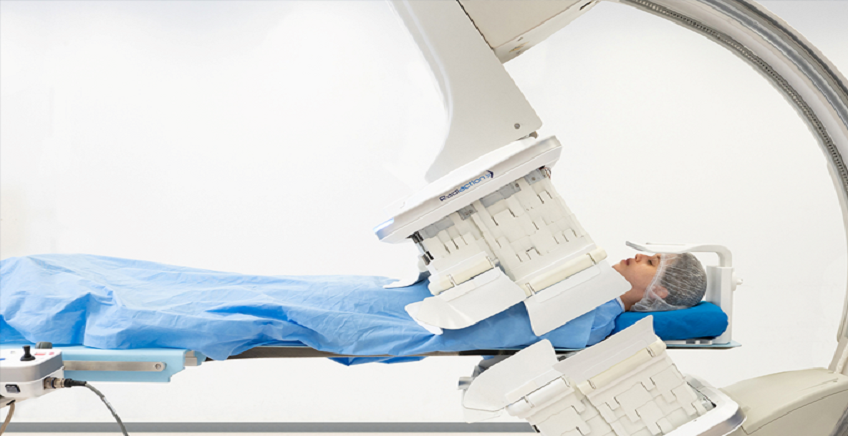
Radiaction Medical, which has developed a device to protect medical staff from scattered radiation in interventional cardiology and electrophysiology sectors, announced FDA 510(K) clearance for the marketing of its Shield System in the US.

In addition, the company has completed a $10 million round of financing led by current investors, InnovaHealth Partners. Proceeds will be used to launch Radiaction’s Shield System in the US and to further commercialize in Europe.

Individuals working in catheterization laboratories (“cath labs”) are exposed to high levels of scattered radiation generated from the use of X-ray fluoroscopy. The medical teams wear heavy lead aprons for protection, but their heads, arms and legs are unprotected, leading to an increase in risk for brain tumors, cognitive degradation and other radiation-related illnesses. In addition, the heavy lead aprons can cause severe orthopedic injuries. A significant part of the radiation is scattered throughout the cath lab by its interaction with the patient’s body and X-ray table. Mounted directly on the C-arm, Radiaction’s Shield System blocks and captures the scattered radiation at the source. Clinical studies demonstrate that the device reduces radiation in the entire cath lab by over 90%, with even higher reduction rates to the head and upper body of all personnel in the room.

Jonathan Yifat, Radiaction’s CEO, said, “We are very pleased with the FDA clearance of our device and look forward to protecting the physicians and medical personnel performing interventional procedures in the US. This financing will drive our commercialization in the US and Europe, and allow us to build our team and market presence. We are excited to take this next step with our long-time partner, InnovaHealth Partners, who has tremendous experience backing the fast commercial growth of technology companies.”

Tested in a real-life clinical environments, Radiaction’ system demonstrated an entire room scattered radiation reduction performance of 91.2% in IC procedures and 93.3% in EP procedures. These rates are on par with the protection provided to the body’s core by lead aprons. Importantly, Radiaction is protecting heads, arms, long bones and feet which are outside of the lead apron and are exposed and subjected to harmful cumulative radiation damage. This clinical experience also demonstrated high physician satisfaction with the integration into the clinical workflow.

Radiaction was founded by Amir Belson, MD and its lead investor is InnovaHealth Partners, LP.

Intel to Acquire Israel-based Granulate

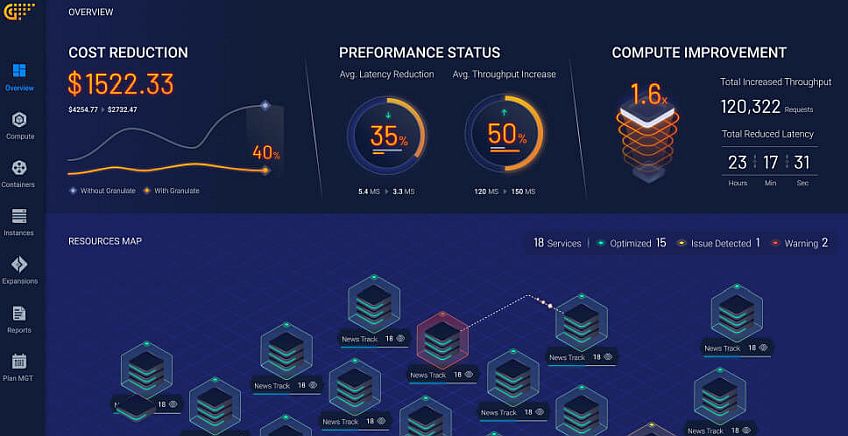
Intel Corporation announced an agreement to acquire Granulate Cloud Solutions, an Israel-based developer of real-time continuous optimization software. The acquisition of Granulate will help cloud and data center customers maximize compute workload performance and reduce infrastructure and cloud costs. Deal terms are not being disclosed, but it is expected to close in the second quarter of 2022. At that time, Granulate’s 120 employees will be integrated into Intel’s Datacenter and AI business unit.

Sandra Rivera, GM of the Datacenter and AI Group at Intel, said that Granulate’s autonomous optimization software can be applied to production workloads without the need to make changes in the customer’s code. Greg Lavender, GM of the Software and Advanced Technology Group at Intel, explained that Granulate’s real-time optimization software complements Intel’s capabilities by helping customers to gain performance and reduce Cloud costs.

How It Works

Granulate’s real-time continuous optimization is a new approach to optimizing production workloads by leveraging resource usage patterns and dataflow to automatically adapt kernel level and runtime level resource management to better fit the application needs. It automatically learns the application’s specific resource usage patterns and data flow to identify contended resources, bottlenecks and prioritization opportunities, and then tailors OS-level scheduling and prioritization decisions to improve the infrastructure’s application specific performance.

Accelerating Legacy Packages

While cloud computing and microservices have created a new era of flexibility in distributed applications and deployment scalability, modern architectures have introduced more complex performance issues that are not easily managed by traditional operating systems and runtimes. Additionally, customers often deploy older Linux distributions and application libraries that are not up to date with the latest advancements in today’s high-performance CPUs.

Granulate’s autonomous optimization service solves these issues by reducing CPU utilization and application latencies, by learning the customer’s application and deploying a customized set of continuous optimizations at runtime. This enables deployment on smaller compute clusters and instance types to improve application performance and drive down cloud and data center costs, without the developer intervention. Thus, optimizations for the latest CPUs can be applied even on legacy Linux distributions and runtimes.

Optimizing Xeon deployments

Asaf Ezra, co-founder and CEO of Granulate, said: “As a part of Intel, Granulate will be able to deliver autonomous optimization capabilities to even more customers globally and rapidly expand its offering with the help of Intel’s 19,000 software engineers.” Intel and Granulate’s relationship began in late 2019, when Granulate was part of the first graduating class of Intel® Ignite, the startup accelerator program that taps into Intel’s resources.

Over the past year, Intel and Granulate have worked together under a commercial agreement to collaborate on workload optimization on Xeon deployments. This collaboration resulted in gains in performance and decreases in costs for customers running on Intel processors. With the acquisition of Granulate, Intel will rapidly scale Granulate’s optimization software, including across Intel’s data center portfolio.

Quantum computing collaboration between Nvidia and the Israeli Classiq

Nvidia Company revealed last week in its annual developer conference (GTC) a new collaboration with another Israeli Company, Classiq from Tel-Aviv, who provides a platform for creating quantum software algorithms. Within this cooperation, Classiq’s platform integrates with Nvidia’s quantum simulator. This integration will allow Classiq’s customers to run their quantum application on the simulator, perform stress-tests, debugging and optimization – without the need to use real quantum machine.

At this time Nvidia doesn’t develop quantum hardware, but it developed the cuQuantum simulator, which simulate quantum computer processing capabilities of dozens of qubits. This simulator is based in its operations on a supercomputer composed of hundreds of GTX A100 processors and Tensor Core GPUs. This simulator is capable of performing billions of parallel computations and simulates quantum computing processes such as superposition and entanglement. It provides the capability of running, on a classic machine, quantum algorithms and is used by researchers and developers in developing and verifying quantum applications.

In last December, Nvidia launched its Software Development Kit (SDK), based on the company’s Selene supercomputer which is capable of running (for particular type algorithms) simulations with a scale of thousands of qubits. Nvidia reported lately that it successfully ran the optimization problem MaxCut, which is considered impossible to solve using a classical computer, but only using a quantum computer. In order to solve the problem, Nvidia used 896 GPUs that simulated 1,688 qubits. 

Verify algorithms without any noise

In a conversation with Techtime says Amir Naveh, Classiq’s co-founder and Head of Algorithms that “this collaboration was born earlier in the simulator development phase. Our platform allows for the creation large-scale quantum circuits, which the customers may test directly through the simulator. The existing intermediate-scale quantum computers are still noisy, and this simulator is currently the only way a developer can test its algorithms in a cost effective, clean method”.

Classiq developing CAD solutions that will make it possible to write applications for quantum computers. Nir Minerbi, Classiq co-founder and CEO, told Techtime in an earlier interview: “The quantum revolution consists of two things: hardware and software. Nowadays it is almost impossible to develop applications for a quantum computer, since you have to program at the logic gate level. It’s like designing a chip at the transistor level. We build the tools that allow developing applications at a higher level of abstraction. The next layer in the quantum stack.”

Recently, Classiq launched its proprietary platform’s Beta version which allows, for the first time in the industry, to compose functional algorithms for Quantum computers. The company made the new platform available to several customers, and intends to expand the beta version access to several dozen customers in the next few months.

Percepto has received an approval for operating drones beyond line of sight

Civil Aviation Authority of Israel (CAAI) has approved the remote operation of Percepto Company’s drones beyond visual line of sight (BVLOS). The approval means that companies using Percepto drones to monitor their facilities no longer need an observer to be present during their operation, and to use Percepto-trained System Operator designation. This approval was granted in order to perform monitoring missions at national water company Mekorot at its Eshkol site as well as at other locations.

This approval is added to a similar approval Percepto received from the Federal Aviation Authority (FAA), to operate drones beyond visual line of sight in refineries in Tyler, Texas and El Dorado, Arkansas. Similar approvals were granted to other Percepto’s customers, such as Florida Power and Light (FPL), Verizon’s drones company and various customers across Italy, Australia, Spain and Norway. This type of approvals,  individually granted by aviation authorities after validating safety aspects, are critical for the increasing usage of autonomous drones, since the need to keep an eye contact with the operator vastly limit the tasks that can be performed.

Operating drones Beyond Visual Line of Sight (BVLOS) is made possible thanks to the Autonomous Inspection and Monitoring (AIM) system developed by Percepto. The AI-based system allows managing and operating a fleet of drones through single unified control platform. This fleet may include other manufacturers’ drones and even non-autonomous ones, assign tasks, collect and share information received from the drones and supply insights regarding the facility. Actually, this system provide the drone with independent capabilities or safely managing the route, planning return time for recharge,  photography and machine sight and also flying under severe weather and visibility conditions. The system is currently intended to be used for monitoring gas and oil pipelines, peripheral defense, solar farms maintenance, infrastructure sites and alike.     

Drone in a box

Percepto Co-founder and CEO Dor Abuhasira says that getting the approval from aviation authorities, who are known to be rigor, is an acknowledgment of his company’s autonomous system to perform accurate analysis of multi-situations and safely fly the drones, sometimes even safer than manned flight. “The ability to trust the system to carry out its job without a drone operator, but only with Percepto’s system operator, significantly minimize hazards, reduce downtime, boost efficiency, and lower operational costs”.   

Abuhasira estimates that the Israeli approval will lead to other approvals across the globe. “Drones’ independent operation will become a fundamental component in our activity”.  Percepto was founded in 2014 by CEO Dor Abuhasira, Raviv Raz, Aviv Avitan and Sagi Blonder. The company estimates that currently the company is one of the ten leading autonomous drones companies in the field of sites monitoring.  The drones are operational at hundreds of industrial and infrastructure sites across the USA, Australia, Israel and more.

The company has also developed an autonomous drones family, installed in a box (Drone-in-a-box). This drone operates autonomously based on scheduled missions or on-demand triggers, for routine tasks and emergency response, without human intervention.  It also equipped with Percepto’s payload and includes thermal and 4K camera and communication module for direct communication with the robot and realtime video streaming using LCE cellular network.

Percepto, who raised $72.5 million since its foundation, employs more than 170 employees, and it currently increasing its manpower in the Modi’in R&D center at various roles and departments, including development, cloud, software, algorithmic, electronics and AI.

Autotalks Doubles Backlog to $200 Million

Autotalks, a provider of V2X (Vehicle-to-Everything) communication solutions, announced that it has doubled its backlog orders in 2021 to $200 million. During 2021, Autotalks has doubled the number of its automotive OEMs clients to six, after winning contracts to provide its V2X chipsets to three additional top auto manufacturers – one in Europe, one in Japan, and one in China. The company has been supplying its V2X chipsets for global infrastructure and smart city projects and has secured contracts for future large projects.

The V2X market in which Autotalks is operating is growing rapidly. Virtually all RFIs (Requests for Information) or RFQs (Requests for Quotes) of Telematics Control Units (TCUs) in 2021 required the installation of V2X devices. Alternatively, some OEMs are adding dedicated standalone V2X Electronic Control Units (ECUs). This trend was partly driven by the perpetrations toward the inclusion of V2X in the safety performance assessment program EuroNCAP in Europe and the similar Chinese program C-NCAP.

“There are good reasons why 2021 was a very good year for us,” said Hagai Zyss, CEO of Autotalks. “Autotalks offers the world’s only dual mode V2X chipset solution, which suits both the DSRC protocol that is used in Europe, and the C-V2X protocol that is used in the US and China. We offer flexible architecture, backed up by an innovative roadmap which matches the requirements of OEMs. On top of that, our V2X system is isolated in a way that provides the highest possible security and safety.”

Zyss continued: “Looking forward towards 2022, we expect additional major wins of top OEMs. Simultaneously, we aim to use our V2X-based micro-mobility platform, ZooZ, in order to expand safety for vulnerable road users such as cyclists and e-scooter riders.”