NGT Healthcare II Fund Raised $92 Million

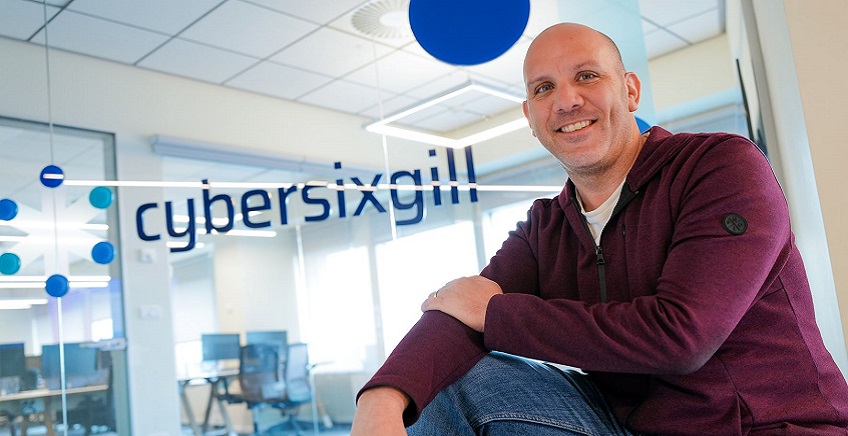
above: Zohar Gendler, Managing Partner & CEO NGT HealthCare II

NGT HealthCare II Impact Fund from Nazareth, Israel, announced the raising of a new fund, with commitments of approximately $92M. The funds are intended for investments in breakthrough medical technologies and in the promotion of entrepreneurship from the Arab society. NGT HealthCare II Incubators program also won a $30 million from the Innovation Authority to furthrr support its portfolio companies.

Today NGT supports 25 early-stage startup companies, and in 16 “year zero” projects (pre-incubator, academic projects) in biotechnology, bio-convergence, and medical devices. Portfolio Companies will also receive access to the offices and laboratories at the Fund’s facility in Nazareth, business services , support in pre-clinical and clinical trials and access to strategic partners.

Among the investors in NGT HealthCare II Fund: T3, the commercialization arm of the Technion, and Hadassit, the technology transfer company of Hadassah Jerusalem, Arkin Holdings, Jacobs Investment Company LLC, Consensus Business Group and Arbelon holdings, Dr. Salvador Pascual, Abu Ayash brothers, Federmann Enterprises, Shehade medical services, Imad and Reem and IBI investment house.

The Fund holds a 1,100 square meter facility in Nazareth including laboratories and 3 clean rooms. Zohar Gendler, Managing Partner & CEO NGT HealthCare II, said: “We will continue to build innovative life science companies, commercialize technologies from universities and hospitals, and encourage entrepreneurs from the Arab society.”

Webiz launched AI-driven platform for recruiting developers from Armenia and Georgia

Webiz, which has located and trained hundreds of developers in Armenia and Georgia in recent years, has launched a designated AI-driven platform for Israeli companies to efficiently search suitable quality candidates for development positions through advanced filtering algorithms and matching mechanisms.

The new platform, www.webiz.com, carries out AI-based matching of the characteristics, skills, and preferences of Webiz’s talents with the requirements of the companies. Every developer fills out a detailed personal profile that includes his or her professional certification, experience, skills, preferred expertise areas, salary expectations, preferred work model (full time, part time, hourly, etc.). The companies also open an account and apply the AI-based filter mechanisms, which show them suitable candidates with a high degree of accuracy. The suitable candidates will be invited to video interviews on the platform, that enables continuous communications between the candidates and the companies, including the submission of documents, questionnaires, and so forth.

Webiz developed a practical training program for high-tech professions on the basis of an Israeli syllabus. In collaboration with the Business and Technology University in Tbilisi, Georgia, outstanding students take a six-month course in various disciplines: programming in a range of languages, including React, Node js, Devops QA and UI/UX followed by certification tests.

Webiz operates in a five-story building in Tbilisi. To date, the company has recruited and trained more than 200 developers, who have joined 25 Israeli companies, including Kaltura and 888 Holdings. The company plans to recruit 200 more developers in 2022 and 1,000 in the coming years. Webiz recently expanded its operations to Armenia, where it is recruiting and training hundreds of developers using the model that it has applied in Georgia.

Eyal Bar Oz, co-founder and CEO of Webiz, says, “Manual processes of searching, filtering, and recruiting candidates take too long, are not accurate enough, and do not suit the dynamic pace of the high-tech industry. The new portal will shorten these processes by about 80%, and in effect even more, because precise matching will prevent recruitment processes might not be realized. These capabilities are especially important for companies that are searching for workers in distant countries, where they are unfamiliar with the community of developers.”

Bar Oz adds, “At this stage, 500 developers, who we have certified, have already registered on the portal, and the number will grow rapidly in the coming months. We are building more models that will enable total human resources management that we provide, including output tracking tools, internal communications with feedback, salary and benefits, vacations, birthdays, and more. They will offer an additional layer of quality management, involvement, and employee retention.”

Seoul City deployed Autotalks’ V2X systems in public buses

Autotalks, a provider of V2X (Vehicle-to-Everything) communication solutions, announced the completion of its role in the Seoul City C-ITS flagship deployment is part of the South Korean capital’s plan to establish a unique V2X and ADAS (Advanced Driver Assistance System) test platform supporting Autonomous Driving Level 4.

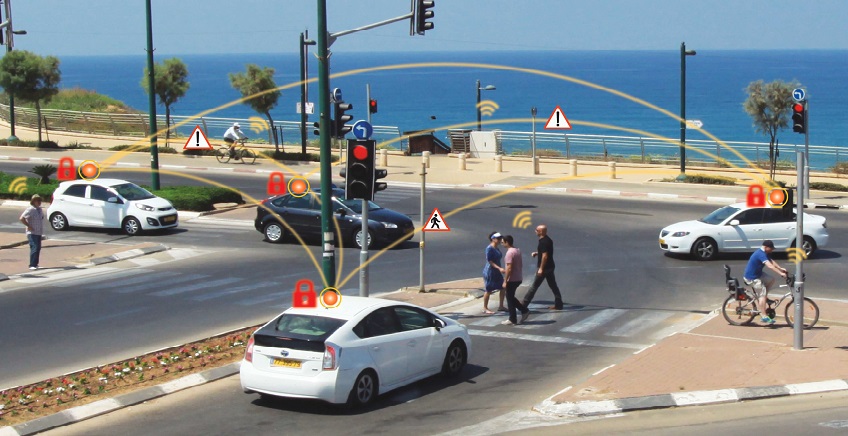
With the V2X systems installed across its bus fleet and infrastructure, Seoul City can now offer its citizens an advanced public transport system able to intelligently alert drivers of pedestrian collision, school, and silver zones, as well as road and weather conditions warnings, among other alerts.

The V2X system, which is based on Autotalks’ chipset, was deployed in nearly 2,000 buses operating in Sangam Digital Media City (DMC) and along Seoul City’s expressways. The project was spearheaded and jointly funded by Seoul City and the South Korean Ministry of Land, Infrastructure, and Transport (MOLIT).

With thousands of systems deployed, the project in Seoul is one of the most extensive of any modern city, showing Korea’s commitment to take mobility in public transportation to the next level.

“Autotalks applauds Seoul City and MOLIT for advancing their vision of a smart and safe city,” said Ram Shallom, VP Business Development and Marketing in APAC at Autotalks. “By taking a bold move towards developing a modern city and placing their confidence in an innovative V2X OBU system, the city is setting the standard for others to follow. This move by Seoul City will be seen as a game-changer for those cities and regions still grappling with technology decisions, allowing their indecision to hamper the future of mobility.”

The deployment in Seoul City is part of the growing momentum of Autotalks in the Asia Pacific region. In November, Foxconn Interconnect Technology (FIT), a subsidiary of Foxconn (Hon Hai Technology Group), the world’s largest electronics manufacturer, and Autotalks, announced that FIT invested $10 million in Autotalks, following a strategic collaboration agreement between the two companies.

Cybord raised $4M to avoid Counterfeit Parts

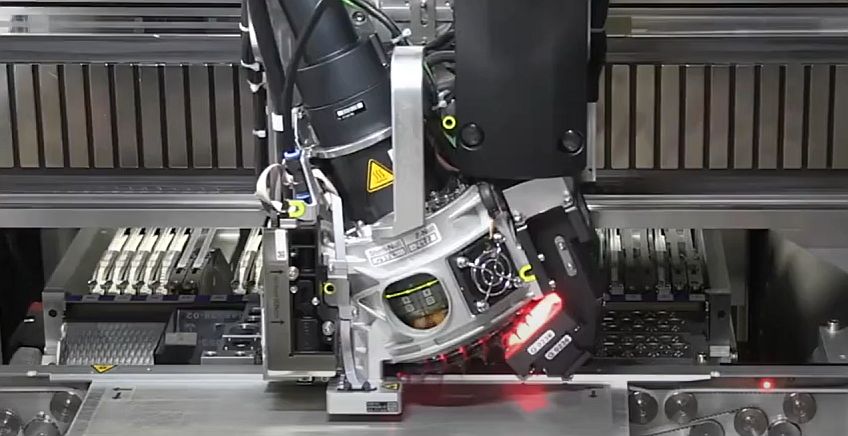
Above: SIPLACE Pick and Place head with built-incamera. Cybord SMT acquire these images for advanced analysis

Keeping damaged, counterfeit and recycled parts out of the production lines is a tedious and in many cases unsuccessful mission. Cybord from Herzliya, Israel, brings a game changer product, Cybord SMT, to avoid this problem and provide quality assurance for the electronic manufacturing industry. This week the company announced a $4M Seed investment led by IL Ventures, a VC fund focused on transformational technologies for legacy industries, with co-investment by the Israel Innovation Authority.

The company delivers advanced AI and Big-Data software that inspects, qualifies, and tracks every component and every electronic board. Cybord SMT acquires component images from a built-in camera, already installed on the SMT pick and place machines. It learn and analyze every component using AI and a component knowledgebase on the cloud, and provide the manufacturer a full report covering 100% of the components.

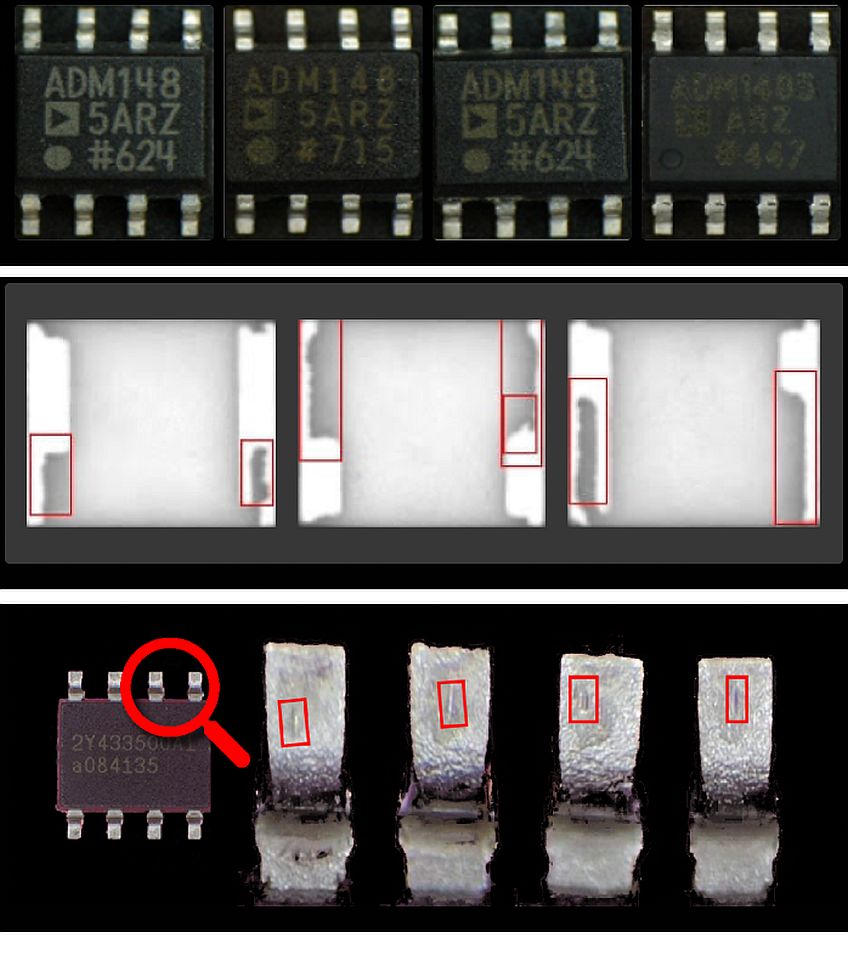
Cybord SMT validates authenticity (top), identifies defects (middle) and reduces the cyberattack vector by detecting reprogrammed components (bottom)
Cybord SMT validates the authenticity of each part (top), identifies defects (middle) and reduces the cyberattack vector by detecting reprogrammed components (bottom)

“Today, in the midst of the global supply chain crisis, electronic manufacturers struggle to meet ever-growing customer demand while keeping quality a top priority. The need to acquire components in the free market and not only from well-established suppliers increases manufacturers’ exposure and vulnerability to significant quality issues. These issues can have direct, sudden, and costly effects on their ability to produce quality products,” said Zeev Efrat, CEO at Cybord.

“Our proven technology allows leading industry players to implement the Zero-Trust approach. As the global shortage in electronic components becomes chronic, this becomes a competitive edge which helps our customers generate more revenues, lower their costs, and increase their profitability,” added Dr. Eyal Weiss, Cybord’s founder, and CTO.

“Cybord’s proprietary technology is already deployed, serving FLEX and other global industry leaders at several manufacturing sites globally. The company has made remarkable technological and commercial achievements to date. By now, Cybord scanned over 1.2 billion components while supporting high production volumes with value delivered every day,” said Elad Frenkel, Managing Partner at IL Ventures. “We are confident this genuinely disruptive AI technology will change the entire industry, solving a multi-billion-dollar pain of the electronics industry.”

StoreDot to develop a 2-minute of charge battery

 StoreDot Company, the developer of extreme fast charging (XFC) battery technology for electric vehicles, has revealed its development roadmap of the company for the next decade. Within this roadmap, the company stated that by 2032 it will be capable of mass producing of a 100-mile of range on a 2-minute charge battery. Current company’s battery, 100-mile of range on a 5-minute charge, will be delivered by the end of 2024.

Another milestone at the company’s roadmap is a 100-mile of range on a 3-minute charge battery, delivered by 2028. The progress in the roadmap is involved in a gradual transition to a solid-state battery. With this type batteries the electrolyte, through which the ions pass in the loading-unloading process between the electrodes, is made of solid material and not liquid or polymer-gel. The 2028 version will be semi-solid state, while the final 2032 battery will be full solid-state.    

Solid state batteries are an objective of the whole automotive industry. Such batteries should be safer and have a larger capacity, and therefore allow for a greater driving range. The challenge is to develop a solid material that will be stable at the one hand, and with high conductance rate at the other hand.

Dr Doron Myersdorf, StoreDot CEO, says: “It’s absolutely crucial that we give global automotive manufacturers a clear and realistic roadmap. Each milestone at our roadmap represents a radical 20% performance improvement – a major impact on the driver’s experience”.

Ultra-fast charging of EV’s batteries

StoreDot has developed the FlashBattery technology, allowing Li-ion batteries to be charged in only several minutes. This technology is based on NanoDots particles, each at the size of 2 nanometers, characterized by high capacity and integrated in the electrolytic liquid within the battery.

In early 2021, StoreDot has produced the pilot production batch of EV batteries in a plant of the Chinese battery manufacturer Eve Energy. These batteries were used to demonstrate full charge of a two-wheeled EV in just five minutes.

ASTERRA, IsraAID & GBUC Partner to Achieve Sustainable Water Goals in The Bahamas

When Hurricane Dorian ravaged The Bahamas in 2019, clean water and sanitation were scarce. An Israeli-funded humanitarian organization, IsraAID, was on the front lines providing emergency response. IsraAID worked together with the Grand Bahama Utility Company (GBUC) to develop a water program for Grand Bahama. They called upon ASTERRA to provide the information and tools to make the new program sustainable, by using satellites to detect drinking water leaks underground utilizing their patented and award-winning Recover product.

NASA satellite images show Dorian thrashing Grand Bahama for nearly 40 hours as one of the strongest Atlantic hurricanes in modern record. Over 70,000 people were left homeless, and few areas had running water or electric power. The hurricane raised the sea level by six meters, leaving 60% of the island surface covered by ocean water. The 20-foot surge of seawater and flooding, which sat for 3 days, destroyed the entire vertical infrastructure including pumping stations, utility poles, wires, electrical components, and control and motoring systems. GBUC’s freshwater aquifer, which was a high quality, abundant, and reliable supply of pristine drinking water for island, was severely compromised and impacted.

Together with IsraAID’s Anton Driz, an expert in integrated water resource management, a plan was put in place to desalinate the water using reverse osmosis. While this creates a reliable water supply, it consumes energy, and the water comes at increased costs. When leaks occur in the distribution system, those leaks are expensive. This is where ASTERRA products became a critical part of the water plan in Grand Bahama.

“The survey showed that 40% of the desalinated water was leaking back to ground water,” said Driz. “Desalination is expensive, particularly when there are leaks. Every gallon costs more, and this is an unsustainable cost. We knew ASTERRA would help quickly address water leaks and set them up for the future.”

Locating leaks in Grand Bahama’s pipelines was easy with ASTERRA’s Recover satellite aperture radar (SAR) product. Grand Bahama received reports showing the areas of probable leaks were contained within 14 kilometers—just 5% of the system. Once investigated and confirmed, ASTERRA Recover identified over three times more leaks every day than previously used detection methods.

Following the completion of GBUC’s $5 million reverse osmosis (RO) installation last month, they conducted a 30-day testing and commissioning process to ensure that the system was functioning adequately and at the specifications prescribed by the World Health Organization for potable water. Philcher Grant, GBUC and Public Affairs Chief Operating Officer stated, “Grand Bahamians and residents have experienced and overcome numerous challenges since Hurricane Dorian ravaged the island back in September 2019. Since then, our team has worked tirelessly with many partners including ASTERRA and we are grateful for their contribution which will help us to ensure that our customers have a reliable, potable water supply for years to come.” On December 13, 2021, the Grand Bahama Port Authority, Limited (GBPA), the regulatory authority with responsibility for utility regulation in Freeport, declared that GBUC now provides potable water to 100% of Grand Bahama residents.

“We have both a social and an economic responsibility to prevent and solve problems like what occurred in Grand Bahama,” said Ionatan Ascher, LATAM Spain & Portugal Sales Manager for ASTERRA. “One of the sub targets of United Nations Sustainable Development Goal 6 (SDG 6) is smart water systems management. ASTERRA technology makes it easy to monitor and manage water systems by using our patented algorithm to detect treated water underground from satellite data. This helps locate, monitor, and resolve leaks in the pipelines.”

ASTERRA (formerly Utilis) provides data-driven solutions for water utilities, government agencies, and the greater infrastructure industry. ASTERRA products use synthetic aperture radar (SAR) data from satellites and turns this data into large-scale decision support tools. The company’s proprietary algorithms and highly educated scientists and engineers are the key to their mission, to deliver actionable intelligence to advance Earth’s resource resilience.

Since 2017, ASTERRA technology has been used in over 59 countries, saving over 169,280 million gallons of potable water, reducing carbon dioxide emissions by 108,339 metric tons, and saving 423,200 MWH of energy, all in support of United Nations Sustainable Development Goals. ASTERRA is headquartered in Israel with offices in the United States, United Kingdom, and Japan. Their innovative data solutions are used in multiple verticals around the globe. ASTERRA is investing in artificial intelligence (AI) to bring their products to the next level.

[Pictured above: Eli Peretz. Photographrr: Mical Bendek]

OpTeamizer will train European customers of NVIDIA

Yokneam based OpTeamizer, which provides solutions and consultation to AI R&D centers in Israel, has been selected by NVIDIA to provide consulting services to its customers in Europe, assist the company’s technology management, and consult companies on projects based on NVIDIA processors.

OpTeamizer was founded in 2015 by Tomer Gal, one of Israel’s leading AI experts, who participated in strategic developments of Intel Israel and General Electric Israel. Tomer, who has an M.Sc. in Computer Science in software optimization, is a member of the Israel Innovation Authority that evaluates grant applications by AI startups and a lecturer in artificial intelligence at the Software Engineering Department of ORT Braude College of Engineering.

In 2018, NVIDIA appointed OpTeamizer as its first Service Delivery Partner in Israel and the Middle East. OpTeamizer is accredited to train the industry in using NVIDIA’s GPU processors, to accelerate system performance and perform artificial intelligence development. The company is also a consulting services provider for companies that adopt GPU solutions when entering the world of AI.

Following the appointment, OpTeamizer provided a range of trainings and consultation services to more than 80 R&D centers of Israeli companies and multinationals operating in the country. Its customers include defense systems, healthcare, inspection systems, and other hi-tech companies. Tomer Gal and his team help companies migrate from CPU to the massively parallel GPU, accelerate the performance of new GPU systems, develop AI and neural network models, optimize neural networks, and select the relevant hardware for deployment.

OpTeamizer, which currently has 20 employees, trains developers at the R&D centers on NVIDIA’s development tools for the GPU environment and offers courses on CUDA C++, CUDA Python, CUDA for multiple GPUs, Deep learning for computer vision, and Deep learning for multiple data types.

The pending launch of the Jetson Orin AI Computer in 2022 signals a further upgrade in OpTeamizer’s unique status in NVIDIA technologies. Recently, the company has been appointed partner with the status of NVIDIA Jetson Partner for the European market, in addition to the Israeli market. It will provide development, consulting, and training services for European customers of NVIDIA, targeting the Jetson Orin platform.

OpTeamizer founder and CEO Tomer Gal says: “NVIDIA’s new Jetson Orin AI Computer will offer edge devices 6x times the performance improvement over the current generation. We will help top Israeli and European companies obtain optimal performance across a wide range of markets that have immense potentials, such as smart cities, autonomous vehicles, healthcare, drones, robotics, smart carts, and more.”

Tomer adds: “The strategy NVIDIA applies via a partner who specializes in its technologies helps companies enter the fast lane to the world of AI. These developments disrupt numerous markets and make such companies global pioneers. OpTeamizer skills and services will assist in implementing the latest NVIDIA technologies in the European market, setting the path for the creation of disruptive AI applications.”