Arc and Bezeq International Partner to Deliver Network Connectivity Between the UAE, Bahrain and Israel

Arc Solutions, a telecom infrastructure solutions provider across the region based in Dubai, has signed an agreement with Bezeq International, Israel’s leading ISP and IT solutions provider, to deploy its network in Bezeq International’s data centre in Tel Aviv. Arc and Bezeq International are creating the lowest latency route between regional hubs in datamena UAE, Global Zone Bahrain,  Smarthub UAE and Israel,  combining network footprints, enabling partners and customers to access a rich portfolio of destinations and services.

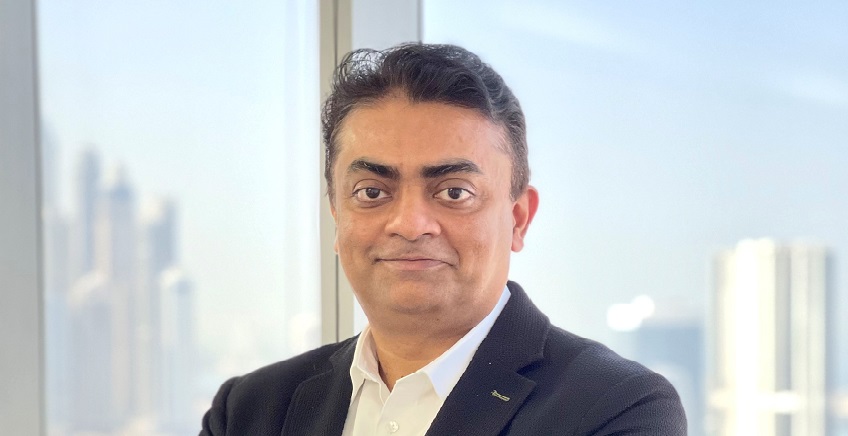
“Arc’s partnership with Bezeq International is a great step forward for the growing co-operation between Israel and the UAE. Our customers can now access the lowest latency routes to Europe via Israel and support users with a high quality of experience when using their applications and services,” said Mahesh Jaishankar [pictured above], CEO at Arc. “We are excited to offer this route to customers and enable them to diversify how they connect across the region. Bezeq International is a great partner, and it is great to be working with the team in Israel on this landmark initiative.”

Israel is a world leader in innovation and entrepreneurship with more start-ups per capita than any other country, making it a key market in the Middle East. As the country’s Public and Private Sector and foreign investment scale investment in infrastructure to support emerging digital technologies such as cloud, IoT, and AI, strong interconnection with regional and international networks is vital.

“There are tremendous growth opportunities for Arc and Bezeq International as we collaborate to connect digital innovation across the region. Arc shares our belief in seamless inter-regional connectivity and delivering new choice when connecting locally and across the globe,” said Ron Glav, VP Business Division & Global Alliances at Bezeq International. “The Israel–United Arab Emirates agreement has just found us ready to supply, taking advantage of Israel’s unique geographic position as a hub connecting between Europe, Asia and Africa and new Middle Eastern markets. Together, we are providing the foundation for both Bezeq International and Arc customers to extend their reach, expand their portfolio and access new opportunities in key markets across the Middle East.”

Arc is dedicated to making connectivity in the Middle East as simple as possible, with a vision of a highly interconnected Middle Eastern market that accelerates how network-centric businesses optimise, grow and innovate in cloud, content and communications.

Deci launches new models for enhancing Deep Learning on CPU 

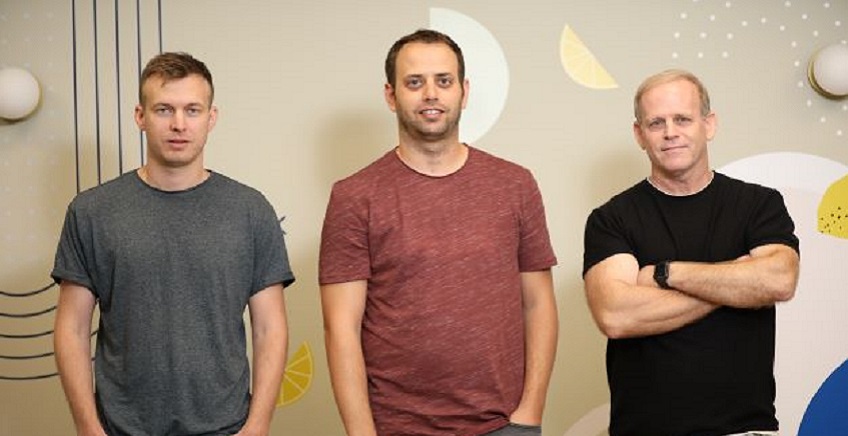
Photo above:Deci’s founders (from left to right): Jonathan Elial- COO, Yonatan Giefman- CEO and Ran El Yaniv- Chief scientist. Credit: Deci

Deci, the deep learning company harnessing Artificial Intelligence (AI) to build AI, announced a new set of image classification models, dubbed DeciNets, for Intel Cascade Lake CPUs. According to Deci, its proprietary Automated Neural Architecture Construction (AutoNAC) technology automatically generated the new image classification models that significantly improve all published models and deliver more than 2x improvement in runtime, coupled with improved accuracy, as compared to the most powerful models publicly available such as EfficientNets, developed by Google.

While GPUs have traditionally been the hardware of choice for running convolutional neural networks (CNNs), CPUs, already more commonly utilized for various computing tasks, would serve as a much cheaper alternative. Although it is possible to run deep learning inference on CPUs, generally they are significantly less powerful than GPUs. Consequently, deep learning models typically perform 3-10X slower on a CPU than on a GPU.

As explained by Deci, its DeciNets closes the gap significantly between GPU and CPU performance for CNNs. With DeciNets, tasks that previously could not be carried out on a CPU because they were too resource intensive are now possible. Additionally, these tasks will see a marked performance improvement: by leveraging DeciNets, the gap between a model’s inference performance on a GPU versus a CPU is cut in half, without sacrificing the model’s accuracy.

“As deep learning practitioners, our goal is not only to find the most accurate models, but  to uncover the most resource-efficient models which work seamlessly in production – this combination of effectiveness and accuracy constitutes the ‘holy grail’ of deep learning,” said Yonatan Geifman, co-founder and CEO of Deci. “AutoNAC creates the best computer vision models to date, and now, the new class of DeciNets can be applied and effectively run AI applications on CPUs.”

All networks were compiled and quantized using OpenVino, with latency measured on AWS instance c5.4xlarge with Cascade Lake CPU (16 vCPUs, batch size = 1)

“There is a commercial, as well as academic desire, to tackle increasingly difficult AI challenges. The result is a rapid increase in the complexity and size of deep neural models that are capable of handling those challenges,” said Prof. Ran El-Yaniv, co-founder and Chief Scientist of Deci and Professor of Computer Science at the Technion – Israel Institute of Technology. The hardware industry is in a race to develop dedicated AI chips that will provide sufficient compute to run such models; however, with model complexity increasing at a staggering pace, we are approaching the limit of what hardware can support using current chip technology. Deci’s AutoNAC creates powerful models automatically, giving users superior accuracy and inference speed even on low-cost devices, including  traditional CPUs.”

In March 2021, Deci and Intel announced a broad strategic collaboration to optimize deep learning inference on Intel Architecture (IA) CPUs. Prior to this, Deci and Intel worked together at MLPerf, where on several popular Intel CPUs, Deci’s AutoNAC technology accelerated the inference speed of the well-known ResNet50 neural network, reducing the submitted models’ latency by a factor of up to 11.8x and increasing throughput by up to 11x.

Deci enables deep learning to live up to its true potential by using AI to build better AI. With the company’s end-to-end deep learning development platform, AI developers can build, optimize, and deploy faster and more accurate models for any environment including cloud, edge, and mobile, allowing them to revolutionize industries with innovative products.  The platform is powered by Deci’s proprietary automated Neural Architecture Construction technology (AutoNAC), which automatically generates and optimizes deep learning models’ architecture and allows teams to accelerate inference performance, enable new use cases on limited hardware, shorten development cycles and reduce computing costs. Founded by Yonatan Geifman, Jonathan Elial, and Professor Ran El-Yaniv, Deci’s team of deep learning engineers and scientists are dedicated to eliminating production-related bottlenecks across the AI lifecycle.

Verto Launches Online Service for AI-driven 3D Product Visualization

Verto, the AI-based startup and 3D imaging innovator, announced today the expansion of its AI-driven 3D product visualization solution, making it commercially available to customers across various industries. A growing business with a proven track record in jewelry and eyewear imaging, the company’s expansion will help online retailers, e-commerce companies, web developers, and product developers, to dramatically reduce the time, effort, and cost of 3D imaging for use on websites and digital catalogs.

Using advanced AI-based imaging techniques, Verto fully recreates a product, whether it is a piece of jewelry, shoes, eyewear, or another product. The software renders and creates a fully-fledged 3D object, including a 360-degrees video image of any item from just a few pictures taken from any smartphone. Users of the service upload either photographs or CAD files to Verto’s website, where once processed will be altered to a fully rendered 3D video for immediate use. It is a simple shoot, upload, download three-step process.

Vetro’s growing customer base includes jewelry companies such as 77 Diamonds, Israel Diamond Exchange, and Martin Flyer, and now the company is expanding its footprint to eyewear and footwear, with early adopter customers such as GlassesUSA.com.

Verto is now collaborating with the Israeli Diamond Exchange. The joint venture will be conducted for two months, during which Verto will provide its service to small-scale jewelers who are members of the exchange. Verto’s solution has been recently recognized by the Israeli Diamond Institute as a cutting-edge solution for e-commerce product visualization.

“Consumer spending over the last two years has continued to shift into online due to lockdowns and changing of purchasing behaviors,” said Nadav Dadon, CEO and co-founder of Verto. “What we are offering is a way for e-tailers, designers, architects, and product development teams to offer a full 3D view of an item that consumers can literally inspect every corner of by rotating it in any angle. All without having to invest in costly photographers or 3D scanner equipment and software.”

A rapidly growing business, interest in Verto has been met with enthusiasm. The company recently completed seed funding, which it received from a group of private investors led by Chaim Chizik. This adds to the grants it has already received from the Israel Innovation Authority, totaling $3.5M in funding that it continues to invest in developing its software and systems.

While 3D solutions are not new, they take time, money, and skills to create, with specialized 3D artists and software costing tens of thousands of dollars. With Verto, the barrier to entry is almost zero, as users do not need to have any professional photographic knowledge, and the accuracy is superb. Additionally, Verto’s SaaS-based cloud offering can process a single item for use, or up to a full catalog of images. A popular application of its technology allows a consumer to virtually engage with the 3D product online and change the colors, textures, and elements of an item – in essence customizing the product to meet their personal preference.

“The need for affordable 3D visualization technology is driving the demand for smart solutions that require minimal effort from the customer. There are almost no companies that can automatically create 3D content at the speed and precision that Verto can,” added Nadav Dadon.

“GlassesUSA.com has always been focused on using tech to deliver breakthrough customer experiences,” noted Hila Shtram, Chief Design Officer at GlassesUSA.com. “Verto is an ideal partner to enhance and offer a transformative way for our customers to purchase sunglasses online.”

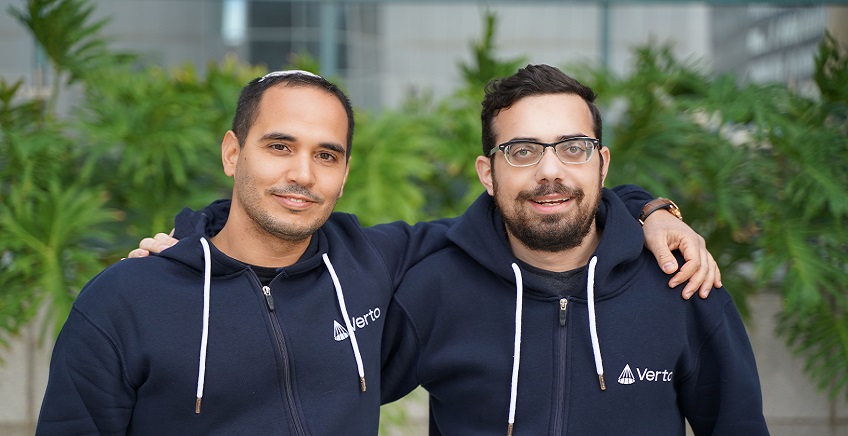
The Verto imaging services can be available and purchased via a SaaS-based licensing or subscription model. Pricing is determined via the size of an organization and the number of deliverables required and is suitable for both SMBs and enterprise customers. Verto was founded in 2017 by Didi Dvash (CTO) and Nadav Dadon (CEO).

Dynamic Infrastructure to collaborate with one of the world’s largest reinsurers

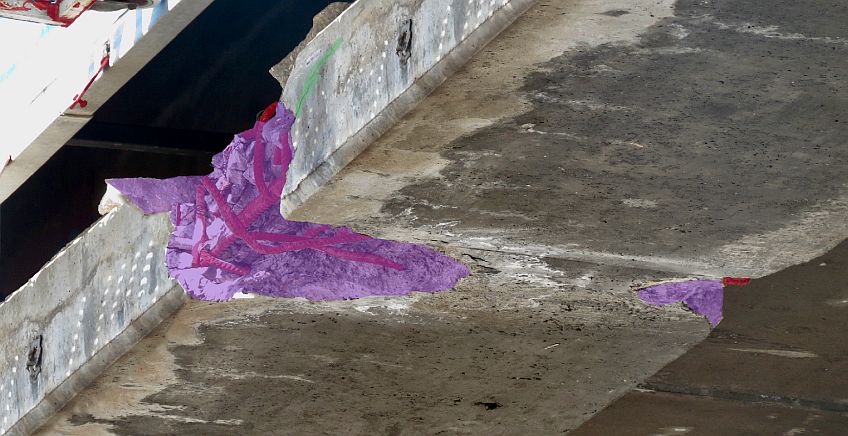
Dynamic Infrastructure’s AI based cloud platform, which detects maintenance failures of bridges and road infrastructures based on photographs only, is now getting a seal of approval from one of the largest insurance companies in the world. Munic Re., a world leading insurance company, announced it guarantees Dynamic Infrastructure’s system to detect 99% of the critical infrastructure failures in a monitored structure. This guarantee is based on a thorough systematic exploration done by the German company to the system by engineers and AI experts. For Dynamic Infrastructure, this cooperation allows its solution to be exposed to the large Munic Re’s customer base.

Munic Re. is one of the largest reinsurers in the world. Its revenue in 2020 was £54.9 billion. Reinsurance it’s a way of transferring or sharing some of the financial risk insurance companies assume with another insurance company, the reinsurer. This method is widely used in a large scale insurance, which might risk the financial stability of the company. Naturally, the use of reinsurers is particularly common in infrastructure insurance.

“With this third-party validation, civil managers and engineers can finally rely on fully-insured technology for confidence that no critical crack, spall, erosion or any other risk factor will catch them off guard,” explains Dynamic Infrastructure’s CEO Saar Dickman. “For proactive maintenance, damage assessment or preventive repair planning, managers know it’s literally impossible to send inspectors to all locations around the clock, examining every inch of each structure for deterioration – especially when erosion is a gradual process. Munich Re conducted its due diligence on our solution’s AI algorithm, and their backing is a game-changer to increase certainty for our customers – a unique offering in our sector.”

The company’s platform uses all the visual information gathered by the periodical inspections at the site, to include phone photographs, aerial photographs taken by drones, laser scans and alike – and composes a detailed 3D picture of the structure. The system constantly compares the current state of the structure to previous states, and detects cracks, defects and anomalies which requires preventive maintenance and automatically generates alerts for the asset operators.

Dynamic Infrastructure, founded in 2017 and operates from Tel-Aviv, New-York and Berlin, is already involved in private and public projects throughout USA, Australia, Germany, Switzerland, Greece and Israel. The company estimates that using its platform, operators of tens of thousands of assets managed to significantly reduce their operations expenses and financial investments.

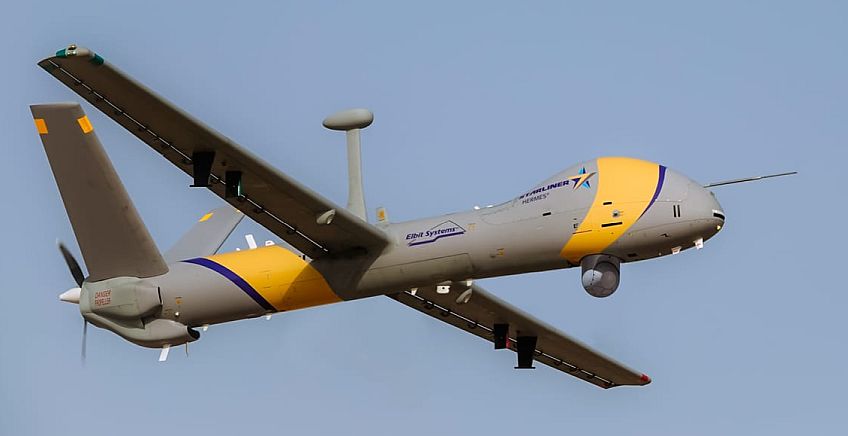
Elbit’s Hermes UAS was approved to fly in Israel civil airspace

The Civil Aviation Authority of the State of Israel (CAAI) in the MOT has certified an Unmanned Aircraft System (UAS), the Hermes Starliner, a Type Certificate, approving it to fly in all civilian airspace, just like any other civilian airplane. Head of the CAAI, Joel Feldschuh, says this is the first time in the world to provide an UAS an identical certificate to civilian plane. “The certification we granted to the Hermes Starliner is aligned with international activity in this field. This Type Certificate was issued at the end of a fundamental process that we led for six years that included thousands of man hours, dozens of audits, laboratory tests, ground tests, intensive flight tests and thousands of documents under our supervision”.

The certificate complements Hermes’ compliance with NATO standardization for approving UAS for integration in civilian airspaces. Until now, unmanned aerial vehicles were allowed to fly only in military airspaces or designated air corridors. The Type Certificate changes this reality. The Hermes Starliner is equipped with a wingspan of 17 meters and weighing 1.6 tons. It is capable of up to 36 hours of continuous flight at an altitude of up to 25,000 ft. and can carry an additional 450 kg of electro-optical, thermal, radar and other technical payloads. 

The Hermes Starliner is based on Elbit’s Hermes 900 UAS, and is integrated with advanced civil aviation technological capabilities such as terrain avoidance warning system, automatic take-off and landing in harsh visibility, redundant avionics, sensors and satellite data links and adverse weather capabilities. Elbit already won contracts to supply the Hermes Starliner to the Swiss Federal Department of Defense and the Canadian Ministry of Transportation.

U.S performed first autonomous helicopter flight

The transition of air forces to unmanned aerial vehicles is in the process of accelerating, and is also expanding to aircrafts that were considered so far as unsuitable for the UAV concept. Recently, Lockheed Martin,  Sikorsky and the Defense Advanced Research Projects Agency (DARPA) announced the completion of an exceptional project: full autonomous flight of the Black Hawk UH-60A  helicopter with no crew onboard. The flight was part of the Aircrew Labor In-Cockpit Automation System (ALIAS) program. The helicopter completed 30-minutes of uninhabited flight over the U.S. Army installation at Fort Campbell, Kentucky, and was operated by the Sikorsky MATRIX™ autonomous flying system. 

The US army is in the process of exploring potential use cases for UAS technologies, including for the Future Vertical Lift (FVL) helicopter. Lead test pilot at Fort Campbell, Benjamin Williamson, says the technology allows pilots to switch from autonomous to piloted control at any point with “the flip of a switch” in the cockpit. “This will allow for reducing work load in a variety of missions, in degraded weather conditions or in threatened environments. The system will automatically detect dangerous situations for the helicopter or to the execution of the mission – dangers that may lead to accidents and thereby saving crew and soldiers lives”.  

Ukrainian-Russian Conflict May Cause Rise in Chip Costs

Deployment of Ukrainian tanks. Photo: Ukrainian Armed Forces

Ukraine is a major supplier of raw material gases for semiconductors including neon, argon, krypton, and xenon. According to TrendForce’s study, Ukraine supplies nearly 70% of the world’s neon gas capacity. Although the proportion of neon gas used in semiconductor processes is not as high as in other industries, it is still a necessary resource. If the supply of materials is cut off, there will be an impact on the industry. TrendForce believes that, although the Ukrainian-Russian conflict may affect the supply of inert gas regionally, it will not halt semiconductor production in the short term.

However, the reduction in gas supply will likely lead to higher prices which may increase the cost of wafer production. Inert gases are primarily used in semiconductor lithography processes. When the circuit feature size is reduced to below 220nm, it begins to enter the territory of DUV (deep ultraviolet) light source excimer lasers. The wavelength of the DUV light generated by the energy beam advances circuit feature sizes to below 180nm. The inert gas mixture required in the DUV excimer laser contains neon gas.

Neon gas is indispensable in this mixture and, thus, difficult to replace. The semiconductor lithography process that requires neon gas is primarily DUV exposure, and encompasses 8-inch wafer 180nm to 12-inch wafer 1Xnm nodes. TrendForce research shows that 180~1Xnm nodes accounts for approximately 75% of total capacity. Except for TSMC and Samsung, who provide advanced EUV processes, for most fabs, the proportion of revenue attributed to the 180~1Xnm nodes exceeds 90%.

The manufacturing processes of components in extreme short supply since 2020, including PMIC, Wi-Fi, RFIC, and MCU all fall within the 180~1Xnm node range. In terms of DRAM, in addition to Micron, Korean manufacturers are gradually increasing the proportion of 1alpha nm nodes (using the EUV process) but more than 90% of production capacity still employs the DUV process.  In addition, all NAND Flash capacity utilizes DUV lithography technology.

Intel to Acquire Tower for $5.4 Billion

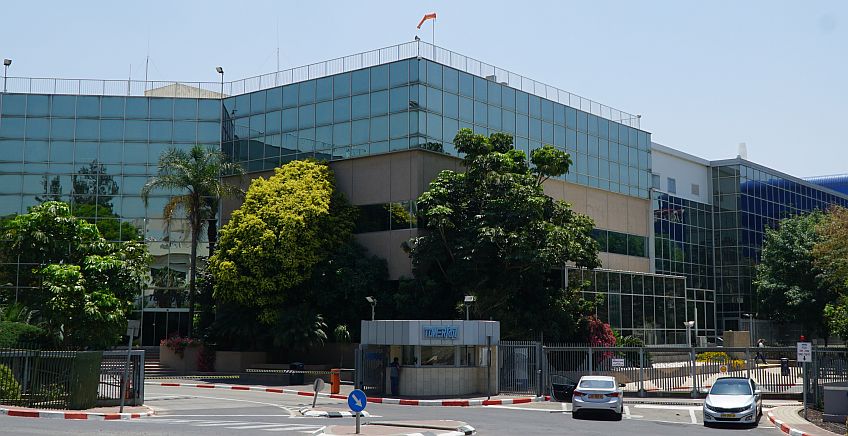
Intel and Tower Semiconductor (based in Migdal Haemek, Israel), announced a definitive agreement under which Intel will acquire Tower for $53 per share in cash, representing a total enterprise value of approximately $5.4 billion. The acquisition supports Intel’s IDM 2.0 strategy to build a foundry services business. “Tower’s specialty technology portfolio, geographic reach and deep customer relationships will help scale Intel’s foundry services and advance our goal of becoming a major provider of foundry capacity globally,” said Pat Gelsinger, Intel CEO.

As a key part of its IDM 2.0 strategy, Intel established Intel Foundry Services (IFS) in March 2021 to become a major provider of U.S.- and Europe-based foundry capacity to serve customers globally. IFS currently offers leading-edge process and packaging technology, and a broad intellectual property (IP) portfolio. The transaction is expected to close in approximately 12 months. It has been unanimously approved by Intel’s and Tower’s boards of directors and is subject to regulatory approvals, including the approval of Tower’s stockholders.

Tower Semiconductor provides a broad range of customizable process platforms such as SiGe, BiCMOS, mixed-signal/CMOS, RF CMOS, CMOS image sensor, non-imaging sensors, integrated power management (BCD and 700V), and MEMS. It owns two manufacturing facilities in Israel (150mm and 200mm), two in the U.S. (200mm), three facilities in Japan (two 200mm and one 300mm) which it owns through its 51% holdings in TPSCo and is sharing a 300mm manufacturing facility being established in Italy with ST.

“With the addition of Tower, Intel is strongly positioned to bring more value to customers across the nearly $100 billion addressable foundry market.”