NTT Data to develop quantum algorithm for credit risks assessment

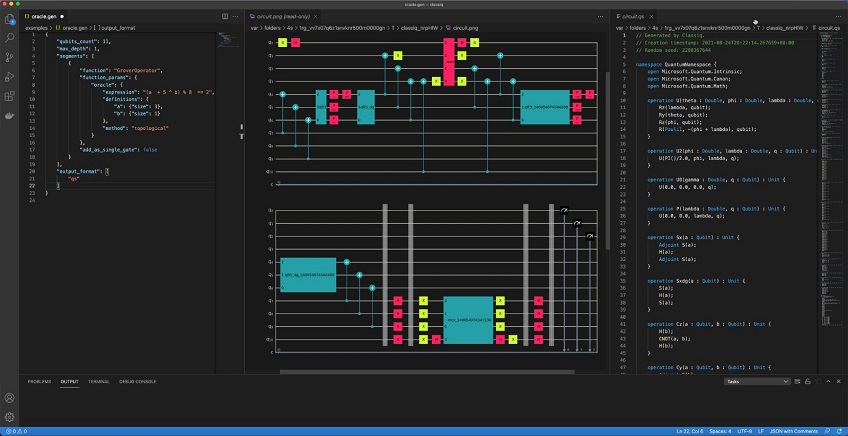
Classiq Company announced a new cooperation in the quantum algorithm field with the IT Services Company NTT Data. This is the first cooperation revealed publicly by Classiq, which within its framework NTT will use the Classiq’s quantum programming platform to develop designated quantum algorithms. NTT will use those algorithms to perform complex calculations in the credit risk analysis field, as part of its novel IT services it delivers to customers in the finance world.

NTT Data, part of NTT Group, is one of the largest IT Services companies in the world. According to Gartner’s ranking, NTT Data is the sixth largest IT Company, revenue-wise, with $20.3 billion revenue in FY2021. It focuses in broad areas such as digitization processes, cloud, business intelligence, business consulting and more, and it serves customer in a wide range of sectors, to include the financial one.  Shunichi Amemiya, Head of Research and Development HQ, NTT Data, says: “We are interested in applying quantum computer technology to financial engineering and believe that the need to compute complex business models will increase in the future”.

Quantum risk management

Credit risk analysis is a weighing process intended to evaluate the risk that borrowers or vendors will not return a loan. The higher the risks – the higher is the interest the lender requests, or even refuse to loan. Amir Naveh, Co-Founder and Head of Algorithms in Classiq, explains to Techtime why quantum computing capabilities are required in calculating credit risk analysis. “Calculating and ranking credit risk requires weighing of many variables, the same way it’s done in financial option pricing process. Usually, an enormous number of scenarios and possibilities should be considered in order to achieve the correct evaluation. Using quantum computing, this process could be accelerated and more accurate, which – in turn – improves risk management of the financial body”.

Classiq is developing CAD solutions that will make it possible to write applications for quantum computers. Nir Minerbi, Classiq co-founder and CEO, told Techtime in an earlier interview: “The quantum revolution consists of two things: hardware and software. Nowadays it is almost impossible to develop applications for a quantum computer, since you have to program at the logic gate level. It’s like designing a chip at the transistor level. We build the tools that allow developing applications at a higher level of abstraction. The next layer in the quantum stack.”

Recently, Classiq launched its proprietary platform’s Beta version which allows, for the first time in the industry, to compose functional algorithms for Quantum computers. The company made the new platform available to several customers, and intends to expand the beta version access to several dozen customers in the next few months.

Ophthalmic Sciences unveils world’s first AI contactless device for measuring eye fluid pressure

Israeli startup Ophthalmic Sciences is unveiling IOPerfect™, the world’s first AI-based contactless intraocular pressure (IOP) measuring device. The proprietary technology, which combines AI-based visual analysis in a VR-like headset, allows tele-diagnosis and remote monitoring of glaucoma. With around 75 million patients globally, glaucoma is the second leading cause for blindness, which the novel technology may help prevent.

Patients can easily and safely wear the VR-like headset to monitor their IOP (fluid pressure inside the eyes) any time of the day at home without the need for eye drops or constant calibration. The test is performed in under two minutes, and is unaffected by corneal thickness, with its proprietary algorithm providing reliable AI-based image processing analysis of vascular pressure response.

“We are excited to have our technology serve as a meaningful tool to help fight the glaucoma epidemic and prevent millions from going blind,” says Ariel Weinstein, CEO, Ophthalmic Sciences. “Growing exposure to phone and computer screens appears to be linked to increased glaucoma prevalence. Along with an ageing population, the risk keeps getting higher, increasing the need for early diagnosis. But most importantly, the past year has proven the value of tele-diagnosis and this fact has attracted significant attention from clinicians and investors in our venture,” adds Weinstein.

“Non-contact, remote measurement of IOP is very challenging, which explains why current glaucoma management is based on infrequent measurements even though IOP fluctuates continuously. Such sporadic monitoring would be unheard of in diabetes or hypertension management which is why I embarked on this journey,” says Noam Hadas, inventor of the technology, Co-Founder and CTO, Ophthalmic Sciences.

IOPerfect™ applies mild controlled air pressure within the headset while micro-video cameras capture the difference in response to pressure of internal vs. external eye blood vessels. Data is uploaded to a secure cloud where analysis takes place and results can be accessed by the clinician for interpretation.

The IOPerfect™ can be used at home, at eye-care clinics, in emergency rooms, primary care physicians’ offices for at-risk patient screening, nursing homes and by pharmacies offering health services. The solution helps save time for ophthalmologists and optometrists, while improving patient outcomes and increasing revenue for clinics, hospitals, and telehealth providers.

Ophthalmic Sciences has started the regulatory procedures for the IOPerfect™, which is set to be available for sale in the US and Europe in 2023.

The technology forms the basis for Ophthalmic Sciences’ future products, which will include a full eyecare remote diagnostics suite for early detection of cataract, corneal edema and exophthalmia, alongside early identification of central/branch vascular occlusions and ocular motor disorders.

The devices will be available in two versions, the IOPerfect™ and the IOPerfect Plus™, tailored for different use cases. IO Perfect Plus™ can help Ophthalmic Sciences generate a particularly attractive revenue stream, based on offering the product through a SaaS based business model. According to Ophthalmic Sciences, dozens of subjects have already used the device to date as part of R&D and ongoing clinical trials, the results of which are expected to be submitted to the FDA in 2022. The startup has already secured part of the new capital it is now raising. The funding will allow the company to extend partnerships that will help bring the devices to the market.

Cycode Raises $56M to Secure Software Supply Chains

Cycode, a provider of software supply chain security solutions, today announced a $56M Series B round led by New York-based global private equity and venture capital firm, Insight Partners. YL Ventures, a global VC firm specializing in Israeli cybersecurity investments, who led Cycode’s seed investment, also participated in the round. The funding, one of the largest Series B rounds ever in Application Security (AppSec), comes on the heels of Cycode’s $20 million Series A funding in May of 2021. This round brings the total investment to $81 million.

As software engineering and DevOps teams have adopted new tools, the tools themselves have become attack surfaces. While, in previous eras AppSec teams secured development tools, today, they are rarely responsible for doing so. In a survey of 176 technology executives, fewer than 22% of organizations have AppSec teams responsible for securing these key development tools and processes. 

While DevOps automation drives efficiency in the software development life cycle (SDLC), the interconnectedness also facilitates lateral movement between tools, systems, and resources across the software supply chain. 

Source control management systems (SCM) are becoming the hub of many organizations’ SDLC. “In order to truly shift left, security teams need to put as much emphasis on securing the development environment as they do production,” said Kevin Paige, CISO at Flexport. “From the SCM, attackers have access to source code, they can modify CI/CD settings, tamper with code, steal credentials, provision vulnerable cloud infrastructure, and more.”

The frequency and severity of software supply chain attacks are increasing significantly. According to the European Union Agency for Cybersecurity, supply chain attacks are expected to increase 400% from 2020 to 2021. Furthermore, Gartner predicts by 2025, 45% of organizations worldwide will have experienced attacks on their software supply chains, a three-fold increase from 2021.

Cycode addresses software supply chain security with a platform that provides visibility, security, and integrity across all phases of the SDLC. Through integrations with DevOps tools and infrastructure, Cycode hardens security postures and implements consistent governance policies. Risk of software supply chain breach is further reduced by scanning for hardcoded secrets, infrastructure as code misconfigurations, code leaks, improper access, and more. Cycode’s knowledge graph then creates a comprehensive mapping of the software supply chain—including security violations, user activity, and other events across the SDLC—to prioritize risk, find anomalies, and prevent code tampering.

Cycode intends to use the funds to fuel sales growth and accelerate development of its product roadmap. Cycode is expanding its go-to-market capabilities by building a partner-friendly ecosystem of both channel and technology alliances. Engineering will focus on expanding Cycode’s pre-built integration network to include 3rd party security tools, deepening user behavior analytics and anomaly detection capabilities and continuing to enhance its knowledge graph to enable deep investigation of breach paths through an interactive link analysis-based interface.   

 “The key to modern AppSec is centralizing and mapping events and metadata across the SDLC such that it becomes easy to determine when disparate activities add meaningful context to each other,” said Lior Levy, co-founder & CEO of Cycode. “With each new integration, our knowledge graph becomes smarter. Hence, one of our goals is to integrate with every software delivery and AppSec tool to determine how each dot is connected and when it’s relevant.” 

“What’s so exciting about this company is the comprehensiveness of its vision for SDLC security,” said John Brennan, Partner at YL Ventures. “From day one, Cycode’s approach has supported a vision that surpasses anything that currently exists in the space, making it one of the fastest growing AppSec companies in the industry. This is the kind of platform solution that CISOs envision when aiming to solve big problems with robust solutions.”


Techaya and Enercon launched VPX switches for military embedded modules

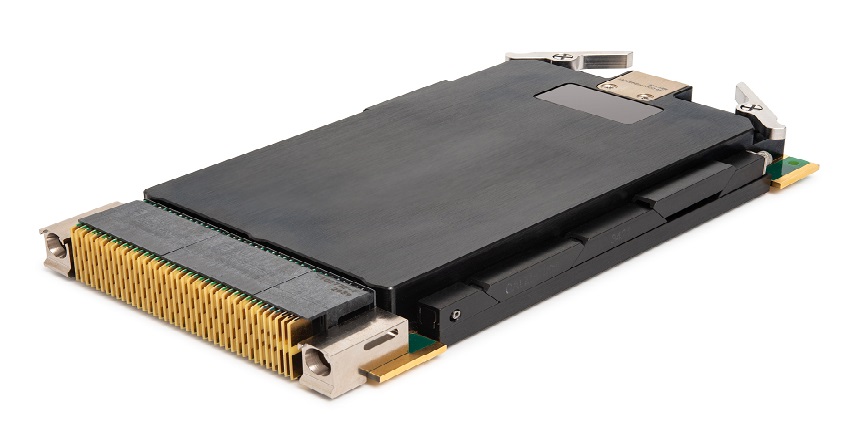
Techaya, an Enercon Technologies group company, launched a new family of VPX communication modules that are SOSA-aligned. The standard regulates power and communication interfaces between embedded modules within military platforms and generates compatibility between components and systems of various manufacturers. The standard, originally from the avionics sector, was adopted by most of the U.S. military branches. 

The new communication boards are being used as a principal switch which connects all the different devices of the system, and through which the communication traffic is being directed. To date, the company issued modules with 3 different data speeds – 1, 10 and 40 gigabit, and plans to bring to market, in 2022, a 100-gigabit module, which is the fastest speed for a VPX protocol. The company is reporting first orders from two customers, for a radar system and a marine/naval project. In parallel, the company taps into different tenders in the United States and reports much interest in the product. 

One of the advantages of the new product line stems from the synergy between Techaya and Enercon. During January 2021, Enercon, a well-known company developing power supplies to the military sector, acquired Techaya, where one of the goals of the merger was to provide its clients combined solutions, which are based on the solutions of both companies. 

In the military market segment, integration between systems of different manufacturers might be complex and require additional development. The joint company offers coupled solutions of communication and power supply that have structured compatibility, a feature which accelerates fast system readiness processes of the wholesome solution by the client. 

Udi Palgi, VP R&D of the company explained to Techtime: “up until today, we have developed on-demand VPX boards. Now, we bring to market a designated product line. Since Enercon has the power supplies that are SOSA-aligned, it enables us to provide an integrated system compliant with the standard. In reality, it is a highly flexible platform which enables the client to carry out the integration and the development at a fast pace”. Enercon Technology group offers communication and power supply solutions for advanced C3 (Command Control and Communication) systems both as off-the-shelf products and as designated development for customers in Israel and in the international market. 

Former NXP’s CTO joins TriEye

TriEye, a developer of CMOS-based SWIR sensing solutions, announces the addition of Hans Rijns, a senior semiconductor executive with over 25 years of international experience in R&D management, innovation and business strategy, to their Advisory Board.

Before joining TriEye’s advisory board, Hans took on many roles including, Senior Vice President, Chief Technology Officer and head of Research at NXP Semiconductors, where he was responsible for all applications, systems, circuits and process technology programs until 2016.

Hans started his professional career in 1991 as a scientist at Philips Research. In 1996 he continued on to Philips/NXP Semiconductors where he continued to acquire extensive experience in business and technologies across end-markets such as mobile, consumer electronics, security, automotive and Internet-of-Things applications. He studied at the University of Twente in the Netherlands where he received his M.Sc. and Ph.D. in Electrical Engineering. During his professional career he has published over 40 scientific publications and holds 7 patents.

“I look forward to joining TriEye and becoming part of a team that is committed to continuously improving and innovating technologies to solve global challenges,” said Hans Rijns, Board Advisor of TriEye, “TriEye continues to be ahead of the curve as it offers new cutting-edge technologies to various mass-markets. I’m excited to work with TriEye’s team to help accelerate the company’s growth as it expands its offerings and global reach.”

The news comes after TriEye’s recent announcement that it has secured additional funding to support their product commercialization and global expansion. This investment was led by M&G Investments and Varana Capital, with the participation of Samsung Ventures, SDF (the investment arm of Tawazun Holdings), Deep Insight, Allied Group, and Discount Capital along with follow on investors Intel Capital, Porsche Ventures, Marius Nacht and Grove Ventures.

Hans Rijns

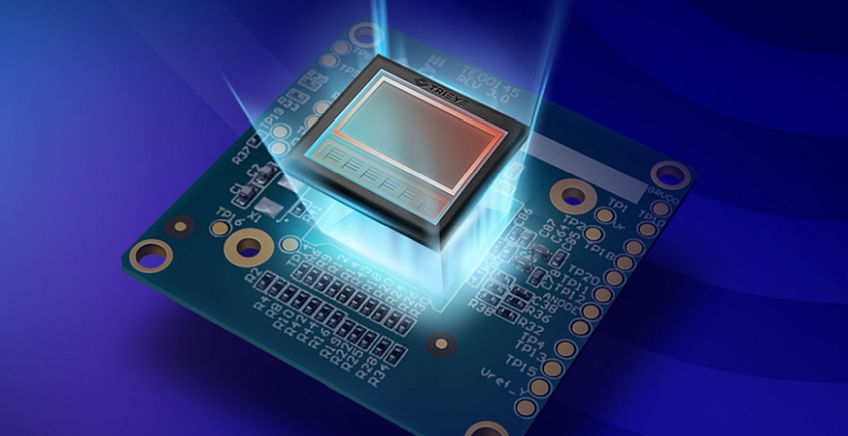
The company was founded in 2017 by Avi Bakal (CEO), Prof. Uriel Levy (CTO), and Omer Kapach (VP R&D), and is headquartered in Tel Aviv, Israel. Its technology enables cost-effective, high-resolution image data and depth perception in all weather and lighting conditions. Short-Wave Infrared (SWIR) cameras are known to can allow for object and hazard detection even under the most challenging visibility conditions.

But the current utilization of Indium-Gallium-Arsenide (InGaAs) material to produce SWIR sensors, is complex, expensive and involved with long lead times. Following a decade of nanophotonics research by TriEye’s CTO, Prof. Uriel Levy, the company succeed to fabricate CMOS sensor,  allowing SWIR to enter mainstream use. According to TriEye, its sensor’s prices are thousand times lower than the existing InGaAs-based cameras.

Aidoc developed Operating System for AI medical application

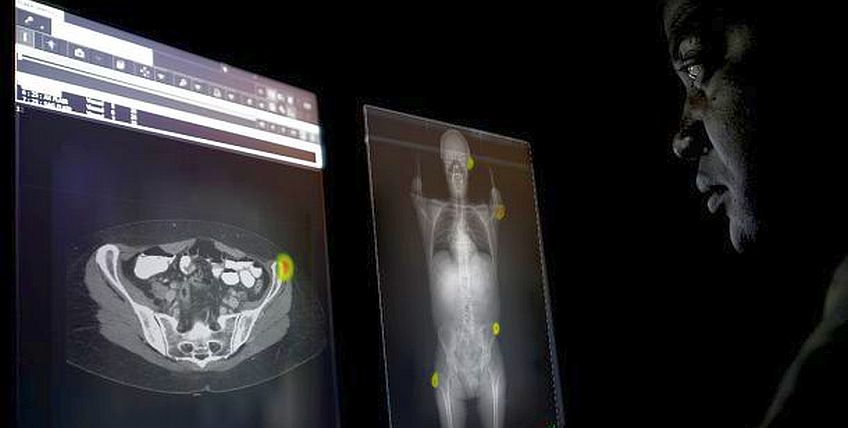
Aidoc Company developed a designated OS (operating system) for the medical world, intended for AI-based algorithms that use to analyze imaging scans. Aidoc is considered a leader in the field of medical algorithms. Its algorithms automatically analyze imaging scans such as X-ray, CT and MRI – and alert the radiologist for abnormal findings that may indicate emergency situations such as intracranial hemorrhage or acute C-spine fractures.

Next to Aidoc, other companies are active in this field, to include Israeli companies. The Aidoc’s operating system is considered an agnostic one, allowing it to run algorithms created by other vendors. This method provides hospitals and imaging institutes with the ability to integrate other AI solutions in more effective and easy manner. Till now, Aidoc OS platform integrated AI solutions from 5 other vendors: Imbio, Riverain, Icometrix, Subtle Medical and ScreenPoint Medical. These 5 sub-specialties solutions are added to Aidoc’s 7 FDA-cleared solutions that are already built in the system.    

According to 2021 Sage Growth Partners survey, about 90% from the hospitals that took part are willing to adopt AI-based solution, comparing 53% two years ago. However, only 34% are deploying these solutions in practice. According to Aidoc, that gap is a result of the complexity of integrating various vendors’ solutions under a unified environment. Aidoc’s OS analyze the scan characteristics and apply the relevant algorithm from the ones available in the system – regardless of its vendor.   

Artificial Intelligence in the service of the Radiologist

Aidoc operate in the growing field of AI in the use of imaging scans’ interpreting. Its platform interfaces with the hospital’s server and automatically analyzes the imaging scans of the inpatients or the patients in the ER. The system detects abnormal findings such as intracranial hemorrhage, acute C-spine fractures or a stroke. Usually, the radiologist analyzes the scans in a FIFO order. The Aidoc system prioritizes the scans that require extra attention and emergency care for the medical team.  

Aidoc’s algorithms are based on a deep-learning and big-data analysis. These algorithms analyze millions of scans in order to define patterns that characterize medical situations and symptoms. Till now, 7 of the developed algorithms were cleared by the FDA. In May 2020 the company received FDA clearance for an algorithm that is capable of detecting findings connected to COVID-19 infection from imaging scans. According to the company, its healthcare AI platform is currently deployed at about 400 health centers around the globe, is used by 5,000 radiologists in health networks, hospitals and radiology groups worldwide, and having analyzed over 10.3 million scans in total to date.

SCD renews its IR Manufacturing Infrastructures

SCD from the Galilea, Israel, has entered the final stage of upgrading its FAB manufacturing infrastructures as part of a multi-year, multi-million-dollar project. Techtime has learned that the move is expected to be completed in in 2022. SCD is one of the most advanced producers of infrared (IR) detectors for military, defense, and commercial applications. The program is aimed to allow the increasing of its production capacity, and to mass produce highly advanced sensors.

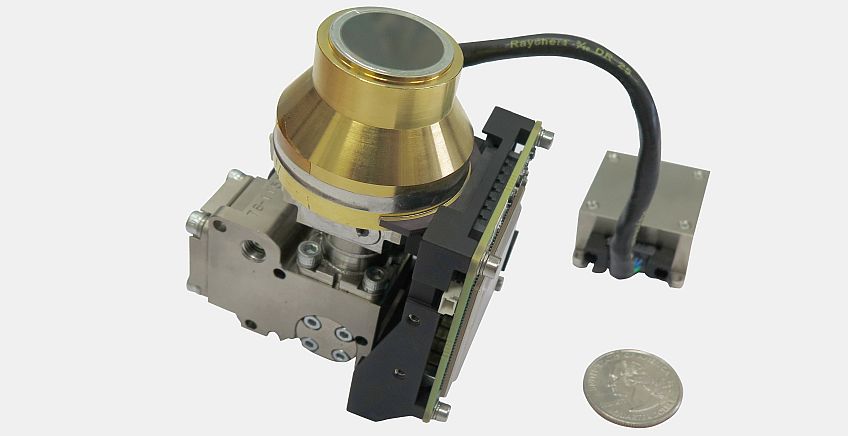
The company is jointly owned by Elbit Systems and Rafael Advanced Defense Systems. It maintains full control over all processes and core technologies, from R&D through manufacturing, packaging, testing, and integration. That includes also its latest product – the “Crane” Medium-wave infrared (MWIR) detectors (photo above), introduced in October 2021. This unique 5-micron pitch MWIR detector with 5 million pixels is considered a technological breakthrough.

Kobi Zaushnizer, VP Business Development & Marketing in SCD

MWIR spectrum enable true long-range passive night vision, used in aerial surveillance vision systems, thermal sights and missile warning systems. It answers a critical need of the defense industry to provide modern armies with multi-pixel terrain dominance in all weather conditions, day and night. Crane detectors are based on SCD’s unique 5 micron pixel pitch technology combined with its XBn technology, that allows operation at a relatively high temperature of 150⁰K.

Kobi Zaushnizer, VP Business Development & Marketing, said: “We are a strategic resource that provides Israel with independence and superiority in the field of electro-optics, from single photon to complete system.” He revealed that the new detector has been selected for a major defense program. “With Crane detector it is possible to build a very low size, weight and power (SWaP) IR camera with a single chip that provides 5 megapixel image resolution. The upgrade of our production line will enable serial production of the new detector.”

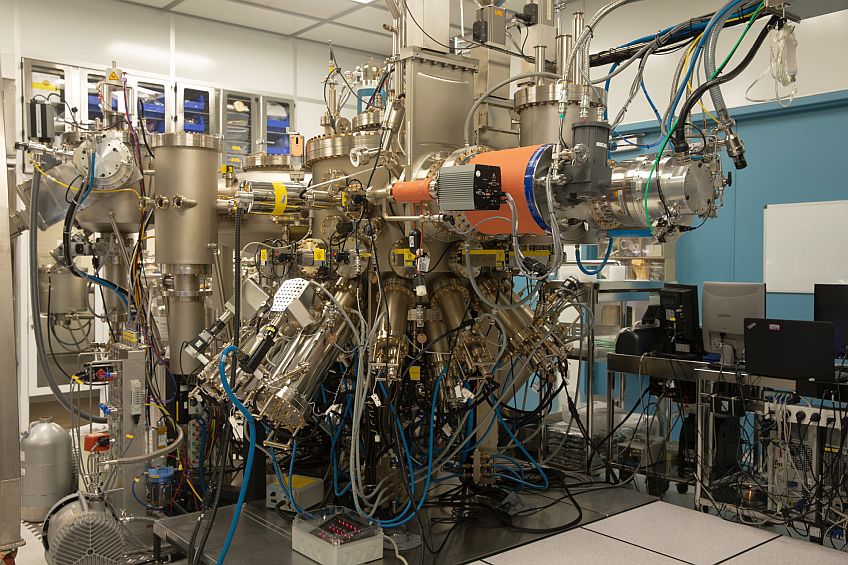
SCD FAB. Multi-million dollar program