AiVF receives approval to sell its AI-driven IVF platform in the UK

AiVF, which specializes in AI technology for the IVF (In Vitro Fertilisation) treatment process, has received regulatory approval of the for its EMA™ platform in the UK. The approval enables AiVF to launch marketing and sales efforts in the UK, one of the largest IVF markets in Europe. The news follows AiVF’s announcement in April that it has received a CE Mark for use of EMA in IVF labs in Europe.

The algorithm at the heart of AiVF’s EMA™ platform, combines AI-based machine learning and computer vision to improve embryos’ implantation success rates. AiVF’s non-invasive PGT-A (Preimplantation Genetic Testing for Aneuploidy) results can predict, without the need for a biopsy, whether a given embryo is genetically suitable for transfer.

Estimates published by the World Health Organization (WHO) suggest that between 48 million couples and 186 million individuals live with infertility globally. Many of these couples are opting for IVF (In Vitro Fertilisation) treatments, where most of them typically see success rates of 20-35% per cycle, but the likelihood of getting pregnant decreases with each successive round, while the cost and the agony increase.

According to its own research, the Human Fertilisation and Embryology Authority reports that in in the UK, in 2018 alone, around 54,000 patients had 68,724 fresh and frozen in-vitro fertilisation cycles in addition to 5,651 donor insemination cycles at HFEA licensed fertility clinics. Moreover, a recent report by Allied Market Research valued the UK IVF market at $514 million in 2018 and estimated that it would nearly double to $928 million by 2026. This translates into a CAGR of 7.6% over the period.

Fertility clinics and hospitals play a key role in providing IVF services in the UK market and are rapidly expanding to meet the growing demand from couples seeking assistance for infertility problems. The application of AiVF’s AI solution holds the potential to greatly increase the success rates of fertility treatments for women in the UK and around the world – allowing many more to receive the treatment, saving money, and helping many more realise the dream of having a baby.

“Back in 1978 the UK was the pioneer of IVF and is one of the largest markets for treatment in Europe,” notes Daniella Gilboa, CEO, and founder of AiVF. She added that “we will soon begin targeting the growing number of fertility clinics in the UK.”

The opening up of the British market will enable the company to apply its technology for improving the success rate of IVF in one of the largest countries in Europe.

AiVF was created to help people who dream of having a baby, and the doctors and clinics that support this dream. The AiVF multi-module integrated platform combines AI, computer vision, and big data and is in use at a number of European clinics.

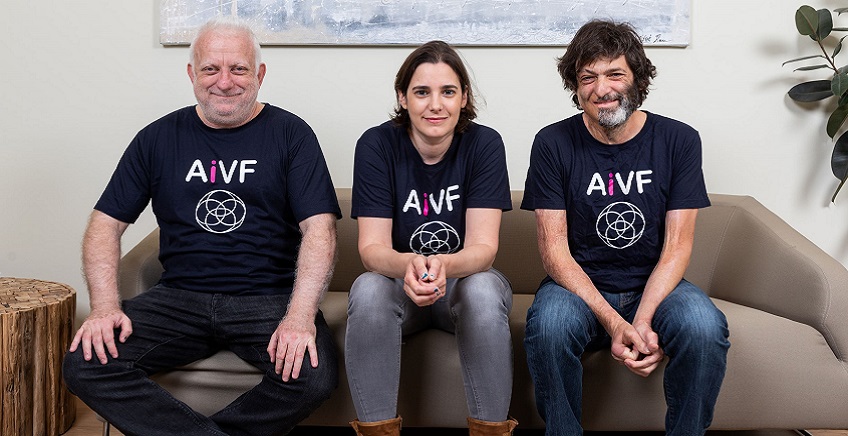
The company was founded in 2018 by Daniella Gilboa, an experienced clinical embryologist and a biostatistician and Professor Daniel Seidman, one of the busiest IVF practitioners in the world. Duke University and leading behavioral economist, Prof. Dan Ariely, serves as AiVF’s Chief Behavioral Officer. AiVF is backed by a US-based VC firm, and by prestigious scientific grants from Israeli and European sources.

“Taking Mobileye public is admitting Intel’s failure”

Intel’s intention to take Mobileye public in mid 2022, less than 5 years after its acquisition, continues to resonate and raises questions regarding the direction its current CEO, Pat Gelsinger, is leading the company. In light of the major importance Intel attributed to Mobileye in its future plans, it seems that the expected offering is not a single move; rather it is a sharp u-turn from the strategy led in the past years by the two former CEOs.

In a recent conversation with Techtime, Sergey Vastchenok – Senior Equity Analyst at Oppenheimer Israel explained that the expected offering is the price Intel pays for its mistakes in recent years. “In the recent years, Intel lagged behind its major competitors in the manufacturing world, mainly TSMC and Samsung, with regard to capital expenditures (Capex). This process led Intel to lose its technological advantage”.  

“New CEO, Pat Gelsinger, who grew within Intel and is part of its genetics, came with a vision of reviving its past market dominance, and he did so by massively increasing investments in the company’s organic capabilities”.

Sergey Vastchenok, Oppenheimer Israel

The diminution in Intel’s status is reflected very clearly in its share performance in recent years. In the past 5 years, Intel’s share raised by only 47% whiles the Philadelphia Stock Exchange (PHLX) index, grouping leading chip companies, raised by 354%. Nvidia and AMD, Intel direct competitors, raised by 1300% within the same period.

Vastchenok: “Intel plans to invest 20-25 billion annually in the coming years to restore the lost advantage. Since the company is deficient with cash, the main question is how to finance the planned increase in investments.  Increasing its debt may harm the company’s credit rating, while additional offering in the stock market may weaken its already weak share. The best method of raising funds is to start selling assets”.

Mobileye is a perfect asset to sell

According to Vastchenok, selling Mobileye is a rational step, since its market value is considerably high, and since there was never a real synergy between the two companies’ core activities. Not only there was no real synergy, one may say that it was even a negative one, since Mobileye buy its chips from TSMC and not from Intel. This led to the situation where Intel financed Mobileye’s development strategy, while TSMC benefit the production orders”.   

“Mobileye is a growing business, and is considered a pioneer and a leader in the advanced driver-assistance systems (ADAS) world. Yet, it is still difficult to forecast its revenues and its market share in the future autonomous vehicle world, since there are many competitors nowadays. Every technology giant is joining the game. At this situation, if the market is willing to pay a good price for your assets – you better sell. If Intel is going to make it public at the mentioned price, it could significantly enlarge its cash reserves. This move will do well for both Intel and Mobileye. Mobileye has better chance to prosper outside Intel’s wings. As we can see, since it was acquired by Intel they have lost plenty of quality human resources, the same way Intel lost human resources for its competitors”.

What is the future of Moovit?

Selling Mobileye raises questions regarding the future of other companies bought by Intel in the recent years. In May 2020 Intel acquired Moovit – the Israeli public transport platform – for $900 million. This surprising acquisition presented as another step in Intel’s vision to provide Mobility-as-a-Service (MaaS) services in the future, based on Mobileye’s autonomous vehicles and Moovit’s application. In fact, it seems that the real synergy is between Mobileye and Moovit. “Almost all the acquisitions made by Intel at the past years, to include FPGA vendor Altera, were not related to the core activities of Intel. Taking Mobileye public is an admission of the failure of the acquisition strategy of recent years. It looks like the current CEO is being aware of Intel core expertise and what should they focus at”.

Volvo invests in optical and imaging technology start-up Spectralics

Volvo Cars has invested in the optical and imaging technology start-up Spectralics through the Volvo Cars Tech Fund, the company’s venture capital investment arm. The investment gives Volvo Cars access to promising technology at an early stage of development that could contribute to making cars safer and revolutionise in-car user experience.

Coming from a background in aerospace technology development, Israel-based Spectralics creates state-of-the-art imaging and optical infrastructure spanning materials, hardware and software, enabling a wide variety of advanced optical capabilities. One of the company’s core solutions is the multi-layered thin combiner (MLTC) which is a new type of thin optics ‘film’ applicable to see-through surfaces of all shapes and sizes. Integrated into a car’s windshield or windows, the technology could be used to overlay imagery on the glass. In a windshield configuration, the technology could create a wide field of view ‘heads-up display’ that can instill a sense of distance as virtual objects are superimposed onto the real-world environment for a safe and immersive experience.

“Spectralics is an exciting company with technology that holds truly great promise,” said Henrik Green, chief product officer at Volvo Cars. “By supporting their development, we can bring forward the potential their products could have in future Volvo cars.”

Other potential uses of the technology include advanced filters for various applications, in-cabin sensing, blind-proof front-looking cameras and digital holographic projections.

“We are proud to partner with a progressive technology leader like Volvo Cars,” said Ran Bar-Yosef, co-founder and chief executive officer of Spectralics. “We identify multiple touch-points with Volvo Cars’ vision in the ecosystem and recognise future Volvos as the right fit for new technologies.”

Spectralics is an alumnus of the MobilityXLab programme in Gothenburg, Sweden and is part of the DRIVE network in Tel-Aviv, Israel. They are both accelerators for promising start-ups with ideas that can break new ground in the mobility sector. Volvo Cars has been a leading partner in both initiatives since 2017.

“This investment is another result of our successful collaboration with MobilityXlab and DRIVE, and it deepens our relationship with these innovation partners,” said Lee Ma, head of the Volvo Cars Tech Fund. “Spectralics is a good portfolio fit for us and we believe that their technology has the potential to set a standard for the next generation of displays and cameras.”

The Volvo Cars Tech Fund was launched in 2018 and invests in high-potential technology start-ups around the globe. It focuses its investments on strategic technology trends transforming the auto industry, such as artificial intelligence, electrification and autonomous driving.

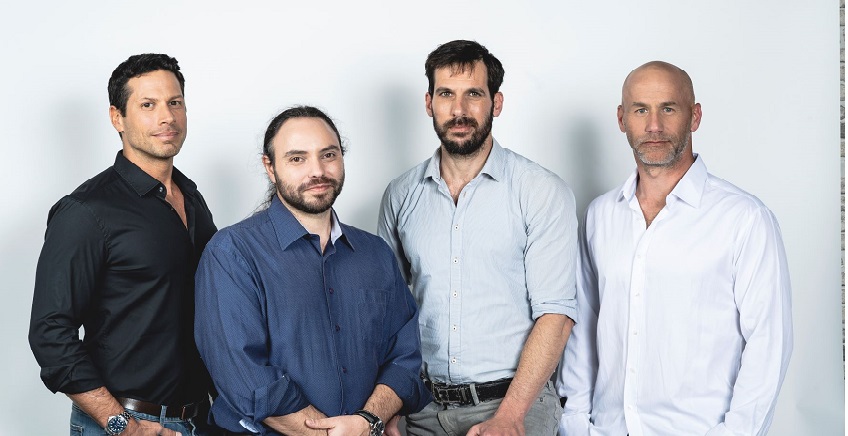
[Pictured above: Spectralics founders from left to right – Ran Bar Yosef, Dr. Eran Falk, Dr. Yuval Kashtar, Yuval Keinan. Credit – Tal Givoni]

Waterfall and NanoLock collaborate to protect critical infrastructure

A new Israeli cooperation in the critical infrastructures’ cyber defense.  Waterfall Security Company and NanoLock Company announced a new cooperation of offering a combined solution for energy & critical infrastructures companies. According to the companies, the synergy between the solutions will provide tighter and more holistic protection to the various layers of operation and production systems against different cyber scenarios. 

Waterfall’s solution is located in the communication interface between the IT systems and the operation & production systems, and creates a unidirectional buffer that prevents cyber intrusions from outside the system. NanoLock’s solution is installed at the device level, providing protection to connected edge devices, such as industrial controllers and sensors. At this level, the solution prevents maliciously or accidentally unauthorized code alterations, whether by employees or outsiders.

Yanir Laubshtein, NanoLock’s VP Cyber Solutions, explains the technological and business rationality behind the cooperation: “Waterfall creates separation between the production infrastructure and the internet, while we provide protection at the controller or sensor level. Since technicians or vendors might have occasional access to the edge-devices, such as for maintenance – it is important to fully protect them. Our solution allow for using the edge-devices for telemetry only, and block any unauthorized attempts to alter their definitions. This is not only malicious attacks protection, but also human errors that might cause faults and harm the operational flow. Nowadays, critical infrastructure plants are subject to tighter regulation requirements. Also, the latter attacks wave increased the industry’s awareness to cyber protection solutions”. 

Two concepts of IIoT cyber security

Founded in 2016, NanoLock’s solution provides device level protection for IoT and industrial equipment, with minimal power, processing and memory footprint, and is therefore particularly suitable for IoT devices with limited processing resources and scant battery power such as smart meters in the gas, water and electricity industries.

Founded at 2008, Waterfall has developed a unidirectional cyber solution, consists of both hardware and software, which offers bulletproof protection for operational networks (OT) in industrial facilities against remote cyber attacks. The hardware component is installed between the operational network (OT) and the external network (IT). A single one direction optical fiber connects the two, thus creates a Unidirectional Security Gateway allowing data to move only outward but not into the industrial network itself. This hardware creates a physical barrier that isolates the network. When a user uses the analytics systems, he does so in a replicated cloud.

Hailo Partners with KAGA FEI America to Support Growing Customer Base

AI chipmaker Hailo has partnered with KAGA FEI America, Inc. (KFAI), a leading global semiconductor distributor, to promote and support Hailo’s products in North America. According to a statement by the two companies, KFAI will enable Hailo to extend its reach to more customers across the region, impacting sectors such as smart retail, smart cities, smart homes, industry 4.0, and beyond.

The Hailo-8 AI chip delivers unprecedented performance to edge devices. Featuring up to 26 Tera Operations Per Second (TOPS), the module is built with an innovative architecture that enables edge devices to run sophisticated Deep Learning applications that could previously only run on the cloud. Hailo-8’s advanced structure translates into higher performance, lower power, and minimal latency, enabling enhanced privacy and better reliability for smart devices operating at the edge.

“KAGA FEI’s logistical expertise will significantly strengthen our presence in North America, where demand for Edge AI solutions continues to rise,” said Orr Danon, CEO of Hailo. “We are confident that KAGA FEI’s distribution channels and strong relations with customers will accelerate our expansion in the region. Our unique edge processing and acceleration solutions are a gamechanger for enterprises in many industries, and KAGA FEI will help us with customers both old and new in need of robust AI solutions at the edge.”

The agreement aims to helps Hailo strengthen partnerships with existing customers in North America, while enhancing its sales channels to expand into other markets. Hailo will continue offering its product line to customers.

“We are excited to partner with a top artificial intelligence company in the edge space like Hailo, as we see huge potential for their innovative AI solutions,” said Toyohisa Hoshino, President and CEO of KFAI. “Our experience in guiding customers in new technology adoption and demand creation, coupled with Hailo’s powerful AI solutions, will bring significant value to customers across the region.”

Intel Intends to take Mobileye Public

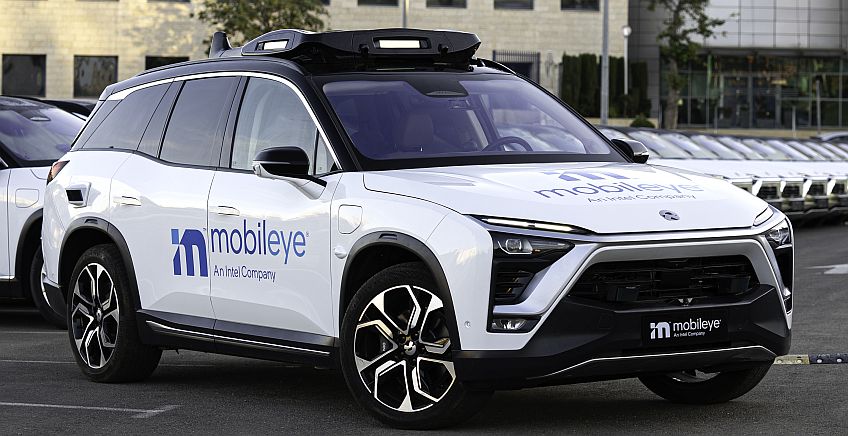
Above: Autonomous Driving car in front of Mobileye’s HQ in Jerusalem

the Intel announced its intention to take Mobileye public in the United States in mid-2022 via an initial public offering (IPO). Intel will remain the majority owner of Mobileye, and the two companies will continue as strategic partners, collaborating on projects in the automotive sector. The Mobileye executive team will remain, with Prof. Amnon Shashua continuing as the company’s CEO. Recently acquired Moovit as well as Intel teams working on LiDAR, radar development and other Mobileye projects will be aligned as part of Mobileye.

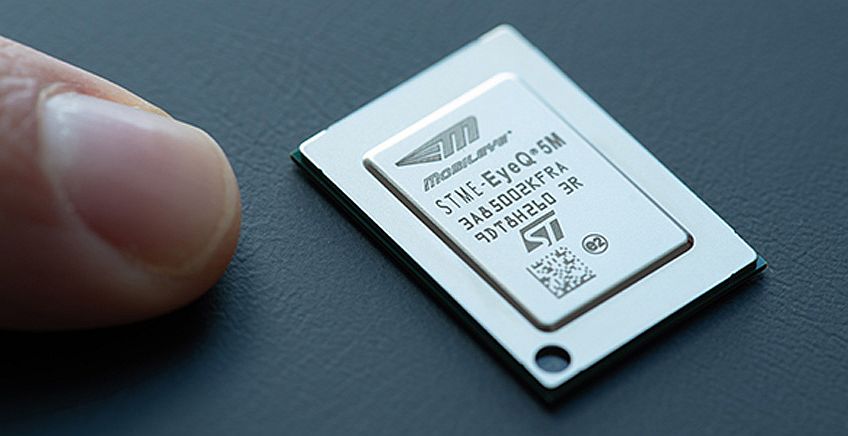
Jerusalem-based Mobileye provides computer vision chips, data analysis, localization and mapping solutions for Advanced Driver Assistance Systems and autonomous driving. On August 2017 Intel completed the acquisition of Mobileye for $15.3 billion. Intel CEO Pat Gelsinger said that the acquisition of Mobileye has been a success. “Mobileye has achieved record revenue year-over-year with 2021 gains expected to be more than 40% higher than 2020. An IPO provides the best opportunity to build on Mobileye’s track record for innovation and unlock value for shareholders.”

In 2021, Mobileye shipped its 100 millionth EyeQ system-on-chip (SoC), scaled autonomous vehicle (AV) test programs across multiple cities around the world covering the U.S., Europe and Asia, unveiled its production robotaxi, and secured 41 new ADAS program wins across more than 30 automakers. Moovit is a Mobility-as-a-Service (MaaS) solutions provider that complements Mobileye’s solutions. The Tel aviv-based company was acquired by Intel on May 2020, for approximately $900 million.

The Mobileye executive team will remain, with Prof. Amnon Shashua continuing as the company’s CEO. Intel currently owns 100% of Mobileye shares and is expected to retain majority ownership following the completion of the IPO. Intel said it has no intention of spinning off or otherwise divesting its majority ownership interest in Mobileye.

Synaptics acquired DSP Group

Above: Michael Hurlston, President and CEO of Synaptics

US-based Synaptics Incorporated announced that it has completed the acquisition of DSP Group (Herzliya, Near Tel Aviv), for an a price of approximately $549 million in cash. The acquisition was previously announced on August, 2021. Michael Hurlston, President and CEO of Synaptics, said the two companies are highly complemented. “DSP Group’s capabilities in SmartVoice and low power AI align well with our long-term vision of embedding more intelligence in connected devices at the edge.

“The addition of DSP Group’s ULE wireless technology and VoIP processing solutions enhances our ability to both cross-sell and deliver differentiated solutions to our combined customer base.” For the full year fiscal 2021, Synaptics revenues totaled $1.34 billion. DSPG annual revenues for 2020 totaled $114.5 million. DSP Group was founded in 1987 on the basis of DSP technologies, and evolved to be a provider of ULE and voice processing chips.