The Mystery of OpenAI’s New Hardware Device

photo above: Sam Altman, CEO of OpenAI (right) and Jony Ive, founder of io Products

In May 2025, OpenAI announced the acquisition of io Products, a hardware startup co-founded by legendary Apple designer Jony Ive, for approximately $6.5 billion. Ive, who led Apple’s design team for nearly three decades and was often considered second only to Steve Jobs and Tim Cook, launched io Products in 2024 with a clear mission: to design a revolutionary AI-based hardware devices.

The company worked closely with LoveFrom, the design collective Ive founded after departing Apple in 2019. In a letter to employees two weeks ago, the CEO of OpenAI, Sam Altman, and Jony Ive, confirmed the deal had closed. “The io Products team has been integrated into OpenAI,” they wrote. “Jony and LoveFrom remain independent, but are now leading deep product design across OpenAI.”

AI for everyone, everywhere

The letter also revealed that discussions between Altman and Ive began nearly two years ago, as part of an effort to rethink the user experience – one that, despite rapid advances in computing power and connectivity, has remained largely unchanged over the past 15 years. They explored a variety of ideas for next-gen hardware, ultimately deciding that a dedicated company was needed in order to bring their concepts to life.

That’s how io Products was born. It quickly assembled a team of engineers, physicists, and researchers to begin prototyping radical new devices. Now, with io fully absorbed into OpenAI, the plan is to align the hardware roadmap closely with OpenAI’s software products – particularly ChatGPT. But what, exactly, is this new hardware?

While the company remains tight-lipped, several clues are beginning to emerge. The device is rumored to be a mass-market consumer product, potentially poised to become a “third essential device, alongside the desktop and mobile phone.” These hints came to light partially through court document filed after Google sued OpenAI, alleging trademark infringement over the name “io,” which Google claims conflicts with its subsidiary iyO.

Legal documents reveal some details

iyO is reportedly developing an AI-powered, screenless wearable: a small in-ear device designed to function as a “computer without a screen,” controlled by voice and audio-only feedback. OpenAI, in its court response, explained that its hardware initiative aims to “build a family of devices that redefine how humans interact with AI,” and that it had explored various form factors, including desktop, mobile, wired, wireless, and even wearables.

Former senior Apple’s engineer and io Products co-founder, Tang Tan, is cited on this documenty, saying that OpenAI’s device is “very different” from Google’s iyO wearable. This led analysts to suspect that it may not be a wearable at all. In a promotional video released by OpenAI in May (later removed), Ive and Altman commented on how outdated our current interfaces are, relying on technology “developed more than a decade ago.”

They noted that interacting with ChatGPT today involves using a PC or opening a Cloud-based App – neither of which is ideal. Altman described the goal as delivering a device “everyone will use”, much like the smartphone. He was even quoted by news outlets expressing an ambition to make a big launch in 2026, with the intention of selling 100 million units during the initial rollout.

Will ChatGPT kill the Smartphone?

So what is it? Mystery still surrounds the device. In a podcast interview with his brother, Jack Altman, Sam hinted that the new device would surpass smartphones and computers in capability. He emphasized that it won’t be a smartphone or smart glasses, but rather a new category altogether: a personal AI assistant or companion. “I don’t have a good name for it yet,” he admitted, “but the best I can do is: My AI Companion.”

In a February 2025 interview with Nikkei Asia, Altman elaborated further, expressing hope that the new device could eliminate the need for smartphones altogether, by deeply embedding AI into the user’s day-to-day interaction with AI technology. The vision, developed in collaboration with Jony Ive, is to move beyond the screen-and-app paradigm that has dominated mobile for years. Instead, the new device will rely on seamless integration with ChatGPT to assist with communication, task automation, and a wide range of everyday needs.

Safran to use Odysight.ai Predictive Maintenance

Above: Boeing AH-64 Apache attack helicopter prototype of the Israel Air Force (IAF). Credit: Odysight.ai

Odysight.ai announced an inaugural purchase order from France-based Safran Aircraft Engines for its AI-based Predictive Maintenance (PdM) and Condition Based Monitoring (CBM) solutions. As part of the order, Odysight.ai will also supply its cutting-edge micro cameras to support Safran’s experimentation, planning and development of jet engines for the aviation industry. “This order signifies our entry into the realm of experimental design and development of aviation engines,” said Odysight.ai’s CEO, Yehu Ofer.

Odysight.ai is in a process of strenthening its position in the defense and aviation industries.  In February 2024, it announced a strategic collaboration with the Israeli Ministry of Defense (IMOD) to deploy its PdM system in the Boeing AH-64 Apache attack helicopter prototype of the Israel Air Force (IAF). There are approximately 2,700 Boeing AH-64 Apache attack helicopters deployed worldwide.

In March 2024, Odysight.ai announced the receipt of a purchase order exceeding $1 million from a major international defense contractor for the Company’s visual sensing and AI analytics solution, to be installed in upgraded Lockheed Martin (Sikorsky) SH-60 Seahawk Maritime Rotary Wing Aircraft of the Israel Air Force. More than 4,000 UH-60 Black Hawk aircraft, and its variants such as the SH- 60 Seahawk, are currently in service worldwide. The addressable market for the Company’s rotary wing aircraft system is more than a $1bn.

Hailo AI was selected for Raspberry Pi 5

Tel aviv based Hailo announced that its AI processor, Hailo-8L AI accelerator, has been selected by Raspberry Pi to provide AI accelerators for the Raspberry Pi AI Kit – an AI-enabled add-on for Raspberry Pi 5. The partnership bring Hailo to a new market consistins of milions of professional and enthusiast creators and Edge solutions developers. “Our partnership with the world’s leading single-board computer provider will inspire a new era of computing, enhanced by high-performance AI processing capacity,” said Hailo CEO and Co-Founder Orr Danon.

Eben Upton, Raspberry Pi CEO, said. “Hailo’s combination of high compute power and low power consumption make it an incredibly attractive AI solution for professionals and enthusiasts alike.“The Hailo-8L AI accelerator is designed to support entry level products requiring limited AI capacity or lower performance. It provides computing power of 13 Tera-Operations Per Second (TOPS) with a typical power consumption of only 1.5W. The accelarator support X86 and ARM architectures, Linux and Windows OSs and does not require external memory. Hailo’s AI processors are already deployed by over 300 customers worldwide.

The collaboration with Raspberry Pi marks a significant milestone for Hailo. To support the growing community of developers, Hailo is introducing an online developer community featuring tutorials, FAQs, and other resources to foster innovation among creators and developers. Registered members will have the opportunity to engage with a team of Hailo experts and connect with each other to share code, experiences, resources, knowledge, and more. “Our new online community will serve as a collaborative environment,” Danon concluded.

Will AI replace the programmer? Not so fast

The field of artificial intelligence (AI) is revolutionizing automation, and large language models (LLMs) like ChatGPT are at the forefront. These models showcase impressive capabilities in generating textual and graphic content and engaging in interactive dialogues with humans. The application of AI in areas such as sales, customer service, and teaching is expanding, transforming professions we never thought computers could perform.

Code, being a language itself, is abundant on the web, presenting a vast pool of data with which neural networks can be trained to code on demand. This automation initially appeared with GitHub Co-pilot and is now further exemplified by ChatGPT 4, which can automatically generate code for any task.

In our technology-driven world, programming has become one of the most sought-after and esteemed professions. However, an ironic question arises: Can AI replace programmers?

Nir Dobovizki, a senior software architect at CodeValue, has embraced tools like ChatGPT as part of his programming routine. While these tools are impressive and make a programmer’s life more convenient, they do not pose a threat to their jobs, according to Nir.

Nir emphasizes the need to break down the concept of “artificial intelligence.” He views it as a marketing term, clarifying that there is no manifestation of true intelligence, understanding, or knowledge in these tools. They are statistical instruments, albeit remarkable ones. AI lacks the genuine ability to differentiate between truth and falsehood, or to distinguish facts on its own.

“For me, one of the primary purposes of code is effective communication to fellow programmers, ensuring they understand my intentions beyond mere functionality. Code is akin to a story, and clarity matters. These tools, although capable of performing tasks, often lack style, hindering collaborative coding efforts.”

So how does one effectively utilize these tools?

“It’s undoubtedly an automated tool that offers significant assistance—an advancement in automation. However, I only use it for tasks I’m familiar with. If it’s something I’m unsure about, I won’t be able to verify whether the AI has executed it correctly. I rely on these tools for problems I comprehend, saving me considerable typing and providing confidence in the accuracy of the written code.”

The term “artificial intelligence” itself poses challenges, obscuring the creation and operation of these models. Nir Dobovizki highlights that each model and neural network is a product of the data used to train and validate it. Training these models necessitates abundant and high-quality data, with the exact quantity being uncertain in advance. It’s a process of trial and error, with verification playing a vital role. However, biases can emerge at both the training and verification stages, leading to gender and ethnic biases in certain applications like facial recognition systems that excel at identifying white individuals but fail with Black individuals. Bias stems from the data used for training and validation.

Nir Dobovizki

“Perfect verification is essentially impossible; biases may persist due to how we test the model. Therefore, involving humans in the training and operational processes is crucial for vigilance and error correction. We must exercise great caution, particularly when dealing with systems that impact human life, such as autonomous driving systems. Any bias within such systems could jeopardize human safety.”

At present, these tools are incapable of coding complex tasks requiring a deep understanding of multifaceted interactions. These challenges remain exclusively within the realm of skilled and experienced programmers. Even when these tools generate convincing code for intricate problems and perform well in a development environment, there is no way to ensure they are free from critical bugs. These tools empower programmers and may reduce the required workforce, but they are far from replacing programmers, both in their capabilities and in the foreseeable future.

In conclusion, AI-driven tools have ushered in a new era of automation in programming, amplifying the capabilities of programmers while preserving their indispensable role in tackling complex challenges. The collaborative efforts of humans and AI continue to shape the future of programming, offering promising prospects for enhanced productivity and innovation.

[Pictured above: OpenAI HQ. Source: Wiki]

“The payload is the system. Drones become sub-systems”

By: Roni Lifshitz

Thirdeye Systems received a grant of NIS 900,000 from the Israel Innovation Authority and the Ministry of Defense for the development of a Non-GPS based navigation solution, totaling in NIS 1.8 million. Non-GPS based navigation eliminates the dependence on satellite communications and immune to GPS jamming efforts. This is a new market for a company that was known mainly for its electro-optical smart algorithmics.

Lior Segal, CEO and co-founder  of the Natanya-based company (in the center of Israel), told Techtime the market is rapidly changing: “In the past, the drone was considered by customers as a ‘main system’. “However, today we see a different approach:, drones are becoming a sub-system within the complete solution. The center of interest has shifted towards the payload. This dramatic change helped us to win a Ministry of Defense NIS 9 million project, in which we take the place of a main contractor.”

Locating people inside buildings

Thirdeye was founded 12 years ago by Lior Segal, the CTO Yoel Motola and the COO Gil Barak. The idea for the company resulted military service were Lior and Yoel took active role in urban warfare events in 2009 in their role as combat infantry officers. Segal: “We started talking about a problem we faced as warriors: how to find out a person inside a room without using a screen. This is how the idea of ‘third eye’ was born: A thermal camera that identifies human beings and provides a silent warning to the warrior. We needed to find a way how to integrate this capability into a compact kit, flashlight-like gadget, placed on the personal weapon.”

With the help of Ministry of Defense Thirdeye had developed its unique algorithm and IR sensors for the warrior personal weapon, which were delivered to IDF special units that immediately put them into operational use. In 2015 it won a NIS 2 million order from the MoD for these systems called Cerberus. However, at that drones began to play a vital role in the civil and military markets, and Thirdeye decided to adjust its technology to be used with drones.

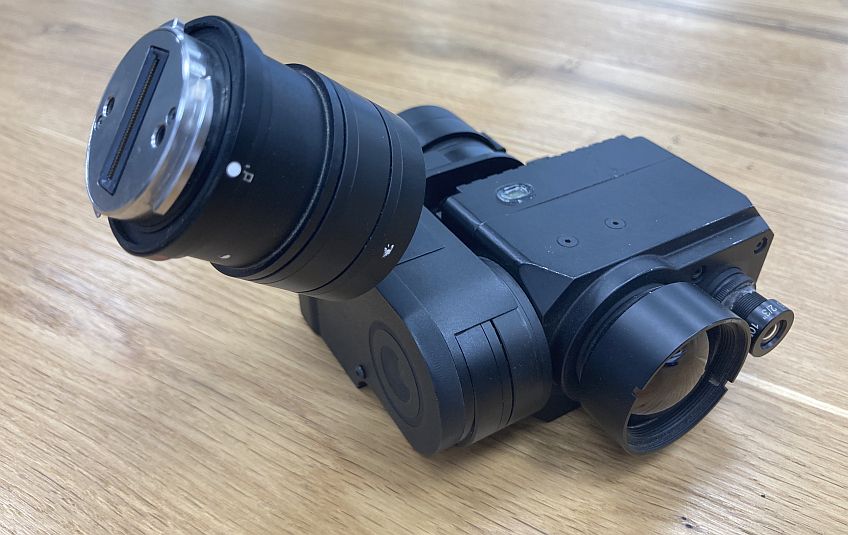
Thirdeye's Chimera payload for drones. Credit: Techtime
Thirdeye’s Chimera payload for drones. Credit: Techtime

The first product for the new market was Chimera: An electro-optical system that includes a thermal camera, a daylight camera, and people identification algorithmics, enabling identification across wide areas. The system performed its first baptism of fire during Operation Guardian of the Walls in middle of 2021. Segal: “Our main market today is the local market. We collaborate with companies such as Elta Systems, Elbit, Aeronautics and the Israel Aerospace Industries.”

“The company employs fifty employees, with all the development, manufacturing and assembly works done in Israel. Even the AI systems’ database was developed here by us, without using external databases or sub-contractors. Our systems are platform-agnostic and can be installed on any drone – civil or military- as well.”

In April 2021 you went public on TASE. Why?

Segal: “This was our way of bringing funding to the company without being considered as a business partner of any costumer, to avoid deterring other costumers.”

What are your main current projects?

“Several products are currently in transition from R&D to serial production. We develop the Chimera-X to provide wider area grip. It is expected to reach maturation early next year. We are developing a platform for drones’ detection called Medusa and a new system for ground platforms. Unmanned vehicles will be able to use our systems for various missions, such as people tracking an people avoidance to prevent unwanted damages, especially in difficult terrain conditions.”

The core of your market is the military. What are the main trends in this market?

“We believe that Western societies refuse to pay heavy prices in a human’s lives, and therefore the need for autonomous instruments is growing. Western armies need many robotic tools in order to save human lives. The war in Ukraine illustrates how modern warfare turns into a multidimensional warfare: The warrior should be aware to everything that is happening around and above him.”

Translated by P. Ofer


NXP and Hailo Expand AI cooperation through MicroSys

NXP Semiconductors and Hailo announced a cooperation to provide joint AI solutions for automotive Electronic Control Units (ECUs). The new solutions will combine NXP’s automotive processors S32G and Layerscape, along with Hailo-8 processor. Hailo-8 is an AI processor for edge computing with up to 26 tera-operations per second (TOPS) at a typical power consumption of 2.5 W. The solutions offer an open software ecosystem for applications and software stacks.

The first solution, powered by the Arm based NXP S32G processor combined with up to two Hailo-8™ AI processors delivering up to 52 TOPS. The second solution, powered by the Arm based NXP Layerscape platform and combined with up to 6 Hailo-8 processors, delivers a high-performance of up to 156 TOPS. “We are excited to partner with a major player like NXP to demonstrate the true potential of AI for automotive,” said Orr Danon, CEO of Hailo.

“We look forward to continuing to work with NXP to expand our edge processing solutions to a broad range of demanding applications including industrial & heavy machinery, robotics, and more.” The NXP-Hailo joint solutions are already being utilized by customers, including MOTER Technologies, which is using the Arm-based NXP S32G processor combined with a Hailo-8 M.2 AI accelerator module for Usage-Based Insurance (UBI) applications.

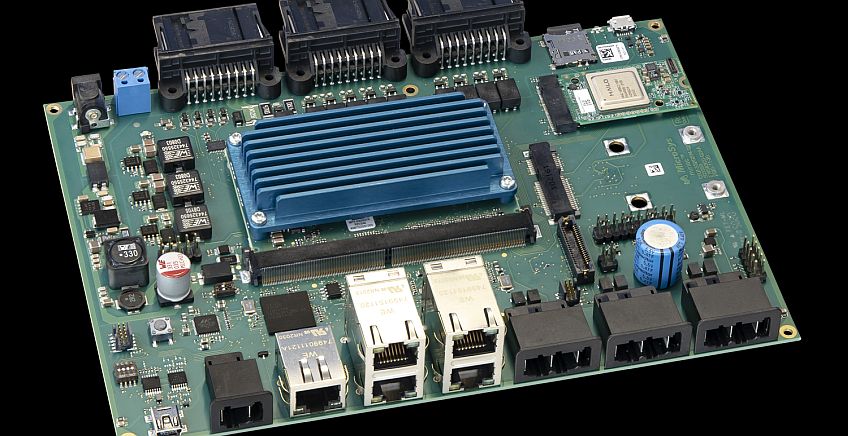
The evaluation boards were designed and produced by the Germany-based MicroSys, who cooperates with NXP as well as with Hailo. The miriac® AIP-S32G274A and miriac® AIP-LX2160A NXP-Hailo automotive based application-ready platforms are available from MicroSys, as well as development platforms by NXP: BlueBox 3.0 (Layerscape LX2160A and S32G and GoldBox (S32G). Both are compatible with Hailo-8™ M.2 AI Acceleration Modules.

Vanti Brings Analytics to the Electronics Manufacturing

Above: The CEO Smadar David (right) and the CTO Nir Osiroff

AI tecchnologies may have a deep impact on the yield and effectiveness of elelctronics production lines. Vanti Analytics from Tel aviv is doing just that: It provides a SaaS-based solution already tested by adsvanced customer. Today the company announced a $4.5 million seed funding round led by True Ventures and More VC with participation of i3 Equity Partners and the private investor Ariel Maislos. Vanti has raised $6 million total since it was established in 2019.

The company is developing a cloud-based platform that helps manufacturing operations teams increase yields and throughput for electronic products. Its SaaS software platform autonomously leverages machine learning to dramatically reduce ramp-up time, errors and test time for electronics manufacturers. The company was established by the CEO Smadar David and the CTO Nir Osiroff, both are veterans of the automotive LiDAR sensor provider Innoviz Technologies, and of technological units in IDF.

Prior to founding Vanti, Smadar had served as MEMS & Mechanics Group Manager at Innoviz and Osiroff had served as a head of InnovizPro product line at Innoviz. “As a manufacturer in a very competitive environment, we’re always looking to speed up ramp-up time and serve our customers with the highest quality, volume and price,” said Omer Keilaf, CEO and co-founder of Innoviz. “That’s exactly where Vanti’s platform comes into the picture. We liked how fast it was integrated and demonstrated value leveraging our operations data.”