
Redler to partner with Virtual Forest in the Indian Micro-EV market

Redler Technologies, specializing in solutions with international patents in the areas of electrical power and motion technologies, has entered into a strategic alliance with Virtual Forest (VF) of India. VF develops technologies for micro electric vehicles (Micro-EV) for two- and three-wheel vehicles for the Indian and Southeast Asian markets. In doing so, Israeli technology will, for the first time, be an integral part of the Micro-EV markets in India and Asia.  Redler Technologies will supply innovative motion solutions for the accelerating Micro-EV markets as part of the green electricity revolution taking place in India and her region.

Cooperation between the companies will include integration of new technology solutions including Redler Technologies flagship products, from development to production, integration, and support together with VF, while adjusting to the new and unique demands of two- and three-wheel EV vehicles. Both companies will together invest 5.5 million USD in the initial stage.

The motion controllers’ market is experiencing steady growth in line with exponential growth of the EV markets in India and Southeast Asia. In 2021, this market saw a turnover of 3.8 million dollars, which is expected to multiply over 30 times to a value of 267 million dollars in 2025.

This forecast is based on, amongst other factors, national plans as announced by the Indian government and Mr. Nitin Gadkari, the Minister of Road Transport and Highways, for two- and three-wheel EVs to become 80% of the EV market by 2030.  The two- and three-wheel market is a significant portion of the annual number of new electric vehicles rolled out and is expected to reach annual sales in the billions of dollars worldwide. With 17.4 million new two- and three-wheel sold in 2020, compared to 2.7 million cars (a ratio of 6.5 to 1) and where only 1.6% of all new cars on the roads are green energy [EV’s], the growth potential in this market is very high.

VF operates in a growing market while focusing on new innovations in EV in India and the region, addressing two main issues: their geographical area is responsible for one third of the world’s carbon emissions due to the overwhelming reliance on two- and three-wheel vehicles operating on petroleum. And secondly, the high cost of petroleum in relation to the average income as a result of India’s dependence on imported fuel.

Guy Natanson, CEO of Redler Technologies, says “We are excited to be part of the burgeoning revolution in this particularly important market of EV two- and three-wheel vehicles. The choice to partner with VF was ideal for both companies since the synergies between our technologies will enable us to build a better future, advance green technology and zero vehicle carbon emissions which is at the forefront of economic and political agendas in this region and around the world.”

Omer Basith, Co-Founder and Partner in VFadds “We see the importance in our strategic cooperation with Redler Technologies. Together we provide an important message of localizing technology that enables us to take the EV industry in India and the region toward a better future.”

Virtual Forest is among India’s fastest-growing Electronics Systems Design & Manufacturing (ESDM) companies. With its R&D Lab in Bangalore, is already designing and developing energy-saving, yet cost-efficient Motor Controllers and Human Interface technologies for several top Consumer Durables brands in the industry.

Established in 1994, Redler specializes in developing and marketing electrical power and motion management solutions for the automotive and defense industries. The company’s advanced, innovative, embedded and patented DC motion control drivers [Redler holds a patent that enables utilization of up to 25energy saving] and smart power PDU  and circuit breakers help keep customer’s platforms in a wide range of vertical markets – robotics motion control, automotive and AGV.

Dynamic Infrastructure aims to assist America rebuild its dilapidated bridges

Infrastructure bill, passed last week by the congress, delivers $200 billion over 5 years for the renewal of bridges, roads, railways and airports. This is the largest government investment in infrastructure at the last 100 years, arriving after decades of neglecting the infrastructures by the American government, which led to deterioration in the state of infrastructure across the United States.

According to the American Road and Transportation Builders Association (ARTBA) report, more than 200,000 bridges, about 36% of all US bridges, are structurally deficient and in poor condition which requires repair and renewal. According to the association, the estimated total cost to repair the bridges infrastructure is estimated at $41.8 billion. The American Society of Civil Engineers (ASCE) estimated, according to a research published earlier this year that the failing infrastructure status costs families about $3,300 a year, as a result of traffic jams, road detours due to bridges being closed, fuel waste and public transportation deficient.

In the next years, the Infrastructure Bill’s financial allocations are expected to gradually permeate to the different countries and the municipal authorities, and later to the engineering and construction companies that will carry out the projects. One of the Israeli companies interested in taking part at the technological aspects of the national infrastructure renewal is Dynamic Infrastructure Company, the developer of an AI based cloud platform that provides insights regarding the maintenance level of bridges and road infrastructures based on visual input only.  

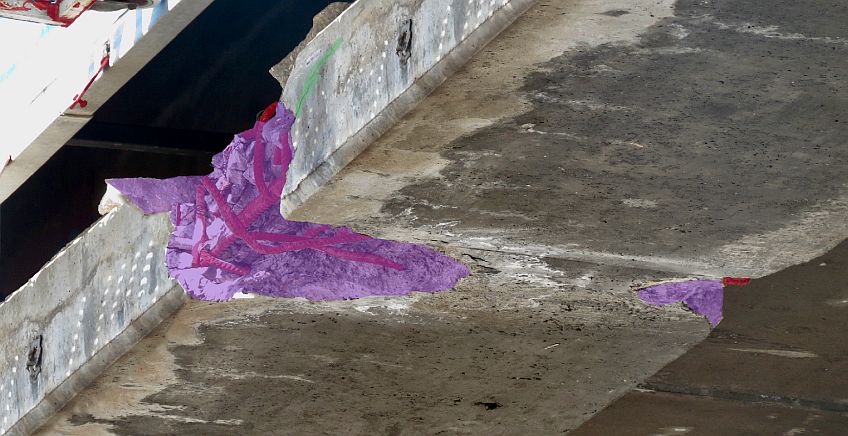
The company’s platform uses all the visual information gathered by the periodical inspections at the site, to include phone photographs, aerial photographs taken by drones, laser scans and alike – and composes a detailed 3D picture of the structure. The system constantly compares the current state of the structure to previous states, and detects cracks, defects and anomalies which requires preventive maintenance and automatically generates alerts for the asset operators. 

Saar Dickman, CEO & co-founder at Dynamic Infrastructure, says to Techtime that the industry is being preparing for the Infrastructure Bill for a while. “I believe that in one or two years, just after the budgets will go through the bureaucracy pipes, we will start to see a flood of projects initiatives. Already now we are facing great tailwind to the industry. Construction and engineering companies are being prepared and are equipped with the required technologies. There are quite a few contacts with municipalities, engineering bodies, counties and the like that show interest in our technology and how it may assist them in utilizing the budgets at the optimal level and properly prioritize the labor according to the maintenance level at the field”.

Currently, Dynamic Infrastructure operates in the USA under a local company, where the main activities are focus in the state of Maryland. The company cooperates with the Maryland Department of Transportation (MDoT) to map the maintenance level of infrastructure assets under the responsibility of MDoT. Using Dynamic Infrastructure’s system, hundreds of assets have been scanned. Earlier this year the company had started to cooperate with another federal body – the Maryland Transit Administration (MTA), a body in charge of the state infrastructure assets operated by Public-Private Partnerships (PPP), such as toll lanes.

Dikcman says: “Each state has tens of thousands of infrastructure assets under its responsibility, all of them produce a lot of data that cannot be managed manually, and thus they are incapable of being properly prioritizing resources allocations. For this reason, the maintenance mode nowadays is mainly breakdown maintenance, so they face defects in advanced condition. Our platform makes it possible to operate in a preventive maintenance mode and detect defects in the initial stages”.

“There are quite a few technologies in the preventive maintenance area, but they are highly expensive and complex. Our technology offers completely new approach, something like Google Photos. The asset manager is merely required to upload the asset’s scans and photos collection to the cloud, without sorting or classifying them, and let our AI process the information and produce insights”.

Dynamic Infrastructure, founded in 2017 and operates from Tel-Aviv, New-York and Berlin, is already involved in private and public projects throughout USA, Australia, Germany, Switzerland, Greece and Israel. The company estimates that using its platform, operators of tens of thousands of assets managed to significantly reduce their operations expenses and financial investments.

TriEye raised $74m for Short-Wave Infrared Sensor

The Tel aviv-based developer of the world’s first CMOS-based Short-Wave Infrared (SWIR) sensing solution, TriEye, has raised $74 million in a capital fund round led by M&G Investments and Varana Capital, with the participation of Samsung Ventures, SDF (the investment arm of Tawazun Holdings), Intel Capital, Porsche Ventures, Marius Nacht and Grove Ventures. The round brings TriEye’s total funding to $96 million.

The company was founded in 2017 by Avi Bakal (CEO), Prof. Uriel Levy (CTO), and Omer Kapach (VP R&D), and is headquartered in Tel Aviv, Israel. Its technology enables cost-effective, high-resolution image data and depth perception in all weather and lighting conditions. Short-Wave Infrared (SWIR) cameras are known to can allow for object and hazard detection even under the most challenging visibility conditions.

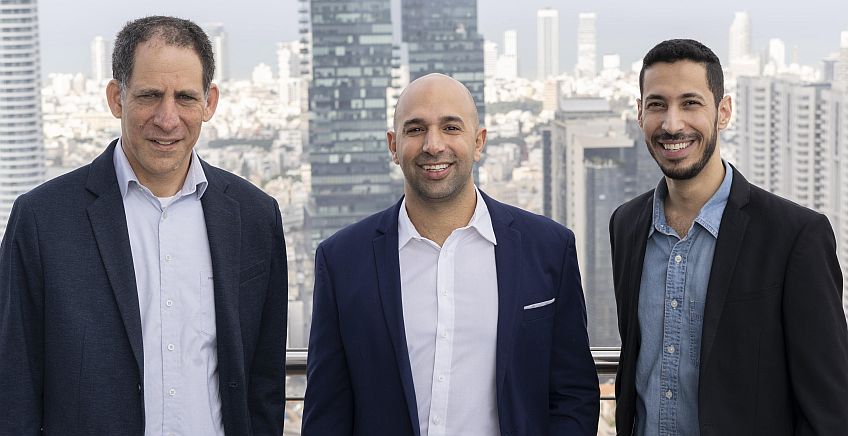
TriEye founders (from left to right): Prof. Uriel Levy, Avi Bakal and Omer Kapach. Credit: Maxim Dinshtein

But the current utilization of Indium-Gallium-Arsenide (InGaAs) material to produce SWIR sensors, is complex, expensive and involved with long lead times. Following a decade of nanophotonics research by TriEye’s CTO, Prof. Uriel Levy, the company succeed to fabricate CMOS sensor,  allowing SWIR to enter mainstream use. According to TriEye, its sensor’s prices are thousand times lower than the existing InGaAs-based cameras.

TriEye will use the funds to commercialize SEDAR (Spectrum-Enhanced Detection And Ranging), its imaging and ranging solution for Advanced Driver Assistance Systems (ADAS) and Autonomous Vehicles (AV). SEDAR is capable of producing both HD image and a detailed depth-map. Commercialization is expected in the beginning of 2022. “We believe SEDAR will change the automotive perception market as we know it today,” said Avi Bakal.

Innoviz targets a business model of Direct Tier-1 Supplier

Above: Omer Keilaf, CEO and co-founder of Innoviz

Innoviz Technologies is building a new business model aimed to position itself as a Direct Tier-1 Supplier of its LiDAR InnovizTwo solution for car manufacturers. The company has developed a solid-state LiDAR technology which was selected by BMW for its fully autonomous car program and for its consumer vehicles. The InnovizOne LiDAR product has also been selected by a leading European Tier 1 automotive company for its shuttle program.

“Innoviz successfully completed an extensive, 12-month Tier 1 supplier audit process conducted by one of the largest car makers in the world, said Omer Keilaf, CEO and co-founder of Innoviz. of Innoviz. “Innoviz is now recognized as a direct supplier as part of the final stage of consideration for a nomination for a L2/L3 program. If received, this recognition would mark an important milestone in our progress.”

During the earnings call following Q3 2021 report, Keilaf explained that working as a Tier-1 supplier will keep the company closer to the car manufacturers, bring bigger deals and reduce the total cost of the systems for the car OEMs. The new business model will be flexible one – and will allow car manufacturers to decide themselves weather they prefer Innoviz to be a Tier-1 or a Tier-2 supplier working with their current Tier-1 suppliers.

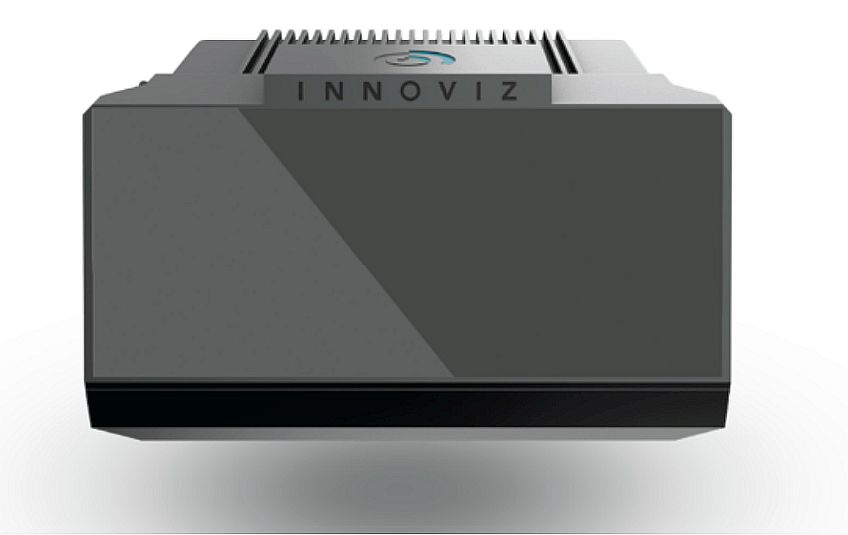
Innoviz LiDAR sensor

Last week NVIDIA completed the integration of Innoviz Perception Platform with NVIDIA’s DRIVE AGX autonomous vehicle development platform. Innoviz’s LiDAR sensor is also integrated with the NVIDIA DRIVE Sim. This move brings the company into the NVIDIA DRIVE ecosystem. According to Keilaf, most of the American and European car companies are working with NVIDIA platform.

lately it was also selected by JueFX for its Vehicle-to-Everything (V2X) solution to improve road safety and traffic alerts for autonomous vehicles in China. JueFX will install Innoviz’s high-performance, solid-state LiDAR on smart city infrastructure and leverage its annotated data to monitor traffic in real time and to send alerts to autonomous vehicles.

Mass production is expected to start in 2023. Meanwhile, the revenues for Q3 2021 were $2.1 million. Innoviz management reaffirmed its forward-looking order book guidance of $2.4 billion, representing the cumulative projected future sales of hardware and perception software through 2030. Innoviz currently has 56 prospective customers in the late stages of technical evaluation.

“Nine are in the RFQ or final commercial negotiations stage. They represent more than $3.4 billion in future potential order book volume. Innoviz expects some of these projects to materialize into contractual relationships by mid-2022.”

“Midas touch” or “Is it for real?” 

By Leehee Gerti, Director of Marketing at CodeValue

In recent months, the media has been buzzing with news items about huge salaries and dreamy working conditions in the Israeli high-tech market. Highways sidelines and the entrance to High-tech industrial parks have become a billboard war zone, the TV ad breaks are dominated by the industry giants, radio broadcasts, International DJs perform in rooftop parties. What the hell is going on here?

Welcome to the jungle. Here, too, the strong will survive and by survival, I mean – succeed in recruiting talents to expand its workforce and meet the ambitious development goals to which it committed in the last of IPO. We are only at the beginning of the post-corona era and perhaps it is too early to reach conclusions about the lessons and processes that this plague has taught us. But one fact stands out and cannot be disputed – the corona plague has caused an unprecedented wave of technology adoption by businesses across all spectrums of the industry.

There is a lot of money in the market, and it is flowing directly to high-tech companies. They in turn formulate ambitious development goals and desperately need working hands that will write all this code. In other words, companies dealing with wage inflation in the super-competitive field. Established and Unicorn companies with gigantic budgets are pushing up the entire market. These terrain conditions combined with the characteristics of the Millennials/X/y/Z generation (and whatever comes after), creates a ticking time bomb.

“What is the problem?” “The time has come for the power to be in the hands of the workers and not of the corporates.” “If there is a lot of money in the market, it is better for it to reach the last link in the chain – the employee.”

This is all true. But..

As in any industry, the big, rich companies are at the front. But the locomotive that pulls this train forward is the medium and small size companies. Israel is a startup super-power, from these initiatives comes innovation and technological creativity, how long can they stay in the game when the basic conditions become so difficult? The entire industry needs to understand that until we can fill the ranks by investing in infrastructure, technological education in the periphery and encouraging employment in marginal sectors, there is an immediate need to change the conditions of the game. Here are 3 (well tested) ways to maximize the workforce and meet business objectives:

  • Expanding employed ad-hoc – creating condensed tech’ bootcamps (here at CodeValue they are called Techboost). Locating and recruiting employees with some technological background and high independent learning abilities and training them, by experts, in modern and required technologies. It really does work, we at CodeValue are already in the third cycle of exactly this type of training and all the graduates are already employed in our various projects within the best companies in the market.
  • Widening R&D departments with organic teams – Companies that provide development services have qualified and available manpower and a layer of experienced tech’ managers who can provide an immediate solution to meet development goals. An organic team derived from the dev’ services company, receives a development task from the client and fills it in to its completion. The customer, on the other hand, is not required to locate, recruit and train employees, which is time-consuming, nor is it required for administrative and logistical management. It only receives outputs without the unnecessary fuss.
  • Hybrid offshore – This is not a new idea, many companies turn to hire the services of dev’ teams/individuals from the developing world (Eastern Europe, Asia). Many companies have tried and burned since the quality of code is not always at the required level and the language and cultural barriers are also extremely difficult to surpass. The hybrid solution addresses exactly these pain points. We are talking about an Israeli team leader, an expert in his/her field, who directly manages and professionally guides the foreign development team that was handpicked and carefully trained by him/her. This skips over the failures of managing a foreign and remote team and manages to reduce the time to market significantly.

Times are challenging and great power can be intoxicating. Remember how we were really scared just a year and a half ago? That there was uncertainty in the market and many companies were quick to “release” their employees? 40+ industry veterans also remember the .com era at the turn of the century. On that time too the market seemed to play into the favor of the worker, but then the bubble bursts or the plague erupts and the companies that chased after you and wrapped you with pampering benefits are turning their backs and leaving you behind. So, when the skies are blue and no cloud in sight, it might be a good idea to buy an umbrella?

CodeValue, founded in 2010, is a services company delivering architectural and technical expertise and in-depth consultancy. CodeValue integrate product & design research in our development process, provide managed software and cloud solution, and offer customized training programs to bridge knowledge gaps.

University Program Nurtures Next Generation of Engineers

By Patrick Haspel, Global Program Director, Academic Partnerships and University Programs, Synopsys

The COVID-19 pandemic has accelerated our digital migration, moving more of our activities online. Ajit Manocha, president and CEO of SEMI, has discussed how critical it will be for the industry to close the talent gap. Investing in science, technology, engineering, and math (STEM) education is one way to nurture the interests and skillsets that are needed to bring more engineers into the workforce.

Collaborative business/university relationships, where businesses provide resources that complement or augment educational programs, provide a nice bridge between the two worlds. One such example is the Synopsys Electronic Design University Program, which provides academic and research institutions with access to electronic design automation (EDA) software, technical support, curriculum, and more.

The university bundle consists of more than 200 tools for a nominal fee and licensing agreement in support of fundamental research and education efforts. In this article, which was originally published on the From Silicon to Software blog, I’ll highlight some key examples that illustrate the mutually beneficial outcomes that are resulting from close collaboration between the business and academic worlds.

VLSI Training Course at Tel Aviv University

Creating the next generation of chip design engineers needs to start at the university level. Consider a project involving a complex 5nm design, which would require a team for implementation, verification, software design, and more. Such an endeavor could involve more than 100 people who have the latest skills. However, it’s not always easy to find the right mix of engineers.

Israel, for example, is in a region of the world where the dearth of electronic design talent is extremely high. To help create a pipeline of engineers, Zvi Webb, a retired applications engineering director from Synopsys, is serving as VLSI lab manager at Tel Aviv University and is developing an introductory very large-scale integration (VLSI) course based on the latest chip design tools. Students there, Webb noted, hadn’t been exposed to a digital design workflow and tool chain. Instead, they were building their designs manually.

Webb’s course will be offered in the spring of 2022 and will cover topics such as Verilog, logic synthesis, static timing analysis, and placement and routing, providing students with real-world expertise that can help open doors once they’re ready for the workforce. The training outline was derived from material prepared by Professor Adam Teman from Bar Ilan University. “The new course will bring student engineers more knowledge – they will gain an understanding of what VLSI means, what the steps are, how to perform checks,” Webb said.

NC State University Creates PDK for Physical Verification at 3nm

What constitutes an effective 3nm node? According to research conducted by the Electrical & Computer Engineering Department at North Carolina State University, which based its examinations on several IMEC papers, the 3nm node is marked by a gate length of approximately 15nm, cell track height of 5.5T, and contacted poly pitch of 42nm. Scaling has been enabled by design technology co-optimization to achieve the desired benefits; however, as Moore’s Law slows down, it’s now also important to look at system technology co-optimization, examining ways to reengineer the power grid and utilize new device structures (such as gate all-around FETs).

Dr. Rhett Davis, a professor at the university’s Electrical & Computer Engineering Department, has teamed up with graduate students, other faculty, and the Synopsys University Program to create an open-source 3nm process design kit (PDK) for education and industry research. Specifically, the team wanted to explore the impact of new structures like gate all-around FETs and scaling boosters like buried power rails and 5.5T height metal pitch.

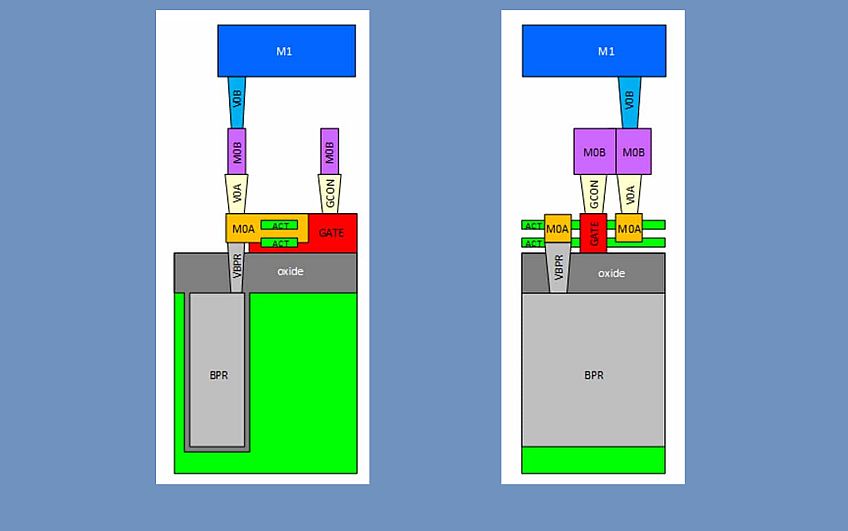
A cross-section of a single transistor in the FreePDK3's vision of a 3nm process (front and side views)
A cross-section of a single transistor in the FreePDK3’s vision of a 3nm process (front and side views)

“What we found when making this kit is that transistors aren’t really shrinking anymore. Instead, they’re getting taller. That is, foundries are finding economical ways to stack them. Our kit compiles the best available public data into a set of rules that show us how to work with this new technology,” explained Davis.

To create the resulting FreePDK3, the team used Synopsys IC Validator for physical verification, Synopsys Custom Compiler for layout and schematic entry, Synopsys StarRC for parasitic extraction, and HSPICE® technology for circuit simulation. The FreePDK3 is published on the GitHub repository.

Engaging the Next Generation of Engineers

These examples illustrate the work that academia is engaging in with the business world. Through our Electronic Design University Program, Synopsys provides full-semester coursework for undergraduate and graduate programs in IC design and EDA development; teaching resources such as libraries and PDKs, and technical support and training. In addition, Synopsys also offers academic programs in the areas of optical design and static analysis software.

The Synopsys Foundation is committed to advancing STEM education opportunities that contribute to the growth and development of our future technology leaders. Through close collaboration, businesses and universities can help nurture the next generation of engineers for semiconductor and electronics industries that are continuing to embark on new innovations that are fueling our smart, connected world.

IAI developed cloud-based satellite control station

Israel Aerospace Industries’ (IAI) Space Division announced the completion of the development of Blue Sphere – a ground station for Satellite control and command, based on a new concept of cloud-based virtual control system. Operating the station using the cloud extends the satellite’s availability and releases the operators from their dependency on satellite passing times. With this new technology, the satellite able to transmit the information to any available ground station, anywhere across the globe. From this ground station the information will be sent directly to the cloud.

With this new ability, the satellite is capable of transmitting the gathered information to the cloud, allowing the ground station to push or pull the information promptly, independently from receiving stations scattered throughout the globe. This is a unique concept shaped by the IAI, developed in accelerated mode at the IAI Innovation center, together with the global startup accelerator Starburst Aerospace.

Shlomi Sudri, General Manager of IAI’s Space Division, says that the new Blue Sphere system promote satellites to a level of 24/7 availability. “The concept has been proven, and we currently develop advanced version of the ground station for our worldwide customers”.

New class of mini communication satellite

The new virtual control station will be presented later this month at the Dubai Airshow. Last week the IAI revealed its new MCS – Mini Communication Satellite at Dubai’s International Astronautical Congress. The MCS comes with digital communication payload and software architecture which allows for loading applications from the ground to the space, during it travel, in order to alter the mission according to the changing communication needs.

The life span of the new satellite is not less than 14 years, it weighs 650 kg at launch and includes a complete digital communication payload weighing up to 200 kg. Due to its light weight, the satellite can be launched together with other satellites, significantly lowering launch costs. According to Sudri, the satellite provides “supreme space technology for countries and space operators who doesn’t need large satellite. The new mini satellite establishes a new niche in the communication satellites’ world”.

The satellite is based on capabilities developed for the “Dror 1” project. At the start of 2020, the Israeli government asked the IAI to build and develop the Dror 1 satellite as the new national communication satellite for the state of Israel. The IAI’s Missile and space systems division is in charge of development of aerospace defense systems, including Hetz 2, Hetz 3, Barak 8, observation satellites, communication satellites, Nanosatellites and satellites launchers.