The FDA approved Insightec system for the treatment of advanced Parkinson

The U.S. Food and Drug Administration (FDA) has approved Insightec’s system for treating advanced Parkinson Disease (PD) patients suffering from rigidity, mobility and dyskinesia symptoms. This is a significant expansion of Insightec’s system clinical indication, which until now was approved for treating PD patients experiencing essential tremor. Last month Insightec signed a merger agreement with a SPAC in order to list on Nasdaq with a company valuation of $2 billion. The new clinical indication extends the potential market for the company’s system. Currently, one million patients in the United States are coping with PD.

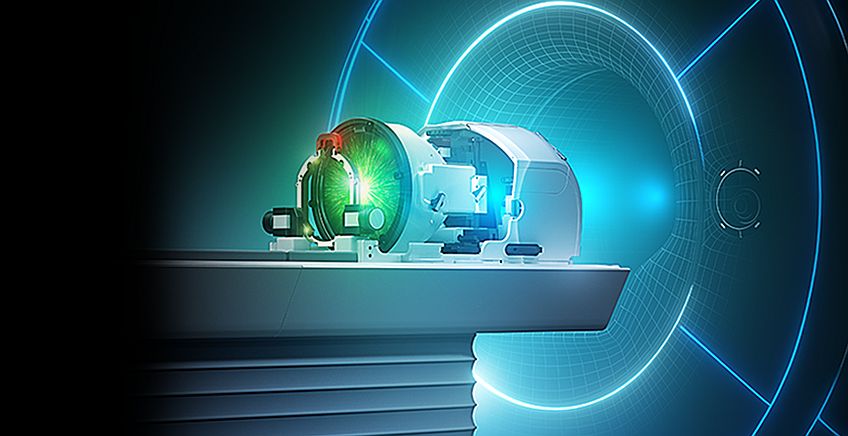
The system developed by Insightec is a minimally invasive surgery (MIS) technique, used for treating symptoms such as essential tremor and benign tumors in the uterus using focused ultrasound waves. Within the new clinical indication, Insightec’s system may be used as an incisionless method of performing a process called Pallidotomy, which is used to ablate a brain area called globus pallidus. Until now, the only method of performing Pallidotomy was to place a tiny electrical electrode in the globus pallidus, which is then heated and destroy a small area of brain cells. Using Insightec’s device, this process could be performed incisionlessly, by externally focusing the ultrasound waves to the target area. In many cases, this process reduces the severity of the patient’s symptoms.

Founded in 1999, Insightec developed the Exablate platform which provides non-invasive treatments for a variety of oncology and gynecology indications. Exablate Neuro uses focused ultrasound waves to target and ablate tissue deep in the brain with no surgical incisions or implants. The treatment is done under MRI guidance for real-time treatment monitoring.

In May 2017, Insightec received FDA Approval for Exablate Neuro fo the treatment of essential tremor. Following the approval Insightec has decided to initiate a pivotal study of the Exablate Neuro for treating dyskinesia symptoms or motor fluctuations of advanced Parkinson’s disease patients who have not responded to medication.

Parkinson’s disease afflicts millions of people worldwide, including approximately one million in the United States alone with 60,000 additional diagnoses each year. Treatment with the Exablate Neuro is intended to improve motor function and reduce dyskinesia, one debilitating symptom that presents as uncontrolled, involuntary movement of the arms and/or legs.

Edete’s robotic pollination boosts yields in California pistachio orchard by 24% 

Israeli agri-tech startup Edete Precision Technologies for Agriculture has completed a successful pilot of its new robotic pollinator, a supplement to wind pollination that also boosted yields by 24%.

The company, that until now focused on insect borne pollinated crops has responded to a “call to action” by Californian growers of wind pollination crops, to adapt the knowhow in pollination to a wider range of crops.

The pilot spanned an over 82-acre pistachio orchard in Sacramento, California, which was divided into three maturity stages: from recently bearing ones to fully matured, through mid-aged. The trial analyzed various levels of pollination treatments. The pilot served as the first test of the 2BeTM automated pollinator developed by Edete as a supplement to wind pollination. The system conducts artificial pollination by dispersing miniscule quantities of pollen that are closely controlled and managed during the blooming season. The use of the company’s novel system led to an average 24% increase in yields compared to the control groups in all of the plots. 

According to the U.S. Department of Agriculture, the 2020 average pistachio yield was 2,810 pounds an acre with an average per pound price of $2.75. A 24% increase in yields translates into an additional $1,850 in income per acre for the grower. The results have the potential to impact the $9 billion a year global pistachio market, of which the U.S. had a 47% share in 2020, according to the INC. 

Edete is currently preparing to offer artificial pollination services to pistachio growers in California, the service will start with the pistachio blooming season that commences in April 2022. The company plans to use its technology on an area covering several thousand acres in California using its proprietary 2BeTM prototypes.

Keren Mimran, Co-Founder and VP for Business Development and Marketing at Edete noted that “artificial pollination for wind pollinated crops will totally change the market, the economic feasibility for growers, and the ability to feed the world. A 24% increase in agricultural yields will raise farmers’ incomes by hundreds of millions of dollars. The exceptional results serve as a source of optimism at a time when the agricultural sector is struggling with the decline in amount of land under cultivation, the global climate crisis, droughts, increasing water shortages, and natural disasters that put our food supply under stress.”

According to Mimran there has been a decline in yields in recent years of various orchard crops such as pistachio, hazelnuts and other wind pollinated crops. Wind pollination is carried out by the dissemination of pollen from male to female plants which reproduce the crop, but perhaps due to climate change has led to a growing problem of desynchronization in the blossoming of male and female trees that in turn has resulted in lower yields. “Our technology not only stops this decline but actually increases yields at a rate that in the future will change the prospects of many agricultural sectors.”

IBM and NeuReality team up to build AI Server-on-a-Chip

IBM and NeuReality, an Israeli AI systems and semiconductor company, have signed an agreement to develop the next generation of high-performance AI inference platforms that will deliver disruptive cost and power consumption improvements for deep learning use cases. IBM and NeuReality will enable critical sectors such as finance, insurance, healthcare, manufacturing, and smart cities to deploy computer vision, Natural Language Processing, recommendation systems, and other AI use cases. The collaboration is also aimed at accelerating deployments in today’s ever-growing AI use cases which are already deployed in public and private cloud datacenters

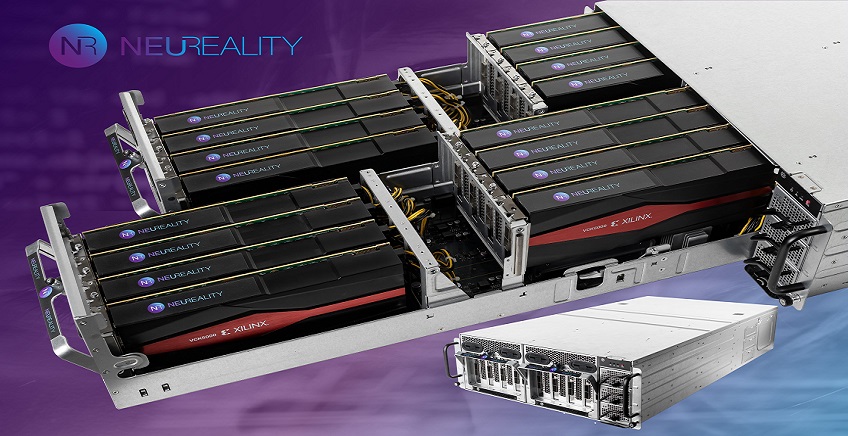
The agreement involves NR1, NeuReality’s first Server-on-a-Chip ASIC implementation of their revolutionary AI-centric architecture. NR1 is based on NeuReality’s first generation FPGA-based NR1-P prototype platform that was introduced earlier this year. The NR1 will be a new type of integrated circuit device with native AI-over-Fabric networking, full AI pipeline offload and hardware-based AI hypervisor capabilities. These capabilities remove the system bottlenecks of today’s solutions and provide disruptive cost and power consumption benefits for inference systems and services. The NR1-P platform will support software integration and system level validation prior to the availability of the NR1 production platform next year.

This partnership also marks NeuReality as the first start-up semiconductor product member of the IBM Research AI Hardware Center and licensee of the Center’s low-precision high performance Digital AI Cores. As part of the agreement, IBM becomes a design partner of NeuReality and will work on the product requirements for the NR1 chip, system, and SDK, that will be implemented in the next revision of the architecture. Together the two companies will evaluate NeuReality’s products for use in IBM’s Hybrid Cloud, including AI use cases, system flows, virtualization, networking, security and more.

The agreement with IBM marks the continued momentum for NeuReality. In February this year, the company emerged from stealth announcing its first-of-a-kind AI-centric architecture and laying out its roadmap, where NR1-P will be followed by NR1. Shortly after, in September, NeuReality announced that it is collaborating with Xilinx to deliver their new AI-centric FPGA based NR1-P platforms to market.

Moshe Tanach, CEO and co-founder of NeuReality, stated: “We are excited and deeply satisfied that a world-class multinational innovator like IBM is partnering with us. We believe our collaboration is a vote of confidence for our AI-centric technology and architecture and in its potential to power real life AI use cases with unprecedented deep learning capabilities.” Tanach added: “Having the NR1-P FPGA platform available today allows us to develop IBM’s requirements and test them before the NR1 Server-on-a-Chip’s tapeout. Being able to develop, test and optimize complex datacenter distributed features, such as Kubernetes, networking, and security before production is the only way to deliver high quality to our customers. I am extremely proud of our engineering team who will deliver a new reality to datacenters and near edge solutions. This new reality will allow many new sectors to deploy AI use cases more effciently than ever before.”

Dr. Mukesh Khare, Vice President of Hybrid Cloud research at IBM Research, said: “In light of IBM’s vision to deliver the most advanced Hybrid Cloud and AI systems and services to our clients, teaming up with NeuReality, which brings a disruptive AI-centric approach to the table, is the type of industry collaboration we are looking for. The partnership with NeuReality is expected to drive a more streamlined and accessible AI infrastructure, which has the potential to enhance people’s lives.”

Oxeye Emerges from Stealth; Raises $5.3M

Oxeye, a technology innovator in cloud-native application security testing, announced the closing of a $5.3 Million seed financing round led by MoreVC, a seed-stage venture capital fund in Israel. The latest round includes support from i3 Equity Partners, and other cybersecurity focused investors as the company prepares to protect the world’s most popular Web applications with next-generation cloud-native Application Security Testing.

According to a FutureScape report by IDC, “By 2023, over 500 million digital apps and services will be developed and deployed using cloud-native approaches – the same number of apps developed in the last 40 years. Most of these will be targeted at industry-specific digital transformation use cases. This explosion of new digital apps and services will define the new minimum competitive requirements in every industry.”

While the advantages of cloud native applications are many-fold, they present unique security challenges that until now have not been properly addressed. Intricate and layered attack surfaces that are widely misunderstood and under-secured are in need of resolution.

Containers, APIs, microservices, clusters, and other cloud-based components all comprise a large portion of cloud-hosted apps. Given the complexities of such an advanced architecture, traditional testing methodologies simply aren’t enough to address security holistically for these environments. 

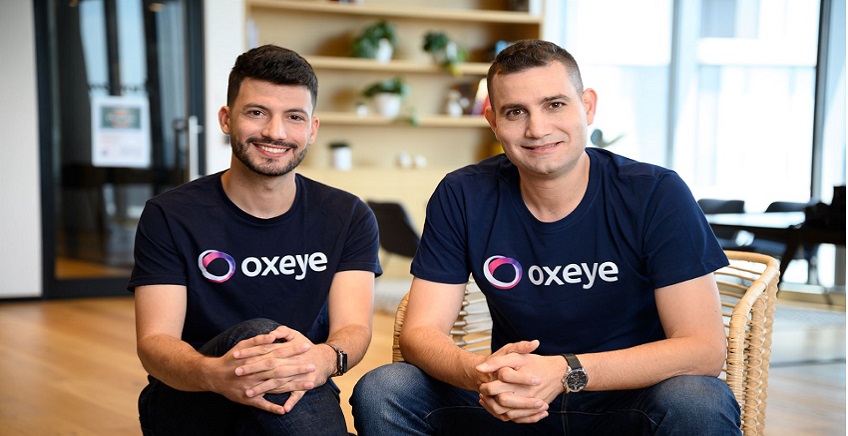
With headquarters in Israel, Oxeye was created by a team that combines both young elite cyber researchers and veteran experienced engineers and advisors, where culture is focused on excellence. The company was founded by Dean Agron and Ron Vider, who both have over a decade of experience in application and cloud security. Oxeye is leveraging the abilities of cloud native and building a structured solution that combines best-of-class features into a single powerful solution. The new funding will be used to complete product development, increase mindshare around the company’s novel approach, and expand sales, marketing and operations.

“We are thrilled to add Oxeye to our growing successful cybersecurity portfolio. The founding team at Oxeye brings together a rare combination of deep expertise and youthful daring, and has developed an elegant solution for cloud native application security,” said Jack Levy, Co-founder and Partner at MoreVC. “With modern applications entering the market by the millions, developers and AppSec professionals will require higher grade application security that presents a limited impact on DevSecOps and ensures a positive customer experience. Oxeye is on track to bring this advanced brand of security to the world.” 

“Oxeye solves the challenges legacy application security testing tools present in modern software environments and it is an honor to be an investment partner of such an innovative solution,” said Noga Kap, Managing Partner at i3 Equity Partners.

Currently in Beta, the Oxeye security testing solution is built for AppSec, Dev, and DevOps teams, helping to shift security left while accelerating development cycles, reducing friction, and eliminating risks. The Oxeye cloud native application security testing solution overcomes the challenges imposed by the complex nature of modern architectures. This positions the technology to disrupt traditional application security testing (AST) approaches by offering a multi-layer, contextual, effortless and comprehensive solution designed to ensure that no vulnerable code ever reaches production.

“Oxeye’s laser focus on the cloud native sector of Application Security Testing (as opposed to traditional AST) gives the company a unique advantage in one of the fastest-growing areas of technology,” said Michael Sutton, former ZScaler CISO and now Investor and Advisor. “With successful cyberattacks costing millions to application providers, the revenue opportunity for Oxeye is quite significant. We are pleased to support this promising industry player.”

“Cloud native is the de-facto standard for building new applications. This tectonic shift has a major effect on code vulnerabilities. These are no longer only flawed lines of code, but rather vulnerable flows stretching over multiple microservices and multiple infrastructure layers.” said Dean Agron, CEO and Co-founder, Oxeye. “With Oxeye, developers and AppSec professionals are promised the most prominent, automated, security testing platform across all important stages of software development to ensure apps are both operationally efficient and highly secure.”

[Pictured above: Ron Vider (left) and Dean Agron founders oxeye. credit David Garb]

Marvell Israel enters the 5nm process

Marvell, through its R&D center in Israel, lately completed the development of its new DPU processor, OCTEON 10, and PRESTERA switches for base stations of G5 networks. The company already started to supply initial components to its customers. In August 2020 Marvel announced the expansion of its cooperation with Taiwanese company TSMC.  As part of this cooperation, both companies announced that the new OCTEON processors will be built in TSMC’s 5nm process.

Both the communication processor and the switch, originally developed in Israel, are the first to be manufactured by Marvell using 5nm technology. VLSI vice president of engineering, in charge of Marvell’s switches, told Techtime that the moving to the new production technology required special adjustments: “It required us to develop new IP modules and to perform architectural modifications which utilize the 5nm advantages”.

The Israeli R&D center involves in developing chips to the connectivity and processors field, which is considered to be significant economic growth engine foe Marvell. The center employs several hundreds of employees, most of them in Petach-Tikva & Yoqne’am centers, and the rest of them in smaller centers throughout India, China and the USA. According to Heruti, the transition to the new technology was crucial, as the new switches – which are based on PRESTERA architecture – are going to handle the connectivity between the antenna and the base unit (Fronthaul) within 5G networks and between the processors of the system.

Heruti: “These networks have a 100-fold increase in the communication transfer rate comparing to G4 networks – from 100Mbps to 10Gbps. They also have to struggle very short delay intervals, as the time required to transmit the information from one end of the network to the other had shortened from 20ms to 1ms. It has to make sure the switch provides deterministic performance, with zero peaks, as the level of communication continuity dictates service level”.    

The OCTEON chip is of System-on-Chip (SoC) type, composed of a bundle of 8-36 CPU processors (ARM Neoverse N2 model), encryption accelerators, artificial intelligence accelerators, data processing accelerators and circuits that provide support for various protocols. The DPU have to manage the communication against thousands of resources, handle new communication protocols with widespread use of frequency multiplication, while allowing for future network expansion. “We currently use these switches in both cloud-farms and in communication infrastructure, while in the cloud applications it is intended to provide support in the main server processor and perform load shifting from the CPU, in the communication area it is served as the system’s main processor.

15 automotive OEM and Tier-1 to evaluate EVR’s electric motors

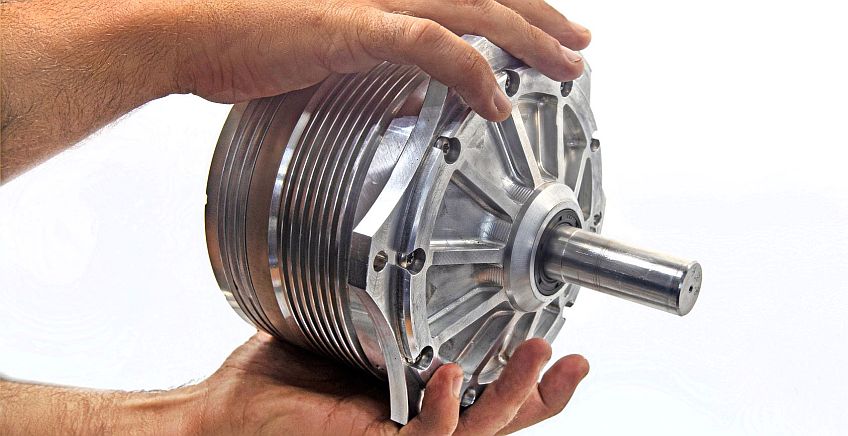
Over 15 global vehicle manufacturers and Tier-1 automotive companies in eight countries will conduct evaluations of high-performance electric motors developed and manufactured by EVR Motors in Israel. The novel motors are less than half the size and weight of existing state of the art RFPM (Radial Flux Permanent Magnet) motors with similar power. The company is also developing additional motors and setting up an assembly line in Israel, planned to start large scale production in H2 2022.

EVR said it will tailor the motors according to the performance, size, cost, and other requirements of each specific customer. Customers not interested in manufacturing motors can be supplied with motors manufactured by EVR or its partners, including motors deigned to meet their specific requirements.

“Vehicle manufacturers want electric motors with less size, weight and cost, which provide more power, efficiency and flexibility – and this is exactly what we are providing,” noted Opher Doron, CEO of EVR Motors. The breakthrough electric motor we unveiled in May 2021 witnessed tremendous interest from OEMs, Tier-1s and potential partners.”

EVR’s first two/three-wheeler air-cooled 48/96V motor provides a peak power of 17kW and peak torque of 41Nm, yet weighs only 9 kgs, with a volume of 2.7 liters. The company is also developing a water-cooled  35kW motor, a small 6.5 kg, 7-9 kW motor for two wheelers, and a water-cooled 400V motor for passenger cars and light commercial vehicles.

New Topology for Old Technology

The new electric motors are based on EVR’s patented TS-RFPM (Trapezoidal Stator Radial Flux Permanent Magnet) topology, which provides improved performance, while at the same time maintaining the advantages of traditional RFPM motors. The motors generate higher power for their size thanks to increased flux, high fill factor, superior copper utilization, heat dissipation and thermal capacity. The novel topology provides significant reduction in cost as a result of lower Bill of Materials (BOM) and production costs, along with a simple assembly process.

EVR Motors will target most mobility and industrial applications, including two and three wheelers, passenger and light electric vehicles, trucks, busses, Battery Electric Vehicles (BEVs), Hybrid Electric Vehicles (HEVs), Plugin Hybrid Electric Vehicles (PHEVs), Mild Hybrid Electric Vehicles (MHEVs), golf carts, forklifts, trains, boats etc. TSRF technology can support a wide range of power and torque outputs, with voltage ranging from 48V to 800V, that are suitable for different power levels and for a wide range of speeds.

EVR Motors was founded by its current president and COO Eli Rozinsky, together with Victor Kislev and Ruslan Shabinski. The company’s chairman is Ophir Shoham, former Director of the Defense R&D Directorate at the Israeli Ministry of Defense (MAFAT). The CEO Opher Doron, is a former GM of Israel Aerospace Industries (IAI) Space Division. The company is backed by a strong team of investors, led by Marius Nacht, co-founder of Check Point, and the participation of Teramips Technologies, Varana Capital and SIBF. It is now raising Series A funding round to accelerate its penetration into the market, develop additional motors and increase production capacity.

Augury raised $180M on $1 billion valuation

Augury Company from Haifa has completed a $180M fundraising, based on $1 billion company value. Current round raises the company’s total fundraising to $286M. The round was led by Baker Hughes, one of the biggest global providers of services and equipment for the gas & oil industry, with more than a $20 billion revenues in 2020. Following the investment, Baker Hughes will take a seat in Augury’s board of directors, and will also incorporate Augury’s platform into its operational systems. New investor in the current round is SE Ventures, the corporate venture arm of Schneider Electric.

With $200M in cash, Augury will use it to globally expand its operation and enter new fields such as the energy sector. The company was founded in 2014 by CEO Saar Yoskovitz and CTO Gal Shaul. Company’s headquarters is located in New-York, while its R&D center is in Downtown Haifa. Augury’s platform monitors industrial machines’ mechanical state using various sensors, including vibration, temperature and magnetic sensors.

The information gathered by the sensors is collected continuously, transmitted to the cloud and analyzed by artificial intelligence algorithms combined with operational and mechanical models. The analysis in the cloud compares between the data collected from current machine’s state and historical data regarding current machines and other similar ones. This analysis provides insights regarding abnormal patterns which might indicated machine malfunction, flaw or depreciation. Also, the system produces recommendations as for the optimal methods of locating and fixing the issue. Augury’s customers include Heineken, Tnuva, Danone, Bosch Health, Nestle, Nefco and more.