Tower and Juniper Announced SiPho with III-V Lasers

Tower Semiconductor and Juniper Networks announced the first silicon photonics (SiPho) foundry-ready process with integrated III-V lasers, amplifiers modulators and detectors. Th process addresses optical connectivity in datacenters and telecom networks, and new emerging applications such as artificial intelligence and LiDAR sensors.  The new platform co-integrates III-V lasers, semiconductor optical amplifiers (SOA), electro-absorption modulators (EAM) and photodetectors with silicon photonics devices, on a single chip.

“Our mutual development work with Tower has been extraordinarily successful in qualifying this innovative silicon photonics technology in a high-volume manufacturing facility,” said Rami Rahim, CEO of Juniper Networks. The new process will be available to customers via Tower’s foundry services. Process design kits (PDK) are expected to be available by year end and the first open multi-project wafer (MPW) run are expected to be offered early next year.

Tower’s Multi-Project Wafer (MPW) Shuttle Program enables customers to tape-out their designs for rapid prototyping and helps reduce costs by sharing the expense of masks and wafers with other MPW shuttle program participants. This can all be done using Tower Semiconductor’s standard manufacturing process technologies. First samples of full 400Gb/s and 800Gb/s PICs reference designs with integrated laser are expected to be available in Q2 of 2022.

Obayashi selects Innoviz’s LiDAR for autonomous tower crane

Obayashi, one of the largest Japanese construction companies, choose Innoviz’s LiDAR sensor for a semi-autonomous tower crane in develops. Obayashi intends to deploy the final system in various construction sites throughout Japan. This development is part of a larger Obayashi program to develop autonomous construction tools to be widely used in construction projects. The cooperation between the two companies started at 2018. 

The autonomous operation of the tower crane will be based on integration between the high performance capabilities of the LiDAR sensor and Obayashi’s software. The sensor generates 3D pictures and identifies of people and equipment in construction sites, based on measuring returns of multiple reflections per pixel. Obayashi’s software extracts the data from the sensor, and generates alerts and instructions for the crane’s operator. This joint solution makes operations highly automatic and enhances safety.  

Construction world became a place where we evidence greater processes of adopting autonomous technologies, mainly because construction sites are usually closed and delimited, and the tools in use require performing predefined structured processes. According to a ResearchAndMarkets report, the autonomous construction equipment market is expected to grow to $26.8 billion by 2030. This growth is mainly due to construction boom we witness in many countries, the shortage in professional HR and the increasing demand for higher safety levels in the construction processes.     

Obayashi is one of the largest construction companies in Japan, with $11.8 billion revenue in FY2021. A year ago, the company announced a new cooperation with the American SafeAI Company, a developer of a platform for autonomously operating heavy duty tools. The main goal of this cooperation is to develop a whole ecosystem for an “Autonomous Construction Site”. Together, both companies ran a pilot in a construction site at the Silicon Valley, where they demonstrated disposal of construction waste using an autonomous truck. The truck was a standard Caterpillar truck which was converted to operate autonomously using SafeAI’s platform.

Israeli Nemo aims to turn the promise of nanomaterials into industrial reality

[Pictured: Nemo Nanomaterials team- Photo Credit – Eyal Toueg]

The need to produce new, sustainable technologies that improve people’s lives while maintaining the health of the planet requires access to innovative materials designed for safe, sustainable manufacturing and production. Established in 2018, Israeli startup Nemo Nanomaterials is now emerging out of stealth mode to provide game-changing nanomaterials that revolutionize the possibilities of industrial additives across virtually every market sector.

Take the automotive industry as an example. It is moving away from old, polluting products to greener, leaner, and smarter vehicles. Demand that has contributed to the global market for lightweight automotive materials now being projected to surpass  $99 billion by 2025. But to achieve this, new materials are needed, which is one of the markets that Nemo Nanomaterials addresses.

Modern vehicles present unique demands for materials and require them to be light and durable while providing electrical conductivity as well as electromagnetic shielding. Most importantly, all materials used must be sustainably managed throughout the product lifecycle. Invariably, this has seen manufacturers making tradeoffs when it comes to material properties and functionality

However, with Nemo Nanomaterials, the industry challenges have become a thing of the past. Nemo’s proprietary technology and techniques for processing and mixing carbon nanomaterials enhance plastics with features of metals for advanced electronic systems, under the hood parts, fluid supply lines, battery casings, internal and structural components, with reduction of up to 30% of the weight for parts when compared to metals.

Beyond the automotive sector, Nemo Nanomaterials technology can be applied to electronics, textile, construction, telecom, energy, the aviation and aerospace sectors.

Nemo’s technological breakthrough is the sole enabler for replacing metals with plastic materials – by achieving desired electrical conductivity and EMI shielding properties while maintaining the original features of the plastic.

On EMI shielding and electrical conductivity alone, the company can reach an addressable market that surpasses $10 billion. And that is just one of almost limitless applications and possibilities.

Nemo Nanomaterials was established in 2018 by Alexander Zinigrad and Jonathan Antebi. The company has successfully raised $7 million in pre-seed and seed funding, the bulk of which has come from the Cyprus-based GEM Capital. The startup is already working with 10 large companies, including multi-billion-dollar conglomerates. The list includes paying customers and co-development partners in various stages of pilots and product validations. Nemo has started manufacturing tons of its products following commercial orders from customers.

“High-end carbon nanomaterials are known to mankind for decades. They recently were made available on a commercial scale. Many companies have made lots of promises in regard to making real industrial products out of them, but Nemo is unique in making them a reality. Nemo’s technology enables a revolution in nano-carbons. It solves many wide and acute industry challenges across a myriad of specifications while delivering ready-to-use additives that can be used by the industry utilizing existing machinery and procedures. Nemo Nanomaterials is going to provide materials that are required for the future of manufacturing,” said Jonathan Antebi, Co-founder and VP Business Development at Nemo Nanomaterials.

With Nemo Nanomaterials technology, there is zero performance tradeoff in materials while enabling innovative design and functional possibilities across industry sectors. Its additive means customers can more efficiently use raw materials while also delivering the most effective end-of-life recyclability possible.

“Refineries, and not petroleum, reshaped the world because they provided new materials that enabled new industrial capabilities. With Nemo Nanomaterials, high-end nanocarbons are just as transformative to reinvent the world of the future, today,” said Alexander Zinigrad, Co-founder and CEO of Nemo Nanomaterials.

NXP and Hailo Expand AI cooperation through MicroSys

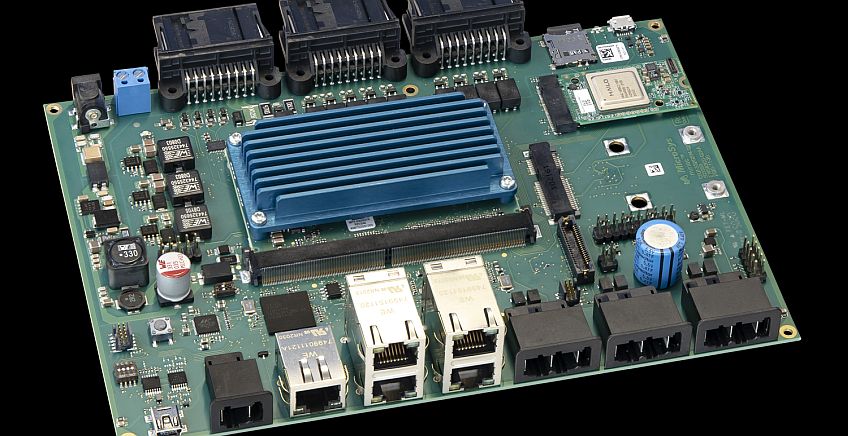
NXP Semiconductors and Hailo announced a cooperation to provide joint AI solutions for automotive Electronic Control Units (ECUs). The new solutions will combine NXP’s automotive processors S32G and Layerscape, along with Hailo-8 processor. Hailo-8 is an AI processor for edge computing with up to 26 tera-operations per second (TOPS) at a typical power consumption of 2.5 W. The solutions offer an open software ecosystem for applications and software stacks.

The first solution, powered by the Arm based NXP S32G processor combined with up to two Hailo-8™ AI processors delivering up to 52 TOPS. The second solution, powered by the Arm based NXP Layerscape platform and combined with up to 6 Hailo-8 processors, delivers a high-performance of up to 156 TOPS. “We are excited to partner with a major player like NXP to demonstrate the true potential of AI for automotive,” said Orr Danon, CEO of Hailo.

“We look forward to continuing to work with NXP to expand our edge processing solutions to a broad range of demanding applications including industrial & heavy machinery, robotics, and more.” The NXP-Hailo joint solutions are already being utilized by customers, including MOTER Technologies, which is using the Arm-based NXP S32G processor combined with a Hailo-8 M.2 AI accelerator module for Usage-Based Insurance (UBI) applications.

The evaluation boards were designed and produced by the Germany-based MicroSys, who cooperates with NXP as well as with Hailo. The miriac® AIP-S32G274A and miriac® AIP-LX2160A NXP-Hailo automotive based application-ready platforms are available from MicroSys, as well as development platforms by NXP: BlueBox 3.0 (Layerscape LX2160A and S32G and GoldBox (S32G). Both are compatible with Hailo-8™ M.2 AI Acceleration Modules.

Ohh-med developed RF technology for solving erectile dysfunctions

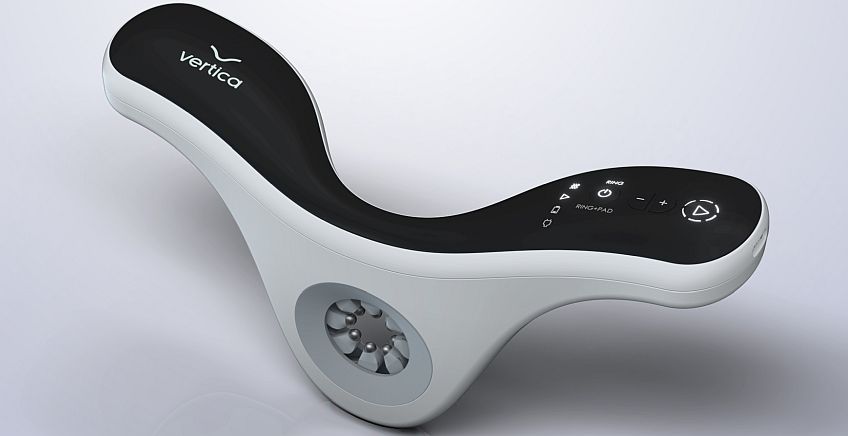
Ohh-med Company, operated from within Medimor Campus, is entering initial production stage of its new medical product named Vertica. This product assist in overcoming erectile dysfunction issues using RF technology, a method proved to be very advantageous in esthetic treatments. This technology is based on the company’s founder & CEO, Daniel Lischinsky, which developed Endymed’s RF technology for skin tightening. 

Daniel Lischinsky is considered one of Israel’s technologies pioneers, and served in senior developments positions at LSI Logic, Zoran Semiconductors and Saifun Semiconductors and was in charge for developing attribution plans at Mellanox Technologies. The idea of founding Ohh-med was born in 2016, when he read an article regarding Collagen’s role in the sexual processes. The ability of RC radiation to encourage Collagen fibers’ growing is a well familiar phenomenon, used in various medical implementations. The mentioned article brought experimental results, showing that the weakness of the Collagen tissue is responsible for erectile dysfunction. In conversation with Techtime, he recalls that this was the moment he realized RF technology might assist in resolving these issues. 

Lischinsky crafted a homemade prototype, which was clinically tested in Rambam Medical Center in Haifa. Following successful results (twice of Viagra efficiency), he received marketing license from the Israeli Ministry of Health, and the product is currently pending European certification (CE) approval. Ohh-med is now being arranged for a wide clinical experiment in order to file an FDA request. The device is based on connectors system, transferring AC currents through the penis, in a 1MHz frequency and a strength of 200-350mA.    

The target: Producing 10,000 devices monthly

Main advantage of this technology is that the treatment is taking place at the patient’s house, completely privately and during its convenient free time. Also, it is highly safe, as temperature sensors assures the heat will not exceed 42°C (107°F). Lischinsky: “up to date, the company had raised several million dollars (less than 10), and another raising is expected by the end of 2022. This month we started with the first batch production of 2,500 devices in the Medimor factory at Tiberius. Next month we plan to increase the production by several more thousands, and we estimate a production capability of 10,000 in 2023”. 

“Our solution helps many persons, generating no side effects nor suffer. From data known to the medical world, it seems that there is a correlation between the rates of men suffers from erectile dysfunction and their age: around 40%of them are in their forties, and around 60% are in their sixties. We are touching a painful issue in many people’s lives. Since we launched our public website in November 2021, a lot of men aged 35 to 65, showed interest by browsing it. We also noticed that almost 40% of our website’s visitors were women’.

The Continued Importance of Unified Power Format

By: Nikhil Amin and Harsha Vardhan, Verification Group, Synopsys

As chip design sizes increase, so does the total power consumption driving its operations. To meet with the increasing intelligence and power-management flow required by modern applications, system on chip (SoC) designers and verification engineers need comprehensive solutions that leverage low-power design techniques to enable fine-grained power management. Over the years, the Unified Power Format (UPF) standard, intended for specifying and verifying power intent of integrated circuit (IC) designs, has advanced and created a wide range of opportunities.

However, for low-power cells like hard macro, RAM cell, or PAD, the connectivity of low-power control signals remains ambiguous. In this article, which was originally published on the “From Silicon to Software” blog, you’ll  learn about the basics of UPF, its importance in the power landscape, how to expand low-power signoff with custom mechanisms, and how to take power-managed designs to the next level.

The History of Unified Power Format (UPF)

As development teams prioritized energy efficiency and adopted low-power approaches, they found difficulties in the specification, implementation, and verification of power management structures. Prior to today’s era of standardization and automation, they didn’t have many resources to solve design problems. The nonprofit organization Accellera Systems Initiative launched UPF for the EDA industry to enable low-power design and verification.

The organization presented it to the Institute of Electrical and Electronics Engineers (IEEE), which published the UPF standard in 2007. Since IEEE’s introduction of the standard, UPF has served as a North Star for chip designers tackling low-power, energy-efficient electronic systems and SoCs. Over the last nine years, new iterations of UPF have been published to advance alongside semiconductor technology enhancements.

Using UPF in Designs

UPF outlines design power intent, specifying control signals, routing, block configuration, and more. Its backbone is the scripting language — Tool Control Language (TCL) — which enables automation for design software, providing specific recommendations to meet low-power standards. On average, development teams report more than a dozen significant challenges related to implementation, specification, and verification of structures.

With UPF, the ability to determine the intended design operation in terms of power management has proven to be effective in overcoming these challenges. Successful implementation of low-power semiconductor designs includes checking UPF descriptions and verifying UPF against the design at multiple stages in the project. Typically, low-power design involves standard control signals such as:

  • Isolation enables
  • Clocks, resets
  • Save, restore, and retain
  • Power switch enables, acknowledgement

UPF designs the standard specifications for these control signals that are distributed traditionally through a power management unit. The most common issues that design teams encounter with low-power signals include complex logic connectivity, incorrect buffers, retimed flops for high fanout net handling, blocked control paths, and swapped connections. A UPF file specifies several key attributes for a low-power design, including:

  • Power supplies: supply nets, supply sets, power states
  • Power control: power switches
  • Level shifters and isolation cells
  • Memory retention strategies and supply set power states
  • Power states and transitions
  • Power/ground pin type

As SoC designs evolve and include more logic functions to meet advanced requirements, the use of complex macros and memories are becoming more common. These cells can have their own low-power modes and functionality which adds unique complexities to the design flow, since the primitive connectivity specifications within UPF are insufficient to meet the verification requirements and architectural-level specifications.

Expanding Low-Power Signoff: UPF and Beyond

Typically, once the initial steps for low-power design are conducted — selection of low-power components, system simulations, UPF, and register transfer level (RTL) coding — designers move to the verification phase, which requires a comprehensive toolkit with several capabilities. The initial step is static power verification and exploration, ensuring the inputs to the design flow (RTL, UPF, and SDC) are structurally and syntactically correct.

Designers need to conduct Lint and CDC checks to make sure the RTL is clean. UPF and SDC checks can be then conducted concurrently with the RTL checks — but a tool that can run these checks and perform power analysis to ensure the design functions properly is key. Software-driven power analysis comes next. For emulation-based low power flows, it is important for chip designers to ensure that peak windows for the design’s power profile are used and leveraged to generate waveforms that estimate power.

The power implementation phase includes several steps for power estimation, logic synthesis, and generating a netlist. Once the checks are complete, the final physical components are placed and routed. During the final step – signoff – designers must ensure that the connections and changes made to the netlist and UPF are consistent and clean, and the power intent is preserved.

Over the years, UPF has grown by incorporating several advanced capabilities. These range from power-intent specification process simplification to power-management flow alignment requirements of IP-based SoC designs. Verification of low power control signals by leveraging control signal connectivity of typical low-power cells such as isolation, retention, and coarse grain power switch within UPF.

Open Issues in UPF

However, for certain low-power cells, such as hard RAM and hard macro, the connectivity of low-power control signals is unclear. This makes verification a complex and manual process often leading to costly bug escapes. Simulation can identify some of these issues but is contingent on a robust simulation environment and corresponding debug capabilities. It also occurs very late in the verification cycle increasing the cost of the verification.

Cases where UPF does not have a way to define specification:

  • While UPF is extensive, the control signal connectivity for low-power cells such as RAM and hard macros remains undefined. Chips are often designed with several RAM cells, and their architecture within the chip is critical to define memory controls and enable low-power optimization features such as sleep and retention enablers. During the design process, engineers frequently rely on simulation to find connectivity issues and other power-related bugs. However, simulations take days and are typically time-intensive procedures.
  • Hard macros present a similar problem. They are often several blocks built into the chip’s design and internally isolated. UPF doesn’t provide checks for internal isolation control or polarity for internally isolated pins.
  • In addition, it is also important to verify an IP-level control signal’s connectivity to the correct SoC signal when the IP is integrated into the SoC to ensure accurate verification at the SoC level. Currently, UPF does not have a mechanism to define the specification for this connectivity.
  • Power state table (PST) dependent isolation enable checks is another area where the Low Power Architect usually defines how the isolation enable signal and its sense are related to a supply. If isolation enable becomes active or inactive in the wrong power state table, then it can propagate corruption or clamp value towards power-on logic and that may not be intended in a PST.

To support the increasing demands of advanced power management from many of today’s electronic products, it is critical to have a comprehensive low-power verification tool that validates the final design functions accurately and can accomplish all of the phases for UPF and RTL checks, power analysis, and signoff. For more information on UPF and pre-empting low-power issues, watch this webinar.

Tackling the Power Monster with UPF Checks Throughout the Design Process

Given the nature of low-power design architectures and behavior, verification and signoff for low-power designs have become more challenging compared to always-on designs. As you’re evaluating verification technologies, consider solutions that are capable of extensive, low-noise reporting, filtering, and waiving to help simplify and also expedite complex, low-power verification signoff flows. Equipped to fully analyze chip performance and capabilities, you can be in a solid position to find and solve low-power bugs faster.
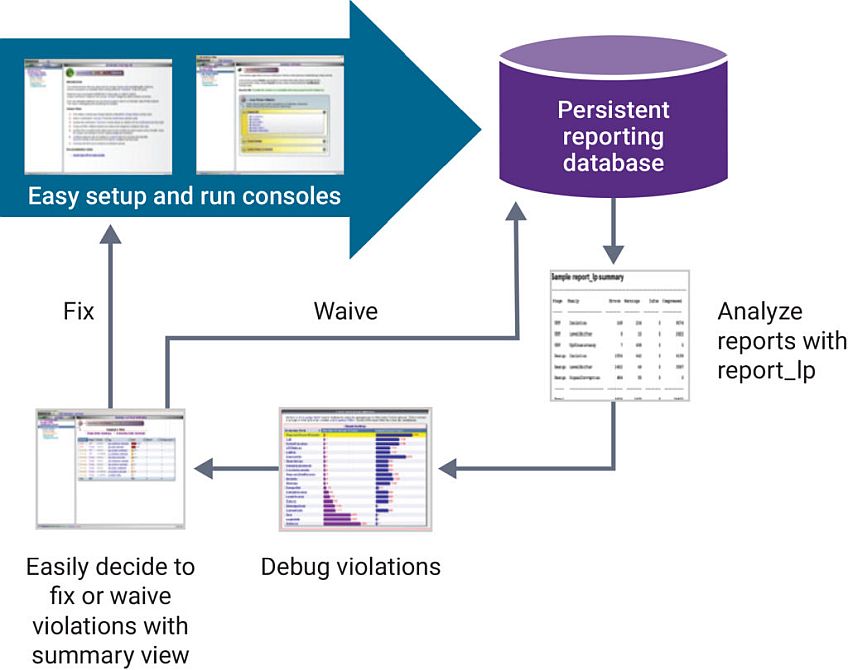
To address the RAM cells, a solution that allows you to quickly conduct full connectivity checks and identify potential problems can mitigate resource costs. As for the hard macros, a solution that allows you to specify control and polarity for these internal components can address the associated challenges.

The Synopsys VC LP™ static low-power verification solution enables all UPF checks, such as scans for power intent consistency, architecture at RTL, structural and power and ground (PG), and functionality. VC LP is a multi-voltage low-power static rule checker that allows developers to validate UPF low-power design intent quickly and accurately. It also features hierarchical power state analysis, power state table debug, and Synopsys Verdi® debug. VC LP also provides solutions for hard macro and RAM cells that UPF doesn’t include.

The platform includes over 650 checks — covering electrical and architectural evaluations — and offers full-chip performance and capacity for comprehensive signoff. It allows users to conduct checks at every step of the chip design process from register-transfer-level (RTL) to post-synthesis and post-place-and-route PG netlist. VC LP offers predictive checks for designers to identify potential implementation problems, allowing for discovery and remediation earlier in the process, as well as providing support for multiple hierarchal flows, such as Black Box and Extracted Timing Models (ETM).

As low-power design continues to become an increasingly important priority and more devices connect to the internet, chip developers will have to keep pace with demand. Design teams will need to prioritize low-power designs and employ advanced power management techniques to operate across all power states going forward.

BIRD Aerosystems Receives an STC for its Cessna Special Mission Aircraft

BIRD Aerosystems, a global provider of innovative defense technology and solutions that protect the air, sea, and land fleets of governments and related agencies, has received a Supplemental Type Certificate (STC) from the Civil Aviation Authority of Israel (CAAI) – for its Cessna CJ3 ASIO Special Mission Aircraft. 

The granted STC follows a modification of the aircraft into a special mission configuration and includes all the structural and electrical changes to the aircraft to support the installation of the airborne surveillance sensors (Radar, EOP, AIS), multiple communication equipment, and BIRD’s operator workstations and pilot display.

The full STC program including the installation design, analysis, justifications and modification activities were conducted by BIRD Aerosystems’ platform engineering department and by BIRD’s MRO in Cyprus. 

The STC also enables a dual-use of the aircraft including a special mission surveillance configuration and a VIP configuration, furthermore allowing to change the cabin configurations without the need to dismantle the ASIO sensors and systems. 

The STC received by the CAAI is now also being adapted by the FAA and EASA, and will enable BIRD to provide its worldwide customers with a certified special mission aircraft solution which can be delivered in various configurations and under very short schedules.  

BIRD’s ASIO Special Mission Aircraft is an end-to-end airborne Information, Surveillance and Reconnaissance (ISR) solution ideal for maritime and ground surveillance, search and rescue, patrol and monitoring. ASIO offers decision-makers and field commanders accurate, real-time terrestrial and maritime information that dramatically enhances situational awareness. A true force multiplier, ASIO enables even small crews to deliver detailed and comprehensive surveillance information covering large geographic areas. 

Ronen Factor, Co-Chief Executive Officer and Founder at BIRD Aerosystems: “We are excited to announce that we have received this unique STC on a Citation Jet. The hard work invested by our internal platform engineering department and our MRO in Cyprus, together with our partners at the CAAI, enabled us to complete this challenging STC certification successfully and fulfill our mission of delivering turn-key programs to our customers. Always at the forefront of technology, we can now offer our customers a fully certified, maritime and ground surveillance aircraft solution that is cost-effective and can be delivered under very short schedules”.   

BIRD Aerosystems, a global provider of innovative defense technology and solutions, protects the air, sea and land fleets, of governments and related agencies. BIRD secures these assets via its industry-leading missile protection, and border task force, solutions. It provides turn-key programs, including design and certification services, as well as installation in its wholly-owned Maintenance and Repair Organization (MRO). The company integrates world-class engineering, with its own patented technology, to deliver end-to-end solutions to customers like the US government, UN Air Operations, NATO forces and leading defense organizations.