“Data Centers to Adopt High Voltage DC Power Sources”

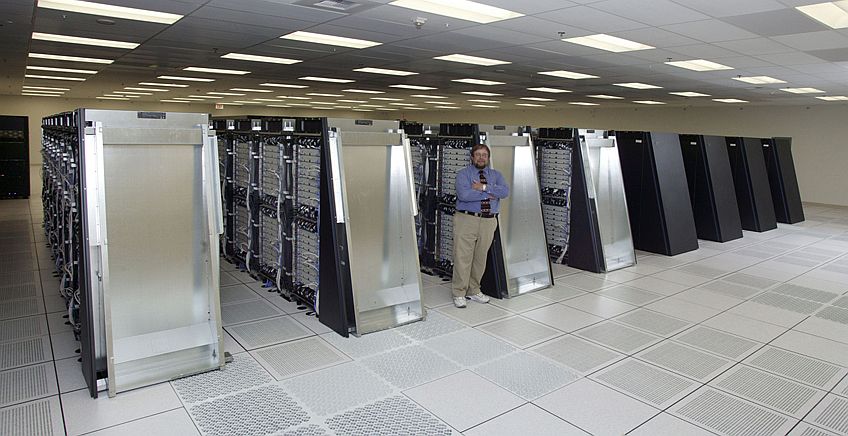
Above: IBM’s Blue Gene computer paved the way for powerful AI Data Centers

“The large data centers are undergoing a deep structural change. We anticipate more datacenters moving away from Alternating Current (AC) in favor of 260-410V DC infrastructures to better cope with the massive increases in power needs of high-performance computing,” told Lev Slutskiy, Vicor’s EMEA Business Development Manager for High Performance Computing. “Google started testing the concept secretly back in 2015 and today companies like Nvidia are performing experiments with high voltage, that haven’t been published yet.”

According to Slutskiy, the Open Compute Project Foundation is also testing the new approach. The OCP was established 10 years ago by Facebook and now it brings together the biggest manufactureres of processors, servers and data center infrastructures. They are tackling an old electrical dilemma: Since the electric power is a multiplication of the voltage by current, using a high direct voltage at low currents saves a lot of energy (P = I²R). Until recently the problem was marginal: standard database servers consumed approximately 5kW each – and power systems that passed energy into the server circuits at a voltage of 12V and 416 Amps current – were good enough.

What can be done with 1,000 Amps

But times change and around 2015 the average power consumption of database servers increased to 12kW, with currents ranging up to 1k Amps. Most of the manufacturers dealt with the high currents using very large conduction cables, but this solution is beginning to reach the end of its ability. Especially in the last year in which the growing use of artificial intelligence and machine learning multiplied the power usage of the database servers: Vicor reports that in the large data centers the usage increased to about 20kW, and in some cases even to 100kW.

This means that the power distribution systems need to deal with huge currents of appoximately 1k Amps. At this point the OCP consortium started to define a format of database servers working at higher voltages of 48V. This decreases the current in the circuit by 4 and minimizes the power loss in the conduction cables by 16. Thus for instance, the current required for 12kW server will be only 250 Amps.

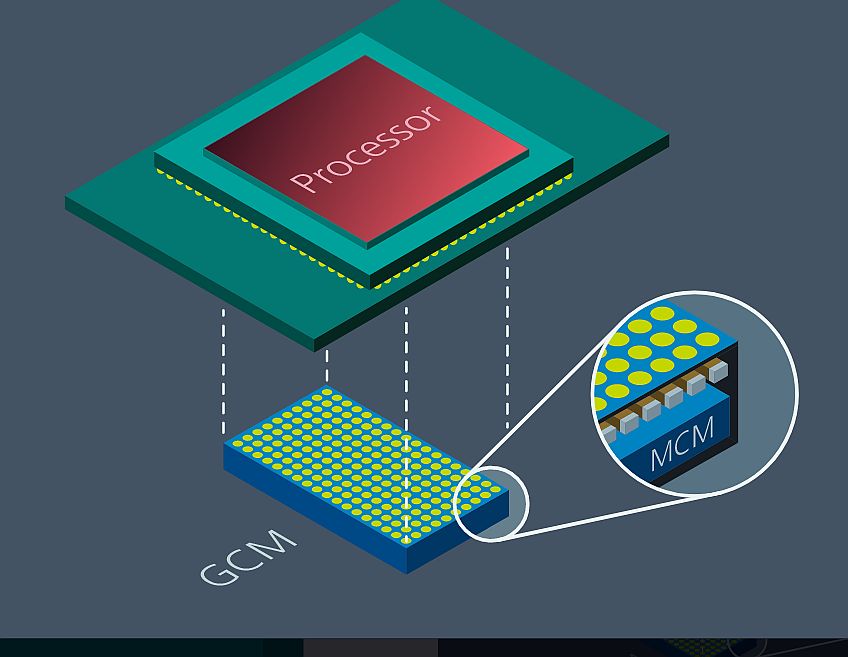
Vicor’s approach for direct power supply to the processors in the data center

According to Jain Ajithkumar, Vicor’s Sr. Director for Strategic Accounts in Data Center, HPC and AI Business, this is just the first move in a larger trend and it holds further technological implications. “We are now at the beginning of a new era. The computer rooms will receive direct voltage of 350V, that will be converted to 48V at the racks level, and then to the exact voltage needed by each specific chip in the server.

“We are dealing here with two additional issues: today the processors work at 1.8V and 0.8V. When we minimize the width of the transistor to 5 nanometers, the voltage may reach down to 0.4V. There is a need for an advanced technology to answer this need – and to do it without compromising the space dedicated to the multitude of densed data links populating modern processors.”

Looking for the next Startup

This is where Vicor’s Factorized Power Architecture technology, originally developed for IBM’s 2007 Blue Gene supercomputer, comes into the picture. Blue Gene was powered by 350V, delivered through Vicor’s power distribution system, starting with high power rails, middle stages and ending with a dedicated chip directly connected to the CPU’s power connections. “We have developed a technique for pushing the power supply to each processor of Blue Gene.

“Now we are making that technology available for startup companies too, and therefore it is very important for us to exist in the Israeli Market. Out of all the influential startup companies in the world, just 5% come from Europe. Thus Israel’s foothold in the European market is very large. Today there are over 300 HPC startup companies in Israel, and most of the startups that are being sold to global companies are Israeli. We are offering to supply them with chips and full planning methodologies – including converting supply networks to voltages of hundreds of volts, bringing energy to the consumption point, lowering to a voltage of 48 volts and supply the required voltage for each processor.”

NeuReality raises $8M seed funding to set a new performance standard for AI compute infrastructure

NeuReality, an Israeli startup developing high performance AI compute for cloud data centers and edge nodes, emerged from stealth last week with $8M seed from Cardumen Capital, OurCrowd and Varana Capital to fuel the growth of real-life AI applications running at scale. NeuReality will introduce its first AI platform early this year.

NeuReality also announces the appointment of Dr. Naveen Rao, an AI industry expert, and former General Manager of Intel’s AI Products Group, to its Board of Directors.  Prior to his role at Intel, Dr. Rao had been the CEO of Nervana Systems (acquired by Intel in 2016).

NeuReality exponentially enhances ultra-scale inference for AI applications. Despite huge advances in deep learning acceleration, hyperscalers such as Facebook, Microsoft and Amazon are facing scalability challenges with recommendation systems, digital assistants (such as Alexa and Siri), language-based applications (such as translations and natural language processing) and computer vision use cases. Enterprises are facing the limits of today’s solutions and experiencing spiraling costs with their growing deep learning demands on-premises and in the cloud.

“Our mission is to deliver AI users best in class system performance while significantly reducing cost and power,” said Moshe Tanach, Founder and CEO of NeuReality. “We are already consuming huge amounts of AI in our day-to-day life and it will continue to grow exponentially over the next five years. In order to make AI accessible to every organization we must build affordable infrastructure that will allow innovators to deploy AI-based applications that cure diseases, improve public safety and enhance education. NeuReality’s technology will support that growth while making the world smarter, cleaner and safer for everyone. The cost of the AI infrastructure and AIaaS will no longer be limiting factors.”

NeuReality was established in 2019 by CEO Moshe Tanach, VP Operations Tzvika Shmueli and VP VLSI Yossi Kasus. Prior to founding NeuReality, Tanach served in several executive roles as Director of Engineering at Marvell and Intel, and AVP R&D at DesignArt-Networks (later acquired by Qualcomm). Tzvika Shmueli served as VP of Backend at Mellanox Technologies and VP of Engineering at Habana Labs. Yossi Kasus served as Senior Director of Engineering at Mellanox and the head of VLSI at EZChip.

Gonzalo Martinez de Azagra, General Partner at Cardumen Capital and former head of Samsung Ventures in Israel commented: “The AI market is growing very rapidly and NeuReality will become the de facto standard in this segment. By focusing on the AI computing system as a whole, NeuReality will deliver AI computing infrastructure that is more powerful and more cost-efficient to meet the industry’s growing demands. We are proud to support NeuReality in its journey to make this a reality.”

One segment that will find NeuReality’s solution very relevant is healthcare, due to the growing scale challenges related to COVID-19 research and vaccine development. NeuReality enables customers to easily scale their AI utilization while significantly cutting costs, lowering energy consumption, and shrinking the overall computing-infrastructure footprint.

“After seeing so many AI companies focusing on deep learning accelerators at the device level, NeuReality intrigued me with their refreshing view of overall AI deployment barriers and their unique system-level approach that will eclipse today’s outdated data center architecture,” said Dr. Naveen Rao. “NeuReality’s innovative design solves AI scalability and cost challenges.”

Record Number of Investments in Israeli Start-ups

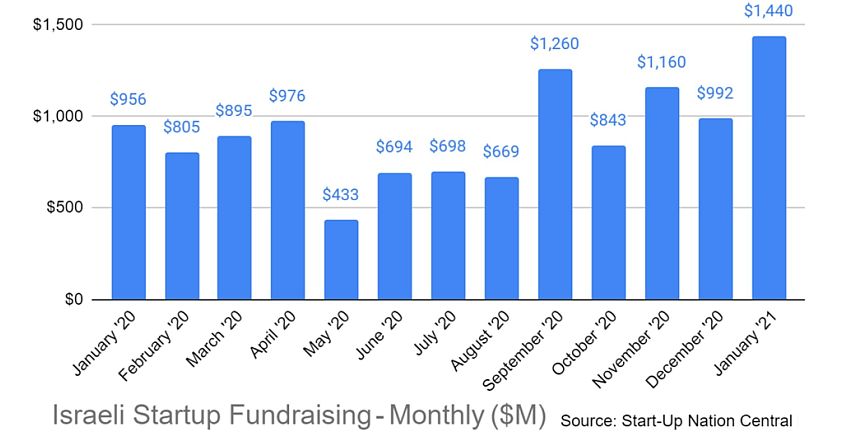
During January 2021, the month that COVID-19 reached its peak in Israel, local Start-ups raised $1.44B – a record amount of investments in Israel during a single month. Six start-ups raised more than $100M each (mega rounds) during the month. According to Start-Up Nation Central (SNC) the mega-rounds in January 2021 alone, equal close to 30% of the total number of mega-rounds in the entire year of 2020.

It is the highest number of both mega-round and general investments made during a single month in Israeli start-ups. The year 2020 witnessed 21 ‘mega-round’ investments during the whole of 2020, equivalent to 33% of capital raised. As a monthly comparison, there were three ‘mega-rounds’ in January 2020, none in January 2019 or January 2018. The mega-rounds in January were led by US investors.

Fintech was the dominant sector with two ‘mega-rounds’ and $413M raised. It is a continuation of Fintech’s strong performance since September 2020 with $1.4B in investments compared to only $340M raised in the first eight months of 2020. Director of Research at(SNC), Meir Valman, said that the record level of fundraising is driven by the increasing maturity of the Israeli tech ecosystem, when rapidly growing startups are able to raise much larger rounds.

The six ‘mega-rounds’ which were announced during January 2021 were: Rapyd Financial Network (Fintech, $300M), Drivenets (Network Infrastructure, $208M), OwnBackup (Enterprise solutions, $167.5M), K Health (Digital health, $132M), Resident Home (Ecommerce, $130M) and Melio (Fintech, $110M).

Start-Up Nation Central is a non-profit organization that helps tackle global challenges by connecting Israeli technologies with multinational corporations, governments, investors, as well as NGO’s from around the world.

REE enters NASDAQ with a valuation of $3.1 Billion

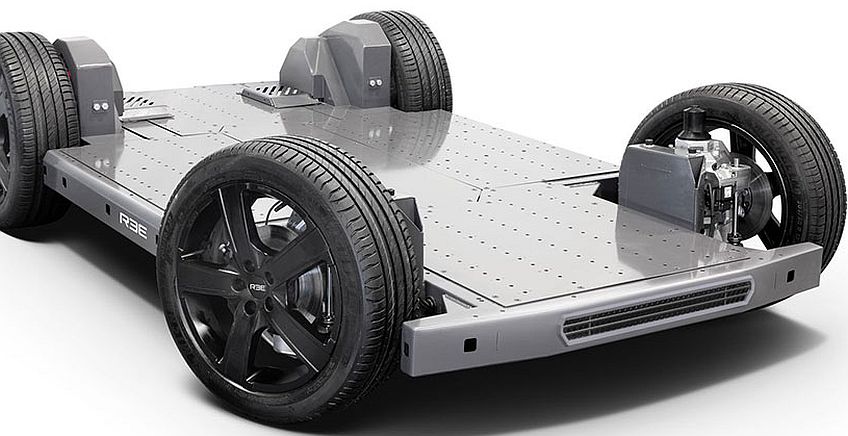
The Tel Aviv-based REE Automotive and 10X Capital Venture Acquisition Corp (“10X SPAC”) have entered into a merger agreement for a business combination that would result in REE becoming a publicly listed company. Following the close, NASDAQ will list the combined company under the ticker “REE”. REE Automotive has developed EV platform which is completely flat, scalable and modular. The transaction values the combined company at a value of $3.1 billion.

REE’a platform is based on two core innovations: the REEcorner integrates all traditional vehicle components into the arch of the wheel, and the REEboard that provides a completely flat and modular electric platform. Each REECorner is completely independent and powered by its own ECU and consists of Electric motor, Single wheel steer-by-wire, Single wheel brake-by-wire, Multi-ratio drivetrain, Preventive maintenance AI and OTA updates.

The REEboard’s scalable technology allows it to carry a very large variety of different permutations without the need to design a new platform for each vehicle type. Since it does not store any drive components it can be designed to take any shape. It is accessibility from all sides and utilizes CANopen and supports any ADAS interface.

The combined company is expected to receive approximately $500 million in gross cash proceeds from a combination of US $201 million in cash held in 10X SPAC’s trust account, and $300 million from committed strategic investors including Koch Strategic Platforms, Mahindra & Mahindra and Magna International. The capital will accelerate mass production of REEcorner technology and modular EV platforms, expected to begin in 2023.

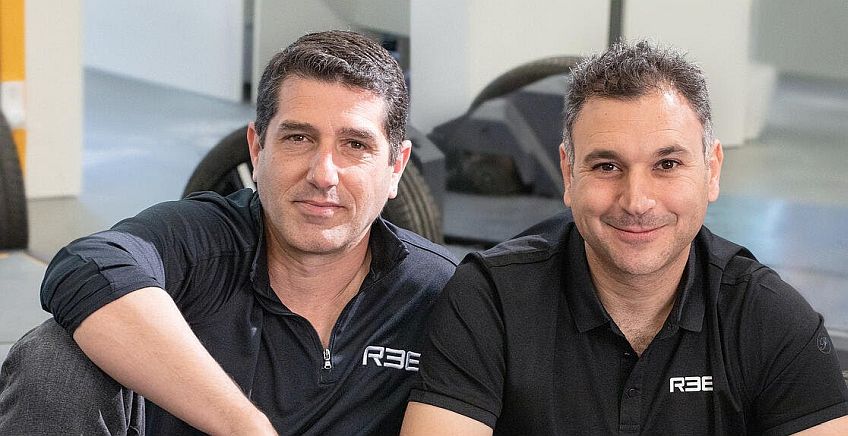
Daniel Barel (left), REE Co-Founder & CEO and Ahishay Sardes, REE Co-Founder & CTO

REE is planning to utilize manufacturing capacity via a secured and exclusive global network of Tier 1 partners in over 30 countries, with point-of-sale assembly. This strategy is expected to enable REE to reach profitability by 2024. The existing shareholders and investors will continue to hold their equity ownership, including Mitsubishi Corporation, American Axle, and Musashi Seimitsu Industry.

Check-Cap to produce its own X-ray source

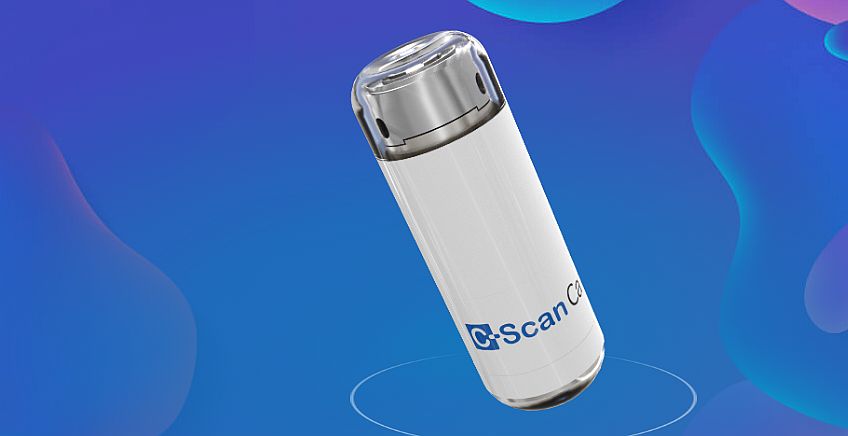
The israeli clinical stage medical diagnostics start-up Check-Cap plans to build an in-house manufacturing line to produce the x-ray source for its C-Scan capsule, a patient-friendly preparation-free screening test to detect polyps before they may transform into colorectal cancer – as the CEO of the company, Alex Ovadia, announced last week in a letter to investors. In the letter, Ovadia also disclosed that Check-Cap was recently awarded a 750k dollar grant from the Israel Innovation Authority to support the transition from R&D to production, and the company will invest a similar sum in the project as well.

An x-ray source is a radioactive isotope with an extra neutron, which emits X radiation when the extra neutron is released from the atom’s nucleus. Check-Cap uses an isotope from the osmium element in their capsule. This isotope has a short half-life. As such, by the time the capsule exits the body, the source will have already been extinguished and thus does not require a complex evacuation procedure.

Ovadia told Techtime that the establishment of the local production line is a part of the company’s business and logistic strategy. “Since the half-life of the x-ray source is relatively short, we may need to build local production facilities in our future markets, in order to ensure availability. It is a model similar to that common in the nuclear medicine field.”

Currently, Check-Cap has a production line in the US that was established by GE. The production line in Israel will also be used for a widespread clinical trial that the company is planning to hold in Israel throughout the year. The trial will take place in 10 medical centers and will include 250 patients at an average risk for colon cancer. The company added that recruitment of patients was going slower than expected because of the Covid-19 pandemic, but the trial is set to begin soon. The aim of trial in Israel is to gather additional clinical data that will allow continued improvement of the system’s functionality.

The main goal the company is preparing for these days, is the Pivotal trial in the US, which will be the last clinical hurdle before seeking marketing approval from the FDA. In November, Check-Cap submitted a request to perform the trial (IDE) to the FDA, and they are now in the process of responding to comments that they’ve received from the FDA.

The company also announced that it was notified by Nasdaq that it regained compliance with the minimum $1.00 bid price rule. Over the last month, after a continuous trampling, Check-Cap’s stock jumped by about 370% and is now traded at a market value of 74.4 million dollars. Ovadia: “Many significant things are happening in the company, in all aspects, and we came to the conclusion that we should give periodical updates from time to time. It is important that people know what is happening in our interesting company.”

Check-Cap, located in Isfiya near Haifa, Israel, develops an ingestible capsule-based system for preparation-free colorectal cancer screening. The C-Scan utilizes ultra-low dose X-ray and an wireless communication sub-system. The capsule is used to create a 3D map of the inner lining of the colon, which allows physicians to look for polyps and other abnormalities. C-Scan is non-invasive and requires no preparation or sedation, allowing the patients to continue their daily routine with no interruption as the capsule is propelled through the gastrointestinal tract by natural motility.

PCB Technologies to produce 1 mil PCBs

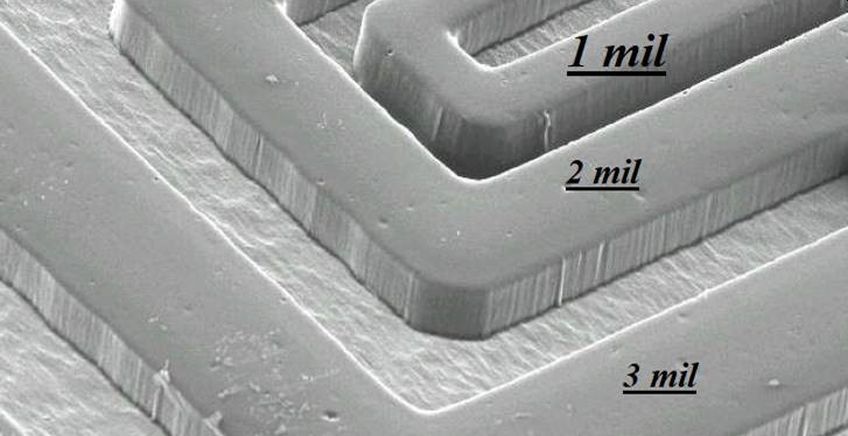
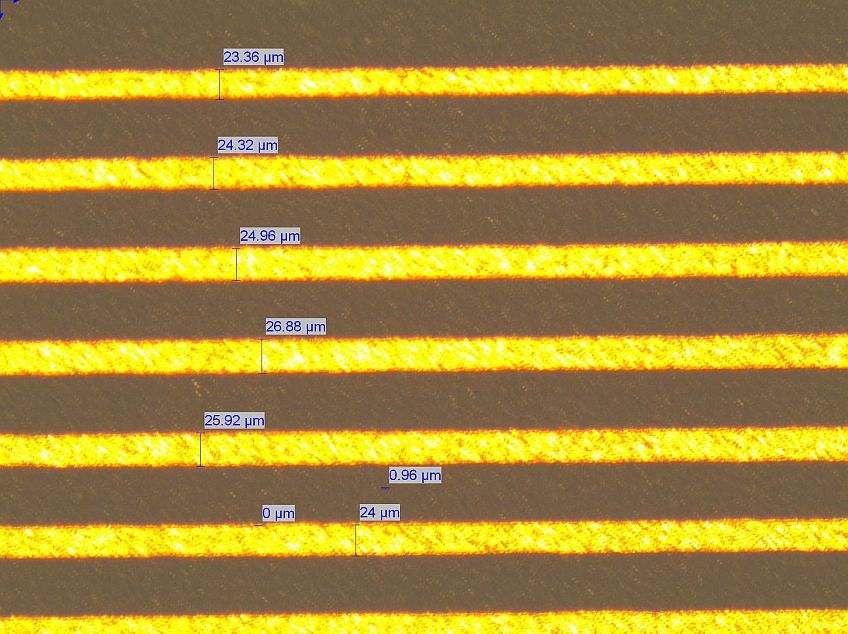
PCB Technologies from Migdal Ha’emek (North of Israel) is ready to begin the production of high density Printed Circuit Boards for its cotumers in Israel and abroad. During the last couple of years it had developed the capability to produce very thick conductor’s width and spacing , of up to just 25 microns (1 mil).  During the project, PCB Technologies has established its own research and development experise in this technology and purchased unique equipment modified to the company’s specifications, using about a 20 million shekel investment.

According to the Vice President Of Marketing, Arik Einhorn, this move will allow the company to provide production services for costumers in Israel, Europe and the US, and to get ready for the next level of its technology roadmap: placing chips directly on Printed Circuit BoardS (Chip on Board). Arik Einhorn: “We are not a regular High Mix Low Volume company – we are also a High Performance solutions provider.”

Gainig foothold in Europe and the US

“We have noticed that our technology is highly advanced compared with Europe, and therefore we decided to strengthen this advantage in order to gain more foothold in the European market and in the US. One of the components of this move is creating the capability to produce 1 mil PCBs, which does not exist in the US and almost doesn’t exist in Europe. In fact, we found out that it exists today mostly in China and Taiwan because of the cellphone manufacturing done there. Only now the US government has decided that it needs to invest in creating 1 mil capability in the US.

“In this sense, PCB Technology will be among the first companies in the West Hemisphare to have this technology”. He relayed that the decision was made following an in depth process of research and talking with customers. “Our technology roadmap was determined during a series of focused meetings that we held with select customers in order to understand their needs and expectations.”

The roadmap was defined by the costumers

“These customers manufacture elite technologies for advanced radar systems, UAVs, minimally invasive medical equipment and more. We presented them with different options for advancement of our technologies, and they provided us with feedback about their needs. We defined our top goals based on those meetings. Some of them are already starting to plan future products based on our capability to produce 1 mil PCBs”.

A horizontal cut of 1 mil test board, that was produced at PCB Technologies

PCB Technologies is an All-in-One solution provider for the fabrication of high reliability, multi-layer printed circuit boards and top-level assemblies (PCBA), mainly for defense, aerospace, healthcare, RF/microwave and telecom sectors. Today they employ approximatly 750 people. The company is is traded in the Tel Aviv Stock Market at market value of about 360 million shekels. Its major shareholder (48%) is Tel Aviv based FIMI Opportunity Funds.

Agtech startup Edete brings its artificial pollination technology to the Australian almond market

Israeli agri-tech startup Edete Precision Technologies for Agriculture is due to begin commercial scale field trials of its artificial pollination technology in almond orchards covering dozens of hectares in the Australian state of Victoria. This follows the signing of an agreement with one of Australia’s largest almond growers. The field trials are due to commence in August when the almond trees begin to blossom.

Edete successfully completed field trials in almond orchards in Israel using its unique mechanical pollen harvesting and robotic pollinator system resulting in substantially increased yields. The company is also planning to set up an operational array in California, that will serve the state’s 7,400 almond growers.

“Australia is the second largest almond producer in the world and continues to increase acreage under cultivation in a way that makes the country a key proving ground for us,” said Keren Mimran, co-founder and VP for Business Development and Marketing at Edete. According to Mimran, Edete’s system can also pollinate pistachios, apples, cherries, pears, plums, among others.

The decline of natural pollinators, namely insects and specifically honeybees, has led to an intensified search for a solution to protect crop yields and solve the challenge facing farmers who need to grow more fruits while facing a shortage of beehives for pollinating their orchards. This problem must be solved to meet the food security needs of the world’s growing population. About 75% of the world’s crops rely on insect pollination for yield and quality. Without an alternative pollination solution in the coming years, food security is at risk, food prices are likely to climb sharply, and certain foods might become scarce.

The global almond market is estimated at over $7 billion annually. With growers spending hundreds of millions of dollars annually on beehive services alone, costs are rising. The market structure in Australia is similar to that in California, where less than 10% of the growers account for more than half of the acreage under cultivation.

Edete’s system starts with mechanical collection of flowers, separation of pollen from the anthers and other flower parts and producing pure pollen. The company’s proprietary method enables maintenance of good viability rates of pollen stored for over one year. The best genetically fit pollen is applied on the target trees using the company’s unique robotic pollination system, which uses a combination of technologies to disperse an optimal dosage of pollen on the target flowers for effective pollination. The application units can work during day or night and independent of ambient temperature.

[Pictured above: Keren Mimram, Co-founder]